Preview
 Send
Send Share
Share
 Details
 Guide
Guide

 Download
 Similars
 X-Ray
X-Ray Diaporama
 Stats
StatsLaurentian Library


 Read More
Giclée / Art Print
Museum-quality giclée or canvas print with fast production and flexible finish options. ( Buy Hand Made Painting Switch to Digital Image)




P118B $10

P118H $10

P118W $10

P438Z $10

P508JH $12

P508YH $12

P805H $10

P805Z $10

P919BZ $10

P919G $10

P919XJ $10

P959ZH $10

P968JZ $12

W106C $8

W218G $10

W218JH $8

W218Y $10

W307PJ $10

W316G $10

W316PJ $8

W316Y $10

W398PJ $8

W4111J $10

W500HY $15

W500JH $15

W692G $12

W849H $8

W940BG $15

W953PJ $8




Pick from our preset sizes that match the artwork's original proportions.

Type the width and the height you need, to fit your frame or your wall. A print can only be cut, never made bigger than the picture, so a size with a different shape loses a part of the image. We send you a digital mockup to approve before we print anything. The picture shown on this page does not show the real cut — only the mockup does.
Worldwide Delivery () in 2 weeks instead of standard 4/5 weeks. (27 October)

Free Worldwide Express Shipping

High-Quality Linen Canvas

Full Shipping Insurance

Customs Tax Refund Guarantee

True Color Matching Guarantee

100-Day Return Policy (Defects Only)

100% Money-Back Guarantee

Bulk Discount Offer
 Glass option is only available in size under 110 CM

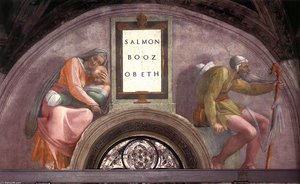
Laurentian Library
Giclée / Art Print
Reproduction Size
-


Total Price
$ 81
A Testament to Florentine Grandeur: The Laurentian Library
The Laurentian Library, a name that whispers of scholarly pursuit and artistic brilliance, stands as one of the most captivating architectural achievements of the High Renaissance. Designed by none other than Michelangelo Buonarroti, this extraordinary space within the Biblioteca Medicea-Laurenziana in Florence isn’t merely a repository for ancient texts; it's a meticulously crafted dialogue between classical ideals and innovative design, a testament to the genius of its creator and a poignant reflection on the era that birthed it. Commissioned by Pope Clement VII in 1530, the library was intended as a magnificent center for humanist learning, housing a vast collection amassed by the Medici family – a legacy of intellectual curiosity and artistic patronage that shaped the very fabric of Florence.
Michelangelo’s vision transcended the conventional design of libraries. He didn't simply build walls to hold books; he sculpted space itself. The long, narrow reading room, punctuated by a series of graceful arches, creates an atmosphere of profound concentration and quiet contemplation. These arches aren’t merely structural elements; they are carefully orchestrated visual cues, guiding the eye along a rhythmic path, fostering a sense of harmony and order that reflects the Renaissance fascination with proportion and balance. The building's layout is a masterful exercise in spatial composition, designed to inspire both intellectual rigor and aesthetic appreciation.
Architectural Marvels: Details That Speak Volumes
The Laurentian Library is replete with architectural details that showcase Michelangelo’s unparalleled skill and his deep understanding of classical principles. The most immediately striking element is undoubtedly the Vestibule, a dramatic entrance space designed to impress and orient visitors. Here, a majestic staircase, sculpted by Michelangelo himself, dominates the scene. This isn't just a means of ascending; it’s a work of art in its own right – an intricate dance of marble curves and elegant proportions that embodies the dynamism and expressive power characteristic of Mannerist style. The staircase serves as a powerful visual metaphor: a journey through knowledge, a climb towards enlightenment.
Beyond the Vestibule lies the main reading room, a space bathed in natural light filtering through tall windows. Rows of meticulously crafted wooden desks and benches provide a comfortable setting for scholars to immerse themselves in their studies. The high ceiling and expansive windows create an illusion of boundless space, while the ornate decorations – intricate carvings and sculptures adorning the walls and ceilings – add a layer of visual richness and symbolic depth. These details aren’t mere ornamentation; they are integral to the library's overall atmosphere, reinforcing its status as a sacred space dedicated to learning and scholarship.
Symbolism and Legacy: A Renaissance Masterpiece
The Laurentian Library is more than just a beautiful building; it’s a powerful symbol of the Renaissance spirit – a celebration of human potential, a revival of classical ideals, and an embrace of innovation. Michelangelo's design reflects his profound understanding of both ancient Greek and Roman architecture, as well as his own unique artistic vision. The library’s layout, with its emphasis on proportion, harmony, and spatial dynamism, embodies the Renaissance fascination with order and beauty. It also represents a departure from traditional architectural conventions, foreshadowing the emergence of Mannerism – a style characterized by its expressive intensity, complex forms, and subtle distortions.
The library’s significance extends beyond its aesthetic qualities. It served as a vital center for humanist learning, preserving and disseminating knowledge during a period of profound intellectual and cultural transformation. The collection housed within the Laurentian Library – including ancient manuscripts, early printed books, and rare documents – represents a priceless legacy of human achievement. Today, it continues to inspire awe and admiration from visitors around the world, serving as a tangible reminder of Florence’s enduring contribution to art, architecture, and scholarship. OriginalUniqueArt offers exquisite hand-painted reproductions that capture the essence of this remarkable space, allowing you to bring its beauty into your own home or office.
Questions & Answers
How does the subject of "Laurentian Library" relate to Michelangelo Buonarroti's usual themes?
"Laurentian Library" depicts renaissance, architecture, library, michelangelo, florence, italy, vestibule, staircase, while Michelangelo Buonarroti's recorded themes are classical antiquity, renaissance ideals, michelangelo’s style, spatial composition, early renaissance design, library architecture, spatial innovation, michelangelo’s vision. Comparing the two shows how the work relates to the artist's usual subjects.
What medium is "Laurentian Library" by Michelangelo Buonarroti executed in?
Michelangelo Buonarroti used the acrylic on canvas technique for "Laurentian Library". The technique defines the material nature of the original work.
What stage of Michelangelo Buonarroti's career does "Laurentian Library" (1530) belong to?
"Laurentian Library", created in 1530, belongs to the Early Period of Michelangelo Buonarroti's career.
Artist Biography
The Hands of Caprese
In the hills of Caprese, a boy learned the weight of stone and the grit of marble dust. Born in 1475, Michelangelo di Lodovico Buonarroti Simoni spent his early years near Settignano, where his father owned a quarry. The smell of damp earth and the sound of hammers against rock were part of his childhood. He did not start with brushes but with the chisel. His apprenticeship under Domenico Ghirlandaio in Florence brought him into contact with the city's growing interest in the human form, yet it was the Medici gardens that truly shaped his eyes. There, among the ancient Greek and Roman fragments, he studied how light falls across muscle and bone.
His work began to take shape through a deep study of anatomy. He looked at the way a limb carries weight and how skin stretches over a joint. This focus on the physical reality of the body became his primary language. By the time he reached Rome in 1496, he was already carving figures that possessed a heavy, palpable presence. The Pietà, completed in 1499, shows this early ability to make marble appear as soft as flesh, even as it carries the weight of a dead man.
The Weight of the Sistine Ceiling
The task of the Sistine Chapel ceiling was not something he sought. He saw himself as a sculptor, someone who pulls life out of stone rather than spreading pigment on plaster. Yet, for four years, he worked in the high reaches of the chapel, painting over 300 figures from the Book of Genesis. The physical toll was visible in his daily life. He spent hours in difficult positions, his body strained by the reach and the heavy application of fresco technique. In panels like The Creation of Adam, the tension is found in the small gap between two fingers, a moment of near-contact that holds the viewer's attention through pure composition.
As time passed, his style moved away from the balanced ideals of the High Renaissance toward something more restless. His later works, such as The Last Judgment on the altar wall, show a shift toward Mannerism. The figures became more elongated and the compositions more crowded and dramatic. This change reflected a shifting spiritual climate in Rome. He continued to work with an intensity that many found overwhelming, often leaving projects unfinished as his mind moved toward new architectural or sculptural problems.
Architecture and Final Years
In his later decades, Michelangelo turned much of his attention to the structure of buildings. At age 71, he took over the work on St. Peter's Basilica, altering the plans to create a more massive, imposing design. He also designed the Laurentian Library, where his use of architectural elements broke from tradition, creating a sense of movement within the stone itself. His work on the Piazza del Campidoglio in Rome showed how he could organize a public space using symmetry and classical motifs to guide the eye through the square.
He died in Rome in 1564, leaving behind a legacy written in marble, fresco, and stone. His life was defined by several key roles:
- Sculptor: Carving works like David from single blocks of Carrara marble.
- Painter: Executing the vast narrative cycles of the Sistine Chapel.
- Architect: Redesigning the foundations of St. Peter's Basilica and the Laurentian Library.
- Poet: Expressing his inner thoughts through verse.

Michelangelo Buonarroti
1475 - 1564 , Italy
Quick Facts
- Artistic Movement Or Style:
- High Renaissance
- Mannerism
- Artists Or Movements Influenced By This Artist: ['Mannerism']
- Artists Who Influenced This Artist:
- Domenico Ghirlandaio
- Donatello
- Masaccio
- Full Name: Michelangelo di Lodovico Buonarroti Simoni
- Nationality: Italian
- Notable Artworks:
- Pietà
- David
- The Creation of Adam
- The Last Judgment
- Moses
- Place Of Birth: Caprese Michelangelo, Italy
- Date Of Birth: 1475
- Date Of Death: 1564
Related Articles

The Renaissance Trinity: A Comparative Study of Leonardo, Michelangelo, and Raphael
Explore the profound genius of the Renaissance Trinity. Delve into a comparative study of Leonardo da Vinci, Michelangelo, and Raphael, uncovering their unique contributions to art history, technique, and the enduring legacy of Italian High Renaissance mastery.
Michelangelo Buonarroti: A Renaissance Titan – Life, Works & Enduring Legacy
Explore the life, works & enduring legacy of Michelangelo Buonarroti, a Renaissance titan. Discover his iconic sculptures, frescoes, and architectural achievements. Expert art consultation & high-quality reproductions at OriginalUniqueArt.
British Museum Masterpieces: Explore 25 Iconic Artworks & Decor Inspiration
Journey through 25 iconic artworks at the British Museum, London! Explore masterpieces from Egyptian sculptures to Renaissance paintings & uncover their stories. Find museum-quality art reproductions and curated decor ideas on OriginalUniqueArt.com.

Uffizi's 25 Masterpieces: Renaissance Art & Timeless Decor Inspiration
Journey through the Uffizi Gallery's 25 most iconic Renaissance artworks! Explore Botticelli, Leonardo da Vinci & Michelangelo’s masterpieces. Find museum-quality art reproductions and curated decor ideas to bring timeless Italian beauty into your home. Discover all masterpieces on OriginalUniqueArt.com
Michelangelo's Masterpieces: Explore 25 Iconic Artworks for Your Home | OriginalUniqueArt
Journey through Michelangelo's 25 greatest artworks – from David’s strength to the Sistine Chapel’s beauty. Explore Renaissance masterpieces, art history & find museum-quality reproductions for your home at OriginalUniqueArt.com.