 Preview
 Send
Send Share
Share
 Details

 Download
 Similars
 X-Ray
X-Ray Diaporama
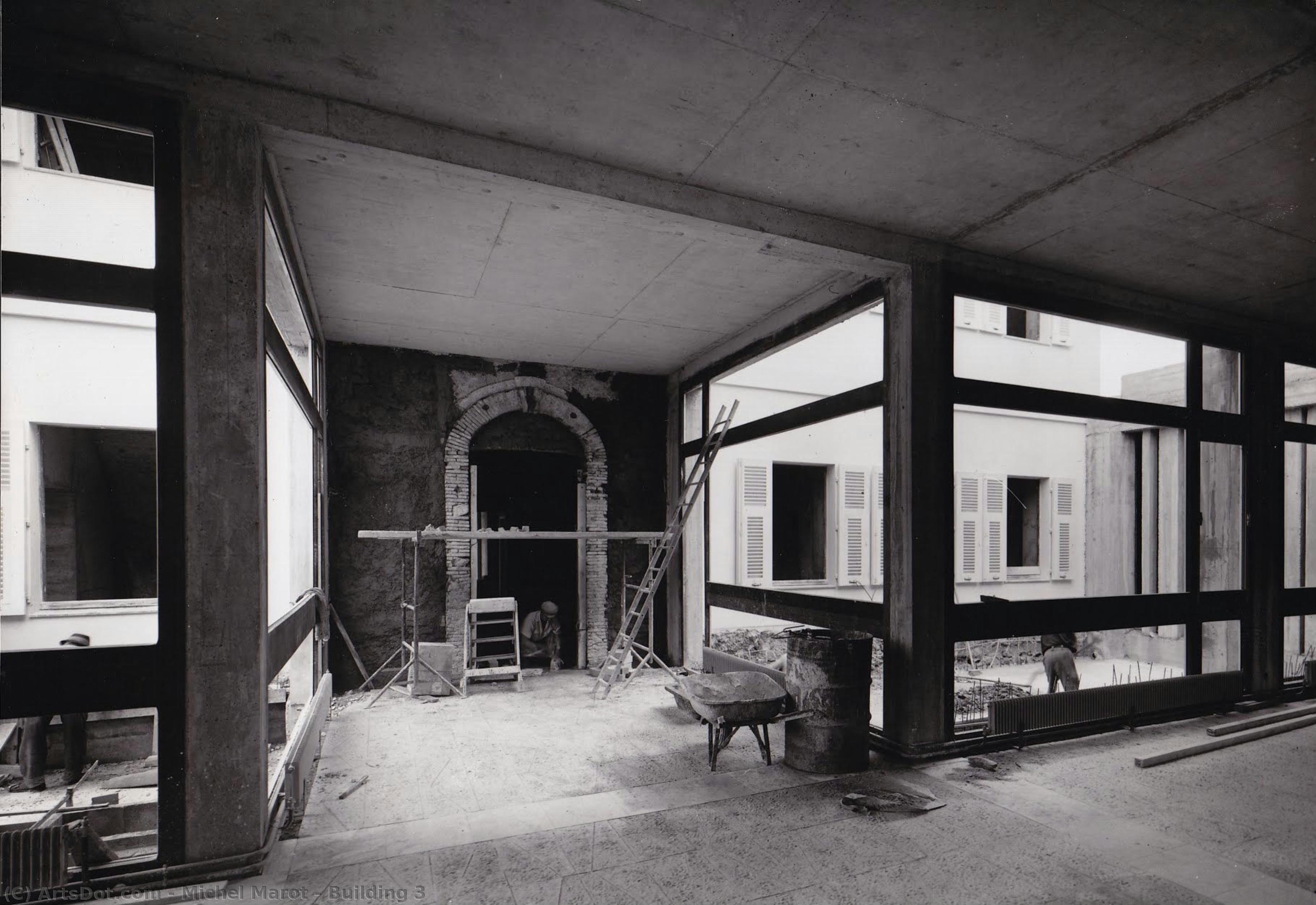
Building 3


 Read More
Hand Made Oil Reproduction
Hand-painted oil on canvas in your size and frame, made to order by our artists. ( Buy Print Buy Image)




































Pick from our preset sizes that match the artwork's original proportions.

You may enter your own dimensions to fit a specific frame or space. If your selected size does not match the original image's proportions, we will either crop the artwork or extend the painting with additional hand-painted elements. A digital mockup will be sent for your approval before production begins.
Please note that the on-screen preview does not reflect the actual cropping or extension. Only the mockup will accurately show the final composition.
While custom sizes are available, we recommend selecting a dimension from the predefined list to preserve the original proportions.
After order, OriginalUniqueArt.com team will email client for instructions and provide a mockup preview
Worldwide Delivery () in 3/4 weeks instead of standard 5 weeks. (15 August). No compromise on quality.

Free Worldwide Express Shipping

High-Quality Linen Canvas

Full Shipping Insurance

Customs Tax Refund Guarantee

True Color Matching Guarantee

60-Day Return Policy (Defects Only)

100% Money-Back Guarantee

Bulk Discount Offer
 Glass option is only available in size under 110 CM

Building 3
Reproduction Medium
Reproduction Size
-


Total Price
$ 300
Artist Biography
The Architect of Modern Vision: The Life and Legacy of Michel Marot
In the grand tapestry of twentieth-century design, few figures managed to weave together the rigorous discipline of classical tradition with the daring spirit of modernism as seamlessly as Michel Marot. Born in the historic city of Troyes, France, in 1926, Marot emerged from a lineage of French intellectual and artistic excellence. His journey was one of profound academic rigor and global exploration, beginning with his formative training at the École Supérieure d'Arts et Industrie Graphiques (ESAIG). This early foundation in graphic precision would later manifest in the sharp, geometric clarity that defined his architectural language. His subsequent admission to the prestigious Beaux-Arts de Paris in 1945 marked the true beginning of a career destined to reshape the French landscape.
Marot’s intellectual horizons were never confined by borders. His pursuit of excellence led him across the Atlantic to Harvard University, where he engaged with the burgeoning currents of international modernism. However, it was his receipt of the legendary Prix de Rome that perhaps most deeply etched the soul of antiquity into his work. Residing at the Villa Medici between 1955 and 1958, Marot immersed himself in the study of classical architecture. This period of intense contemplation allowed him to absorb the grandeur of Roman monuments, teaching him that true innovation does not require the abandonment of history, but rather a sophisticated dialogue with it. He learned to respect the weight of stone and the permanence of form, lessons that would later inform his masterful use of contemporary materials.
A Mastery of Form and Function
As his career blossomed, Marot became a steward of both the past and the future. His professional repertoire was characterized by an extraordinary ability to handle monumental responsibility with grace. One of his most significant contributions to the cultural fabric of France was his role in overseeing the meticulous reconstruction of the Arc de Triomphe in Paris. This task, requiring immense engineering precision and a deep reverence for national heritage, showcased his capacity to manage structural integrity while honoring historical symbolism. Furthermore, his appointment as the guardian of the Archives Nationales underscored his lifelong commitment to the preservation of cultural memory.
The zenith of his creative recognition arrived in 1963, when he was awarded the prestigious Prix de l’Équerre d’Argent. This accolade was bestowed following his groundbreaking design of the Sainte-Agnes Church in Fontaine-les-Grès. In this project, Marot achieved a rare feat: the creation of a sacred space that felt both timeless and avant-garde. Through the masterful use of concrete—a material often seen as cold or industrial—he crafted an atmosphere of elegant simplicity and spiritual lightness. This work remains a testament to his ability to utilize functionalist aesthetics to evoke profound emotional responses, proving that modernism could possess a soul.
The Enduring Resonance of a Modern Master
The architectural legacy of Michel Marot is defined by a unique sensitivity to the relationship between man-made structures and the natural world. His designs were never mere impositions upon the landscape; rather, they were thoughtful interventions that sought harmony with their surroundings. Whether designing the striking Villa Arson in Nice or navigating the complexities of urban reconstruction, Marot’s work always maintained a sense of geometric precision tempered by an organic fluidity.
Throughout his life, which concluded in 2021, Marot remained a beacon for architects seeking to balance innovation with tradition. His influence can be seen in the way modern structures now approach the concept of permanence and environmental integration. To study the work of Michel Marot is to witness the evolution of twentieth-century thought—a journey from the classical shadows of Rome to the bright, concrete horizons of the modern age. He remains an architect of vision, leaving behind a world made more beautiful by his structural poetry.

Michel Marot
1926 - 2021 , France
Quick Facts
- Artistic Movement Or Style: Modernist Architecture
- Artists Or Movements Influenced By This Artist: ["École Nationale Supérieure d'Arts de Nice"]
- Artists Who Influenced This Artist: ['Harvard University']
- Date Of Birth: January 29, 1926
- Date Of Death: August 24, 2021
- Full Name: Michel Marot
- Nationality: French
- Notable Artworks:
- Villa Arson
- East garden...
- Building 3, great hall...
- Place Of Birth: Troyes, France