Send
Send Share
Share
 Details

 Download
 Similars
 Diaporama
 Stats
StatsSweet Emma Barrett
 Black and White Photography
- Photo
- Contemporary Realism
 1974
1974- Contemporary
 The Historic New Orleans Collection
 Read More
Giclée / Art Print
Museum-quality giclée or canvas print with fast production and flexible finish options. ( Buy Hand Made Painting Switch to Digital Image)




































Pick from our preset sizes that match the artwork's original proportions.

You may enter your own dimensions to fit a specific frame or space. If your selected size does not match the original image's proportions, we will either crop the artwork or extend the image with a mirrored or solid-fill edge. A digital mockup will be sent for your approval before production begins.
Please note that the on-screen preview does not reflect the actual cropping or extension. Only the mockup will accurately show the final composition.
While custom sizes are available, we recommend selecting a dimension from the predefined list to preserve the original proportions.
Worldwide Delivery () in 2 weeks instead of standard 4/5 weeks. (8 September)

Free Worldwide Express Shipping

High-Quality Linen Canvas

Full Shipping Insurance

Customs Tax Refund Guarantee

True Color Matching Guarantee

100-Day Return Policy (Defects Only)

100% Money-Back Guarantee

Bulk Discount Offer
 Glass option is only available in size under 110 CM

Sweet Emma Barrett
Giclée / Art Print
Reproduction Size
-


Total Price
$ 81
A Symphony in Monochrome: Capturing the Soul of New Orleans
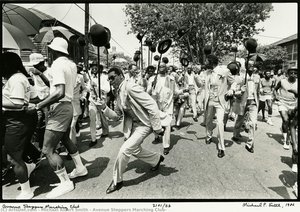
In the evocative photograph Sweet Emma Barrett, captured by the renowned American artist Michael Albert Smith in 1974, we are transported into the smoky, rhythmic heart of a New Orleans jazz club. The image serves as more than a mere visual record; it is a temporal window into a bygone era of musical transcendence. Through the masterful use of black and white photography, Smith strips away the distractions of color to reveal the raw, pulsing essence of the performance. The composition draws the viewer into a crowded, intimate space where the boundaries between performer and spectator dissolve into a singular, shared experience of sound and spirit.
The scene is a dense tapestry of motion and stillness. At the center of this sonic whirlwind, a jazz band pours their vitality into their instruments—the brassy gleam of trumpets and trombones, the rhythmic heartbeat of the drums, all captured in a way that suggests the very vibration of the notes. Surrounding the stage, an attentive audience sits in rapt contemplation, their faces etched with the profound engagement that only live jazz can command. The presence of spectators holding handbags or resting on chairs adds a layer of poignant realism, grounding this extraordinary musical moment in the everyday textures of life.
The Artistry of Michael Albert Smith
To understand Sweet Emma Barrett, one must understand the lens through which Michael Albert Smith views the world. His journey from a professional basketball prospect to a celebrated chronicler of Louisiana’s cultural landscape informs the depth of his work. Smith does not merely photograph subjects; he documents the resilience and soul of community. His technique relies on an intimate understanding of light and shadow, using the high contrast of monochrome to emphasize the textures of the instruments, the folds of clothing, and the expressive gestures of the musicians.
This particular piece exemplifies Smith’s ability to capture what many call the "New Orleans Soul." There is a profound sense of historical weight in this image, as it documents a lineage of musical legends. The photograph functions as a piece of visual jazz itself—improvisational in its energy yet structured by a deep, underlying rhythm. For the collector or interior designer, this work offers a sophisticated narrative element, bringing a sense of historical prestige and cultural depth to any curated space.
A Timeless Addition to the Modern Collection
For those seeking to adorn a space with art that speaks of heritage and human connection, this reproduction offers an unparalleled emotional impact. The monochromatic palette ensures a seamless integration into diverse interior styles, from the minimalist elegance of a modern gallery-style room to the warm, storied atmosphere of a classic study. It is a piece that invites conversation, prompting viewers to imagine the scent of the club, the heat of the crowd, and the unmistakable swell of a jazz crescendo.
Owning a reproduction of this caliber is an investment in a piece of American cultural history. It serves as a constant reminder of the power of art to preserve the fleeting moments of human joy and communal triumph. Whether placed as a focal point in a grand living area or as a soulful accent in a private library, Sweet Emma Barrett brings with it the enduring, rhythmic heartbeat of New Orleans.
Artist Biography
Michael Albert Smith: A Chronicle of New Orleans Soul
Born in Rochester, New York, in 1963, Michael Albert Smith’s artistic journey is inextricably linked to the vibrant pulse of New Orleans. Initially a basketball player drafted by the Boston Celtics – a surprising detour from his creative pursuits – Smith ultimately found his true calling not on the court but through the lens of his camera. His work transcends mere documentation; it's an immersive exploration of culture, faith, and the human spirit within the unique landscape of Louisiana’s musical heartland. From the poignant black-and-white portraits of gospel legends to the dynamic captures of jazz funerals, Smith’s photographs resonate with a deep understanding of community, resilience, and the stories embedded within everyday life.
Smith's early career began in the late 1970s, marked by significant recognition from prestigious organizations. A National Endowment for the Arts Photography Fellowship in 1977 laid the foundation for his artistic development, followed by a commission from The Toledo Museum of Art in 1980 and an international award from the International Festival of Photography at Arles in France in 1981. These early accolades signaled a rising talent deeply attuned to visual storytelling. His work quickly gained attention through publications like *Crisis* magazine, where his images of Bishop I. Butler and Mahalia Jackson & Duke Ellington were prominently featured, solidifying his place within the broader narrative of Black cultural representation.
The Gospel Portraits: Faith and Community
Perhaps Smith’s most enduring legacy lies in his series of portraits of gospel musicians and church leaders. These images—including the iconic photograph of Bishop I. Butler, founder of Beauty of Holiness Church of the Lord Jesus Christ (1974)—are not simply representations; they are intimate studies of faith, leadership, and community. The stark black-and-white tones heighten the emotional impact, emphasizing the dignity and strength of these figures within their sacred spaces. Smith’s approach is deeply respectful, capturing not just appearances but also the essence of his subjects—their conviction, their warmth, and their connection to a rich spiritual tradition.
The 1996 photograph of Emile Victor Clay's funeral, a powerful document of New Orleans jazz funeral traditions, exemplifies Smith’s ability to capture pivotal moments in community life. The image is a testament to the city’s enduring cultural resilience—a celebration of life interwoven with mourning, a vibrant display of collective grief and communal support. It’s a scene brimming with color, movement, and deeply felt emotion, offering a glimpse into the soul of New Orleans.
New Orleans Jazz: A Photographic Symphony
Smith's fascination with New Orleans music is central to his artistic identity. His photographs of Mahalia Jackson & Duke Ellington at the First N.O. Jazz Fest in 1970 are particularly significant, capturing a historic moment that solidified the city’s reputation as a global center for jazz. These images aren’t just snapshots; they're windows into a vibrant musical ecosystem—a celebration of improvisation, collaboration, and the raw energy of live performance. The photographs convey the excitement and communal spirit of the festival, transporting the viewer to the heart of New Orleans’ musical heritage.
Beyond specific events, Smith’s broader body of work on New Orleans jazz reflects a deep appreciation for the city's unique musical culture. He consistently sought to document not just the performers but also the people who shaped and sustained that music—the musicians, the audiences, and the community as a whole. His images are imbued with a sense of reverence and respect for this vital cultural tradition.
Beyond New Orleans: A Broader Artistic Vision
While his work is most closely associated with New Orleans, Smith’s artistic interests extend beyond the city's borders. He has documented diverse communities across the United States, capturing portraits of individuals and scenes that offer insights into American life. His photography reflects a commitment to social justice and cultural understanding—a desire to tell stories that might otherwise go unheard.
Furthermore, Smith’s artistic practice encompasses other mediums, including painting and golf – demonstrating a multifaceted creative spirit. His background as a basketball player also informs his work, providing him with an appreciation for athleticism, competition, and the dynamics of human interaction.
Legacy and Influence
Michael Albert Smith’s photographs are more than just images; they're windows into the soul of New Orleans and the broader American experience. His work has been exhibited in museums and galleries across the United States and internationally, earning him critical acclaim and recognition as a leading figure in contemporary photography. His legacy lies not only in his stunning visual artistry but also in his commitment to documenting marginalized communities and preserving cultural traditions. Smith’s photographs continue to resonate with audiences today, offering a powerful reminder of the beauty, resilience, and complexity of the human spirit.

michael albert smith
1963 - , United States of America
Quick Facts
- Artistic Movement Or Style: Photography, Painting
- Date Of Birth: 1963
- Full Name: Michael Albert Smith
- Nationality: American
- Notable Artworks:
- Emile Victor Clay funeral
- Bishop I. Butler
- Mahalia Jackson & Duke Ellington
- Place Of Birth: Rochester, USA
Related Articles

The Art of Monochrome: Transforming Personal Memories into Timeless Black & White Fine Art Masterpieces
Elevate your most cherished memories with OriginalUniqueArt’s bespoke service. We transform your personal photos into breathtaking, hand-painted black & white oil masterpieces. Experience museum-quality craftsmanship and timeless elegance for your private collection. Discover the art of legacy.

White on Canvas: 10 Masterpieces & Timeless Elegance for Your Home Decor
Explore 10 iconic white paintings by Monet, Whistler & Rothko! Discover the stories behind these serene masterpieces and their impact on art history. Find museum-quality reproductions for your home decor at .

Monochrome Visions: Exploring the Aesthetic & Historical Significance of Black & White Photography
Explore the rich history & artistic power of black and white photography. From early techniques to iconic masters like Ansel Adams, discover why monochrome continues to captivate art lovers today. Expert insights for collectors.

Shadow & Soul: Why Black & White Photography Remains the Ultimate Power Move in Modern Art
Discover why black & white photography remains a powerful force in contemporary art. Explore the impact of light, shadow, and texture through a visual journey of monochrome mastery and learn how to elevate your space with timeless grayscale aesthetics.

Dark Masterpieces: 10 Iconic Paintings Dominated by Black Tones |
Explore 10 iconic paintings dominated by black tones, from Rembrandt’s chiaroscuro to Goya's dark expressions. Discover the stories behind these masterpieces & find museum-quality art reproductions for your home at .