 Send
Send Share
Share
 Details
 Guide
Guide

 Download
 Similars
 Diaporama
 Q&A
Q&A Stats
StatsLois O

- 30.0 x 30.0 cm


 Read More
The artwork displayed on this page is protected by copyright law, which means we cannot legally create or sell an identical reproduction. This protection is enforced under international agreements such as the Berne Convention and by national laws, including those outlined by the U.S. Copyright Law - Title 17.
This method fully complies with copyright regulations because it does not involve copying or duplicating the protected artwork. Instead, it is a creative reinterpretation - a new painting that is influenced by the original but not identical to it.
Giclée / Art Print
Museum-quality giclée or canvas print with fast production and flexible finish options. ( Buy Hand Made Painting Switch to Digital Image)




































Pick from our preset sizes that match the artwork's original proportions.

Type the width and the height you need, to fit your frame or your wall. A print can only be cut, never made bigger than the picture, so a size with a different shape loses a part of the image. We send you a digital mockup to approve before we print anything. The picture shown on this page does not show the real cut — only the mockup does.
Worldwide Delivery () in 2 weeks instead of standard 4/5 weeks. (6 November)

Free Worldwide Express Shipping

High-Quality Linen Canvas

Full Shipping Insurance

Customs Tax Refund Guarantee

True Color Matching Guarantee

100-Day Return Policy (Defects Only)

100% Money-Back Guarantee

Bulk Discount Offer
 Glass option is only available in size under 110 CM

Lois O
Giclée / Art Print
Reproduction Size
-


Total Price
$ 81
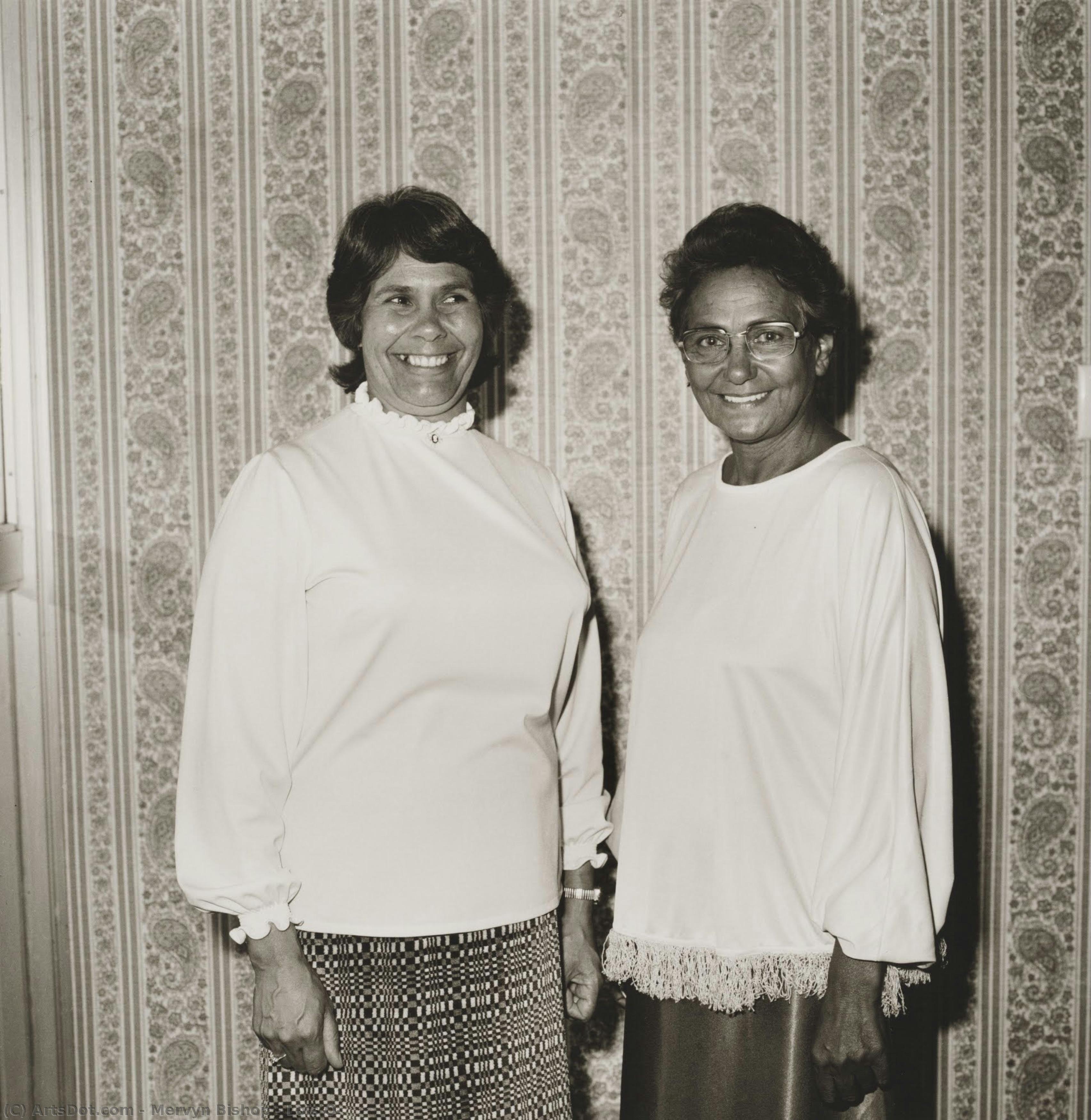
A Window Into Resilience: Mervyn Bishop’s ‘Lois O’Donoghue CBA, AM, and Oodgeroo Noonuccal’
Mervyn Bishop's 1974 photograph, “Lois O’Donoghue CBA, AM, and Oodgeroo Noonuccal,” transcends the simple act of portraiture; it’s a deliberate intervention in the historical record. More than just capturing two remarkable women, Bishop confronts the persistent erasure of Indigenous voices within Australian visual culture. The image, rendered in the starkly beautiful tones of black and white, feels both immediate and deeply resonant, inviting viewers to contemplate the complexities of identity, activism, and the ongoing struggle for recognition.
The photograph’s power lies not just in its subject matter – Lois O’Donoghue, a pioneering figure in Aboriginal affairs and government service, and Oodgeroo Noonuccal, a celebrated poet, educator, and political activist – but also in Bishop's masterful composition. The women are positioned centrally within the frame, their gazes meeting with an unspoken understanding. Their shared presence creates a visual anchor, suggesting solidarity and mutual respect. The subtle tilt of their heads, the slight asymmetry of their postures, imbue the image with a sense of quiet dignity and strength.
A Technical Portrait of Time
Bishop’s technical approach is deliberately rooted in the traditions of documentary photography, yet imbued with a sensitivity that elevates it beyond mere reportage. The photograph utilizes a gelatin silver print process, resulting in a grainy texture that speaks to the materiality of the image itself – a tangible record of a specific moment in time. The lighting is soft and diffused, casting gentle shadows that accentuate the contours of their faces and clothing, revealing the wisdom etched into their features. The choice of a straightforward, frontal perspective underscores the directness of the encounter, fostering a sense of intimacy with the subjects.
Notably, the image’s composition avoids any overtly theatrical elements. There's no elaborate backdrop or carefully arranged props; instead, Bishop focuses on capturing the essence of the women within their natural environment – a simple, patterned wallpaper providing a subtle yet effective visual context. The wallpaper, with its vertical stripes in shades of brown and cream, acts as a grounding element, anchoring the figures while simultaneously hinting at the broader social landscape they inhabit.
Symbolism and Historical Context
The photograph’s significance extends far beyond its aesthetic qualities. It emerged during a pivotal period in Australian history – the 1970s – a time of intense debate surrounding land rights, Indigenous self-determination, and the legacy of colonialism. O’Donoghue's work as a director within the Department of Aboriginal Affairs represented a crucial step towards greater inclusion and recognition for Indigenous Australians within government structures. Noonuccal’s poetry and activism challenged dominant narratives and demanded justice for her people.
By juxtaposing these two powerful women, Bishop subtly critiques the historical tendency to marginalize Indigenous voices in official representations. He offers a counter-narrative – a portrait of resilience, intellect, and unwavering commitment to social change. The photograph’s deliberate framing serves as an act of resistance against the dominant visual tropes that have historically misrepresented Indigenous Australians.
Emotional Resonance and Lasting Impact
“Lois O’Donoghue CBA, AM, and Oodgeroo Noonuccal” is a profoundly moving image. It evokes feelings of warmth, connection, and quiet dignity. The women's warm smiles suggest a shared sense of purpose and mutual respect. The photograph invites viewers to contemplate the enduring legacy of these remarkable individuals and their contributions to Australian society.
More than just a historical document, Bishop’s portrait is a testament to the power of photography as a tool for social justice and cultural preservation. It stands as a poignant reminder of the importance of amplifying marginalized voices and celebrating the strength and resilience of Indigenous communities.
Questions & Answers
Is "Lois O" typical of what Mervyn Bishop usually created?
Mervyn Bishop's recurring themes include photojournalism & social commentary, indigenous australian identity, celebrating activist women", challenging colonial narratives, documenting historical figures", advocacy for indigenous rights", bishop's portraiture series focus", reflecting on australian history; "Lois O" focuses on indigenous australia, australian history, women’s rights, cultural representation, portrait photography, social justice, historical figures, black and white.
What are the format and size of "Lois O"?
"Lois O" by Mervyn Bishop is proportioned as a square work of 30 x 30 cm.
At what size is "Lois O" recommended to be printed?
"Lois O" is recommended at a medium print size. Other sizes are available with the same proportions.
Artist Biography
A Pioneering Lens: The Life and Work of Mervyn Bishop
Mervyn Bishop’s journey as a photographer is more than just a career; it's a testament to breaking barriers, documenting history, and giving voice to Indigenous Australia. Born in Brewarrina, New South Wales, in 1945, his early life was shaped by the complexities of post-war Australia and the restrictive policies impacting Aboriginal communities. His father, “Minty” Bishop, a veteran and shearer, navigated a system that demanded assimilation for even those who had served the nation. This context – a family striving for normalcy while subtly resisting cultural erasure – would profoundly influence Bishop’s perspective and ultimately, his art. The spark ignited with his mother's Kodak 620 camera, transforming everyday scenes into cherished memories and laying the foundation for a lifelong passion. He honed his skills through self-teaching, capturing the essence of family life around Brewarrina before embarking on formal studies at Dubbo High School.Breaking Ground: A Career Forged in Journalism
In 1962, Bishop shattered expectations by becoming the first Aboriginal Australian cadet photographer at the *Sydney Morning Herald*. This wasn’t merely a personal achievement; it was a symbolic dismantling of systemic exclusion within mainstream media. For seventeen years, he navigated the world of news photography, covering everything from community events to sporting triumphs. He completed his Photography Certificate Course at Sydney Technical College during this time, solidifying his technical expertise. Bishop's dedication and keen eye quickly earned him recognition, culminating in the prestigious Nikon-Walkley Australian Press Photographer of the Year award in 1971 for *Life and Death Dash*. This powerful image – a nun rushing to aid an Aboriginal child – wasn’t just a news photograph; it was a stark commentary on social inequalities and the often-fraught relationship between Indigenous communities and religious missions. The composition, contrast, and raw emotion resonated deeply, foreshadowing the profound impact his work would have on Australian society. He remained the sole indigenous photographer employed by the *Herald* throughout his tenure, paving the way for future generations of Aboriginal visual storytellers.Documenting a Nation: The Department of Aboriginal Affairs Years
Bishop’s move to the Department of Aboriginal Affairs in 1974 marked a pivotal shift in his career. This role allowed him unprecedented access to Indigenous communities across Australia during a period of significant change and burgeoning self-determination. He became a chronicler of hope, documenting land rights negotiations, cultural revival movements, and the everyday lives of Aboriginal people with sensitivity and respect. It was here that he captured arguably his most iconic photograph: the 1975 image of Prime Minister Gough Whitlam handing soil back to Gurindji elder Vincent Lingiari at Wattie Creek. This moment – a symbolic act of land repatriation – transcended its immediate context, becoming an enduring emblem of the Australian land rights movement and a powerful testament to Indigenous resilience. The photograph wasn’t simply documenting an event; it was capturing the birth of a new era in Aboriginal-government relations.Beyond the Image: Influence, Legacy, and Continued Impact
Mervyn Bishop's influence extends far beyond his individual photographs. He didn’t just document history; he actively shaped its narrative. His work challenged prevailing stereotypes, fostered empathy, and provided a platform for Indigenous voices often marginalized in mainstream media. He returned to the *Sydney Morning Herald* in 1979 before embracing freelance photography in 1986, working with agencies like National Geographic Society. He also dedicated himself to education, lecturing at Tranby Aboriginal College, Eora College, and the Tin Sheds Gallery at the University of Sydney, nurturing a new generation of Indigenous photographers. His retrospective exhibition, *In Dreams: Mervyn Bishop, Thirty Years of Photography 1960–1990*, curated by Tracey Moffatt, toured nationally and internationally for a decade, solidifying his place as a leading figure in Australian art and photojournalism. He further contributed to the cultural landscape as a stills photographer on Phil Noyce’s film *Rabbit Proof Fence* (2002). The Australia Council's Red Ochre Award in 2000 recognized his pioneering work, but perhaps his greatest legacy lies in the enduring power of his images and the inspiration he continues to provide. His recent retrospective at the Art Gallery of New South Wales further cemented his importance, showcasing not only his iconic photojournalism but also intimate family photographs that reveal the personal roots of his artistic vision.- Awards: Nikon-Walkley Australian Press Photographer of the Year (1971), Australia Council’s Red Ochre Award (2000).
- Key Themes: Indigenous identity, social justice, land rights, cultural preservation.
- Influences: His family history and experiences growing up in Brewarrina, the burgeoning Aboriginal rights movement of the 1970s.

Mervyn Bishop
1945 - , Australia
Quick Facts
- Full Name: Mervyn Bishop
- Nationality: Australian
- Date Of Birth: 1945
- Place Of Birth: Brewarrina, Australia
- Notable Artworks:
- Life and Death Dash (1971)
- Whitlam pouring soil (1975)
- Artistic Movement Or Style: Photojournalism, Documentary
Related Articles

Beyond the Lens: Photography's Enduring Influence on Modern & Contemporary Art
Explore photography's pivotal role in shaping modern & contemporary art. Discover key movements, influential artists like Stieglitz, and expert collecting advice from OriginalUniqueArt.

Monochrome Visions: Exploring the Aesthetic & Historical Significance of Black & White Photography
Explore the rich history & artistic power of black and white photography. From early techniques to iconic masters like Ansel Adams, discover why monochrome continues to captivate art lovers today. Expert insights for collectors.

Timeless Shadows: The Artistry, History, and Emotional Resonance of Black and White Photography
Explore the profound artistry of black and white photography. From historical mastery to the interplay of light and shadow, discover how monochrome captures timeless emotion and form through a sophisticated lens of art history.

Beyond Color: The Timeless Power and Artistry of Black and White Photography
Explore the profound artistry of black and white photography. From the chemistry of gelatin silver to the chiaroscuro of the Old Masters, discover how monochrome captures the eternal essence of light, form, and emotion for the discerning art collector.

Dark Masterpieces: 10 Iconic Paintings Dominated by Black Tones |
Explore 10 iconic paintings dominated by black tones, from Rembrandt’s chiaroscuro to Goya's dark expressions. Discover the stories behind these masterpieces & find museum-quality art reproductions for your home at .


