

 Send
Send Share
Share
 Details
 Guide
Guide

 Download
 Similars
 Diaporama
 Stats
StatsThe Bookmaker


 Read More
Hand Made Oil Reproduction
Hand-painted oil on canvas in your size and frame, made to order by our artists. ( Switch to Print Switch to Digital Image)




































Pick from our preset sizes that match the artwork's original proportions.

Type the width and the height you need, to fit your frame or your wall. This is hand-painted, so for a size with a different shape the artist can paint a bit more around the picture, or cut a bit — you choose. We send you a digital mockup to approve before the painting starts. The picture shown on this page does not show the real result — only the mockup does.
After order, OriginalUniqueArt.com team will email client for instructions and provide a mockup preview
Worldwide Delivery () in 3/4 weeks instead of standard 5 weeks. (24 October). No compromise on quality.

Free Worldwide Express Shipping

High-Quality Linen Canvas

Full Shipping Insurance

Customs Tax Refund Guarantee

True Color Matching Guarantee

100-Day Return Policy (Defects Only)

100% Money-Back Guarantee

Bulk Discount Offer
 Glass option is only available in size under 110 CM

The Bookmaker
Reproduction Medium
Reproduction Size
-


Total Price
$ 300
The Ephemeral Moment Captured in Clay
To stand before Medardo Rosso's "The Bookmaker" is to encounter not merely a sculpture, but a suspended breath—a moment of profound, internalized thought given tangible form. This piece transcends the mere depiction of a figure reading; it captures the very essence of contemplation itself. The artist, known for his revolutionary spirit, eschewed the polished permanence of classical tradition to pursue something far more elusive: the fleeting gesture, the subtle shift in posture that betrays a mind deeply engaged. Rosso masterfully renders this quiet absorption through the soft modeling of clay or plaster, allowing the viewer to feel the weight of unspoken thoughts emanating from the solitary form.
A Study in Modern Sensibility and Form
Rosso’s style here is a breathtaking bridge between late 19th-century academic sculpture and the burgeoning spirit of Modernism. Unlike the rigid narratives favored by his predecessors, "The Bookmaker" embraces an organic fluidity. The lines are not etched with sharp certainty but suggested through gentle curves—the slope of the head, the fall of implied drapery, the relaxed curve of the shoulders. This emphasis on naturalistic movement and atmospheric suggestion aligns perfectly with Impressionism's desire to capture light and life in motion. The monochromatic palette, dominated by creamy beiges and earthy browns, strips away the distraction of vibrant color, forcing the eye instead to trace the exquisite interplay of shadow and form.
Technique and Tactile Allure
The technical brilliance lies in Rosso's handling of the material itself. The surface treatment is a conversation between refinement and rawness. While the figure suggests a smooth, almost yielding skin under diffused light, the base remains deliberately rough and uneven. This contrast—the polished interior life against the unrefined grounding—is crucial to the piece’s narrative power. It speaks to the process of creation itself: the delicate idea emerging from the raw material. For those considering a reproduction for an interior space, this textural dialogue is key; it adds an immediate, artisanal depth that mass-produced art simply cannot replicate.
Symbolism of Solitude and Knowledge
The subject matter—the solitary figure absorbed in reading—is inherently symbolic. It speaks to the universal human need for introspection, a quiet retreat from the clamor of the external world. The book becomes more than an object; it is a portal to knowledge, a sanctuary for the mind. Rosso invites us, the viewer, into this private moment of intellectual communion. Owning "The Bookmaker" is therefore not just acquiring art; it is curating a space dedicated to thought, reflection, and the enduring value found within quiet contemplation.
Questions & Answers
What is "The Bookmaker" about?
"The Bookmaker" by Medardo Rosso depicts: sculpture, contemplation, reading, clay, form, texture, organic shapes.
What is the emotional tone of "The Bookmaker" by Medardo Rosso?
"The Bookmaker" by Medardo Rosso conveys a reflective emotional tone.
What color saturation does "The Bookmaker" by Medardo Rosso have?
The colors of "The Bookmaker" by Medardo Rosso have a muted saturation. Saturation describes how vivid or muted the colors are.
Artist Biography
A Pioneer of Impressionistic Sculpture: The Life and Art of Medardo Rosso
Medardo Rosso, born in Turin, Italy, on June 21, 1858, was a sculptor who dared to challenge the very foundations of his art form. He wasn’t merely shaping stone or bronze; he was attempting to capture fleeting moments, the ephemeral play of light and shadow, and the psychological depth of his subjects in three dimensions – an ambition that set him apart from his contemporaries and established him as a pivotal figure in the transition from traditional sculpture to modernism. His early life foreshadowed this rebellious spirit. A move to Milan with his family at age twelve was followed by a brief military service before enrolling, and swiftly being expelled from, the Brera Academy for advocating radical changes to drawing classes – specifically, the use of live models and anatomical studies rather than conventional methods. This expulsion wasn’t a setback but a declaration of independence, signaling his refusal to conform to established artistic norms.From Realism to Fleeting Impressions
Rosso's artistic journey began with realist influences, evident in early works like The Hooligan (1882) and Kiss Under the Lamppost (1882). However, a profound shift occurred after 1882, as he encountered Impressionism. This encounter wasn’t about replicating brushstrokes in clay; it was about absorbing the core philosophy of capturing momentary sensations. Sculptures like Portinaia (Concierge) (1883-84) and Carne altrui (Flesh of Others) (1883-84) demonstrate this evolution, showcasing a move towards sketchy modeling, flattened planes, and a deliberate softening of detail. He wasn’t interested in precise representation but rather in evoking an impression – a feeling. This approach was revolutionary for sculpture, traditionally focused on permanence and meticulous craftsmanship. Rosso's unique technique further amplified this effect; he rarely created preparatory drawings, preferring to work directly with clay, building up forms intuitively. These clay models were then cast in bronze, plaster, or wax, and crucially, he often retained the imperfections inherent in the casting process, valuing their visual impact as integral parts of the artwork.A Unique Process and Influential Connections
Central to Rosso’s artistic vision was his fascination with light. He wasn't simply illuminating his sculptures; he was designing them *to be* illuminated, understanding how light would interact with their rough surfaces and create a dynamic interplay of shadow and form. This focus on capturing fleeting impressions demanded an unconventional approach to materials and technique. His process involved creating plaster models from clay, then casting them in various mediums, often leaving traces of the molding process visible – a deliberate rejection of polished perfection. His work garnered attention from influential figures like Émile Zola, who recognized the innovative spirit within his sculptures. A significant commission came from Ludwig Mond for Ecce Puer (1906), a poignant depiction of a mother and child that exemplifies Rosso’s ability to convey emotion through subtle modeling and evocative light. While influenced by Impressionism and initially admiring Auguste Rodin, their relationship later became strained due to disputes over originality and artistic direction.Legacy and Lasting Impact
Medardo Rosso's influence extended far beyond his own lifetime. He is considered a key figure in the development of Post-Impressionism and a pioneer in modern sculpture, challenging traditional practices with his emphasis on spontaneity, psychological depth, and the ephemeral nature of perception. His innovative approach resonated particularly with the Futurists, especially Umberto Boccioni, who saw in Rosso’s work a precursor to their own exploration of movement and dynamism. After World War I, Rosso returned to Italy but faced bureaucratic hurdles due to his French citizenship. Despite these challenges, he continued to create art, receiving recognition from figures like Margherita Sarfatti. He passed away on March 31, 1928, in Milan, leaving behind a body of work that continues to inspire artists and captivate audiences today. Rosso’s sculptures are not merely objects; they are invitations to experience the world through a new lens – one that embraces impermanence, celebrates imperfection, and seeks to capture the elusive beauty of fleeting moments.Major Works
- The Hooligan (1882)
- Kiss Under the Lamppost (1882)
- Portinaia (Concierge) (1883–84)
- Carne altrui (Flesh of Others) (1883–84)
- Ecce Puer (1906)
- Aetas Aurea

Medardo Rosso
1858 - 1928 , Italy
Quick Facts
- Full Name: Medardo Rosso
- Nationality: Italian, French
- Date Of Birth: 1858
- Date Of Death: 1928
- Place Of Birth: Turin, Italy
- Notable Artworks:
- The Hooligan
- Kiss Under the Lamppost
- Portinaia (Concierge)
- Ecce Puer
- Artistic Movement Or Style: Post-Impressionism
- Artists Who Influenced This Artist:
- Auguste Rodin
- Impressionism
- Artists Or Movements Influenced By This Artist:
- Umberto Boccioni
- Futurists
Related Articles

Bronze Age to Modern Masters: 10 Sculptures That Redefined Art | OriginalUniqueArt
Journey through art history with 10 legendary bronze sculptures – from Michelangelo's David to Rodin’s Thinker. Explore the stories, techniques & timeless beauty of these masterpieces. Find museum-quality reproductions & elevate your home decor on OriginalUniqueArt.com.

Bronze Sculptures That Defined Art History | OriginalUniqueArt
Journey through art history with our Top 10 bronze sculptures! Explore masterpieces by Rodin, Michelangelo & more. Discover stories behind iconic statues and find museum-quality reproductions for your home decor at OriginalUniqueArt.com.

The Enduring Form: Exploring Themes & Techniques in Sculpture Across Historical Periods
Explore the rich history of sculpture from ancient masterpieces to contemporary innovations. Discover key techniques, influential artists & investment potential for discerning art collectors.
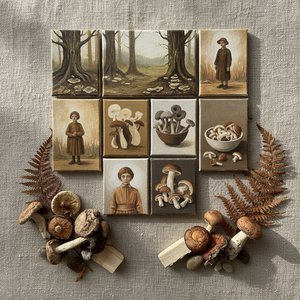
Earthy Hues & Masterpieces: Top 10 Paintings with 'Mushroom' Tones |
Explore 10 iconic paintings with captivating 'mushroom' tones! Discover Van Gogh, Monet & Rembrandt’s masterpieces—earthy palettes, rich history & artistic techniques. Find museum-quality art reproductions and curated decor ideas at

Sandstone & Sunlight: 10 Masterpieces of Earth-Toned Art |
Journey through 10 iconic paintings bathed in 'sand' tones – from Van Gogh to Monet. Explore the stories, techniques & warm palettes of these timeless masterpieces. Find museum-quality art reproductions at and bring classic beauty home.


