

 Send
Send Share
Share
 Details
 Guide
Guide

 Download
 Similars
 Diaporama
 Stats
StatsMoonmad


 Read More
Purchase a high-resolution, enhanced digital image, far superior to the online preview.
Each file is meticulously prepared by our in-house specialists using advanced tools and expert manual retouching. We ensure every image has exceptional clarity, precise color accuracy, and fine detail.
The final file is delivered via email within 72 hours, optimized for immediate use in professional, editorial, and print environments. This is the same quality trusted by top-tier design studios, publishers, and galleries.
Digital Image
Download a high-resolution file for personal display, printing, and creative projects. ( Switch to Print Buy Hand Made Painting)
Included in Every Digital Image Order
Expert Digital Delivery, Guaranteed
When you choose OriginalUniqueArt.com, you're not just getting an image - you're receiving a professionally enhanced digital artwork, crafted with precision and backed by a satisfaction guarantee. Here's everything that comes with your order, automatically:

Fast Email Delivery
Your high-resolution digital image file will be emailed to you within 72 hours of ordering - ready for immediate use.

AI-Enhanced Digital File
Your artwork is professionally optimized using advanced AI tools and manual editing, ensuring maximum detail, clarity, and color accuracy.

Free Lifetime Re-Delivery
Accidentally deleted or lost your file? No worries - we'll resend it to you anytime, free of charge.

No Import Fees - Ever
Enjoy your artwork instantly with zero customs, duties, or delivery fees - digital downloads are always tax-free.

Color Accuracy Guarantee
We ensure your digital image reflects the original colors as closely as possible using professional tools and color management.

100-Day Satisfaction Guarantee
If you're not satisfied with your digital image, we'll revise it or refund 100% within 100 days - no questions asked.

100% Money-Back Guarantee
Not satisfied? Get a full refund within 100 days of receiving your digital file - no questions asked.

Bulk Order Discounts
Buy 3 images, save 10% - Buy 5, save 15% - Buy 10+, save 20%. Great for creative projects, galleries, and agencies.
A Fragment of Surreal Wonder: Exploring Max Ernst’s “Moonmad”
The sculpture "Moonmad," created by German artist Max Ernst, stands as a testament to the unsettling beauty inherent in the Surrealist movement. More than just an aesthetically pleasing object, it embodies a profound exploration of psychological anxieties and subconscious desires—themes central to Ernst's artistic philosophy. Its enigmatic presence invites contemplation on themes of surprise, vulnerability, and the confrontation with inner turmoil.The Artist’s Intellectual Landscape
Ernst’s formative years were marked by rigorous academic pursuits that profoundly shaped his worldview. Studying philosophy at Bonn alongside art history, literature, psychology, and psychiatry instilled in him a critical perspective—a refusal to accept surface appearances without delving beneath them. This intellectual curiosity wasn't merely academic; it was a deliberate quest for understanding the human psyche and its relationship to reality. He sought to capture not just what *looked* like something, but what it *felt* like to experience it – mirroring the core tenets of Surrealism itself.A Bold Synthesis of Technique and Symbolism
Ernst’s sculptural approach exemplifies a masterful blend of technique and symbolism. Typically crafted from bronze—though precise details regarding “Moonmad” remain elusive—the sculpture utilizes subtractive casting methods, meticulously refining raw material to reveal the desired form. This process reflects Ernst's broader artistic strategy: stripping away convention to expose underlying truths. The face depicted is deliberately stylized, prioritizing expressive gesture over realistic representation. Its open mouth conveys a palpable shock or astonishment, suggesting an intrusion of the unconscious into conscious awareness—a hallmark of Surrealist iconography.Historical Context and Artistic Influences
“Moonmad” emerged during Ernst’s engagement with the burgeoning Surrealist movement in Paris during the 1920s. This period witnessed a fervent reaction against rationalism and championed dreams, automatisms, and irrational juxtapositions as pathways to artistic creativity. Ernst drew inspiration from psychoanalytic theories pioneered by Sigmund Freud, particularly his concept of the unconscious mind—a realm where repressed desires and anxieties manifest themselves in symbolic form. The sculpture’s unsettling stillness speaks volumes about this intellectual milieu, mirroring the pervasive anxiety surrounding societal upheaval and the questioning of established beliefs.Emotional Resonance: Capturing Inner Turmoil
Ultimately, “Moonmad” succeeds in conveying a powerful emotional resonance. Its deliberate ambiguity compels viewers to confront their own vulnerabilities and anxieties—themes that resonate deeply within the human experience. The sculpture’s stylized face captures not merely surprise but also a sense of disorientation, mirroring the destabilizing effects of confronting hidden psychological realities. It's a piece designed to provoke introspection and to remind us that art can illuminate the darkest corners of our inner selves – offering a captivating glimpse into Ernst’s masterful ability to translate philosophical ideas into tangible artistic expression.Questions & Answers
Can I see "Moonmad" by Max Ernst on my own wall before buying?
"Moonmad" by Max Ernst can be previewed on your own wall with the artwork's AR Preview page, using augmented reality on a compatible device.
How is the color composition of "Moonmad" by Max Ernst built?
The color analysis of "Moonmad" by Max Ernst records a gentle contrast and a strong color unity harmony.
How do the colors of "Moonmad" relate to each other?
"Moonmad" by Max Ernst displays a strong color unity color harmony.
Artist Biography
A Life Immersed in the Surreal
Max Ernst, born Maximilian Maria Ernst on April 1st, 1891, in Brühl, Germany, was a restless spirit destined to become one of the most pivotal figures in 20th-century art. His journey wasn’t one of conventional artistic training; rather, it was a self-directed exploration fueled by philosophical inquiry, psychological fascination, and a profound disillusionment with societal norms. Ernst's father, a teacher of the deaf and an amateur painter, instilled in him both a sensitivity to the world and a rebellious streak against established authority. This early duality would become a defining characteristic of his artistic vision.
Ernst’s academic pursuits at the University of Bonn – encompassing philosophy, art history, literature, psychology, and psychiatry – were not merely diversions but foundational elements that deeply informed his later work. He wasn't simply interested in *how* to paint; he was grappling with *why*. This intellectual curiosity led him to encounter the groundbreaking works of Picasso, Van Gogh, and Gauguin at the Sonderbund exhibition in Cologne in 1912, a moment that irrevocably altered his artistic trajectory. The seeds of modernism had been sown.
Dada’s Disruption and the Birth of Surrealist Visions
The cataclysm of World War I proved to be a watershed moment for Ernst. His experiences as a soldier on both the Eastern and Western fronts left him profoundly shaken, fostering a deep skepticism towards established order and a yearning for new modes of expression. This disillusionment found fertile ground in the burgeoning Dada movement, which he embraced wholeheartedly after returning to Cologne in 1918. Alongside Hans Arp – a lifelong friend and collaborator – Ernst became a central figure in the Cologne Dada group, rejecting traditional artistic conventions and embracing absurdity, chance, and anti-rationality.
However, Dada was merely a stepping stone. In the early 1920s, Ernst migrated to Paris and joined the ranks of the Surrealists, led by André Breton. This marked a shift towards exploring the realm of dreams, the unconscious mind, and the irrational. Influenced by the psychoanalytic theories of Sigmund Freud, Ernst sought to unlock the hidden depths of human experience through his art. He wasn’t interested in depicting reality as it appeared but rather in revealing the underlying psychological forces that shaped it.
Pioneering Techniques: Frottage, Grattage, and Collage
Ernst's artistic innovation extended beyond subject matter; he was a relentless experimenter with technique. He didn’t simply adopt existing methods—he invented new ones. Perhaps his most famous contribution is frottage, a process of rubbing pencil or charcoal over textured surfaces to create unexpected and evocative images. This technique, born from a moment of boredom while observing wood grain, allowed Ernst to tap into the subconscious and generate forms that defied conscious control. Closely related was grattage, where paint is scraped across canvas revealing underlying layers.
He also masterfully employed collage, assembling disparate elements – images from magazines, scientific illustrations, photographs – into surreal compositions that challenged conventional notions of representation. These techniques weren’t merely stylistic choices; they were integral to his exploration of the unconscious and his desire to disrupt traditional artistic boundaries. His paintings often feature recurring symbolic imagery: birds (particularly his alter ego Loplop), desolate landscapes, unsettling juxtapositions, and a pervasive sense of mystery.
A Legacy of Innovation and Influence
The outbreak of World War II forced Ernst to flee Europe, finding refuge in the United States. He continued to paint and experiment with new techniques throughout his exile, eventually returning to France after the war where he remained active until his death on April 1st, 1976, in Paris. His influence on subsequent generations of artists is immeasurable.
Max Ernst’s contributions to Dada and Surrealism were nothing short of groundbreaking. He challenged artistic norms, delved into the depths of the subconscious mind, and invented innovative techniques that continue to inspire artists today. He wasn't merely a painter; he was an explorer, a provocateur, and a visionary who expanded the boundaries of art itself. His work remains a testament to the power of imagination, the allure of the irrational, and the enduring quest to understand the complexities of the human psyche.
- Major Works: The Entire City, Euclides, Of This Men Shall Know Nothing, Forest and Dove
- Influences: Pablo Picasso, Vincent van Gogh, Paul Gauguin, Sigmund Freud, Giorgio de Chirico
- Movements: Dada, Surrealism
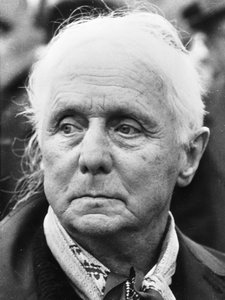
Max Ernst
1891 - 1976 , Germany
Quick Facts
- Artistic Movement Or Style:
- Dada
- Surrealism
- Artists Or Movements Influenced By This Artist:
- Karl Otto Gotz
- Salvador Dali
- Manuel Cargaleiro
- Artists Who Influenced This Artist:
- Pablo Picasso
- Vincent van Gogh
- Paul Gauguin
- Sigmund Freud
- Giorgio de Chirico
- Full Name: Maximilian Maria Ernst
- Nationality: German
- Notable Artworks:
- The Entire City
- Euclides
- Of This Men Shall Know Nothing
- Forest and Dove
- Place Of Birth: Brühl, Germany
- Date Of Birth: 1891
- Date Of Death: 1976