

 Preview
 Send
Send Share
Share
 Details

 Download
 Similars
 X-Ray
X-Ray Diaporama
 Stats
StatsBarbarians Marching to the West
 Oil On Board
- WallArt
- Surrealist Style
 1937
1937- Modern
 24.0 x 33.0 cm
 Read More
Purchase a high-resolution, enhanced digital image, far superior to the online preview.
Each file is meticulously prepared by our in-house specialists using advanced tools and expert manual retouching. We ensure every image has exceptional clarity, precise color accuracy, and fine detail.
The final file is delivered via email within 72 hours, optimized for immediate use in professional, editorial, and print environments. This is the same quality trusted by top-tier design studios, publishers, and galleries.
Digital Image
Download a high-resolution file for personal display, printing, and creative projects. ( Switch to Print Buy Hand Made Painting)
Included in Every Digital Image Order
Expert Digital Delivery, Guaranteed
When you choose OriginalUniqueArt.com, you're not just getting an image - you're receiving a professionally enhanced digital artwork, crafted with precision and backed by a satisfaction guarantee. Here's everything that comes with your order, automatically:

Fast Email Delivery
Your high-resolution digital image file will be emailed to you within 72 hours of ordering - ready for immediate use.

AI-Enhanced Digital File
Your artwork is professionally optimized using advanced AI tools and manual editing, ensuring maximum detail, clarity, and color accuracy.

Free Lifetime Re-Delivery
Accidentally deleted or lost your file? No worries - we'll resend it to you anytime, free of charge.

No Import Fees - Ever
Enjoy your artwork instantly with zero customs, duties, or delivery fees - digital downloads are always tax-free.

Color Accuracy Guarantee
We ensure your digital image reflects the original colors as closely as possible using professional tools and color management.

100-Day Satisfaction Guarantee
If you're not satisfied with your digital image, we'll revise it or refund 100% within 100 days - no questions asked.

100% Money-Back Guarantee
Not satisfied? Get a full refund within 100 days of receiving your digital file - no questions asked.

Bulk Order Discounts
Buy 3 images, save 10% - Buy 5, save 15% - Buy 10+, save 20%. Great for creative projects, galleries, and agencies.
A Vision of Chaos: The Surrealist Nightmare of Max Ernst
In the hauntingly beautiful landscape of 1937, Max Ernst birthed a visual fever dream titled “Barbarians Marching to the West.” This masterpiece serves as more than just a painting; it is a visceral distillation of the global anxieties that gripped the world on the precipice of World War II. As an exemplar of the Surrealist movement, the work transcends mere representation to explore the profound instability of the human condition. The viewer is immediately thrust into a desolate, otherworldly terrain where the boundaries between dream and reality dissolve, leaving behind a sense of cosmic dread and primal uncertainty.
The composition is anchored by two colossal, predatory birds that dominate the frame, locked in an unsettling dance of aggression and instinct. These avian titans act as metaphors for the escalating tensions of their era—forces of destruction that seem unstoppable and indifferent to the fate of man. Amidst this titanic struggle, a solitary human figure stands near the periphery, a silent witness to the unfolding catastrophe. This juxtaposition between the monumental, mythic creatures and the fragile, observing individual creates a profound emotional tension, inviting collectors and observers alike to contemplate our own vulnerability within the grand, often violent, cycles of history.
Mastery of Texture: The Alchemy of Grattage
To behold this work is to witness Ernst’s revolutionary technical prowess. Eschewing the smooth, polished finishes of academic tradition, Ernst utilized grattage—a technique he pioneered to tap into the subconscious. By layering oil paint onto a cardboard substrate and then scraping or pressing textured objects like pumice stone against the surface, he achieved a geological complexity that feels alive. The resulting textures mimic the ruggedness of ancient earth and weathered bone, providing a tactile depth that makes the landscape feel as though it were unearthed rather than painted.
This deliberate use of texture serves a deeper conceptual purpose. For the discerning enthusiast, the uneven, scarred surface of the painting reflects the fractured psyche of an era defined by trauma. The technique allows light to catch on the ridges and valleys of the paint, creating a shifting visual experience that mirrors the unpredictable nature of dreams. It is this very marriage of physical grit and psychological depth that makes a high-quality reproduction of this piece such a compelling addition to any sophisticated interior, offering a conversation piece that rewards prolonged, intimate study.
An Eternal Echo for the Modern Collector
For the art lover or interior designer, “Barbarians Marching to the West” offers an unparalleled opportunity to introduce a sense of intellectual depth and historical gravity into a space. The painting does not merely decorate a wall; it commands the atmosphere, injecting a layer of mystery and philosophical inquiry into its surroundings. Its palette of muted, earthy tones and its stark, surrealist imagery harmonize beautifully with modern minimalist or avant-garde decor, providing a focal point that is both intellectually stimulating and visually arresting.
Owning a reproduction of this Ernst masterpiece means preserving a fragment of the 20th century’s most radical artistic revolution. It is an invitation to inhabit the realm of the irrational, to find beauty in the grotesque, and to appreciate the enduring power of the human imagination to confront the darkest shadows of existence. Whether placed in a private gallery or a curated living space, this work remains a timeless testament to the enduring resonance of Surrealism.
Artist Biography
A Life Immersed in the Surreal
Max Ernst, born Maximilian Maria Ernst on April 1st, 1891, in Brühl, Germany, was a restless spirit destined to become one of the most pivotal figures in 20th-century art. His journey wasn’t one of conventional artistic training; rather, it was a self-directed exploration fueled by philosophical inquiry, psychological fascination, and a profound disillusionment with societal norms. Ernst's father, a teacher of the deaf and an amateur painter, instilled in him both a sensitivity to the world and a rebellious streak against established authority. This early duality would become a defining characteristic of his artistic vision.
Ernst’s academic pursuits at the University of Bonn – encompassing philosophy, art history, literature, psychology, and psychiatry – were not merely diversions but foundational elements that deeply informed his later work. He wasn't simply interested in *how* to paint; he was grappling with *why*. This intellectual curiosity led him to encounter the groundbreaking works of Picasso, Van Gogh, and Gauguin at the Sonderbund exhibition in Cologne in 1912, a moment that irrevocably altered his artistic trajectory. The seeds of modernism had been sown.
Dada’s Disruption and the Birth of Surrealist Visions
The cataclysm of World War I proved to be a watershed moment for Ernst. His experiences as a soldier on both the Eastern and Western fronts left him profoundly shaken, fostering a deep skepticism towards established order and a yearning for new modes of expression. This disillusionment found fertile ground in the burgeoning Dada movement, which he embraced wholeheartedly after returning to Cologne in 1918. Alongside Hans Arp – a lifelong friend and collaborator – Ernst became a central figure in the Cologne Dada group, rejecting traditional artistic conventions and embracing absurdity, chance, and anti-rationality.
However, Dada was merely a stepping stone. In the early 1920s, Ernst migrated to Paris and joined the ranks of the Surrealists, led by André Breton. This marked a shift towards exploring the realm of dreams, the unconscious mind, and the irrational. Influenced by the psychoanalytic theories of Sigmund Freud, Ernst sought to unlock the hidden depths of human experience through his art. He wasn’t interested in depicting reality as it appeared but rather in revealing the underlying psychological forces that shaped it.
Pioneering Techniques: Frottage, Grattage, and Collage
Ernst's artistic innovation extended beyond subject matter; he was a relentless experimenter with technique. He didn’t simply adopt existing methods—he invented new ones. Perhaps his most famous contribution is frottage, a process of rubbing pencil or charcoal over textured surfaces to create unexpected and evocative images. This technique, born from a moment of boredom while observing wood grain, allowed Ernst to tap into the subconscious and generate forms that defied conscious control. Closely related was grattage, where paint is scraped across canvas revealing underlying layers.
He also masterfully employed collage, assembling disparate elements – images from magazines, scientific illustrations, photographs – into surreal compositions that challenged conventional notions of representation. These techniques weren’t merely stylistic choices; they were integral to his exploration of the unconscious and his desire to disrupt traditional artistic boundaries. His paintings often feature recurring symbolic imagery: birds (particularly his alter ego Loplop), desolate landscapes, unsettling juxtapositions, and a pervasive sense of mystery.
A Legacy of Innovation and Influence
The outbreak of World War II forced Ernst to flee Europe, finding refuge in the United States. He continued to paint and experiment with new techniques throughout his exile, eventually returning to France after the war where he remained active until his death on April 1st, 1976, in Paris. His influence on subsequent generations of artists is immeasurable.
Max Ernst’s contributions to Dada and Surrealism were nothing short of groundbreaking. He challenged artistic norms, delved into the depths of the subconscious mind, and invented innovative techniques that continue to inspire artists today. He wasn't merely a painter; he was an explorer, a provocateur, and a visionary who expanded the boundaries of art itself. His work remains a testament to the power of imagination, the allure of the irrational, and the enduring quest to understand the complexities of the human psyche.
- Major Works: The Entire City, Euclides, Of This Men Shall Know Nothing, Forest and Dove
- Influences: Pablo Picasso, Vincent van Gogh, Paul Gauguin, Sigmund Freud, Giorgio de Chirico
- Movements: Dada, Surrealism
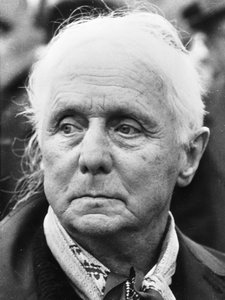
Max Ernst
1891 - 1976 , Germany
Quick Facts
- Artistic Movement Or Style: Dada, Surrealism
- Artists Or Movements Influenced By This Artist:
- Surrealism
- Dada
- Artists Who Influenced This Artist:
- Pablo Picasso
- Vincent van Gogh
- Paul Gauguin
- Giorgio de Chirico
- Date Of Birth: April 1, 1891
- Date Of Death: April 1, 1976
- Full Name: Max Ernst
- Nationality: German-American, French
- Notable Artworks:
- Ofrenda funeraria
- The Equivocal Woman
- L'Ange du foyer
- Place Of Birth: Brühl, Germany