Preview
 Send
Send Share
Share
 Details
 Guide
Guide

 Download
 Similars
 X-Ray
X-Ray Diaporama
 Stats
StatsFlying Angel
 Acrylic On Canvas
- WallArt
- Baroque
 1630
1630 162.0 x 217.0 cm
 Kunstpalast
 Read More
Giclée / Art Print
Museum-quality giclée or canvas print with fast production and flexible finish options. ( Buy Hand Made Painting Switch to Digital Image)




P118B $10

P118H $10

P118W $10

P438Z $10

P508JH $12

P508YH $12

P805H $10

P805Z $10

P919BZ $10

P919G $10

P919XJ $10

P959ZH $10

P968JZ $12

W106C $8

W218G $10

W218JH $8

W218Y $10

W307PJ $10

W316G $10

W316PJ $8

W316Y $10

W398PJ $8

W4111J $10

W500HY $15

W500JH $15

W692G $12

W849H $8

W940BG $15

W953PJ $8




Pick from our preset sizes that match the artwork's original proportions.

Type the width and the height you need, to fit your frame or your wall. A print can only be cut, never made bigger than the picture, so a size with a different shape loses a part of the image. We send you a digital mockup to approve before we print anything. The picture shown on this page does not show the real cut — only the mockup does.
Worldwide Delivery () in 2 weeks instead of standard 4/5 weeks. (26 October)

Free Worldwide Express Shipping

High-Quality Linen Canvas

Full Shipping Insurance

Customs Tax Refund Guarantee

True Color Matching Guarantee

100-Day Return Policy (Defects Only)

100% Money-Back Guarantee

Bulk Discount Offer
 Glass option is only available in size under 110 CM

Flying Angel
Giclée / Art Print
Reproduction Size
-


Total Price
$ 81
A Moment of Herculean Resolve: Mattia Preti’s “Flying Angel”
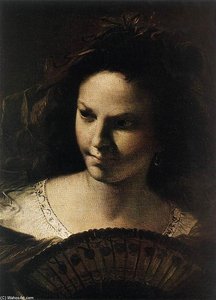
Mattia Preti's "Flying Angel," painted in 1630, is more than just a depiction of physical labor; it’s a potent distillation of Baroque drama and the human spirit’s capacity for endurance. This arresting canvas, currently housed within the Kunstpalast museum in Düsseldorf, immediately commands attention with its dynamic composition and masterful use of chiaroscuro – the dramatic interplay of light and shadow that was Preti's signature style. The scene unfolds outdoors, bathed in a golden, almost theatrical light, highlighting the straining figure of a man undertaking an immense task: lifting a heavy stone from the ground. The sheer physicality of the exertion is palpable; every muscle flexes, every vein throbs with effort, rendered with astonishing realism by Preti’s skilled hand.
Preti, known as “Il Cavalier Calabrese,” was a pivotal figure in 17th-century Italian Baroque painting. Born in Taverna, Calabria, he carried the influence of Giovanni Battista Caracciolo, a key proponent of Caravaggio's dramatic style, shaping his early artistic development. This foundation is evident in the painting’s stark contrasts and intense emotionality. The man lifting the stone isn’t merely working; he’s battling against gravity itself, embodying a struggle that resonates deeply within the viewer.
The Anatomy of Effort: Technique and Composition
Examining the technical details reveals Preti's meticulous approach. He masterfully employs *sfumato*, subtly blurring edges to create an illusion of depth and volume, particularly in the depiction of the stone and the man’s straining body. The musculature is rendered with anatomical precision, yet retains a sense of dynamism – it’s not simply a study of anatomy but a celebration of strength. The composition itself is carefully constructed; the diagonal thrust of the lifting arm creates a powerful visual rhythm, drawing the eye towards the central figure and reinforcing the feeling of movement. The two figures in the background—one on the left, another further back on the right—add context without distracting from the primary action, suggesting a collaborative effort or perhaps the silent support of onlookers.
The color palette is rich and vibrant, dominated by earthy tones – ochre, browns, and reds – punctuated by flashes of light. These colors not only contribute to the painting’s dramatic effect but also evoke the heat of the sun and the dust kicked up by the exertion. The use of red, particularly in the man's clothing and the stone itself, adds a layer of symbolic intensity, representing both passion and sacrifice.
Symbolism and Context: A Knight’s Duty
The subject matter itself carries significant weight within the context of Preti’s life. Appointed a Knight of the Order of Saint John in 1660, he brought with him the traditions and values of that esteemed military order. The act of lifting the stone can be interpreted as a metaphor for overcoming obstacles, fulfilling one's duty, and enduring hardship – themes central to the Knights’ ethos. The painting was likely commissioned as an *ex voto*, a votive offering intended to express gratitude for deliverance from adversity, perhaps after surviving a plague outbreak.
Further research reveals that Preti spent much of his career in Malta, transforming the interior of St. John's Co-Cathedral with monumental frescoes depicting scenes from the life and martyrdom of Saint John the Baptist. This experience undoubtedly influenced his artistic sensibilities, contributing to the dramatic intensity and religious fervor evident in “Flying Angel.” The painting’s journey through various collections – from Naples to Düsseldorf – underscores its enduring appeal and historical significance.
A Timeless Image: Reproduction and Interior Design
"Flying Angel" is a powerful testament to Preti's artistic genius, capturing not just a moment of physical exertion but also the profound depths of human resilience. OriginalUniqueArt offers meticulously crafted hand-painted reproductions that faithfully recreate the painting’s original beauty and emotional impact. These high-quality reproductions are ideal for adorning walls in homes, offices, or galleries, bringing a touch of Baroque drama and timeless inspiration to any space. Consider framing options to further enhance the artwork's visual presence – a classic wooden frame would complement the painting's traditional style, while a more contemporary metal frame could offer a striking contrast.
Whether you’re an art enthusiast, a collector seeking a significant addition to your collection, or simply someone looking for a captivating piece of art to elevate your surroundings, OriginalUniqueArt’s “Flying Angel” reproduction provides a remarkable opportunity to experience the enduring legacy of Mattia Preti.
Questions & Answers
Where can I buy a digital image of "Flying Angel" by Mattia Preti?
A digital image of "Flying Angel" by Mattia Preti can be purchased on its Digital Image page: a high-resolution digital image download.
Who made "Flying Angel", and when?
Mattia Preti made "Flying Angel" in 1630.
What emotion does the Baroque work "Flying Angel" convey?
The powerful emotion of "Flying Angel" accompanies its Baroque style.
Artist Biography
A Calabrian Knight of the Baroque
Mattia Preti, known as Il Cavalier Calabrese – the Calabrian Knight – stands as a pivotal figure in 17th-century Italian Baroque painting. Born in Taverna, Calabria, on February 24, 1613, his artistic journey was one of dynamic evolution, absorbing diverse influences and culminating in a uniquely expressive style that left an indelible mark on the art world, particularly in Malta where he would spend much of his later life. Preti’s early training began under Giovanni Battista Caracciolo, a painter deeply rooted in the Caravaggist movement. This foundational exposure instilled within him a profound understanding of dramatic chiaroscuro – the intense interplay of light and shadow – and a commitment to realistic depiction that would remain hallmarks of his work throughout his career. Before 1630, he joined his brother Gregorio in Rome, immersing himself in the artistic ferment of the city and studying the masters who defined the era: Caravaggio, Guercino, Rubens, Guido Reni, and Giovanni Lanfranco. This period was crucial, shaping not only his technical skills but also his aesthetic sensibilities.Forging a Dynamic Style
Preti’s artistic development wasn't merely imitation; it was a synthesis of influences, skillfully woven into a style distinctly his own. While initially steeped in Caravaggism, he gradually moved beyond its strict confines, embracing the dynamism and emotional intensity that characterized the High Baroque. His time in Naples further refined this evolution, exposing him to the vibrant work of Luca Giordano. This period saw Preti’s canvases swell with energetic movement, complex compositions, and a heightened sense of drama. He masterfully employed dramatic contrasts of light and shadow, inherited from Caravaggio, not simply as a technical device but as a means of intensifying emotional impact and guiding the viewer's eye. His figures are imbued with palpable emotion, conveyed through expressive faces and dynamic body language. This ability to evoke powerful feelings – piety, anguish, ecstasy – became a defining characteristic of his oeuvre. He wasn’t content merely to depict scenes; he sought to *animate* them, breathing life into biblical narratives and religious iconography.Commissions and Masterpieces Across Italy
Mattia Preti's talent quickly garnered recognition, leading to a series of significant commissions throughout Italy. Early in his career, he created impressive fresco cycles for Roman churches like Sant’Andrea della Valle and San Carlo ai Catinari, demonstrating an aptitude for large-scale decorative painting. His work at the church of San Biagio in Modena showcased his ability to adapt his style to different architectural settings. However, some of his most ambitious – though sadly lost – works were the frescoes he painted on seven city gates in Naples depicting the Virgin or saints delivering people from the plague. Though only sketches remain today, they testify to the scale and impact of these monumental creations. These commissions weren’t simply about fulfilling a patron's request; they were opportunities for Preti to engage with the religious and cultural life of the communities he served, imbuing his art with meaning and purpose.The Maltese Zenith: St. John’s Co-Cathedral
It was in Malta, however, that Mattia Preti reached the pinnacle of his artistic achievement. Appointed a Knight of the Order of St. John in 1660, he embarked on a transformative project: the complete redecoration of the interior of St. John’s Co-Cathedral in Valletta. This undertaking – arguably his most significant legacy – involved an astonishing series of paintings depicting the life and martyrdom of Saint John the Baptist. The sheer scale of the project is breathtaking; Preti essentially created a visual narrative that enveloped the viewer, immersing them in the story of the saint. The opulent Baroque setting provided the perfect canvas for his dramatic style, and the resulting artwork cemented his reputation as one of Europe’s leading painters. His work at St. John's wasn't merely decorative; it was an act of devotion, a testament to his faith, and a powerful expression of the Order’s religious identity.A Lasting Legacy
Mattia Preti continued to receive commissions from across Europe following his success in Malta, solidifying his position as a leading figure in Italian Baroque art. He died in 1699, leaving behind a rich artistic legacy that continues to inspire and captivate audiences today. His masterful use of light and shadow, dynamic compositions, and ability to convey intense emotion remain hallmarks of his style. His contributions are preserved in museums such as the Capodimonte Museum in Naples, and through reproductions made available by platforms like OriginalUniqueArt.com, ensuring that his art continues to reach new generations. The enduring impact of Preti’s work is perhaps most vividly felt within the walls of St. John's Co-Cathedral, a breathtaking testament to his artistic genius and unwavering dedication to the Baroque aesthetic. Il Cavalier Calabrese truly earned his title, not only as a knight but as a master painter who illuminated the world with his vision.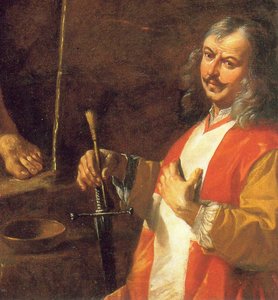
Mattia Preti
1613 - 1699 , Italy
Quick Facts
- Full Name: Mattia Preti
- Nationality: Italian
- Date Of Birth: 1613
- Date Of Death: 1699
- Place Of Birth: Taverna, Italy
- Notable Artworks:
- Tribute Money
- Absalom's Feast
- St John Reproaching Herod
- Artistic Movement Or Style: Baroque
- Artists Who Influenced This Artist:
- Caravaggio
- Guercino
- Rubens
- Reni
- Lanfranco
- Giordano
- Artists Or Movements Influenced By This Artist:
- Stringa
- Mola
Related Articles

Celestial Messengers: A Comprehensive Exploration of Angelic Representation in Art History
Explore the captivating history of angels in art! Discover symbolism, iconic Renaissance masterpieces & renowned artists. Expert insights for art lovers & collectors at OriginalUniqueArt.

Baroque Classicism: The Grandeur of Order and Drama in 17th-Century Art History
Explore the profound elegance of Baroque Classicism. Discover how 17th-century masters synthesized dramatic emotion with classical order through the lens of the Counter-Reformation and the works of legends like Carlo Maratta and Andrea Sacchi.

Celestial Messengers: Angels in Painting – A Historical & Artistic Exploration
Explore the captivating history of angels in painting! Discover symbolism, iconic Renaissance & Byzantine masterpieces, and renowned artists. Expert insights for art lovers & collectors at OriginalUniqueArt.

Drama and Light: A Definitive Guide to the Italian Baroque Masterpieces and the Revolution of Chiaroscuro
Explore the dramatic world of Italian Baroque art. Discover how masters like Caravaggio used chiaroscuro and tenebrism to revolutionize painting through light, shadow, and profound realism. A definitive guide for history lovers and art collectors.

Decoding Baroque Grandeur: A Guide to the Drama and Emotion of 17th-Century Art
Explore the breathtaking drama of 17th-century Baroque art. Our expert guide decodes the use of chiaroscuro, emotional intensity, and historical grandeur to help you appreciate and curate timeless masterpieces for your collection.