Text size

() ·

A painting made for you, by hand

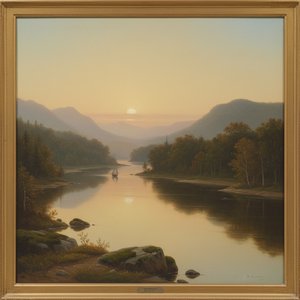
Rocks in New England

Hand Made Oil Reproduction

Hand-painted oil on canvas in your size and frame, made to order by our artists. ( Switch to Print Switch to Digital Image)

Collectible Description

Martin Johnson Heade's "Rocks in New England" (1855) captures the serene beauty of New England’s coastal landscape with luminous light and atmospheric detail, a masterpiece of Luminism.

Artist Biography

Discover Martin Johnson Heade (1819-1904): Luminist master of serene marsh scenes, vibrant hummingbird paintings & exquisite floral still lifes. Explore his rediscovered masterpieces!

from ·

Chapter 1

How large should it be?

Slide to change the size; the picture on the left shows the frame at its real width. The proportions of the original are kept.

Standard
custom
CM
INCH

Pick from our preset sizes that match the artwork's original proportions.

width
height

Type the width and the height you need, to fit your frame or your wall. This is hand-painted, so for a size with a different shape the artist can paint a bit more around the picture, or cut a bit — you choose. We send you a digital mockup to approve before the painting starts. The picture shown on this page does not show the real result — only the mockup does.

Chapter 2

How should it arrive?

Choose the edges of the stretched canvas

Choose your frame

Corner sample of the WhiteWrap canvas edge finish, stretched on solid wood bars
White $1
Corner sample of the BlurSideWrap canvas edge finish, stretched on solid wood bars
Blurside $1
Corner sample of the ExtendedWrap canvas edge finish, stretched on solid wood bars
Extended $1
Corner sample of the P118B picture frame: moulded polystyrene, 5 cm wide and 3 cm thick
P118B $10
Corner sample of the P118H picture frame: moulded polystyrene, 5 cm wide and 3 cm thick
P118H $10
Corner sample of the P118W picture frame: moulded polystyrene, 5 cm wide and 3 cm thick
P118W $10
Corner sample of the P438Z picture frame: moulded polystyrene, 5.5 cm wide and 3.5 cm thick
P438Z $10
Corner sample of the P508JH picture frame: moulded polystyrene, 7 cm wide and 3.5 cm thick
P508JH $12
Corner sample of the P508YH picture frame: moulded polystyrene, 7 cm wide and 3.5 cm thick
P508YH $12
Corner sample of the P805H picture frame: moulded polystyrene, 5 cm wide and 3.5 cm thick
P805H $10
Corner sample of the P805Z picture frame: moulded polystyrene, 5 cm wide and 3.5 cm thick
P805Z $10
Corner sample of the P919BZ picture frame: moulded polystyrene, 7 cm wide and 3.5 cm thick
P919BZ $10
Corner sample of the P919G picture frame: moulded polystyrene, 7 cm wide and 3.5 cm thick
P919G $10
Corner sample of the P919XJ picture frame: moulded polystyrene, 7 cm wide and 3.5 cm thick
P919XJ $10
Corner sample of the P959ZH picture frame: moulded polystyrene, 5 cm wide and 3 cm thick
P959ZH $10
Corner sample of the P968JZ picture frame: moulded polystyrene, 6 cm wide and 4 cm thick
P968JZ $12
Corner sample of the W106C picture frame: solid wood, 5 cm wide and 3 cm thick
W106C $8
Corner sample of the W218G picture frame: solid wood, 5 cm wide and 3 cm thick
W218G $10
Corner sample of the W218JH picture frame: solid wood, 5 cm wide and 3 cm thick
W218JH $8
Corner sample of the W218Y picture frame: solid wood, 5 cm wide and 3 cm thick
W218Y $10
Corner sample of the W307PJ picture frame: solid wood, 6 cm wide and 3 cm thick
W307PJ $10
Corner sample of the W316G picture frame: solid wood, 6 cm wide and 3 cm thick
W316G $10
Corner sample of the W316PJ picture frame: solid wood, 6 cm wide and 3 cm thick
W316PJ $8
Corner sample of the W316Y picture frame: solid wood, 6 cm wide and 3 cm thick
W316Y $10
Corner sample of the W398PJ picture frame: solid wood, 5 cm wide and 3 cm thick
W398PJ $8
Corner sample of the W4111J picture frame: solid wood, 6.5 cm wide and 3.5 cm thick
W4111J $10
Corner sample of the W500HY picture frame: solid wood, 7 cm wide and 5 cm thick
W500HY $15
Corner sample of the W500JH picture frame: solid wood, 7 cm wide and 5 cm thick
W500JH $15
Corner sample of the W692G picture frame: solid wood, 8 cm wide and 4 cm thick
W692G $12
Corner sample of the W849H picture frame: solid wood, 5 cm wide and 3 cm thick
W849H $8
Corner sample of the W940BG picture frame: solid wood, 7.5 cm wide and 4.5 cm thick
W940BG $15
Corner sample of the W953PJ picture frame: solid wood, 6 cm wide and 3.5 cm thick
W953PJ $8
Corner sample of the H24-GOLD picture frame: carved wood with gesso, 10 cm wide and 6 cm thick
H24-GOLD $30
Corner sample of the H24-SILVER picture frame: carved wood with gesso, 10 cm wide and 6 cm thick
H24-SILVER $30
Corner sample of the H36-GOLD picture frame: carved wood with gesso, 15 cm wide and 6.5 cm thick
H36-GOLD $45
Corner sample of the H36-SILVER picture frame: carved wood with gesso, 15 cm wide and 6.5 cm thick
H36-SILVER $45
Frame preview
Framed

Moulding: . Overall size with the frame: .

Chapter 3

Who paints it, and should anything change?

Examples of what can be changed: Replace face with customer photo; Add pet (e.g., replace cat with dog); Include hidden message in background; Change background landscape or elements.
After order, OriginalUniqueArt.com team will email client for instructions and provide a mockup preview

Worldwide Delivery () in 3/4 weeks instead of standard 5 weeks. (6 November). No compromise on quality.

Chapter 4

The finishing touches

A nameplate, as in a museum?

Engraved Bronze Plaque Details

This elegant plaque features the artist's name and the title of the artwork, finely engraved for a timeless presentation.

It is made from bronze with a refined, elegant finish. The text is precisely laser-engraved for a sharp and permanent result. Measuring 9x2 cm, the plaque is compact yet easy to read. It's built to be durable and scratch-resistant, offering a professional, museum-quality look. Mounting is simple thanks to the included adhesive backing.

Transparent Acrylic Plaque Details

The plaque includes essential engraved details such as the artist's name, the title of the artwork, the date it was created, the type of media used-like oil on canvas or watercolor-a brief description of the piece, and a QR code that links to the complete artwork information.

It is crafted from clear acrylic, offering a sleek, modern appearance. The text is UV-engraved in black to ensure strong visual contrast. With a size of 10x15 cm, it ensures optimal readability. It comes equipped with two metal hooks for secure wall mounting. The plaque is designed to be weather-resistant, making it suitable for various environments, and it includes interactive features that work seamlessly with smartphone scanning.

Black Acrylic Plaque Details

This elegant plaque includes engraved information such as the artist's name, the title of the artwork, the date it was created, the type of media used (like oil on canvas or watercolor), a short description of the artwork, and a QR code for quick access to more information.

The plaque itself is made from refined black acrylic with a premium finish. The text is laser-engraved in white for high contrast and readability. Its size is 10x15 cm, designed to be easy to read. It comes with two metal hooks for professional mounting. The design is sleek and fits any interior style. It is also weather-resistant and durable, with built-in digital integration for mobile compatibility.

A protective varnish?

When do you need it?

Chapter 5

Your painting, as you ordered it

Rocks in New England

Reproduction Medium

Reproduction Size

-

Elite Senior Artist

More detail, finesse, and extra production time

-

Reproduction Frame

-

-

For artworks or reproductions larger than 105 cm (approximately 41 inches) on any side, the frame will be shipped as a kit, disassembled. This method ensures safe delivery and prevents damage during transport.

Professional assembly required - this is not a DIY product.
The kit must be assembled and the canvas stretched by an experienced professional framer, using wood glue (not supplied), a canvas stretching plier and clamps to hold the bars square while the glue dries. Incorrect assembly or uneven canvas tension can permanently damage the artwork and is not covered by our warranty.

  • All solid wood bars are included, precisely cut to size.

  • Assembled with the screws provided, plus wood glue for the corner joints, which is not supplied and must be sourced by your framer.

  • Professional tools are required and not included: a canvas stretching plier (tensioner) and clamps to hold the bars square while the glue dries.

Important:
The corner joints require wood glue, the bars must be held with clamps until the glue is fully dry, and tightening the canvas on the assembled frame requires a canvas stretching plier. None of these are included in the kit. Please arrange an experienced professional framer before ordering this size.

Nameplate

-

-

Protective Varnish

Glossy Varnish (enhances colors, protects against light/moisture)

-

Customize My Artwork

Examples of what can be changed: Replace face with customer photo; Add pet (e.g., replace cat with dog); Include hidden message in background; Change background landscape or elements.

-

Urgent

Worldwide Delivery () in 3/4 weeks instead of standard 5 weeks. (6 November). No compromise on quality.

-

Express Shipping

Worldwide Delivery () in 5 weeks. (13 November).

Included

Total Price

$ 300

Total Price $ 300

Glass option is only available in size under 110 CM

Included with every order

  • Free Worldwide Express Shipping
  • High-Quality Linen Canvas
  • Full Shipping Insurance
  • Customs Tax Refund Guarantee
  • True Color Matching Guarantee
  • 100-Day Return Policy (Defects Only)
  • 100% Money-Back Guarantee
  • Bulk Discount Offer

A Moment Frozen in Light: Martin Johnson Heade’s “Rocks in New England”

Martin Johnson Heade's "Rocks in New England," painted in 1855, isn’t merely a landscape; it’s a carefully constructed meditation on light, texture, and the quiet majesty of the American wilderness. This pivotal work, belonging to the Luminist movement, transcends simple representation, offering instead an immersive experience for the viewer—a feeling of being transported to a serene corner of New England where time seems to slow and nature reigns supreme. The painting captures a specific moment, bathed in the diffused light characteristic of the Luminists, suggesting a fleeting beauty that is both deeply familiar and profoundly evocative.

The scene unfolds across a broad expanse, dominated by rolling hills rendered with an almost tactile quality. Heade’s masterful use of broken brushstrokes—tiny, individual marks of paint—creates a remarkable sense of depth and texture. The rocks themselves aren't sharply defined but rather emerge from the mist as hazy forms, their surfaces subtly illuminated to suggest the play of light on stone. A solitary tree, positioned prominently on the left side of the composition, acts as a grounding element, its branches reaching upwards like silent witnesses to the unfolding scene. Notice how Heade doesn’t attempt to capture every detail; instead, he focuses on capturing the *impression* of the landscape—the way light filters through the clouds, the subtle shifts in color across the hillsides, and the overall sense of tranquility.

The Luminist Philosophy: Light as Subject

To understand “Rocks in New England,” it’s crucial to grasp the philosophy behind the Luminist movement. Emerging in the mid-19th century, Luminism sought to move beyond the dramatic narratives and heroic figures favored by earlier Romantic painters. Instead, Luminists focused on capturing the subtle effects of light and atmosphere—the way sunlight interacts with water, clouds, and foliage. They were fascinated by the ephemeral qualities of nature, striving to depict moments of quiet beauty rather than grand historical events or mythological scenes. Heade’s work exemplifies this approach perfectly; he isn't painting a *place*, but rather capturing a specific *feeling*—a sense of peace and connection with the natural world.

Heade’s training under Edward Hicks, a prominent folk artist known for his idyllic depictions of rural life, undoubtedly influenced his early style. However, Heade quickly developed his own distinctive voice, characterized by an extraordinary sensitivity to light and color. His meticulous observation of nature, combined with his technical skill, allowed him to create paintings that are both scientifically accurate and deeply emotionally resonant.

Symbolism in the Landscape

While seemingly straightforward, “Rocks in New England” is rich in symbolic meaning. The rocks themselves can be interpreted as representing resilience—their enduring presence amidst the shifting landscape mirroring the strength and stability of nature. The solitary tree, often associated with wisdom and longevity, further reinforces this theme. The muted palette – dominated by shades of gray, green, and blue – evokes a sense of melancholy and introspection, suggesting a contemplation of time and mortality. Even the distant water reflects the sky, creating a visual echo that emphasizes the interconnectedness of all things.

Furthermore, the painting’s composition—with its horizontal emphasis and lack of strong diagonals—contributes to its feeling of stillness and serenity. The absence of human figures reinforces this sense of isolation and invites the viewer to become a silent observer of nature's beauty. It is a scene that speaks volumes without uttering a single word.

A Legacy of Light: Reproductions and Inspiration

“Rocks in New England” remains one of Martin Johnson Heade’s most celebrated works, admired for its exquisite detail, luminous quality, and profound sense of atmosphere. Reproductions offer an accessible way to experience the painting's magic, bringing this serene landscape into any home or office space. When selecting a reproduction, consider the level of detail and color accuracy—a high-quality print will truly capture the essence of Heade’s original vision. This piece serves as a timeless reminder of the beauty that surrounds us, inviting us to pause, reflect, and appreciate the simple wonders of the natural world.

Questions & Answers

Where does "Rocks in New England" stand among Martin Johnson Heade's recurring subjects?

"Rocks in New England" depicts new england, landscape, rocks, trees, sky, birds, tranquility, while Martin Johnson Heade's recorded themes are hudson river school influence, american landscape, nature focus, light, atmosphere, serenity, regional new england scenes, hummingbird series connection. Comparing the two shows how the work relates to the artist's usual subjects.

How do I download the image of "Rocks in New England" by Martin Johnson Heade?

A download is available for "Rocks in New England": the artwork's Download page offers a high-resolution digital image download.

What is "Rocks in New England" made with?

The medium of "Rocks in New England" by Martin Johnson Heade is acrylic on canvas. Reproductions aim to render the appearance of this technique.

More about this painting

Preview AR preview Switch to Print Switch to Digital Image Send
Details Guide Add to favorites Download Similars X-Ray Diaporama Q&A Stats

In numbers

  • 1855the year it was painted
  • 29frames to choose from
  • standard sizes, in its own proportions
  • 5weeks to paint and deliver it
Martin Johnson Heade

Martin Johnson Heade

1819 - 1904, United States of America

Quick facts about Martin Johnson Heade

  • Full Name: Martin Johnson Heade
  • Nationality: American
  • Date Of Birth: 1819
  • Date Of Death: 1904
  • Place Of Birth: Lumberville, United States of America
  • Notable Artworks:
    • Orchids & Hummingbird
    • Salt Marsh Landscapes
    • Hummingbird Blossoms
  • Artistic Movement Or Style: Luminism
  • Artists Who Influenced This Artist:
    • Edward Hicks
    • John F. Kensett

Artist Biography

A Luminist’s Quiet Vision: The Life and Art of Martin Johnson Heade

Martin Johnson Heade, born in the tranquil Pennsylvania countryside in 1819, remains a captivating figure in American art history—a painter whose luminous landscapes and intimate depictions of nature gradually emerged from relative obscurity to claim their rightful place among the nation’s most significant artistic achievements. His early life in Lumberville, along the Delaware River, instilled within him a deep appreciation for the natural world, an affection nurtured by initial studies under local artists Edward and possibly Thomas Hicks. These foundational lessons provided Heade with the technical skills that would later blossom into a distinctive style, though his path to recognition was far from direct. Initially focused on portraiture, his early works demonstrate a competent hand but lack the singular vision that would define his mature oeuvre. A period of travel in Europe broadened his artistic horizons, exposing him to diverse influences and setting the stage for his eventual embrace of landscape painting.

From Portraiture to Panoramic Light

The pivotal shift in Heade’s artistic direction occurred through encounters with members of the Hudson River School—artists like John Frederick Kensett and Benjamin Champney—who awakened within him a passion for capturing the grandeur and subtle beauty of the American landscape. This influence, combined with his own innate sensitivity to light and atmosphere, led him to develop a style characterized by serene compositions and meticulous attention to detail. Heade’s work began to distinguish itself through its quiet intensity, eschewing the dramatic narratives favored by some of his contemporaries in favor of contemplative studies of marshlands, seascapes, and eventually, tropical flora and fauna. A defining moment came with his travels to Brazil in 1863-1864, a journey that profoundly impacted his artistic output. Immersed in the vibrant colors and exotic forms of the Brazilian rainforest, Heade embarked on a series of small paintings depicting hummingbirds amidst lush orchids—works that showcase both his technical mastery and his fascination with the delicate interplay between life and environment. These “gems of Brazil,” as he called them, were initially intended for publication but remained largely unrealized during his lifetime, yet they stand today as some of his most celebrated creations. Subsequent trips to Central America and Jamaica further fueled his exploration of tropical subjects, enriching his palette and expanding his artistic vocabulary.

Marshlands, Magnolias, and the Rediscovery of a Master

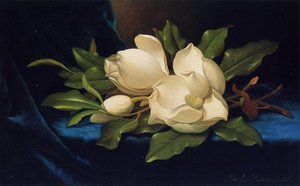
In later years, Heade settled in St. Augustine, Florida, where he turned his attention to still life—particularly exquisite depictions of magnolia blossoms arranged against rich velvet backgrounds. These paintings, with their velvety textures and luminous light, exemplify his mastery of color and form. However, despite producing a substantial body of work throughout his career, Heade remained largely unknown during his lifetime. It wasn’t until the 1940s that scholars began to recognize the significance of his contributions to American art. A remarkable series of rediscoveries—paintings surfacing in unexpected places like garage sales and flea markets—brought renewed attention to his work, revealing a previously overlooked master of Luminism. The term “Luminism” itself, coined to describe the style shared by Heade and artists such as Fitz Henry Lane, captures the essence of his artistic vision: an emphasis on atmospheric effects, subtle gradations of light, and a sense of stillness and tranquility.

A Legacy of Quiet Contemplation

Martin Johnson Heade’s legacy extends beyond his technical skill and aesthetic sensibilities. His paintings offer viewers a space for quiet contemplation—an invitation to immerse themselves in the beauty and serenity of the natural world. While he may not have achieved widespread fame during his lifetime, his work has resonated deeply with audiences since its rediscovery, solidifying his position as a major figure in American art. Today, his paintings are held in prominent museum collections worldwide, including the Martin Johnson Heade collection at OriginalUniqueArt, and continue to inspire awe and admiration for their luminous beauty and enduring power. Heade’s ability to capture the ephemeral qualities of light and atmosphere—to transform ordinary scenes into moments of transcendent beauty—ensures his place among the most beloved and influential American painters of the 19th century. His art serves as a poignant reminder of the importance of preserving and appreciating the natural world, and of finding solace in its quiet splendor.

Key Characteristics of Heade’s Style

  • Luminism: A defining characteristic, emphasizing atmospheric effects and subtle light gradations.
  • Serene Compositions: Avoiding dramatic narratives in favor of peaceful scenes.
  • Meticulous Detail: Precise rendering of natural forms and textures.
  • Subject Matter: Salt marshes, seascapes, tropical birds (especially hummingbirds), magnolias, and still lifes.
  • Romantic Approach: A focus on the emotional impact of nature and its beauty.

Quick Facts

  • Title: Rocks in New England
  • Artist: Martin Johnson Heade
  • Medium: Oil on canvas
  • Artistic style: Landscape painting
  • Notable elements: Light & shadow

Art Quiz

There is only one correct answer for each question.

Question 1:
What artistic movement is Martin Johnson Heade’s ‘Rocks in New England’ primarily associated with?
Question 2:
The painting depicts a landscape featuring which prominent natural element?
Question 3:
According to the image description, what contributes to the painting's atmosphere?
Question 4:
In what year was ‘Rocks in New England’ painted?
Question 5:
Martin Johnson Heade is known for his paintings of which subjects?