
 Preview
 Send
Send Share
Share
 Details
 Guide
Guide

 Download
 Similars
 X-Ray
X-Ray Diaporama
 Stats
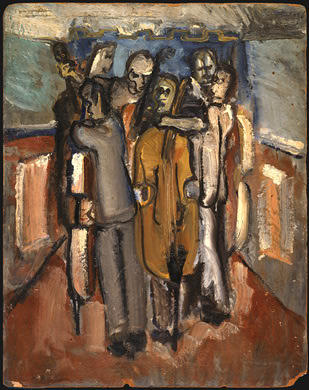
StatsUntitled (musicians)

 Read More
Purchase a high-resolution, enhanced digital image, far superior to the online preview.
Each file is meticulously prepared by our in-house specialists using advanced tools and expert manual retouching. We ensure every image has exceptional clarity, precise color accuracy, and fine detail.
The final file is delivered via email within 72 hours, optimized for immediate use in professional, editorial, and print environments. This is the same quality trusted by top-tier design studios, publishers, and galleries.
Digital Image
Download a high-resolution file for personal display, printing, and creative projects. ( Switch to Print Buy Hand Made Painting)
Included in Every Digital Image Order
Expert Digital Delivery, Guaranteed
When you choose OriginalUniqueArt.com, you're not just getting an image - you're receiving a professionally enhanced digital artwork, crafted with precision and backed by a satisfaction guarantee. Here's everything that comes with your order, automatically:

Fast Email Delivery
Your high-resolution digital image file will be emailed to you within 72 hours of ordering - ready for immediate use.

AI-Enhanced Digital File
Your artwork is professionally optimized using advanced AI tools and manual editing, ensuring maximum detail, clarity, and color accuracy.

Free Lifetime Re-Delivery
Accidentally deleted or lost your file? No worries - we'll resend it to you anytime, free of charge.

No Import Fees - Ever
Enjoy your artwork instantly with zero customs, duties, or delivery fees - digital downloads are always tax-free.

Color Accuracy Guarantee
We ensure your digital image reflects the original colors as closely as possible using professional tools and color management.

100-Day Satisfaction Guarantee
If you're not satisfied with your digital image, we'll revise it or refund 100% within 100 days - no questions asked.

100% Money-Back Guarantee
Not satisfied? Get a full refund within 100 days of receiving your digital file - no questions asked.

Bulk Order Discounts
Buy 3 images, save 10% - Buy 5, save 15% - Buy 10+, save 20%. Great for creative projects, galleries, and agencies.
Exploring the Quiet Resonance of Rothko’s Musicians
Mark Rothko's Untitled (musicians) stands as a testament to the power of understated abstraction, inviting viewers into a contemplative space where color and form converge to evoke profound emotion. This striking black and white piece exemplifies Rothko’s signature Color Field style—a deliberate rejection of representational imagery in favor of expansive blocks of pigment designed to elicit psychological responses rather than visual descriptions. The artwork depicts a group of figures positioned within an interior setting, bathed in diffused light, creating an atmosphere of intimacy and shared experience.Composition and Technique: A Symphony of Monochrome
Rothko’s masterful technique is characterized by layering thin washes of pigment onto canvas, achieving velvety surfaces that seem to absorb rather than reflect light. The deliberate absence of brushstrokes contributes to the artwork's ethereal quality, emphasizing the materiality of color itself. Unlike Impressionists who sought to capture fleeting moments of visual sensation, Rothko aimed for a more enduring impact—one rooted in the subconscious mind. The careful placement of musical instruments – violin and guitar – subtly punctuates the scene, hinting at themes of creativity, contemplation, and perhaps even melancholy. These elements aren’t merely decorative; they serve as anchors within the expansive color fields, grounding the composition while simultaneously amplifying its emotional resonance.Historical Context: Embracing Existential Concerns
Created during Rothko's prolific period in the mid-1960s, Untitled (musicians) reflects the broader artistic landscape of Abstract Expressionism—a movement born from the anxieties and uncertainties of postwar America. Artists like Rothko wrestled with questions of faith, mortality, and the human condition, seeking to express these profound concerns through nonfigurative art forms. The influence of Zen Buddhism is palpable in Rothko’s approach, mirroring the Japanese concept of *ma*—the intentional emptiness or space between elements—which encourages viewers to engage actively with the artwork and allow their own emotions to emerge.Symbolism: Color as Emotional Conduit
While devoid of recognizable imagery, Untitled (musicians) is rich in symbolic significance. The monochrome palette – predominantly black and white – underscores Rothko’s preoccupation with darkness and contemplation. However, within these seemingly bleak hues reside subtle gradations of tone that convey warmth and luminosity. These variations suggest a hidden beauty—a reminder that even amidst sorrow and uncertainty, there exists an underlying sense of peace and acceptance. The musicians themselves represent artistic expression and human connection, symbolizing the pursuit of meaning and solace in a complex world.Emotional Impact: An Invitation to Reflection
Ultimately, Untitled (musicians) compels viewers to confront their own inner landscapes. Rothko’s masterful manipulation of color invites introspection—encouraging contemplation on themes of solitude, vulnerability, and the enduring power of human emotion. Like many of his Color Field paintings, this artwork transcends mere visual perception; it seeks to tap into a deeper psychological realm, leaving an indelible impression on those who engage with its quiet grandeur. It’s a piece designed not just to be seen but felt—a timeless reminder that art can communicate truths beyond words.Questions & Answers
What mood and emotion come together in "Untitled (musicians)"?
The recorded mood of "Untitled (musicians)" by Mark Rothko is calm, and its emotional tone is reflective.
What color harmony does "Untitled (musicians)" by Mark Rothko display?
"Untitled (musicians)" by Mark Rothko displays a strong color unity color harmony.
Is "Untitled (musicians)" by Mark Rothko among the sought-after Abstract Expressionism artworks?
Within the Abstract Expressionism movement, "Untitled (musicians)" has an iconic popularity level.
Artist Biography
A Life Shaped by Displacement
Mark Rothko arrived in the United States as a young boy, part of a family moving from Dvinsk, Latvia, to Portland, Oregon, in 1913. His early years were marked by the heavy atmosphere of the Pale of Settlement, where his family lived amidst political unrest and the fear of pogroms. This sense of instability followed him across the ocean. The loss of his father, Jacob, shortly after their arrival in America added a layer of personal grief to the challenges of settling in a new culture. While he studied at Yale University, the pull of New York City eventually led him to leave formal academics behind for the Art Students League.
His upbringing was one of intellect and debate. His father, a pharmacist with socialist leanings, fostered a home where learning was central. This environment, combined with the hardships of the immigrant experience, created a deep sensitivity to human suffering. These early experiences of loss and the struggle to find a place in a chaotic world became the quiet foundation for everything he would later paint.
From Figures to Fields of Color
In his early years in New York, Rothko focused on realism, painting portraits and urban scenes with careful attention to detail. As the 1940s brought the horrors of World War II, his work began to shift. He moved away from recognizable objects, looking instead toward Surrealism and mythology to find a way to express universal human emotions. During this period, his canvases featured biomorphic shapes that seemed to float between being figures and being abstract forms.
By the late 1940s, he had developed the style that would define his career. He stripped away all imagery, leaving only large-scale canvases with rectangular blocks of color. These forms appeared to hover and resonate against one another. He used thin washes of paint to create subtle changes in tone and texture, making the edges of his shapes appear blurred. He often avoided titles, using simple numbers like No. 1 or No. 6 so that viewers could face the work without any preconceived ideas.
The Search for Emotional Truth
Rothko’s mature period is associated with Color Field painting. His goal was to use color to speak directly to the human soul, bypassing the intellect to reach deep emotions such as tragedy, ecstasy, and despair. He meticulously layered paint to create a sense of depth and light that seemed to come from within the canvas itself. These large works were intended to envelop the viewer in an immersive experience.
His commitment to this emotional honesty led to several significant projects:
- The Seagram Murals, which he originally intended for a New York restaurant but later donated to the Tate Gallery after feeling the setting would compromise the work.
- The Rothko Chapel in Houston, Texas, a non-denominational space containing fourteen of his paintings in varying shades of black, designed as a place for quiet reflection.
- The Harvard Mural series, which were donated to a dining room at the Holyoke Center.
Despite his immense influence on Abstract Expressionism and the later Minimalist movement, Rothko struggled with depression throughout his life. He died by suicide in 1970. His work remains a central part of modern art history, found in permanent collections such as the Museum of Modern Art in New York and the Tate Modern in London.

Mark Rothko
1903 - 1970 , Latvia
Quick Facts
- Artistic Movement Or Style: Abstract Expressionism, Color Field Painting
- Artists Or Movements Influenced By This Artist: ['Minimalist art']
- Full Name: Markus Yakovlevich Rothkowitz
- Nationality: American
- Notable Artworks:
- No. 10
- Seagram Murals
- Untitled
- Place Of Birth: Daugavpils, Latvia
- Date Of Birth: 1903
- Date Of Death: 1970