Text size

() ·

A painting made for you, by hand

No. 12

Hand Made Oil Reproduction

Hand-painted oil on canvas in your size and frame, made to order by our artists. ( Switch to Print Switch to Digital Image)

Collectible Description

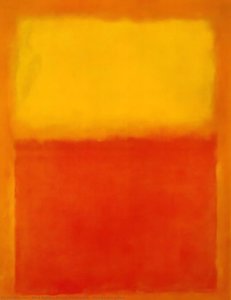
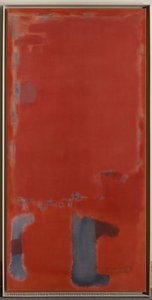
Explore Mark Rothko’s ‘No. 12,’ a minimalist masterpiece of color field painting. Discover its textured brushstrokes & calming dynamic composition – an iconic abstract expressionist work.

Artist Biography

Mark Rothko mastered Color Field painting with the Seagram Murals. Discover the emotional power of his iconic abstract works today.

from ·

Chapter 1

How large should it be?

Slide to change the size; the picture on the left shows the frame at its real width. The proportions of the original are kept.

Standard
custom
CM
INCH

Pick from our preset sizes that match the artwork's original proportions.

width
height

Type the width and the height you need, to fit your frame or your wall. This is hand-painted, so for a size with a different shape the artist can paint a bit more around the picture, or cut a bit — you choose. We send you a digital mockup to approve before the painting starts. The picture shown on this page does not show the real result — only the mockup does.

Chapter 2

How should it arrive?

Choose the edges of the stretched canvas

Choose your frame

Corner sample of the WhiteWrap canvas edge finish, stretched on solid wood bars
White $1
Corner sample of the BlurSideWrap canvas edge finish, stretched on solid wood bars
Blurside $1
Corner sample of the ExtendedWrap canvas edge finish, stretched on solid wood bars
Extended $1
Corner sample of the P118B picture frame: moulded polystyrene, 5 cm wide and 3 cm thick
P118B $10
Corner sample of the P118H picture frame: moulded polystyrene, 5 cm wide and 3 cm thick
P118H $10
Corner sample of the P118W picture frame: moulded polystyrene, 5 cm wide and 3 cm thick
P118W $10
Corner sample of the P438Z picture frame: moulded polystyrene, 5.5 cm wide and 3.5 cm thick
P438Z $10
Corner sample of the P508JH picture frame: moulded polystyrene, 7 cm wide and 3.5 cm thick
P508JH $12
Corner sample of the P508YH picture frame: moulded polystyrene, 7 cm wide and 3.5 cm thick
P508YH $12
Corner sample of the P805H picture frame: moulded polystyrene, 5 cm wide and 3.5 cm thick
P805H $10
Corner sample of the P805Z picture frame: moulded polystyrene, 5 cm wide and 3.5 cm thick
P805Z $10
Corner sample of the P919BZ picture frame: moulded polystyrene, 7 cm wide and 3.5 cm thick
P919BZ $10
Corner sample of the P919G picture frame: moulded polystyrene, 7 cm wide and 3.5 cm thick
P919G $10
Corner sample of the P919XJ picture frame: moulded polystyrene, 7 cm wide and 3.5 cm thick
P919XJ $10
Corner sample of the P959ZH picture frame: moulded polystyrene, 5 cm wide and 3 cm thick
P959ZH $10
Corner sample of the P968JZ picture frame: moulded polystyrene, 6 cm wide and 4 cm thick
P968JZ $12
Corner sample of the W106C picture frame: solid wood, 5 cm wide and 3 cm thick
W106C $8
Corner sample of the W218G picture frame: solid wood, 5 cm wide and 3 cm thick
W218G $10
Corner sample of the W218JH picture frame: solid wood, 5 cm wide and 3 cm thick
W218JH $8
Corner sample of the W218Y picture frame: solid wood, 5 cm wide and 3 cm thick
W218Y $10
Corner sample of the W307PJ picture frame: solid wood, 6 cm wide and 3 cm thick
W307PJ $10
Corner sample of the W316G picture frame: solid wood, 6 cm wide and 3 cm thick
W316G $10
Corner sample of the W316PJ picture frame: solid wood, 6 cm wide and 3 cm thick
W316PJ $8
Corner sample of the W316Y picture frame: solid wood, 6 cm wide and 3 cm thick
W316Y $10
Corner sample of the W398PJ picture frame: solid wood, 5 cm wide and 3 cm thick
W398PJ $8
Corner sample of the W4111J picture frame: solid wood, 6.5 cm wide and 3.5 cm thick
W4111J $10
Corner sample of the W500HY picture frame: solid wood, 7 cm wide and 5 cm thick
W500HY $15
Corner sample of the W500JH picture frame: solid wood, 7 cm wide and 5 cm thick
W500JH $15
Corner sample of the W692G picture frame: solid wood, 8 cm wide and 4 cm thick
W692G $12
Corner sample of the W849H picture frame: solid wood, 5 cm wide and 3 cm thick
W849H $8
Corner sample of the W940BG picture frame: solid wood, 7.5 cm wide and 4.5 cm thick
W940BG $15
Corner sample of the W953PJ picture frame: solid wood, 6 cm wide and 3.5 cm thick
W953PJ $8
Corner sample of the H24-GOLD picture frame: carved wood with gesso, 10 cm wide and 6 cm thick
H24-GOLD $30
Corner sample of the H24-SILVER picture frame: carved wood with gesso, 10 cm wide and 6 cm thick
H24-SILVER $30
Corner sample of the H36-GOLD picture frame: carved wood with gesso, 15 cm wide and 6.5 cm thick
H36-GOLD $45
Corner sample of the H36-SILVER picture frame: carved wood with gesso, 15 cm wide and 6.5 cm thick
H36-SILVER $45
Frame preview
Framed

Moulding: . Overall size with the frame: .

Chapter 3

Who paints it, and should anything change?

Examples of what can be changed: Replace face with customer photo; Add pet (e.g., replace cat with dog); Include hidden message in background; Change background landscape or elements.
After order, OriginalUniqueArt.com team will email client for instructions and provide a mockup preview

Worldwide Delivery () in 3/4 weeks instead of standard 5 weeks. (5 November). No compromise on quality.

Chapter 4

The finishing touches

A nameplate, as in a museum?

Engraved Bronze Plaque Details

This elegant plaque features the artist's name and the title of the artwork, finely engraved for a timeless presentation.

It is made from bronze with a refined, elegant finish. The text is precisely laser-engraved for a sharp and permanent result. Measuring 9x2 cm, the plaque is compact yet easy to read. It's built to be durable and scratch-resistant, offering a professional, museum-quality look. Mounting is simple thanks to the included adhesive backing.

Transparent Acrylic Plaque Details

The plaque includes essential engraved details such as the artist's name, the title of the artwork, the date it was created, the type of media used-like oil on canvas or watercolor-a brief description of the piece, and a QR code that links to the complete artwork information.

It is crafted from clear acrylic, offering a sleek, modern appearance. The text is UV-engraved in black to ensure strong visual contrast. With a size of 10x15 cm, it ensures optimal readability. It comes equipped with two metal hooks for secure wall mounting. The plaque is designed to be weather-resistant, making it suitable for various environments, and it includes interactive features that work seamlessly with smartphone scanning.

Black Acrylic Plaque Details

This elegant plaque includes engraved information such as the artist's name, the title of the artwork, the date it was created, the type of media used (like oil on canvas or watercolor), a short description of the artwork, and a QR code for quick access to more information.

The plaque itself is made from refined black acrylic with a premium finish. The text is laser-engraved in white for high contrast and readability. Its size is 10x15 cm, designed to be easy to read. It comes with two metal hooks for professional mounting. The design is sleek and fits any interior style. It is also weather-resistant and durable, with built-in digital integration for mobile compatibility.

A protective varnish?

When do you need it?

Chapter 5

Your painting, as you ordered it

No. 12

Reproduction Medium

Reproduction Size

-

Elite Senior Artist

More detail, finesse, and extra production time

-

Reproduction Frame

-

-

For artworks or reproductions larger than 105 cm (approximately 41 inches) on any side, the frame will be shipped as a kit, disassembled. This method ensures safe delivery and prevents damage during transport.

Professional assembly required - this is not a DIY product.
The kit must be assembled and the canvas stretched by an experienced professional framer, using wood glue (not supplied), a canvas stretching plier and clamps to hold the bars square while the glue dries. Incorrect assembly or uneven canvas tension can permanently damage the artwork and is not covered by our warranty.

  • All solid wood bars are included, precisely cut to size.

  • Assembled with the screws provided, plus wood glue for the corner joints, which is not supplied and must be sourced by your framer.

  • Professional tools are required and not included: a canvas stretching plier (tensioner) and clamps to hold the bars square while the glue dries.

Important:
The corner joints require wood glue, the bars must be held with clamps until the glue is fully dry, and tightening the canvas on the assembled frame requires a canvas stretching plier. None of these are included in the kit. Please arrange an experienced professional framer before ordering this size.

Nameplate

-

-

Protective Varnish

Glossy Varnish (enhances colors, protects against light/moisture)

-

Customize My Artwork

Examples of what can be changed: Replace face with customer photo; Add pet (e.g., replace cat with dog); Include hidden message in background; Change background landscape or elements.

-

Urgent

Worldwide Delivery () in 3/4 weeks instead of standard 5 weeks. (5 November). No compromise on quality.

-

Express Shipping

Worldwide Delivery () in 5 weeks. (12 November).

Included

Total Price

$ 300

Total Price $ 300

Glass option is only available in size under 110 CM

Included with every order

  • Free Worldwide Express Shipping
  • High-Quality Linen Canvas
  • Full Shipping Insurance
  • Customs Tax Refund Guarantee
  • True Color Matching Guarantee
  • 100-Day Return Policy (Defects Only)
  • 100% Money-Back Guarantee
  • Bulk Discount Offer

The Genesis of a Silent Dialogue

Mark Rothko's “No. 12” isn’t merely a painting; it’s an invitation to quiet contemplation, a distilled essence of feeling rendered in pigment and texture. Born Markus Yakovlevich Rothkowitz in Dvinsk, Latvia – a region steeped in historical displacement and cultural upheaval – Rothko’s early life profoundly shaped his artistic vision. The anxieties of a Jewish family living under the shadow of pogroms instilled within him a deep sensitivity to human suffering, a theme that would become a recurring motif throughout his oeuvre. This sense of vulnerability and searching for meaning is palpably present in “No. 12,” a work born from a complex interplay of personal experience and artistic exploration.

The painting’s genesis lies within the broader context of Color Field painting, a movement that sought to elevate color itself as the primary subject matter. Rothko moved to New York City in 1923, immersing himself in the vibrant, often turbulent, atmosphere of the city's artistic scene. He experimented with various styles – Surrealism, mythological themes – before arriving at his signature approach: large, rectangular blocks of color stacked vertically, creating a sense of depth and luminosity. “No. 12” exemplifies this technique perfectly, representing a pivotal moment in Rothko’s development as he moved away from representational imagery towards pure emotional expression.

Deconstructing Form: A Minimalist Composition

At first glance, "No. 12" appears strikingly simple – three distinct rectangular blocks of color arranged against a reddish-brown frame. However, this apparent minimalism belies a complex interplay of visual elements. The uppermost block is dominated by a deep, saturated blue-purple, transitioning downwards into a lighter, warmer beige hue. This gradient isn’t merely decorative; it suggests movement, depth, and perhaps even the passage of time or emotion. The thin band of reddish-brown acts as an anchor, grounding the composition and providing a subtle contrast to the dominant colors. Notably, there's no discernible perspective or attempt at realistic representation – Rothko deliberately eschewed traditional techniques in favor of conveying feeling directly through color.

The brushwork is crucial to understanding the painting’s impact. It’s visible, textured, and gestural, suggesting an expressive application of paint. Layers are built up, allowing colors to bleed slightly into adjacent areas, creating soft edges and a sense of movement. This technique contributes significantly to the painting's atmospheric quality, evoking a feeling of quiet contemplation and simplicity. The deliberate lack of sharp lines or defined forms encourages the viewer to lose themselves within the color fields, fostering a meditative experience.

Color as Emotion: Symbolism and Interpretation

While Rothko resisted definitive interpretations of his work, it’s widely believed that he aimed to evoke profound emotional responses through color. The blue-purple shade often represents melancholy, spirituality, or the vastness of the universe – a reflection perhaps of his own sense of displacement and longing. The warmer beige tones might symbolize comfort, earthiness, or even mortality. The reddish-brown frame serves as a grounding element, providing stability amidst the expansive color fields.

It’s important to note that Rothko wasn't interested in depicting specific scenes or narratives; instead, he sought to create an experience for the viewer—a direct emotional connection through pure color. “No. 12” invites us to project our own feelings and experiences onto the canvas, transforming it into a personal meditation space. The painting’s enduring power lies in its ability to resonate with viewers on a deeply intuitive level.

A Legacy of Quiet Intensity

Mark Rothko's “No. 12” stands as a testament to the transformative potential of color and abstraction. It exemplifies his mastery of Color Field painting, demonstrating how seemingly simple forms can evoke profound emotional responses. Reproductions capture much of this intensity, offering an accessible way to experience Rothko’s vision in your own space. OriginalUniqueArt offers meticulously crafted hand-painted reproductions that faithfully recreate the texture, luminosity, and subtle nuances of this iconic work, allowing you to bring a piece of Rothko's contemplative world into your home or office.

Questions & Answers

Where can I find a guide to "No. 12"?

A Guide page is available for "No. 12" by Mark Rothko: a printable factsheet about the artwork, designed for students and classroom use.

What is the perceived brightness of "No. 12" by Mark Rothko?

The perceived brightness of "No. 12" by Mark Rothko is balanced. It can be matched to the light of the intended space.

What atmosphere does "No. 12" have?

"No. 12" has a calm atmosphere.

More about this painting

Preview AR preview Switch to Print Switch to Digital Image Send
Details Guide Add to favorites Download Similars X-Ray Diaporama Q&A Stats

In numbers

  • 29frames to choose from
  • standard sizes, in its own proportions
  • 5weeks to paint and deliver it

About the original

Mark Rothko

Mark Rothko

1903 - 1970, Latvia

Quick facts about Mark Rothko

  • Artistic Movement Or Style: Abstract Expressionism, Color Field Painting
  • Artists Or Movements Influenced By This Artist: ['Minimalist art']
  • Full Name: Markus Yakovlevich Rothkowitz
  • Nationality: American
  • Notable Artworks:
    • No. 10
    • Seagram Murals
    • Untitled
  • Place Of Birth: Daugavpils, Latvia
  • Date Of Birth: 1903
  • Date Of Death: 1970

Artist Biography

A Life Shaped by Displacement

Mark Rothko arrived in the United States as a young boy, part of a family moving from Dvinsk, Latvia, to Portland, Oregon, in 1913. His early years were marked by the heavy atmosphere of the Pale of Settlement, where his family lived amidst political unrest and the fear of pogroms. This sense of instability followed him across the ocean. The loss of his father, Jacob, shortly after their arrival in America added a layer of personal grief to the challenges of settling in a new culture. While he studied at Yale University, the pull of New York City eventually led him to leave formal academics behind for the Art Students League.

His upbringing was one of intellect and debate. His father, a pharmacist with socialist leanings, fostered a home where learning was central. This environment, combined with the hardships of the immigrant experience, created a deep sensitivity to human suffering. These early experiences of loss and the struggle to find a place in a chaotic world became the quiet foundation for everything he would later paint.

From Figures to Fields of Color

In his early years in New York, Rothko focused on realism, painting portraits and urban scenes with careful attention to detail. As the 1940s brought the horrors of World War II, his work began to shift. He moved away from recognizable objects, looking instead toward Surrealism and mythology to find a way to express universal human emotions. During this period, his canvases featured biomorphic shapes that seemed to float between being figures and being abstract forms.

By the late 1940s, he had developed the style that would define his career. He stripped away all imagery, leaving only large-scale canvases with rectangular blocks of color. These forms appeared to hover and resonate against one another. He used thin washes of paint to create subtle changes in tone and texture, making the edges of his shapes appear blurred. He often avoided titles, using simple numbers like No. 1 or No. 6 so that viewers could face the work without any preconceived ideas.

The Search for Emotional Truth

Rothko’s mature period is associated with Color Field painting. His goal was to use color to speak directly to the human soul, bypassing the intellect to reach deep emotions such as tragedy, ecstasy, and despair. He meticulously layered paint to create a sense of depth and light that seemed to come from within the canvas itself. These large works were intended to envelop the viewer in an immersive experience.

His commitment to this emotional honesty led to several significant projects:

  • The Seagram Murals, which he originally intended for a New York restaurant but later donated to the Tate Gallery after feeling the setting would compromise the work.
  • The Rothko Chapel in Houston, Texas, a non-denominational space containing fourteen of his paintings in varying shades of black, designed as a place for quiet reflection.
  • The Harvard Mural series, which were donated to a dining room at the Holyoke Center.

Despite his immense influence on Abstract Expressionism and the later Minimalist movement, Rothko struggled with depression throughout his life. He died by suicide in 1970. His work remains a central part of modern art history, found in permanent collections such as the Museum of Modern Art in New York and the Tate Modern in London.

Quick Facts

  • Subject or theme: Color & contemplation
  • Title: No. 12
  • Movement: Abstract Expressionism
  • Location: Various collections
  • Artist: Mark Rothko

Art Quiz

There is only one correct answer for each question.

Question 1:
What is the primary style of Mark Rothko’s ‘No. 12’?
Question 2:
The reddish-brown band framing the painting primarily serves what purpose?
Question 3:
Based on the description, what technique is most evident in Rothko’s brushwork?
Question 4:
Rothko’s early life was significantly shaped by which factor?
Question 5:
What is a key characteristic of Color Field painting, as exemplified by ‘No. 12’?