Switch to Print
 Read More







































 For artworks or reproductions larger than 105 cm (approximately 41 inches) on any side, the frame will be shipped as a kit, disassembled. This method ensures safe delivery and prevents damage during transport.


A Meditation on Mortality: Mariotto Albertinelli’s Triptych (c. 1500)
Mariotto Albertinelli's "Triptych," a remarkably preserved example of early Renaissance artistry, offers far more than a simple religious depiction; it is a profound meditation on the human condition – a stark reminder of our fleeting existence rendered with unsettling beauty and meticulous detail. Executed around 1500, this triptych, measuring 21 x 30 cm, reveals Albertinelli’s mastery of color, composition, and symbolism, hallmarks of his Florentine training and the burgeoning artistic currents of the era. The work's immediate impact is undeniably driven by its central element: a meticulously rendered skull presented as a still life against a somber backdrop. This isn’t merely a morbid fascination; it’s a deliberate invocation of *memento mori*, a tradition deeply rooted in Christian thought, reminding viewers of the inevitability of death and urging contemplation on spiritual matters.
- Subject Matter: The triptych unfolds with layers of religious iconography. When closed, the tabernacle displays an Annunciation rendered in monochrome, a poignant contrast to the vibrant scenes revealed when opened.
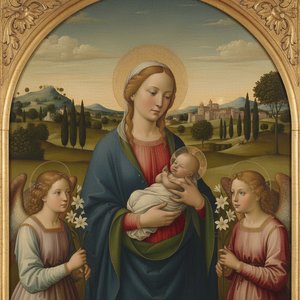
- Central Panel: The Virgin enthroned nursing the Child dominates the central panel, embodying maternal grace and divine protection.
- Side Panels: Saint Catherine of Alexandria, kneeling on her spiked wheel – a testament to unwavering faith – and Saint Barbara, kneeling beside her executioner father Dioscurus, create a powerful narrative of martyrdom and sacrifice.
Albertinelli’s technical skill is immediately apparent in the painting's construction. Executed in oil paints on canvas, the artist demonstrates a sophisticated understanding of *chiaroscuro*, utilizing subtle gradations of light and shadow to sculpt the skull and imbue it with a startling sense of volume and realism. The brushwork, though visible, is expertly controlled, contributing to a polished finish that speaks to Albertinelli’s dedication to detail. The geometric shapes – the tabletop, the skull itself, the curved shadow – are rendered with precision, creating a stable and grounded composition. The muted color palette—browns, ochres, and blacks—further emphasizes the solemnity of the subject matter.
Symbolism and Narrative
Beyond its immediate visual impact, the "Triptych" is rich in symbolic meaning. The skull, as a central motif, transcends mere representation; it functions as a potent symbol of mortality, echoing themes prevalent throughout Western art history. The inclusion of scenes depicting martyrdom – Catherine’s ordeal and Barbara’s plight – reinforces the Christian narrative of sacrifice and redemption. Dioscurus, Barbara's father, acting as her executioner, adds another layer of complexity to the scene, highlighting the tragic consequences of religious persecution. The landscape elements, featuring further depictions of saintly deaths, serve not just as background but as integral components of the overall theological message.
Historical Context and Artistic Influences
Created around 1500, this triptych represents a pivotal moment in Mariotto Albertinelli’s career. Born in Florence in 1474, he benefited from the artistic ferment of the Renaissance, absorbing influences from masters such as Perugino, Piero di Cosimo, and even the Flemish painters whose techniques – particularly their mastery of detail and use of light – profoundly shaped his style. The abbreviation “MD” on the frame likely indicates the year of creation, solidifying its place within a significant period of artistic innovation. Albertinelli’s joint studio with Fra Bartolomeo further enriched his artistic development, exposing him to diverse perspectives and techniques.
Emotional Impact and Collectible Value
The "Triptych" is not simply a beautiful artwork; it's an emotionally resonant piece that invites contemplation on profound themes. Its somber mood, coupled with the arresting image of the skull, evokes a sense of melancholy and reminds us of our own mortality. This triptych by Mariotto Albertinelli represents a rare opportunity to own a significant work from one of Florence’s most accomplished Renaissance painters. Its size (21 x 30 cm) makes it suitable for a variety of settings, while its historical importance and artistic merit ensure its enduring value as an investment piece and a source of inspiration.
Questions & Answers
What national origin stands behind the Early Renaissance of "Triptych"?
The Early Renaissance work "Triptych" was made by an artist born in Italy.
Is "Triptych" held in the country of its creator?
Yes - the artwork is kept in the artist's home country. "Triptych" is held in Italy, while Mariotto Albertinelli was born in Italy.
Can I watch "Triptych" as a full-screen slideshow?
The diaporama of "Triptych" can be watched on the artwork's Diaporama page.
More about this painting
 Preview
 Send
Send Share
Share
 Details
 Guide
Guide

 Download
 Similars
 X-Ray
X-Ray Diaporama
 Q&A
Q&A Stats
Stats