Send
Send Share
Share
 Details
 Guide
Guide

 Download
 Similars
 Diaporama
 Stats
StatsSwatch
 Textile
- Italian Baroque
 1949
1949- 19th Century
 42.0 x 50.0 cm
 Museo del Traje
 Read More
Giclée / Art Print
Museum-quality giclée or canvas print with fast production and flexible finish options. ( Buy Hand Made Painting Switch to Digital Image)




































Pick from our preset sizes that match the artwork's original proportions.

Type the width and the height you need, to fit your frame or your wall. A print can only be cut, never made bigger than the picture, so a size with a different shape loses a part of the image. We send you a digital mockup to approve before we print anything. The picture shown on this page does not show the real cut — only the mockup does.
Worldwide Delivery () in 2 weeks instead of standard 4/5 weeks. (25 October)

Free Worldwide Express Shipping

High-Quality Linen Canvas

Full Shipping Insurance

Customs Tax Refund Guarantee

True Color Matching Guarantee

100-Day Return Policy (Defects Only)

100% Money-Back Guarantee

Bulk Discount Offer
 Glass option is only available in size under 110 CM

Swatch
Giclée / Art Print
Reproduction Size
-


Total Price
$ 81
A Symphony of Blue: Exploring Mariano Fortuny’s “Swatch”
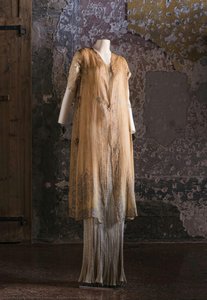
Mariano Fortuny's "Swatch," created in 1949, is more than just a textile; it’s a meticulously crafted echo of the Italian Baroque, a testament to the artist’s singular vision and revolutionary approach to design. Measuring 42 x 50 cm, this horizontal rectangle immediately draws the eye with its opulent layering of blues – from the deepest indigo to shimmering turquoise – punctuated by strategically placed gold stenciled plant and crown motifs. The piece, originally inspired by the rich velvets of the 17th century, demonstrates Fortuny’s masterful manipulation of color and texture, a hallmark of his enduring legacy.
Fortuny's Baroque Revival & Technological Innovation
Born in Reus, Spain, in 1871, Mariano Fortuny was a figure far ahead of his time. His early life, profoundly shaped by the untimely death of his father and subsequent relocation to Paris, exposed him to the world of textiles – a crucial influence that would define his career. Fortuny wasn't simply a designer; he was an inventor, a theatrical innovator, and a master colorist. He pioneered the use of indirect lighting in theater design with his “fortuny cyclorama dome,” a groundbreaking achievement that dramatically altered stagecraft. His relentless experimentation led to over twenty patents, showcasing his dedication to pushing the boundaries of artistic and technological possibilities. This pursuit of innovation is vividly apparent in "Swatch," where he meticulously controlled color variations and patterns.
The Language of Pattern: Symbolism & Technique
The intricate design of “Swatch” – a seemingly chaotic yet perfectly balanced arrangement of circles resembling fish scales – speaks to Fortuny’s fascination with natural forms and his desire to evoke the grandeur of classical antiquity. The gold stenciled plant and crown motifs, subtly integrated within the blue field, add an element of regal symbolism, referencing the opulent fabrics favored by European royalty during the Baroque period. Fortuny's technique is particularly noteworthy; he employed a complex layering process, utilizing multiple shades of blue to create a visual depth that mimics a painting. The retained selvages at the sides further enhance this effect, emphasizing the cloth’s dimensionality and tactile quality. This meticulous approach elevates “Swatch” beyond a mere decorative piece – it's a carefully constructed illusion.
A Timeless Masterpiece for Interior Design
"Swatch" remains a captivating example of Fortuny’s artistic genius and his ability to seamlessly blend historical references with innovative techniques. Its rich color palette, intricate design, and luxurious feel make it an ideal choice for discerning collectors and interior designers seeking to infuse their spaces with a touch of Baroque elegance. A hand-painted reproduction offers the opportunity to experience this remarkable artwork firsthand, bringing its beauty and sophistication into your home.
Questions & Answers
What feeling is "Swatch" associated with?
The emotional tone recorded for "Swatch" by Mariano Fortuny is reflective. It summarizes the feeling the work expresses.
Which museum holds the original "Swatch"?
You can see the original "Swatch" at the Museo del Traje, Madrid, Spain.
Is "Swatch" by Mariano Fortuny in the public domain?
"Swatch" by Mariano Fortuny is in the public domain - its copyright has expired. This status governs how the image of the work may be reproduced.
Artist Biography
early life and inspiration
mariano fortuny, a spanish fashion designer, was born on may 11, 1871, in granada, spain. his father, mariano fortuny y marsal, was a genre painter who passed away when mariano was just three years old. this event led to the family's move to paris, france, where mariano's mother introduced him to various textiles and fabrics that would later influence his creativity.artistic talents and inventions
mariano fortuny showcased his artistic talents from a young age, demonstrating skills in painting, photography, sculpting, architecture, etching, and theatrical stage lighting. his inventions, including over twenty patented between 1901 and 1934, revolutionized the world of theater design.- he developed the fortuny cyclorama dome, a quarter dome-shaped structure of plaster or cloth, which used indirect lighting to create a seamless transition between scenes.
- his treatise "eclairage scenique" (1904) described his discovery of reflecting light off different surfaces, changing its color, intensity, and properties.
notable contributions and collaborations
mariano fortuny's work gained widespread recognition in the 1920s. he collaborated with notable figures, including:- richard wagner, a german composer, whose operas inspired mariano to paint scenes.
- the famous opera house, la scala of milan, where he installed his dome, adapting it for the larger theater and inventing a suction fan to maintain its taut structure.
legacy and later life
mariano fortuny passed away on may 3, 1949, in venice, italy. his work inspired french novelist marcel proust, and his life was depicted in pere gimferrer's novel "fortuny." mariano's legacy continues to influence the world of theatrical design.- explore more about mariano fortuny's inventions and designs at OriginalUniqueArt's collection.
- discover the impact of his work on theatrical lighting in the museum destroyed by fire (united states), a story of an unfortunate event that shaped american art history, available at OriginalUniqueArt's blog.
selected paintings by mariano fortuny and other artists
- mariano fortuny: teagown (museum of fine arts, boston, united states), available at OriginalUniqueArt's collection.
- marc chagall: study to 'song of songs iv' (naive art / primitivism), available at OriginalUniqueArt's collection.
- pablo picasso: clarinet (analytical cubism, oil on canvas), available at OriginalUniqueArt's collection.
- vincent van gogh: tree roots (50 x 100 cm, post-impressionism, oil on canvas), available at OriginalUniqueArt's collection.

Mariano Fortuny
1871 - 1949 , Spain
Quick Facts
- Full Name: Mariano Fortuny y Marsal
- Nationality: Spanish
- Date Of Birth: 1871
- Date Of Death: 1949
- Place Of Birth: Reus, Spain
- Notable Artworks:
- Teagown
- Portrait of Henriette Fortuny
- Artistic Movement Or Style: Orientalism art
- Artists Who Influenced This Artist: ['Richard Wagner']
- Artists Or Movements Influenced By This Artist: ['Marcel Proust']
Related Articles

Baroque Drama: Bringing Opulence & Emotion into Contemporary Interiors
Explore the opulent world of Baroque interior design! Discover key elements, modern applications & how to bring dramatic elegance into your home with OriginalUniqueArt.com's authentic reproductions.

Mariano Fortuny: A Fusion of Art, Fashion & Design – Exploring a Venetian Innovator's Legacy
Explore the captivating world of Mariano Fortuny – artist, designer & innovator. Discover his revolutionary textiles, iconic Delphos gown, and lasting influence on art, fashion & interiors. A collector's guide to a Venetian master.

The Dramatic Flourish: Exploring the Baroque Movement's Enduring Legacy in Art History
Explore the dramatic world of Baroque art! Discover iconic artists like Caravaggio & Rubens, defining techniques, and its lasting impact on art history. Expert insights for collectors & enthusiasts at OriginalUniqueArt.

The Allure of Azure: Exploring the Symbolic & Aesthetic Depths of Blue in Art History
Explore the rich history of blue in art! Discover its symbolism, from ancient pigments to modern masterpieces by Kandinsky & Seurat. Uncover the psychological impact and cultural meanings behind this captivating hue.

Slate Blue Masterpieces: 10 Iconic Paintings & Timeless Home Decor Ideas
Immerse yourself in the captivating world of slate blue! Explore 10 iconic paintings by Monet, Van Gogh & Renoir. Discover their stories, techniques & find museum-quality art reproductions for your home at .