Menu
FREE ART CONSULTATION
Buy Print Buy PrintBuy Image Buy Image SendSend
DetailsDetails Add to favorites Add to favorites DownloadDownload SimilarsSimilars DiaporamaDiaporama

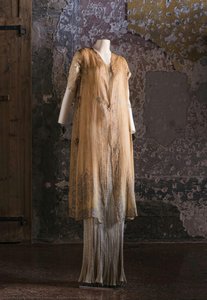
Coat

Examine Mariano Fortuny’s ‘Coat,’ a stunning textile masterpiece showcasing intricate design & Orientalist influences. Explore its aged beauty & historical significance.

Mariano Fortuny (1871-1949) was a Spanish fashion designer & artist renowned for innovative textiles, Delphos gowns, and theatrical lighting designs. Explore his Orientalist influences, inventions, & lasting legacy in art history.

Hand Made Oil Reproduction

Hand-painted oil on canvas in your size and frame, made to order by our artists. (Buy Print Buy PrintBuy Image Buy Image)

Standard
custom
CM
INCH

Pick from our preset sizes that match the artwork's original proportions.

width
height

You may enter your own dimensions to fit a specific frame or space. If your selected size does not match the original image's proportions, we will either crop the artwork or extend the painting with additional hand-painted elements. A digital mockup will be sent for your approval before production begins.
Please note that the on-screen preview does not reflect the actual cropping or extension. Only the mockup will accurately show the final composition.
While custom sizes are available, we recommend selecting a dimension from the predefined list to preserve the original proportions.

Examples of what can be changed: Replace face with customer photo; Add pet (e.g., replace cat with dog); Include hidden message in background; Change background landscape or elements.
After order, OriginalUniqueArt.com team will email client for instructions and provide a mockup preview

Worldwide Delivery () in 3/4 weeks instead of standard 5 weeks. (30 August). No compromise on quality.

why_choose_icon
Free Worldwide Express Shipping
why_choose_icon
High-Quality Linen Canvas
why_choose_icon
Full Shipping Insurance
why_choose_icon
Customs Tax Refund Guarantee
why_choose_icon
True Color Matching Guarantee
why_choose_icon
60-Day Return Policy (Defects Only)
why_choose_icon
100% Money-Back Guarantee
why_choose_icon
Bulk Discount Offer

Total Price

$ 300

reproduction

Coat

Reproduction Medium

Reproduction Size

-

Total Price

$ 300

Quick Facts

  • Location: Private Collection
  • Subject or theme: Textile Design
  • Movement: Orientalism
  • Artistic style: Stylized floral motifs
  • Title: Coat
  • Influences: Islamic Art
  • Artist: Mariano Fortuny

Art Quiz

There is only one correct answer for each question.

Question 1:
What artistic movement is most strongly associated with Mariano Fortuny’s ‘Kimono Coat’?
Question 2:
The kimono coat utilizes a technique known for creating layered color effects. What is this technique?
Question 3:
What material is Fortuny’s ‘Coat’ primarily composed of, based on the description?
Question 4:
Fortuny's innovative cyclorama dome was designed to achieve what visual effect?
Question 5:
The image description mentions stylized floral motifs. Where might these motifs originate?

A Whisper of Silk and Antiquity: Exploring Mariano Fortuny’s “Kimono Coat”

Mariano Fortuny’s “Kimono Coat,” completed in 1910, transcends mere textile; it embodies a profound dialogue between European artistic sensibilities and the evocative allure of Orientalism. This monumental silk robe—now housed within The Metropolitan Museum of Art’s collection—commands attention not only for its sheer scale but also for the masterful execution of technique and the subtle layering of symbolism that speaks volumes about Fortuny's vision.
  • Subject Matter & Composition: The garment itself is presented as a focal point, meticulously draped against a stark white backdrop—a deliberate choice designed to maximize visual impact and isolate the intricate beauty of the textile’s design. The composition adheres to classical principles of symmetry, emphasizing balance and harmony while simultaneously conveying a sense of dignified repose.
  • Style & Influences: Fortuny's work firmly establishes itself within the Orientalist movement—a trend prevalent in European art circles at the turn of the century that sought inspiration from Eastern cultures. The stylized floral motifs, reminiscent of Islamic calligraphy and decorative arts, demonstrate a keen awareness of artistic traditions beyond Europe. However, Fortuny’s style isn’t merely derivative; it possesses an inherent elegance and restraint characteristic of Spanish aristocratic taste.

Technique & Material Considerations

The remarkable achievement of “Kimono Coat” lies in its sophisticated technique—primarily resist dyeing. This painstaking process involves applying wax to specific areas of the silk fabric, preventing dye penetration and creating a captivating interplay of color and texture. The resulting pattern mimics the organic forms of foliage, skillfully capturing the ephemeral beauty of nature. Fortuny’s meticulous attention to detail extends beyond the dye application itself; the weave of the silk—likely wool—contributes significantly to the robe's tactile quality and reinforces its aged appearance.

Symbolism & Emotional Resonance

Beyond its aesthetic qualities, “Kimono Coat” carries subtle symbolic weight. The repetition of leaf patterns evokes themes of regeneration, growth, and connection to the natural world—values deeply rooted in both Eastern and Western philosophical traditions. Furthermore, the muted color palette—greens, blues, browns—creates an atmosphere of serenity and contemplation, reflecting Fortuny’s desire to capture a timeless elegance. It invites viewers to contemplate beauty, history, and the enduring power of artistic expression.

A Legacy of Innovation

Mariano Fortuny's contribution to theatrical design—particularly his pioneering use of the fortuny cyclorama dome—solidifies his reputation as a visionary innovator. “Kimono Coat” stands as testament to this legacy, demonstrating Fortuny’s ability to synthesize artistic inspiration with technological advancement. Its enduring appeal lies in its ability to transport us back to an era of refined taste and artistic experimentation.

Artist Biography

early life and inspiration

mariano fortuny, a spanish fashion designer, was born on may 11, 1871, in granada, spain. his father, mariano fortuny y marsal, was a genre painter who passed away when mariano was just three years old. this event led to the family's move to paris, france, where mariano's mother introduced him to various textiles and fabrics that would later influence his creativity.

artistic talents and inventions

mariano fortuny showcased his artistic talents from a young age, demonstrating skills in painting, photography, sculpting, architecture, etching, and theatrical stage lighting. his inventions, including over twenty patented between 1901 and 1934, revolutionized the world of theater design.
  • he developed the fortuny cyclorama dome, a quarter dome-shaped structure of plaster or cloth, which used indirect lighting to create a seamless transition between scenes.
  • his treatise "eclairage scenique" (1904) described his discovery of reflecting light off different surfaces, changing its color, intensity, and properties.

notable contributions and collaborations

mariano fortuny's work gained widespread recognition in the 1920s. he collaborated with notable figures, including:
  • richard wagner, a german composer, whose operas inspired mariano to paint scenes.
  • the famous opera house, la scala of milan, where he installed his dome, adapting it for the larger theater and inventing a suction fan to maintain its taut structure.

legacy and later life

mariano fortuny passed away on may 3, 1949, in venice, italy. his work inspired french novelist marcel proust, and his life was depicted in pere gimferrer's novel "fortuny." mariano's legacy continues to influence the world of theatrical design.

selected paintings by mariano fortuny and other artists

discover more about mariano fortuny and other artists at OriginalUniqueArt's extensive collection, spanning from the 12th to the 20th century.
Mariano Fortuny

Mariano Fortuny

1871 - 1949 , Spain

Quick Facts

  • Artistic Movement Or Style: Orientalism art
  • Artists Or Movements Influenced By This Artist: ['Marcel Proust']
  • Artists Who Influenced This Artist: ['Richard Wagner']
  • Date Of Birth: May 11, 1871
  • Date Of Death: May 3, 1949
  • Full Name: Mariano Fortuny y Marsal
  • Nationality: Spanish
  • Notable Artworks:
    • Teagown
    • Portrait of Henriette Fortuny
  • Place Of Birth: Granada, Spain
Explore artworks organized by themes, styles, and characteristics.