Text size

() ·

A painting made for you, by hand

Serious Man, or The Serious One

Hand Made Oil Reproduction

Hand-painted oil on canvas in your size and frame, made to order by our artists. ( Switch to Print Switch to Digital Image)

Collectible Description

Explore Man Ray’s ‘Serious Man,’ a minimalist abstract expressionist masterpiece. Layers of brown & beige evoke contemplation. Discover this unique paper & pigment artwork.

Artist Biography

Explore the surreal world of Man Ray (1890-1976), a pioneer of Dada & Surrealist photography. Discover his iconic rayographs, fashion portraits, and experimental film – a key figure in 20th-century art.

from ·

Chapter 1

How large should it be?

Slide to change the size; the picture on the left shows the frame at its real width. The proportions of the original are kept.

Standard
custom
CM
INCH

Pick from our preset sizes that match the artwork's original proportions.

width
height

Type the width and the height you need, to fit your frame or your wall. This is hand-painted, so for a size with a different shape the artist can paint a bit more around the picture, or cut a bit — you choose. We send you a digital mockup to approve before the painting starts. The picture shown on this page does not show the real result — only the mockup does.

Chapter 2

How should it arrive?

Choose the edges of the stretched canvas

Choose your frame

Corner sample of the WhiteWrap canvas edge finish, stretched on solid wood bars
White $1
Corner sample of the BlurSideWrap canvas edge finish, stretched on solid wood bars
Blurside $1
Corner sample of the ExtendedWrap canvas edge finish, stretched on solid wood bars
Extended $1
Corner sample of the P118B picture frame: moulded polystyrene, 5 cm wide and 3 cm thick
P118B $10
Corner sample of the P118H picture frame: moulded polystyrene, 5 cm wide and 3 cm thick
P118H $10
Corner sample of the P118W picture frame: moulded polystyrene, 5 cm wide and 3 cm thick
P118W $10
Corner sample of the P438Z picture frame: moulded polystyrene, 5.5 cm wide and 3.5 cm thick
P438Z $10
Corner sample of the P508JH picture frame: moulded polystyrene, 7 cm wide and 3.5 cm thick
P508JH $12
Corner sample of the P508YH picture frame: moulded polystyrene, 7 cm wide and 3.5 cm thick
P508YH $12
Corner sample of the P805H picture frame: moulded polystyrene, 5 cm wide and 3.5 cm thick
P805H $10
Corner sample of the P805Z picture frame: moulded polystyrene, 5 cm wide and 3.5 cm thick
P805Z $10
Corner sample of the P919BZ picture frame: moulded polystyrene, 7 cm wide and 3.5 cm thick
P919BZ $10
Corner sample of the P919G picture frame: moulded polystyrene, 7 cm wide and 3.5 cm thick
P919G $10
Corner sample of the P919XJ picture frame: moulded polystyrene, 7 cm wide and 3.5 cm thick
P919XJ $10
Corner sample of the P959ZH picture frame: moulded polystyrene, 5 cm wide and 3 cm thick
P959ZH $10
Corner sample of the P968JZ picture frame: moulded polystyrene, 6 cm wide and 4 cm thick
P968JZ $12
Corner sample of the W106C picture frame: solid wood, 5 cm wide and 3 cm thick
W106C $8
Corner sample of the W218G picture frame: solid wood, 5 cm wide and 3 cm thick
W218G $10
Corner sample of the W218JH picture frame: solid wood, 5 cm wide and 3 cm thick
W218JH $8
Corner sample of the W218Y picture frame: solid wood, 5 cm wide and 3 cm thick
W218Y $10
Corner sample of the W307PJ picture frame: solid wood, 6 cm wide and 3 cm thick
W307PJ $10
Corner sample of the W316G picture frame: solid wood, 6 cm wide and 3 cm thick
W316G $10
Corner sample of the W316PJ picture frame: solid wood, 6 cm wide and 3 cm thick
W316PJ $8
Corner sample of the W316Y picture frame: solid wood, 6 cm wide and 3 cm thick
W316Y $10
Corner sample of the W398PJ picture frame: solid wood, 5 cm wide and 3 cm thick
W398PJ $8
Corner sample of the W4111J picture frame: solid wood, 6.5 cm wide and 3.5 cm thick
W4111J $10
Corner sample of the W500HY picture frame: solid wood, 7 cm wide and 5 cm thick
W500HY $15
Corner sample of the W500JH picture frame: solid wood, 7 cm wide and 5 cm thick
W500JH $15
Corner sample of the W692G picture frame: solid wood, 8 cm wide and 4 cm thick
W692G $12
Corner sample of the W849H picture frame: solid wood, 5 cm wide and 3 cm thick
W849H $8
Corner sample of the W940BG picture frame: solid wood, 7.5 cm wide and 4.5 cm thick
W940BG $15
Corner sample of the W953PJ picture frame: solid wood, 6 cm wide and 3.5 cm thick
W953PJ $8
Corner sample of the H24-GOLD picture frame: carved wood with gesso, 10 cm wide and 6 cm thick
H24-GOLD $30
Corner sample of the H24-SILVER picture frame: carved wood with gesso, 10 cm wide and 6 cm thick
H24-SILVER $30
Corner sample of the H36-GOLD picture frame: carved wood with gesso, 15 cm wide and 6.5 cm thick
H36-GOLD $45
Corner sample of the H36-SILVER picture frame: carved wood with gesso, 15 cm wide and 6.5 cm thick
H36-SILVER $45
Frame preview
Framed

Moulding: . Overall size with the frame: .

Chapter 3

Who paints it, and should anything change?

Examples of what can be changed: Replace face with customer photo; Add pet (e.g., replace cat with dog); Include hidden message in background; Change background landscape or elements.
After order, OriginalUniqueArt.com team will email client for instructions and provide a mockup preview

Worldwide Delivery () in 3/4 weeks instead of standard 5 weeks. (1 November). No compromise on quality.

Chapter 4

The finishing touches

A nameplate, as in a museum?

Engraved Bronze Plaque Details

This elegant plaque features the artist's name and the title of the artwork, finely engraved for a timeless presentation.

It is made from bronze with a refined, elegant finish. The text is precisely laser-engraved for a sharp and permanent result. Measuring 9x2 cm, the plaque is compact yet easy to read. It's built to be durable and scratch-resistant, offering a professional, museum-quality look. Mounting is simple thanks to the included adhesive backing.

Transparent Acrylic Plaque Details

The plaque includes essential engraved details such as the artist's name, the title of the artwork, the date it was created, the type of media used-like oil on canvas or watercolor-a brief description of the piece, and a QR code that links to the complete artwork information.

It is crafted from clear acrylic, offering a sleek, modern appearance. The text is UV-engraved in black to ensure strong visual contrast. With a size of 10x15 cm, it ensures optimal readability. It comes equipped with two metal hooks for secure wall mounting. The plaque is designed to be weather-resistant, making it suitable for various environments, and it includes interactive features that work seamlessly with smartphone scanning.

Black Acrylic Plaque Details

This elegant plaque includes engraved information such as the artist's name, the title of the artwork, the date it was created, the type of media used (like oil on canvas or watercolor), a short description of the artwork, and a QR code for quick access to more information.

The plaque itself is made from refined black acrylic with a premium finish. The text is laser-engraved in white for high contrast and readability. Its size is 10x15 cm, designed to be easy to read. It comes with two metal hooks for professional mounting. The design is sleek and fits any interior style. It is also weather-resistant and durable, with built-in digital integration for mobile compatibility.

A protective varnish?

When do you need it?

Chapter 5

Your painting, as you ordered it

Serious Man, or The Serious One

Reproduction Medium

Reproduction Size

-

Elite Senior Artist

More detail, finesse, and extra production time

-

Reproduction Frame

-

-

For artworks or reproductions larger than 105 cm (approximately 41 inches) on any side, the frame will be shipped as a kit, disassembled. This method ensures safe delivery and prevents damage during transport.

Professional assembly required - this is not a DIY product.
The kit must be assembled and the canvas stretched by an experienced professional framer, using wood glue (not supplied), a canvas stretching plier and clamps to hold the bars square while the glue dries. Incorrect assembly or uneven canvas tension can permanently damage the artwork and is not covered by our warranty.

  • All solid wood bars are included, precisely cut to size.

  • Assembled with the screws provided, plus wood glue for the corner joints, which is not supplied and must be sourced by your framer.

  • Professional tools are required and not included: a canvas stretching plier (tensioner) and clamps to hold the bars square while the glue dries.

Important:
The corner joints require wood glue, the bars must be held with clamps until the glue is fully dry, and tightening the canvas on the assembled frame requires a canvas stretching plier. None of these are included in the kit. Please arrange an experienced professional framer before ordering this size.

Nameplate

-

-

Protective Varnish

Glossy Varnish (enhances colors, protects against light/moisture)

-

Customize My Artwork

Examples of what can be changed: Replace face with customer photo; Add pet (e.g., replace cat with dog); Include hidden message in background; Change background landscape or elements.

-

Urgent

Worldwide Delivery () in 3/4 weeks instead of standard 5 weeks. (1 November). No compromise on quality.

-

Express Shipping

Worldwide Delivery () in 5 weeks. (8 November).

Included

Total Price

$ 300

Total Price $ 300

Glass option is only available in size under 110 CM

Included with every order

  • Free Worldwide Express Shipping
  • High-Quality Linen Canvas
  • Full Shipping Insurance
  • Customs Tax Refund Guarantee
  • True Color Matching Guarantee
  • 100-Day Return Policy (Defects Only)
  • 100% Money-Back Guarantee
  • Bulk Discount Offer

Serious Man, or The Serious One

The American artist Man Ray (1890-1976) fundamentally reshaped photography’s role—shifting it from mere documentation of reality into an expressive art form itself. His artistic journey commenced in New York with paintings; however, a pivotal encounter with Dadaism, spearheaded by Marcel Duchamp in 1915, propelled his conceptual explorations far beyond conventional boundaries. Ray embraced the ready-made principle, exemplified by “The Gift” (1921)—a flatiron meticulously affixed with tacks—demonstrating an audacious challenge to artistic norms and elevating commonplace objects into potent symbols of artistic inquiry. Paris became Ray’s crucible for diverse artistic pursuits, encompassing cinema alongside portraiture and fashion photography. It was within this realm that he honed his photographic skills, aligning himself with Surrealism and establishing himself as a trailblazer of innovative techniques. His experimentation sought to capture the subconscious mind's elusive imagery—a core tenet of Surrealist thought.
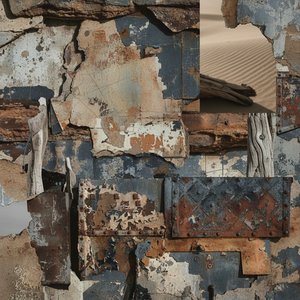
  • Subject Matter: Ray’s oeuvre centers on abstract compositions featuring stacked rectangular forms in shades of brown and beige, resembling an open envelope or stack of documents. This deliberate simplification underscores a preoccupation with conveying essential ideas through geometric shapes and subtle textural nuances.
  • Style: The artwork leans toward abstract expressionism, prioritizing emotional resonance over representational accuracy. Lines predominantly traverse horizontally, fostering a sense of order and stability—a counterpoint to the inherent dynamism of Surrealist aesthetics.
  • Technique: Ray’s masterful approach involves layering pigment on paper—often utilizing silkscreen printing—creating nuanced tonal variations and textural surfaces that contribute significantly to the artwork's overall impact. This meticulous process reflects a commitment to capturing fleeting moments of perception and conveying complex emotions through visual language.

Historical Context & Dada Influence

Ray’s artistic trajectory coincided with the burgeoning Dada movement—a reaction against rationalism and bourgeois values following World War I. Influenced profoundly by Duchamp's conceptual provocations, Ray embraced the ready-made as a subversive tool for questioning established artistic conventions. “The Gift,” alongside other Dada assemblages, challenged notions of originality and authorship—demanding viewers reconsider their preconceptions about art’s definition. This embrace of chance and absurdity mirrored Dada’s broader ethos—a deliberate rejection of traditional artistic forms in favor of spontaneous expression and intellectual disruption.

Symbolism & Emotional Resonance

The stacked rectangular forms within “Serious Man” serve as evocative symbols—suggesting documents, memories, or perhaps the layered complexities of human experience. The muted brown palette contributes to a contemplative mood—inviting viewers to engage in introspection and contemplate profound questions about identity and perception. Ultimately, Ray’s artwork transcends mere visual representation—eliciting an emotional response rooted in ambiguity and intellectual curiosity. It encourages contemplation on themes of order versus chaos, stability versus dynamism—reflecting the artist's enduring fascination with exploring the boundaries of consciousness.

Material Considerations & Reproduction Quality

Typically executed on archival-grade paper—often textured linen or Somerset Satin—Ray’s prints benefit from exceptional pigment dispersion and color fidelity. High-resolution reproductions capture the subtle tonal variations and textural nuances inherent in the original artwork—preserving its artistic integrity for discerning collectors and interior designers alike. Careful attention to printing techniques ensures that the reproduced image faithfully conveys Ray's vision—allowing viewers to appreciate the beauty and complexity of this seminal Surrealist masterpiece.

Questions & Answers

What kind of colors does "Serious Man, or The Serious One" use?

"Serious Man, or The Serious One" by Man Ray uses an earthy color palette. The palette summarizes the work's overall color character.

What is "Serious Man, or The Serious One" about, and what atmosphere does it have?

"Serious Man, or The Serious One" by Man Ray combines abstract, layers, minimalism, brown tones, geometric, order, contemplation, paper texture with an elegant atmosphere.

How light is "Serious Man, or The Serious One" overall?

In terms of perceived brightness, "Serious Man, or The Serious One" by Man Ray is bright.

More about this painting

Preview AR preview Switch to Print Switch to Digital Image Send
Details Guide Add to favorites Download Similars X-Ray Diaporama Q&A Stats

In numbers

  • 29frames to choose from
  • standard sizes, in its own proportions
  • 5weeks to paint and deliver it

About the original

Man Ray

Man Ray

1890 - 1976, United States of America

Quick facts about Man Ray

  • Full Name: Emmanuel Radnitzky
  • Nationality: American
  • Date Of Birth: 1890
  • Date Of Death: 1976
  • Place Of Birth: Philadelphia, United States of America
  • Notable Artworks:
    • Rayographs
    • Le Retour à la Raison
    • L'Étoile de Mer
  • Artistic Movement Or Style: Dada, Surrealism
  • Artists Who Influenced This Artist: ['Marcel Duchamp']
  • Artists Or Movements Influenced By This Artist:
    • Surrealism
    • Experimental Film

Artist Biography

A Life Illuminated by Shadows

Emmanuel Radnitzky, known to the world as Man Ray, was a restless spirit who defied easy categorization. Born in 1890 in Philadelphia to Russian Jewish immigrant parents, his journey from aspiring painter to pioneering photographer and filmmaker embodies the radical artistic ferment of the early 20th century. The shift from “Manny” Radnitzky to the enigmatic “Man Ray” itself speaks volumes about an artist determined to forge a new identity, one unbound by convention. His family’s move to New York City proved pivotal, exposing him to the burgeoning modernist scene and instilling in him a lifelong fascination with experimentation. Early influences included the European avant-garde showcased at Alfred Stieglitz's 291 gallery, and the gritty realism of the Ashcan School – a blend that would subtly inform his later work. Though initially dedicated to painting, it was photography that ultimately became Ray’s most potent medium for exploring the boundaries of perception and reality. He wasn't merely capturing images; he was inventing new ways of *seeing*. His early artistic endeavors were marked by a desire to break from traditional styles, influenced by his exposure to both European modernism and the raw energy of New York City life. The Ferrer Centre, with its anarchist leanings and emphasis on free expression, proved particularly formative during this period, fostering an environment where experimentation was not just encouraged but expected.

Dada, Surrealism, and the Pursuit of the Impossible

Man Ray's artistic trajectory took a dramatic turn with his encounter with Marcel Duchamp in New York around 1915. This meeting sparked a shared fascination with challenging traditional notions of art, leading to explorations of “ready-mades” – ordinary manufactured objects elevated to the status of artwork. This rebellious spirit propelled Ray into the heart of the Dada movement, an anti-art protest born from the disillusionment of World War I. In 1921, he made the momentous decision to relocate to Paris, becoming a central figure in both the Dada and Surrealist circles that flourished there. While never fully aligning himself with any rigid artistic dogma, Ray embraced the Surrealists’ exploration of the unconscious mind, dreams, and the irrational. His work during this period is characterized by a dreamlike quality, often unsettling yet undeniably captivating. He wasn't interested in depicting reality as it *is*, but rather as it *feels* – fragmented, distorted, and imbued with hidden meanings. This embrace of the subconscious allowed him to move beyond mere representation towards an exploration of psychological states and emotional resonance within his art. His collaborations with other Surrealist artists, like Salvador Dalí, further solidified his position within the movement, though he always maintained a degree of independence in his artistic vision.

Rayographs and the Alchemy of Light

Perhaps Man Ray is most celebrated for his invention of the “rayograph,” a cameraless photographic technique he stumbled upon almost by accident. These images—created by placing objects directly onto light-sensitive paper and exposing them to light—resulted in ethereal, ghostly compositions that defied conventional photographic representation. The rayograph wasn't simply an alternative method; it was a philosophical statement about the nature of photography itself. By eliminating the camera lens, Ray stripped away the illusion of objectivity, revealing the inherent subjectivity of the medium. These weren't representations *of* things, but rather direct imprints *from* them, imbued with a sense of mystery and otherworldliness. Beyond rayographs, his photographic portraits – particularly those of artists like Lee Miller (who would become both his muse and collaborator) – are renowned for their striking compositions and psychological depth. He experimented relentlessly with solarization, multiple exposures, and darkroom manipulation, pushing the boundaries of what photography could achieve. Solarization, in particular, became a signature technique, creating dramatic reversals of tone that added an element of the uncanny to his portraits.

Beyond Stillness: Film and a Lasting Legacy

Man Ray’s artistic curiosity extended beyond still images into the realm of filmmaking. His experimental films, such as *Le Retour à la Raison* (1923) and *L'Étoile de Mer* (1928), were characterized by their surreal imagery, unconventional editing techniques, and rejection of narrative conventions. These weren’t stories told in a traditional sense; they were visual poems, explorations of form, rhythm, and the subconscious. He often employed innovative techniques like stop-motion animation and superimposition to create disorienting and dreamlike effects. Though his film work remained relatively small in volume, it was profoundly influential on subsequent generations of avant-garde filmmakers. Throughout his long career, Man Ray continued to challenge artistic norms, refusing to be confined by labels or expectations. He died in Paris in 1976, leaving behind a body of work that continues to inspire and provoke. His legacy lies not only in his technical innovations but also in his unwavering commitment to artistic freedom and his relentless pursuit of the impossible—a true pioneer who forever altered our perception of art and reality. His influence can be seen across various disciplines, from contemporary photography and film to fashion and design, demonstrating the enduring power of his vision.

A Continuing Influence

  • Photography: Man Ray’s techniques, particularly rayography and solarization, continue to be explored by contemporary photographers.
  • Surrealism: His contributions solidified the movement's visual language and inspired countless artists across disciplines.
  • Experimental Film: His pioneering work in film laid the groundwork for future generations of avant-garde filmmakers.
  • Fashion Photography: Ray’s innovative approach to portraiture and composition influenced the development of modern fashion photography.
Man Ray's impact extends far beyond his own lifetime, continuing to resonate with artists and audiences today. His willingness to experiment, his rejection of convention, and his unwavering commitment to artistic freedom serve as a powerful inspiration for those who seek to push the boundaries of creative expression. He remains a pivotal figure in 20th-century art, whose work continues to challenge, provoke, and delight.

Quick Facts

  • Year: 1965-1972
  • Movement: Surrealism
  • Medium: Ink collage and mixed media
  • Location: Private Collection
  • Subject or theme: Portrait
  • Influences: Marcel Duchamp

Art Quiz

There is only one correct answer for each question.

Question 1:
What artistic movement is Man Ray primarily associated with?
Question 2:
The artwork utilizes a technique known for layering paint or ink on paper. What is this technique called?
Question 3:
What prominent artist influenced Man Ray's early artistic explorations?
Question 4:
The artwork’s composition features stacked rectangular forms. What is the dominant visual element contributing to this style?
Question 5:
What symbolic element is present in the artwork's depiction of stacked rectangles, suggesting layers or depth?