Preview
 Send
Send Share
Share
 Details
 Guide
Guide

 Download
 Similars
 X-Ray
X-Ray Diaporama
 Stats
StatsView of
 Painting
- WallArt
- Spatial Conceptualism
 1959
1959- Modern
 125.0 x 80.0 cm
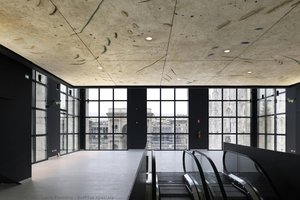
 Boschi Di Stefano House Museum
 Read More
The artwork displayed on this page is protected by copyright law, which means we cannot legally create or sell an identical reproduction. This protection is enforced under international agreements such as the Berne Convention and by national laws, including those outlined by the U.S. Copyright Law - Title 17.
This method fully complies with copyright regulations because it does not involve copying or duplicating the protected artwork. Instead, it is a creative reinterpretation - a new painting that is influenced by the original but not identical to it.
Giclée / Art Print
Museum-quality giclée or canvas print with fast production and flexible finish options. ( Buy Hand Made Painting Switch to Digital Image)




P118B $10

P118H $10

P118W $10

P438Z $10

P508JH $12

P508YH $12

P805H $10

P805Z $10

P919BZ $10

P919G $10

P919XJ $10

P959ZH $10

P968JZ $12

W106C $8

W218G $10

W218JH $8

W218Y $10

W307PJ $10

W316G $10

W316PJ $8

W316Y $10

W398PJ $8

W4111J $10

W500HY $15

W500JH $15

W692G $12

W849H $8

W940BG $15

W953PJ $8




Pick from our preset sizes that match the artwork's original proportions.

Type the width and the height you need, to fit your frame or your wall. A print can only be cut, never made bigger than the picture, so a size with a different shape loses a part of the image. We send you a digital mockup to approve before we print anything. The picture shown on this page does not show the real cut — only the mockup does.
Worldwide Delivery () in 2 weeks instead of standard 4/5 weeks. (23 October)

Free Worldwide Express Shipping

High-Quality Linen Canvas

Full Shipping Insurance

Customs Tax Refund Guarantee

True Color Matching Guarantee

100-Day Return Policy (Defects Only)

100% Money-Back Guarantee

Bulk Discount Offer
 Glass option is only available in size under 110 CM

View of
Giclée / Art Print
Reproduction Size
-


Total Price
$ 81
A Singular Gesture: The Radical Essence of Lucio Fontana’s “View of”
In the quiet intensity of Lucio Fontana's 1959 masterpiece, “View of,” one encounters more than just a minimalist composition; one meets a profound philosophical confrontation. At first glance, the canvas presents a stark, almost austere landscape: a vast expanse of white punctuated by a single, decisive black line that traverses the center. Yet, to view this work merely as an exercise in minimalism is to miss the revolutionary heartbeat of Spatialism. This piece serves as a visual manifesto, a moment where the artist deliberately shatters the traditional boundaries of representation to explore the very concept of space and existence. It is a work that does not seek to depict a scene, but rather to embody the void, inviting the viewer into a meditative state where the distinction between the surface and the infinite begins to dissolve.
The power of this artwork lies in its masterful command of materiality and texture. Unlike the smooth, illusionistic surfaces of classical painting, Fontana utilizes a burlap substrate stretched taut over a wooden frame. This choice is deeply intentional; the natural irregularities of the burlap—its subtle cracks, coarse fibers, and organic wrinkles—provide a tactile reality that grounds the ethereal white space. By applying synthetic polymer paint onto this rugged surface, Fontana embraces imperfection, allowing the physical weight of the medium to participate in the dialogue. The single black line acts as a surgical incision through the visual field, a gesture that disrupts our ingrained perceptions of depth and forces us to confront the flatness of the canvas as a real, physical entity rather than a window into another world.
The Genesis of Spatialism and the Architecture of Silence
To understand the emotional resonance of “View of,” one must look back to the historical crucible from which it emerged. Born in Argentina but deeply rooted in the Italian avant-garde, Fontana sought to move beyond the frantic dynamism of Futurism toward a state of profound stillness. He envisioned a new kind of art—one that could transcend mere depiction to capture the essence of the cosmos. This movement, known as Spatialism, was characterized by an obsession with the third dimension and the liberation of the canvas from the constraints of two-dimensional storytelling. In this work, the black line is not just a mark; it is a boundary being tested, a symbol of the artist's attempt to puncture the veil of reality and reveal the hidden dimensions of space.
For the discerning collector or interior designer, “View of” offers an unparalleled opportunity to introduce a sense of intellectual depth and sophisticated calm into a curated environment. The painting’s monochromatic palette and balanced composition make it a versatile cornerstone for modern, minimalist, or contemporary luxury interiors. It possesses a rare ability to command attention through its silence, acting as a focal point that encourages contemplation rather than distraction. Owning a high-quality reproduction of such a pivotal work means bringing into one's space not just an aesthetic object, but a piece of art history—a fragment of the moment when the twentieth century learned to look through the canvas and into the infinite.
Questions & Answers
Which artistic current is "View of" by Lucio Fontana part of?
The movement associated with "View of" by Lucio Fontana is Spatial Conceptualism. This classification situates the work among related artists and artworks.
From which era does "View of" date?
The historical period of "View of" by Lucio Fontana is Modern. This classification situates the work in art history.
Is "View of" typical of what Lucio Fontana usually created?
Among Lucio Fontana's recorded themes - futurist inspiration, spatial dimension critique, exploring artistic boundaries, argentine identity reflection, iconic fontana signature - "View of" brings its own focus on black line, canvas texture, spatial exploration, argentine art, avant garde painting, minimal composition, fontana technique.
Artist Biography
A Life Forged in Spatialism
Lucio Fontana, a name synonymous with radical innovation in 20th-century art, was born into a world poised between tradition and modernity. His journey began not in Italy, the nation he would come to define within the artistic landscape, but in Rosario, Argentina, in 1899. The son of an Italian sculptor, Luigi Fontana, young Lucio inherited a craftsman’s sensibility alongside a burgeoning artistic vision. This early exposure to form and material proved foundational, even as his life became a series of geographical and stylistic explorations. Returning to Italy with his family, he absorbed the rich cultural heritage of Europe, studying at the Brera Academy in Milan and immersing himself in the avant-garde movements that were beginning to challenge established norms. However, the pull of his origins remained strong; multiple returns to Argentina punctuated his career, shaping his perspective and fueling a desire to transcend conventional artistic boundaries. Fontana’s early work reflected this duality – initially rooted in figurative sculpture and painting, it gradually evolved towards abstraction, hinting at the revolutionary path he was destined to forge.Breaking the Canvas: The Birth of Spatialism
The devastation of World War II proved a catalyst for Fontana's most groundbreaking artistic endeavor. Witnessing the destruction and upheaval firsthand, he felt compelled to redefine art’s purpose in a world irrevocably altered. This led to the formulation of *Spatialism*, a movement that sought not merely to represent space but to incorporate it as an integral element of the artwork itself. Fontana believed traditional painting was limited by its two-dimensionality, confining art within a static plane. He envisioned a new form of expression that would break down these barriers, acknowledging the infinite depth and potential of space beyond the canvas. This wasn’t simply about creating illusions of depth; it was about physically opening up the artwork to reveal what lay *beyond*. Beginning in the late 1940s, Fontana began his now-iconic series of slashed and punctured canvases – the *Concetti Spaziali* (Spatial Concepts). These weren't acts of destruction but rather deliberate interventions, revealing a void that symbolized the vastness of the cosmos. The slashes, often executed with a razor blade, were precise and purposeful, transforming the canvas into a window onto another dimension. He wasn’t destroying the painting; he was liberating it from its limitations.Influences and Artistic Kinship
Fontana's artistic development wasn’t born in isolation. He engaged with a diverse range of influences, absorbing and transforming them into his unique visual language. The expressive power of Vincent van Gogh resonated deeply within him, particularly the emotional intensity conveyed through brushwork. He also admired the satirical edge of Pieter Bruegel the Elder, finding inspiration in the older master’s ability to critique societal flaws. However, a pivotal encounter with the work of Polish artist Jan Grzegorz Stanisławski proved particularly transformative. Stanisławski's exploration of light and color within his 'Mullein' series profoundly impacted Fontana’s approach to abstraction and spatial representation. Furthermore, his participation in groups like *Abstraction-Création* in Paris exposed him to a broader network of avant-garde artists, fostering an exchange of ideas that fueled his experimentation. While distinctively original, Fontana’s work also shares affinities with other post-war movements such as Zero and Nouveau Réalisme, all striving to redefine the boundaries of art and challenge conventional perceptions.Beyond the Slash: A Legacy of Dimensionality
While the slashed canvases remain his most recognizable achievement, Fontana's exploration of space extended beyond this singular technique. He created *hole paintings*, meticulously piercing the canvas to create actual openings that further emphasized spatial depth. He also ventured into sculpture, producing works that echoed the themes of volume and void found in his two-dimensional pieces. His *Soffitto Spaziale* (Spatial Ceiling) installations were particularly ambitious, transforming entire environments into immersive experiences designed to evoke a sense of infinite space. These large-scale creations enveloped viewers, blurring the lines between art and architecture, painting and sculpture. Fontana’s impact on subsequent generations of artists is undeniable. He paved the way for movements like Minimalism, encouraging a reductionist aesthetic focused on form and materiality. His emphasis on process and conceptual intent also anticipated aspects of Arte Povera, which embraced unconventional materials and challenged traditional notions of artistic value.A Lasting Resonance
Lucio Fontana’s death in Comabbio, Italy, in 1968, marked the end of a remarkable career but not the end of his influence. Today, his works are held in prestigious museum collections worldwide – from The Metropolitan Museum of Art to the Ballarat Fine Art Gallery in Australia – testament to his enduring legacy. He remains a pivotal figure in post-war abstract art, celebrated for his courage to challenge conventions and redefine the very essence of artistic expression. Fontana didn’t simply paint *on* canvas; he engaged with space itself, creating works that invite viewers to contemplate the infinite possibilities beyond the visible world. His legacy is not merely a collection of slashed canvases but a profound invitation to perceive reality in new and expansive ways. He demonstrated that art could be more than representation—it could be an exploration of existence itself.
Lucio Fontana
1899 - 1968 , Argentina
Quick Facts
- Artistic Movement Or Style: Spatialism
- Artists Or Movements Influenced By This Artist:
- Zero
- Nouveau Réalisme
- Minimalism
- Artists Who Influenced This Artist:
- Jan Grzegorz Stanisławski
- Vincent van Gogh
- Pieter Bruegel the Elder
- Date Of Birth: 1899
- Date Of Death: 1968
- Full Name: Lucio Fontana
- Nationality: Argentine-Italian
- Notable Artworks:
- Concetto Spaziale, Attese
- Spatial Concept
- Soffitto Spaziale
- Place Of Birth: Rosario, Argentina
Related Articles

10 Iconic Black and White Photographs That Redefined Art History
Journey through time with 10 iconic black and white photography masterpieces. Explore the stories, techniques, and legends that redefined art history. Find museum-quality reproductions and timeless decor inspiration at OriginalUniqueArt.com. Discover all masterpieces on OriginalUniqueArt.com

10 Iconic Black and White Photos That Redefined Art History
Journey through time with 10 iconic black and white photography masterpieces. From Ansel Adams to Cartier-Bresson, explore the stories behind these timeless monochrome legends. Find museum-quality art reproductions for your decor at OriginalUniqueArt.com. Discover all masterpieces online.
10 Iconic Black and White Photographs That Redefined Art History
Journey through history with 10 iconic black and white photography masterpieces. Explore the stories, techniques, and legendary artists behind these timeless monochrome works. Find museum-quality art reproductions for your space at OriginalUniqueArt.com. Discover all masterpieces online.

White on Canvas: 10 Masterpieces & Timeless Elegance for Your Home Decor
Explore 10 iconic white paintings by Monet, Whistler & Rothko! Discover the stories behind these serene masterpieces and their impact on art history. Find museum-quality reproductions for your home decor at .

10 Iconic Black and White Photographs That Redefined Art History
Journey through time with 10 iconic black and white photography masterpieces. Explore the stories of legendary artists and timeless monochrome techniques. Find museum-quality art reproductions and curated decor inspiration at OriginalUniqueArt.com. Discover all masterpieces online.