Preview
 Send
Send Share
Share
 Details
 Guide
Guide

 Download
 Similars
 X-Ray
X-Ray Diaporama
 Stats
StatsSpatial concept


 Read More
The artwork displayed on this page is protected by copyright law, which means we cannot legally create or sell an identical reproduction. This protection is enforced under international agreements such as the Berne Convention and by national laws, including those outlined by the U.S. Copyright Law - Title 17.
As a respectful and legal alternative, we offer custom, hand-painted artworks inspired by the original. Our skilled and professional artists carefully study the original's style, mood, and artistic essence to create a new, unique piece that evokes the same feeling - while remaining an original creation in its own right.
This method fully complies with copyright regulations because it does not involve copying or duplicating the protected artwork. Instead, it is a creative reinterpretation - a new painting that is influenced by the original but not identical to it.
Hand Made Oil Reproduction
Hand-painted oil on canvas in your size and frame, made to order by our artists. ( Switch to Print Switch to Digital Image)




P118B $10

P118H $10

P118W $10

P438Z $10

P508JH $12

P508YH $12

P805H $10

P805Z $10

P919BZ $10

P919G $10

P919XJ $10

P959ZH $10

P968JZ $12

W106C $8

W218G $10

W218JH $8

W218Y $10

W307PJ $10

W316G $10

W316PJ $8

W316Y $10

W398PJ $8

W4111J $10

W500HY $15

W500JH $15

W692G $12

W849H $8

W940BG $15

W953PJ $8




Pick from our preset sizes that match the artwork's original proportions.

Type the width and the height you need, to fit your frame or your wall. This is hand-painted, so for a size with a different shape the artist can paint a bit more around the picture, or cut a bit — you choose. We send you a digital mockup to approve before the painting starts. The picture shown on this page does not show the real result — only the mockup does.
After order, OriginalUniqueArt.com team will email client for instructions and provide a mockup preview
Worldwide Delivery () in 3/4 weeks instead of standard 5 weeks. (28 October). No compromise on quality.

Free Worldwide Express Shipping

High-Quality Linen Canvas

Full Shipping Insurance

Customs Tax Refund Guarantee

True Color Matching Guarantee

100-Day Return Policy (Defects Only)

100% Money-Back Guarantee

Bulk Discount Offer
 Glass option is only available in size under 110 CM

Spatial concept
Reproduction Medium
Reproduction Size
-


Total Price
$ 300
Exploring Spatial Depth: Lucio Fontana’s “Spatial Concept”
Lucio Fontana's "Spatial Concept," a deceptively simple image of a heart pierced with a hole, encapsulates the core tenets of Fontana’s groundbreaking spatialist philosophy. More than just a depiction of an anatomical symbol—the heart representing love and vulnerability—this artwork speaks to a profound reconsideration of artistic representation itself. It marks a pivotal moment in postwar art, rejecting illusionistic painting for a radical embrace of materiality and conceptual exploration.- The Visual Language of Spatialism: Fontana’s approach stemmed from his fascination with the mathematics of space—specifically, projective geometry—which challenged traditional perspective systems. He sought to dismantle the conventions of Western art by questioning how we perceive reality, arguing that painting should not merely imitate what is seen but actively engage with its underlying structure.
- Material Innovation: The artwork’s execution utilizes a technique Fontana termed “Concetti Spaziali,” or Spatial Concepts. He achieved this effect by perforating thin sheets of metal or cardboard—often painted—creating incisions that disrupt the surface and invite viewers to contemplate the emptiness beyond. This deliberate act of intervention is crucial; it isn't about filling space but rather exposing its inherent potential for expansion.
- Symbolic Resonance: The heart itself carries significant symbolic weight, representing compassion, emotion, and connection—themes central to Fontana’s humanist worldview. However, the hole transcends mere representation, functioning as a visual metaphor for openness, transformation, and the infinite possibilities inherent in existence. It suggests that true beauty lies not in completeness but in acknowledging the void.
Historical Context: Challenging Artistic Tradition
Fontana’s work emerged during a period of intense artistic experimentation following World War II. Artists across Europe were grappling with the trauma and disillusionment of the conflict, rejecting sentimental narratives for more intellectually stimulating forms of expression. Fontana's Spatial Concepts directly confronted the dominance of Cubism and Surrealism, offering an alternative path toward artistic innovation. He positioned himself as a rebel against established conventions, asserting that art should strive to transcend mere visual imitation.- Influence on Minimalism: “Spatial Concept” profoundly influenced the burgeoning minimalist movement, demonstrating the power of reductive forms and materials to convey complex ideas. Artists like Donald Judd embraced Fontana’s approach, prioritizing geometric precision and rejecting ornamentation—a deliberate rejection of the excesses of preceding artistic styles.
- A Dialogue with Eastern Philosophy: Fontana's explorations extended beyond Western art history, drawing inspiration from Zen Buddhism and Taoism. These philosophies emphasized emptiness and interconnectedness—concepts that resonated deeply with Fontana’s desire to represent the universe not as a static object but as an active process of becoming.
Emotional Impact: Contemplation and Revelation
Ultimately, “Spatial Concept” compels viewers to confront questions about perception and reality. The simple image—a heart pierced with a hole—provokes contemplation on themes of vulnerability, transformation, and the boundless expanse of existence. Fontana’s intention wasn't merely to depict something beautiful; he sought to elicit an emotional response—one that acknowledges the inherent limitations of human understanding while simultaneously embracing the possibility of revelation. The artwork invites us to consider what lies beyond our immediate grasp, prompting a deeper engagement with both art and life itself.Questions & Answers
What art movement does "Spatial concept" by Lucio Fontana belong to?
"Spatial concept" by Lucio Fontana belongs to the Spatialism movement. This movement provides the stylistic context of the work.
Can I preview "Spatial concept" by Lucio Fontana before ordering?
A preview of "Spatial concept" by Lucio Fontana is available on the artwork's Preview page.
Is "Spatial concept" available as a fine art print?
A print of "Spatial concept" by Lucio Fontana can be ordered directly on its Fine Art Print page: a fine art print on cotton canvas or archival canvas paper.
Artist Biography
A Life Forged in Spatialism
Lucio Fontana, a name synonymous with radical innovation in 20th-century art, was born into a world poised between tradition and modernity. His journey began not in Italy, the nation he would come to define within the artistic landscape, but in Rosario, Argentina, in 1899. The son of an Italian sculptor, Luigi Fontana, young Lucio inherited a craftsman’s sensibility alongside a burgeoning artistic vision. This early exposure to form and material proved foundational, even as his life became a series of geographical and stylistic explorations. Returning to Italy with his family, he absorbed the rich cultural heritage of Europe, studying at the Brera Academy in Milan and immersing himself in the avant-garde movements that were beginning to challenge established norms. However, the pull of his origins remained strong; multiple returns to Argentina punctuated his career, shaping his perspective and fueling a desire to transcend conventional artistic boundaries. Fontana’s early work reflected this duality – initially rooted in figurative sculpture and painting, it gradually evolved towards abstraction, hinting at the revolutionary path he was destined to forge.Breaking the Canvas: The Birth of Spatialism
The devastation of World War II proved a catalyst for Fontana's most groundbreaking artistic endeavor. Witnessing the destruction and upheaval firsthand, he felt compelled to redefine art’s purpose in a world irrevocably altered. This led to the formulation of *Spatialism*, a movement that sought not merely to represent space but to incorporate it as an integral element of the artwork itself. Fontana believed traditional painting was limited by its two-dimensionality, confining art within a static plane. He envisioned a new form of expression that would break down these barriers, acknowledging the infinite depth and potential of space beyond the canvas. This wasn’t simply about creating illusions of depth; it was about physically opening up the artwork to reveal what lay *beyond*. Beginning in the late 1940s, Fontana began his now-iconic series of slashed and punctured canvases – the *Concetti Spaziali* (Spatial Concepts). These weren't acts of destruction but rather deliberate interventions, revealing a void that symbolized the vastness of the cosmos. The slashes, often executed with a razor blade, were precise and purposeful, transforming the canvas into a window onto another dimension. He wasn’t destroying the painting; he was liberating it from its limitations.Influences and Artistic Kinship
Fontana's artistic development wasn’t born in isolation. He engaged with a diverse range of influences, absorbing and transforming them into his unique visual language. The expressive power of Vincent van Gogh resonated deeply within him, particularly the emotional intensity conveyed through brushwork. He also admired the satirical edge of Pieter Bruegel the Elder, finding inspiration in the older master’s ability to critique societal flaws. However, a pivotal encounter with the work of Polish artist Jan Grzegorz Stanisławski proved particularly transformative. Stanisławski's exploration of light and color within his 'Mullein' series profoundly impacted Fontana’s approach to abstraction and spatial representation. Furthermore, his participation in groups like *Abstraction-Création* in Paris exposed him to a broader network of avant-garde artists, fostering an exchange of ideas that fueled his experimentation. While distinctively original, Fontana’s work also shares affinities with other post-war movements such as Zero and Nouveau Réalisme, all striving to redefine the boundaries of art and challenge conventional perceptions.Beyond the Slash: A Legacy of Dimensionality
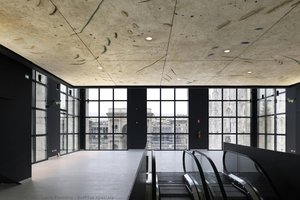
While the slashed canvases remain his most recognizable achievement, Fontana's exploration of space extended beyond this singular technique. He created *hole paintings*, meticulously piercing the canvas to create actual openings that further emphasized spatial depth. He also ventured into sculpture, producing works that echoed the themes of volume and void found in his two-dimensional pieces. His *Soffitto Spaziale* (Spatial Ceiling) installations were particularly ambitious, transforming entire environments into immersive experiences designed to evoke a sense of infinite space. These large-scale creations enveloped viewers, blurring the lines between art and architecture, painting and sculpture. Fontana’s impact on subsequent generations of artists is undeniable. He paved the way for movements like Minimalism, encouraging a reductionist aesthetic focused on form and materiality. His emphasis on process and conceptual intent also anticipated aspects of Arte Povera, which embraced unconventional materials and challenged traditional notions of artistic value.A Lasting Resonance
Lucio Fontana’s death in Comabbio, Italy, in 1968, marked the end of a remarkable career but not the end of his influence. Today, his works are held in prestigious museum collections worldwide – from The Metropolitan Museum of Art to the Ballarat Fine Art Gallery in Australia – testament to his enduring legacy. He remains a pivotal figure in post-war abstract art, celebrated for his courage to challenge conventions and redefine the very essence of artistic expression. Fontana didn’t simply paint *on* canvas; he engaged with space itself, creating works that invite viewers to contemplate the infinite possibilities beyond the visible world. His legacy is not merely a collection of slashed canvases but a profound invitation to perceive reality in new and expansive ways. He demonstrated that art could be more than representation—it could be an exploration of existence itself.
Lucio Fontana
1899 - 1968 , Argentina
Quick Facts
- Artistic Movement Or Style: Spatialism
- Artists Or Movements Influenced By This Artist:
- Zero
- Nouveau Réalisme
- Minimalism
- Artists Who Influenced This Artist:
- Jan Grzegorz Stanisławski
- Vincent van Gogh
- Pieter Bruegel the Elder
- Date Of Birth: 1899
- Date Of Death: 1968
- Full Name: Lucio Fontana
- Nationality: Argentine-Italian
- Notable Artworks:
- Concetto Spaziale, Attese
- Spatial Concept
- Soffitto Spaziale
- Place Of Birth: Rosario, Argentina