Text size

() ·

A painting made for you, by hand

Donna con fiore

Hand Made Oil Reproduction

Hand-painted oil on canvas in your size and frame, made to order by our artists. ( Switch to Print Switch to Digital Image)

Collectible Description

Lucio Fontana's 'Donna con fiore' is a striking ceramic sculpture embodying spatialism and feminine beauty. Explore its dynamic form, rich textures, and the artist’s innovative approach to three-dimensional art.

Artist Biography

Explore the revolutionary art of Lucio Fontana (1899-1968), founder of Spatialism! Discover his iconic slashed canvases & pioneering abstract sculptures that redefined modern art.

from ·

Chapter 1

How large should it be?

Slide to change the size; the picture on the left shows the frame at its real width. The proportions of the original are kept.

Standard
custom
CM
INCH

Pick from our preset sizes that match the artwork's original proportions.

width
height

Type the width and the height you need, to fit your frame or your wall. This is hand-painted, so for a size with a different shape the artist can paint a bit more around the picture, or cut a bit — you choose. We send you a digital mockup to approve before the painting starts. The picture shown on this page does not show the real result — only the mockup does.

Chapter 2

How should it arrive?

Choose the edges of the stretched canvas

Choose your frame

Corner sample of the WhiteWrap canvas edge finish, stretched on solid wood bars
White $1
Corner sample of the BlurSideWrap canvas edge finish, stretched on solid wood bars
Blurside $1
Corner sample of the ExtendedWrap canvas edge finish, stretched on solid wood bars
Extended $1
Corner sample of the P118B picture frame: moulded polystyrene, 5 cm wide and 3 cm thick
P118B $10
Corner sample of the P118H picture frame: moulded polystyrene, 5 cm wide and 3 cm thick
P118H $10
Corner sample of the P118W picture frame: moulded polystyrene, 5 cm wide and 3 cm thick
P118W $10
Corner sample of the P438Z picture frame: moulded polystyrene, 5.5 cm wide and 3.5 cm thick
P438Z $10
Corner sample of the P508JH picture frame: moulded polystyrene, 7 cm wide and 3.5 cm thick
P508JH $12
Corner sample of the P508YH picture frame: moulded polystyrene, 7 cm wide and 3.5 cm thick
P508YH $12
Corner sample of the P805H picture frame: moulded polystyrene, 5 cm wide and 3.5 cm thick
P805H $10
Corner sample of the P805Z picture frame: moulded polystyrene, 5 cm wide and 3.5 cm thick
P805Z $10
Corner sample of the P919BZ picture frame: moulded polystyrene, 7 cm wide and 3.5 cm thick
P919BZ $10
Corner sample of the P919G picture frame: moulded polystyrene, 7 cm wide and 3.5 cm thick
P919G $10
Corner sample of the P919XJ picture frame: moulded polystyrene, 7 cm wide and 3.5 cm thick
P919XJ $10
Corner sample of the P959ZH picture frame: moulded polystyrene, 5 cm wide and 3 cm thick
P959ZH $10
Corner sample of the P968JZ picture frame: moulded polystyrene, 6 cm wide and 4 cm thick
P968JZ $12
Corner sample of the W106C picture frame: solid wood, 5 cm wide and 3 cm thick
W106C $8
Corner sample of the W218G picture frame: solid wood, 5 cm wide and 3 cm thick
W218G $10
Corner sample of the W218JH picture frame: solid wood, 5 cm wide and 3 cm thick
W218JH $8
Corner sample of the W218Y picture frame: solid wood, 5 cm wide and 3 cm thick
W218Y $10
Corner sample of the W307PJ picture frame: solid wood, 6 cm wide and 3 cm thick
W307PJ $10
Corner sample of the W316G picture frame: solid wood, 6 cm wide and 3 cm thick
W316G $10
Corner sample of the W316PJ picture frame: solid wood, 6 cm wide and 3 cm thick
W316PJ $8
Corner sample of the W316Y picture frame: solid wood, 6 cm wide and 3 cm thick
W316Y $10
Corner sample of the W398PJ picture frame: solid wood, 5 cm wide and 3 cm thick
W398PJ $8
Corner sample of the W4111J picture frame: solid wood, 6.5 cm wide and 3.5 cm thick
W4111J $10
Corner sample of the W500HY picture frame: solid wood, 7 cm wide and 5 cm thick
W500HY $15
Corner sample of the W500JH picture frame: solid wood, 7 cm wide and 5 cm thick
W500JH $15
Corner sample of the W692G picture frame: solid wood, 8 cm wide and 4 cm thick
W692G $12
Corner sample of the W849H picture frame: solid wood, 5 cm wide and 3 cm thick
W849H $8
Corner sample of the W940BG picture frame: solid wood, 7.5 cm wide and 4.5 cm thick
W940BG $15
Corner sample of the W953PJ picture frame: solid wood, 6 cm wide and 3.5 cm thick
W953PJ $8
Corner sample of the H24-GOLD picture frame: carved wood with gesso, 10 cm wide and 6 cm thick
H24-GOLD $30
Corner sample of the H24-SILVER picture frame: carved wood with gesso, 10 cm wide and 6 cm thick
H24-SILVER $30
Corner sample of the H36-GOLD picture frame: carved wood with gesso, 15 cm wide and 6.5 cm thick
H36-GOLD $45
Corner sample of the H36-SILVER picture frame: carved wood with gesso, 15 cm wide and 6.5 cm thick
H36-SILVER $45
Frame preview
Framed

Moulding: . Overall size with the frame: .

Chapter 3

Who paints it, and should anything change?

Examples of what can be changed: Replace face with customer photo; Add pet (e.g., replace cat with dog); Include hidden message in background; Change background landscape or elements.
After order, OriginalUniqueArt.com team will email client for instructions and provide a mockup preview

Worldwide Delivery () in 3/4 weeks instead of standard 5 weeks. (1 November). No compromise on quality.

Chapter 4

The finishing touches

A nameplate, as in a museum?

Engraved Bronze Plaque Details

This elegant plaque features the artist's name and the title of the artwork, finely engraved for a timeless presentation.

It is made from bronze with a refined, elegant finish. The text is precisely laser-engraved for a sharp and permanent result. Measuring 9x2 cm, the plaque is compact yet easy to read. It's built to be durable and scratch-resistant, offering a professional, museum-quality look. Mounting is simple thanks to the included adhesive backing.

Transparent Acrylic Plaque Details

The plaque includes essential engraved details such as the artist's name, the title of the artwork, the date it was created, the type of media used-like oil on canvas or watercolor-a brief description of the piece, and a QR code that links to the complete artwork information.

It is crafted from clear acrylic, offering a sleek, modern appearance. The text is UV-engraved in black to ensure strong visual contrast. With a size of 10x15 cm, it ensures optimal readability. It comes equipped with two metal hooks for secure wall mounting. The plaque is designed to be weather-resistant, making it suitable for various environments, and it includes interactive features that work seamlessly with smartphone scanning.

Black Acrylic Plaque Details

This elegant plaque includes engraved information such as the artist's name, the title of the artwork, the date it was created, the type of media used (like oil on canvas or watercolor), a short description of the artwork, and a QR code for quick access to more information.

The plaque itself is made from refined black acrylic with a premium finish. The text is laser-engraved in white for high contrast and readability. Its size is 10x15 cm, designed to be easy to read. It comes with two metal hooks for professional mounting. The design is sleek and fits any interior style. It is also weather-resistant and durable, with built-in digital integration for mobile compatibility.

A protective varnish?

When do you need it?

Chapter 5

Your painting, as you ordered it

Donna con fiore

Reproduction Medium

Reproduction Size

-

Elite Senior Artist

More detail, finesse, and extra production time

-

Reproduction Frame

-

-

For artworks or reproductions larger than 105 cm (approximately 41 inches) on any side, the frame will be shipped as a kit, disassembled. This method ensures safe delivery and prevents damage during transport.

Professional assembly required - this is not a DIY product.
The kit must be assembled and the canvas stretched by an experienced professional framer, using wood glue (not supplied), a canvas stretching plier and clamps to hold the bars square while the glue dries. Incorrect assembly or uneven canvas tension can permanently damage the artwork and is not covered by our warranty.

  • All solid wood bars are included, precisely cut to size.

  • Assembled with the screws provided, plus wood glue for the corner joints, which is not supplied and must be sourced by your framer.

  • Professional tools are required and not included: a canvas stretching plier (tensioner) and clamps to hold the bars square while the glue dries.

Important:
The corner joints require wood glue, the bars must be held with clamps until the glue is fully dry, and tightening the canvas on the assembled frame requires a canvas stretching plier. None of these are included in the kit. Please arrange an experienced professional framer before ordering this size.

Nameplate

-

-

Protective Varnish

Glossy Varnish (enhances colors, protects against light/moisture)

-

Customize My Artwork

Examples of what can be changed: Replace face with customer photo; Add pet (e.g., replace cat with dog); Include hidden message in background; Change background landscape or elements.

-

Urgent

Worldwide Delivery () in 3/4 weeks instead of standard 5 weeks. (1 November). No compromise on quality.

-

Express Shipping

Worldwide Delivery () in 5 weeks. (8 November).

Included

Total Price

$ 300

Total Price $ 300

Glass option is only available in size under 110 CM

Included with every order

  • Free Worldwide Express Shipping
  • High-Quality Linen Canvas
  • Full Shipping Insurance
  • Customs Tax Refund Guarantee
  • True Color Matching Guarantee
  • 100-Day Return Policy (Defects Only)
  • 100% Money-Back Guarantee
  • Bulk Discount Offer

A Fragmented Reality: Exploring the Sculptural Depth of *Donna con fiore*

Lucio Fontana’s *Donna con fiore*, a captivating ceramic sculpture from 1948, isn't merely a representation of a woman holding a flower; it’s an invitation into a realm where form and space converge, challenging the very definition of art. Created during a pivotal period in Fontana’s artistic evolution – a time when he was transitioning from figurative painting to his groundbreaking Spatialism – this piece embodies the spirit of experimentation and radical innovation that characterized his career. The work immediately draws the eye with its striking contrast: the robust, almost monumental presence of the female figure sculpted from dark clay is juxtaposed against the delicate, vibrant bloom held aloft, creating a dynamic tension between strength and fragility.

Fontana’s approach to sculpture during this period was revolutionary. He moved beyond traditional modeling techniques, embracing a more conceptual and process-oriented method. The ceramic itself, meticulously crafted and glazed in rich browns and blacks, possesses a tactile quality – one can almost feel the ridges and valleys of the hand-built surface. This physicality is further emphasized by the subtle variations in tone and texture, suggesting layers of application and deliberate manipulation. The choice of clay, with its inherent earthiness and ability to hold form, speaks to Fontana’s deep connection with material and his desire to move beyond purely intellectual concepts.

Spatialism and the Dissolution of Boundaries

To fully appreciate *Donna con fiore*, it's crucial to understand Fontana’s core philosophy of Spatialism. Born from a rejection of traditional artistic conventions, Spatialism sought to dissolve the boundaries between painting and sculpture, two-dimensionality and three-dimensionality, interior and exterior. Fontana believed that art should not simply represent reality but actively engage with space itself – creating environments where viewers could experience the illusion of depth and movement. *Donna con fiore* exemplifies this principle perfectly. The figure’s pose, seemingly poised to step forward, invites the viewer into her world, while the slash-like cuts on the base subtly suggest a fragmentation of the perceived reality, echoing the core tenets of Spatialism.

The sculpture's placement against a plain white background further amplifies this effect. The stark simplicity of the backdrop serves to isolate and highlight the figure’s form, emphasizing its three-dimensional presence and creating a sense of dramatic tension. It’s as if Fontana is stripping away all extraneous elements, leaving only the essential essence of space and form to speak for itself.

Symbolism: Femininity, Nature, and the Void

The symbolism within *Donna con fiore* is layered and open to interpretation. The woman herself can be seen as a representation of feminine strength and grace, while the flower she holds evokes notions of beauty, fertility, and connection with nature. However, Fontana’s work often transcends simple allegorical readings. The dark tones of the sculpture – browns and blacks – introduce an element of melancholy or introspection, suggesting a deeper emotional resonance beyond mere surface beauty. The cuts on the base can be interpreted as symbolic of a rupture, a disruption of established order, or even a glimpse into the void—a concept central to Spatialism’s exploration of the infinite.

Furthermore, the sculpture's overall composition – the verticality of the figure contrasted with the horizontal expanse of the base – creates a dynamic tension that mirrors the complexities of human experience. It is a work that invites contemplation and rewards repeated viewing, revealing new layers of meaning with each encounter.

A Legacy of Innovation: Fontana’s Enduring Influence

Lucio Fontana's *Donna con fiore* stands as a testament to his pioneering spirit and his profound impact on the history of modern art. His exploration of spatiality, combined with his innovative use of materials and techniques, paved the way for countless artists who followed in his footsteps. Today, this sculpture continues to captivate viewers with its striking beauty, intellectual depth, and emotional resonance – a powerful reminder of Fontana’s enduring legacy as one of the most revolutionary figures in 20th-century art.

Questions & Answers

Where do the visitors of "Donna con fiore" by Lucio Fontana come from?

The Stats page of "Donna con fiore" by Lucio Fontana presents public visit statistics: monthly visits of this artwork, a comparison with the artist's most viewed works, and where its visitors come from.

What size and orientation are recommended for a print of "Donna con fiore" by Lucio Fontana?

For "Donna con fiore", the recommended print setup is a medium size and a portrait orientation.

Where can I find a guide to "Donna con fiore"?

The Guide page of "Donna con fiore" by Lucio Fontana offers a printable two-sheet factsheet: the artwork with its identity table, a decade band placing it in the artist's lifetime, other works by the artist, the measured color palette, and ready-to-copy citations in four styles.

More about this painting

Preview AR preview Switch to Print Switch to Digital Image Send
Details Guide Add to favorites Download Similars X-Ray Diaporama Q&A Stats

In numbers

  • 29frames to choose from
  • standard sizes, in its own proportions
  • 5weeks to paint and deliver it

About the original

Lucio Fontana

Lucio Fontana

1899 - 1968, Argentina

Quick facts about Lucio Fontana

  • Artistic Movement Or Style: Spatialism
  • Artists Or Movements Influenced By This Artist:
    • Zero
    • Nouveau Réalisme
    • Minimalism
  • Artists Who Influenced This Artist:
    • Jan Grzegorz Stanisławski
    • Vincent van Gogh
    • Pieter Bruegel the Elder
  • Date Of Birth: 1899
  • Date Of Death: 1968
  • Full Name: Lucio Fontana
  • Nationality: Argentine-Italian
  • Notable Artworks:
    • Concetto Spaziale, Attese
    • Spatial Concept
    • Soffitto Spaziale
  • Place Of Birth: Rosario, Argentina

Artist Biography

A Life Forged in Spatialism

Lucio Fontana, a name synonymous with radical innovation in 20th-century art, was born into a world poised between tradition and modernity. His journey began not in Italy, the nation he would come to define within the artistic landscape, but in Rosario, Argentina, in 1899. The son of an Italian sculptor, Luigi Fontana, young Lucio inherited a craftsman’s sensibility alongside a burgeoning artistic vision. This early exposure to form and material proved foundational, even as his life became a series of geographical and stylistic explorations. Returning to Italy with his family, he absorbed the rich cultural heritage of Europe, studying at the Brera Academy in Milan and immersing himself in the avant-garde movements that were beginning to challenge established norms. However, the pull of his origins remained strong; multiple returns to Argentina punctuated his career, shaping his perspective and fueling a desire to transcend conventional artistic boundaries. Fontana’s early work reflected this duality – initially rooted in figurative sculpture and painting, it gradually evolved towards abstraction, hinting at the revolutionary path he was destined to forge.

Breaking the Canvas: The Birth of Spatialism

The devastation of World War II proved a catalyst for Fontana's most groundbreaking artistic endeavor. Witnessing the destruction and upheaval firsthand, he felt compelled to redefine art’s purpose in a world irrevocably altered. This led to the formulation of *Spatialism*, a movement that sought not merely to represent space but to incorporate it as an integral element of the artwork itself. Fontana believed traditional painting was limited by its two-dimensionality, confining art within a static plane. He envisioned a new form of expression that would break down these barriers, acknowledging the infinite depth and potential of space beyond the canvas. This wasn’t simply about creating illusions of depth; it was about physically opening up the artwork to reveal what lay *beyond*. Beginning in the late 1940s, Fontana began his now-iconic series of slashed and punctured canvases – the *Concetti Spaziali* (Spatial Concepts). These weren't acts of destruction but rather deliberate interventions, revealing a void that symbolized the vastness of the cosmos. The slashes, often executed with a razor blade, were precise and purposeful, transforming the canvas into a window onto another dimension. He wasn’t destroying the painting; he was liberating it from its limitations.

Influences and Artistic Kinship

Fontana's artistic development wasn’t born in isolation. He engaged with a diverse range of influences, absorbing and transforming them into his unique visual language. The expressive power of Vincent van Gogh resonated deeply within him, particularly the emotional intensity conveyed through brushwork. He also admired the satirical edge of Pieter Bruegel the Elder, finding inspiration in the older master’s ability to critique societal flaws. However, a pivotal encounter with the work of Polish artist Jan Grzegorz Stanisławski proved particularly transformative. Stanisławski's exploration of light and color within his 'Mullein' series profoundly impacted Fontana’s approach to abstraction and spatial representation. Furthermore, his participation in groups like *Abstraction-Création* in Paris exposed him to a broader network of avant-garde artists, fostering an exchange of ideas that fueled his experimentation. While distinctively original, Fontana’s work also shares affinities with other post-war movements such as Zero and Nouveau Réalisme, all striving to redefine the boundaries of art and challenge conventional perceptions.

Beyond the Slash: A Legacy of Dimensionality

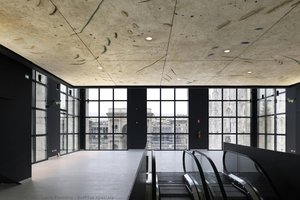
While the slashed canvases remain his most recognizable achievement, Fontana's exploration of space extended beyond this singular technique. He created *hole paintings*, meticulously piercing the canvas to create actual openings that further emphasized spatial depth. He also ventured into sculpture, producing works that echoed the themes of volume and void found in his two-dimensional pieces. His *Soffitto Spaziale* (Spatial Ceiling) installations were particularly ambitious, transforming entire environments into immersive experiences designed to evoke a sense of infinite space. These large-scale creations enveloped viewers, blurring the lines between art and architecture, painting and sculpture. Fontana’s impact on subsequent generations of artists is undeniable. He paved the way for movements like Minimalism, encouraging a reductionist aesthetic focused on form and materiality. His emphasis on process and conceptual intent also anticipated aspects of Arte Povera, which embraced unconventional materials and challenged traditional notions of artistic value.

A Lasting Resonance

Lucio Fontana’s death in Comabbio, Italy, in 1968, marked the end of a remarkable career but not the end of his influence. Today, his works are held in prestigious museum collections worldwide – from The Metropolitan Museum of Art to the Ballarat Fine Art Gallery in Australia – testament to his enduring legacy. He remains a pivotal figure in post-war abstract art, celebrated for his courage to challenge conventions and redefine the very essence of artistic expression. Fontana didn’t simply paint *on* canvas; he engaged with space itself, creating works that invite viewers to contemplate the infinite possibilities beyond the visible world. His legacy is not merely a collection of slashed canvases but a profound invitation to perceive reality in new and expansive ways. He demonstrated that art could be more than representation—it could be an exploration of existence itself.

Quick Facts

  • Year: 1948
  • Location: Mart, Trento
  • Subject or theme: Female figure
  • Dimensions: 122 x 54.5 x 48.5 cm
  • Notable elements: Slashes, monochrome
  • Medium: Ceramic glazed

Art Quiz

There is only one correct answer for each question.

Question 1:
What is the primary material used in Lucio Fontana’s sculpture ‘Donna con fiore’?
Question 2:
According to the description, what is a key characteristic of the sculpture's surface texture?
Question 3:
Lucio Fontana is best known for his pioneering work in which artistic movement?
Question 4:
The sculpture’s composition primarily focuses on:
Question 5:
What is the overall mood or feeling evoked by the sculpture’s dark color palette?