Preview
 Send
Send Share
Share
 Details
 Guide
Guide

 Download
 Similars
 X-Ray
X-Ray Diaporama
 Stats
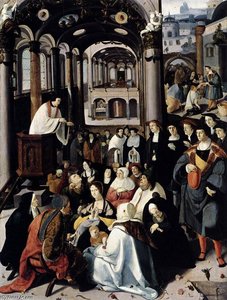
StatsCain Killing Abel
 Etching
- Early Renaissance
 1520
1520- Renaissance
 114.0 x 86.0 cm
 Rijksmuseum
 Read More
Giclée / Art Print
Museum-quality giclée or canvas print with fast production and flexible finish options. ( Buy Hand Made Painting Switch to Digital Image)




P118B $10

P118H $10

P118W $10

P438Z $10

P508JH $12

P508YH $12

P805H $10

P805Z $10

P919BZ $10

P919G $10

P919XJ $10

P959ZH $10

P968JZ $12

W106C $8

W218G $10

W218JH $8

W218Y $10

W307PJ $10

W316G $10

W316PJ $8

W316Y $10

W398PJ $8

W4111J $10

W500HY $15

W500JH $15

W692G $12

W849H $8

W940BG $15

W953PJ $8




Pick from our preset sizes that match the artwork's original proportions.

Type the width and the height you need, to fit your frame or your wall. A print can only be cut, never made bigger than the picture, so a size with a different shape loses a part of the image. We send you a digital mockup to approve before we print anything. The picture shown on this page does not show the real cut — only the mockup does.
Worldwide Delivery () in 2 weeks instead of standard 4/5 weeks. (23 October)

Free Worldwide Express Shipping

High-Quality Linen Canvas

Full Shipping Insurance

Customs Tax Refund Guarantee

True Color Matching Guarantee

100-Day Return Policy (Defects Only)

100% Money-Back Guarantee

Bulk Discount Offer
 Glass option is only available in size under 110 CM

Cain Killing Abel
Giclée / Art Print
Reproduction Size
-


Total Price
$ 81
The Weight of Sin: An Encounter with Cain Killing Abel
To stand before an image like Lucas van Leyden's Cain Killing Abel is to confront a moment of primal human failure, rendered with the meticulous grace of the early Renaissance. This etching, dating from 1520, transcends mere depiction; it captures the visceral echo of fratricide—a foundational tragedy woven into the tapestry of biblical narrative. The scene unfolds in a stark natural landscape, where the lushness of the foliage and trees serves only to heighten the drama unfolding in the foreground. It is a tableau vivant of irreversible action, forcing the viewer to bear witness to the instant when jealousy curdles into deadly force.
Mastery in Line: Technique and Detail
Van Leyden’s command over the etching medium is nothing short of breathtaking. The piece is a profound study in line work; observe how the artist utilizes fine lines and intricate cross-hatching not merely to shade, but to build palpable texture—the rough grain of the earth beneath Abel, the taut musculature of Cain, the very air thick with impending violence. This technical virtuosity, characteristic of early Dutch printmaking, lends an almost unsettling realism to the composition. The interplay of light and shadow is handled with such care that it sculpts the figures out of the monochrome depth, giving weight and gravity to every outstretched arm and fallen body.
Symbolism in Stone: Interpreting the Narrative
The narrative itself—the confrontation between Cain and Abel—is steeped in potent symbolism. The contrast between the two figures is immediate and devastating. Cain, poised with an object of potential destruction, embodies unchecked rage and consequence. Conversely, Abel lies victim to this sudden brutality, his prone form speaking volumes about innocence violated. The surrounding natural world acts as a silent, indifferent witness; it frames the human drama without offering solace or judgment. This juxtaposition—the vibrant life suggested by the background against the stark finality of the foreground action—is what gives the work its enduring emotional resonance.
Bringing History Home: Reproduction for the Modern Collector
For those who wish to integrate such a powerful piece of art into their contemporary living space, acquiring a high-quality reproduction of this etching offers an unparalleled connection to artistic history. Our hand-painted reproductions are crafted with exceptional attention to detail, striving to mirror the depth and nuance of Van Leyden’s original 1520 work. Owning this piece allows one not only to decorate a room but to curate a dialogue with the masters of the Renaissance. It is an investment in narrative power, technical brilliance, and timeless human emotion.
Questions & Answers
What is "Cain Killing Abel" made with, and in which style?
"Cain Killing Abel" is made in etching, in the Early Renaissance style.
Is "Cain Killing Abel" free of copyright?
"Cain Killing Abel" by Lucas van Leyden is in the public domain - its copyright has expired. This status governs how the image of the work may be reproduced.
What mood and emotion come together in "Cain Killing Abel"?
"Cain Killing Abel" by Lucas van Leyden conveys a melancholic feeling within an overall dramatic mood.
Artist Biography
early life and training
lucas van leyden, a dutch painter and printmaker, was born in 1494 in leiden, netherlands. he was the son of huygh jacobsz, a painter, and began his artistic training under his father's guidance. later, he joined the workshop of cornelis engelbrechtsz in 1508, where he refined his skills.artistic development
lucas van leyden was among the first dutch exponents of genre painting and a highly accomplished engraver. his early work, characterized by half-length figures (c. 1506-1512), showcases his precocious originality. as he matured, his landscapes developed, and he became skilled in engraving at a remarkably young age. the earliest known print by him, mohammed and the murdered monk (1508), demonstrates his mastery of the medium.notable works and style
seventeen paintings surely attributed to lucas van leyden survive, including:- the healing of the blind man of jericho, a masterpiece showcasing multiple figures against wooded landscapes.
- saint paul, attr. leyden, exemplifying his engraving prowess.
- the milkmaid (engraving, 1510), highlighting his early skill in the medium.
museum collections and online presence
lucas van leyden's works can be found in various museums, including the van gogh museum (netherlands), which houses an extensive collection of his engravings and paintings. online platforms like OriginalUniqueArt.com offer a comprehensive selection of his works, allowing art enthusiasts to explore his oeuvre in detail.legacy
lucas van leyden's contributions to dutch genre painting and engraving are undeniable. his innovative style and technical skill have made him a celebrated figure in the art world. as a pioneer of dutch art, his legacy continues to inspire artists and art lovers alike.- view lucas van leyden's artworks on OriginalUniqueArt.com
- explore the van gogh museum (netherlands) collection online
- discover more about dutch art and its pioneers on OriginalUniqueArt.com's blog

Lucas van Leyden
1494 - 1533 , Netherlands
Quick Facts
- Full Name: Lucas Hugensz van Leyden
- Nationality: Dutch
- Date Of Birth: 1494
- Date Of Death: 1533
- Place Of Birth: Leiden, Netherlands
- Notable Artworks:
- The Healing of the Blind Man of Jericho
- Saint Paul
- The Milkmaid
- Artistic Movement Or Style: Early Netherlandish Renaissance
- Artists Who Influenced This Artist: ['Albrecht Dürer']
- Artists Or Movements Influenced By This Artist: ['German Renaissance']
Related Articles

Giclée Prints: Archival Quality & Aesthetic Nuances for the Discerning Collector
Explore the world of giclée prints with OriginalUniqueArt. Learn about archival quality, aesthetic nuances & investment potential. Expert guidance for discerning art collectors seeking museum-quality reproductions and lasting value.

Echoes of Time: Exploring the Enduring Appeal & Historical Context of Vintage Art Prints
Explore the captivating world of vintage art prints! Discover their history, collecting tips & enduring appeal. Expert insights on chromolithography and building a legacy collection with OriginalUniqueArt.

The Enduring Legacy of Fine Art Prints: Technique, History & Aesthetic Impact
Explore the rich history & techniques of fine art prints. Discover investment potential, assess authenticity, and learn how to preserve your collection with expert guidance. Trusted insights for discerning collectors.

Rembrandt's Masterpieces: Explore 25 Iconic Paintings & Prints | OriginalUniqueArt
Journey through Rembrandt van Rijn's 25 most iconic paintings & etchings. Explore Dutch Golden Age masterpieces, dramatic chiaroscuro, and timeless portraits. Find museum-quality art reproductions to elevate your home decor on OriginalUniqueArt.com.

Lucas van Leyden: Innovation & Intimacy in Early Netherlandish Printmaking
Explore the groundbreaking prints of Lucas van Leyden, a Dutch master bridging Gothic detail & Renaissance innovation. Discover his rare works, investment potential, and legacy for discerning collectors.