() ·

A painting made for you, by hand

The Paradise

Hand Made Oil Reproduction

Hand-painted oil on canvas in your size and frame, made to order by our artists. ( Switch to Print Switch to Digital Image)

Collectible Description

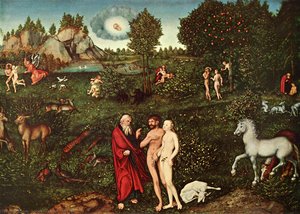
Lucas Cranach the Elder's "The Paradise" (1530) depicts a biblical scene with striking figures and vibrant colors, showcasing the artist’s mastery of religious art & Renaissance detail.

Artist Biography

A German Renaissance master known for his portraits of Martin Luther. Explore the captivating works of Lucas Cranach the Elder today.

from ·

Chapter 1

How large should it be?

Slide to change the size; the picture on the left shows the frame at its real width. The proportions of the original are kept.

Standard
custom
CM
INCH

Pick from our preset sizes that match the artwork's original proportions.

width
height

Type the width and the height you need, to fit your frame or your wall. This is hand-painted, so for a size with a different shape the artist can paint a bit more around the picture, or cut a bit — you choose. We send you a digital mockup to approve before the painting starts. The picture shown on this page does not show the real result — only the mockup does.

Chapter 2

How should it arrive?

Choose the edges of the stretched canvas

Choose your frame

Corner sample of the WhiteWrap canvas edge finish, stretched on solid wood bars
White $1
Corner sample of the BlurSideWrap canvas edge finish, stretched on solid wood bars
Blurside $1
Corner sample of the ExtendedWrap canvas edge finish, stretched on solid wood bars
Extended $1
Corner sample of the P118B picture frame: moulded polystyrene, 5 cm wide and 3 cm thick
P118B $10
Corner sample of the P118H picture frame: moulded polystyrene, 5 cm wide and 3 cm thick
P118H $10
Corner sample of the P118W picture frame: moulded polystyrene, 5 cm wide and 3 cm thick
P118W $10
Corner sample of the P438Z picture frame: moulded polystyrene, 5.5 cm wide and 3.5 cm thick
P438Z $10
Corner sample of the P508JH picture frame: moulded polystyrene, 7 cm wide and 3.5 cm thick
P508JH $12
Corner sample of the P508YH picture frame: moulded polystyrene, 7 cm wide and 3.5 cm thick
P508YH $12
Corner sample of the P805H picture frame: moulded polystyrene, 5 cm wide and 3.5 cm thick
P805H $10
Corner sample of the P805Z picture frame: moulded polystyrene, 5 cm wide and 3.5 cm thick
P805Z $10
Corner sample of the P919BZ picture frame: moulded polystyrene, 7 cm wide and 3.5 cm thick
P919BZ $10
Corner sample of the P919G picture frame: moulded polystyrene, 7 cm wide and 3.5 cm thick
P919G $10
Corner sample of the P919XJ picture frame: moulded polystyrene, 7 cm wide and 3.5 cm thick
P919XJ $10
Corner sample of the P959ZH picture frame: moulded polystyrene, 5 cm wide and 3 cm thick
P959ZH $10
Corner sample of the P968JZ picture frame: moulded polystyrene, 6 cm wide and 4 cm thick
P968JZ $12
Corner sample of the W106C picture frame: solid wood, 5 cm wide and 3 cm thick
W106C $8
Corner sample of the W218G picture frame: solid wood, 5 cm wide and 3 cm thick
W218G $10
Corner sample of the W218JH picture frame: solid wood, 5 cm wide and 3 cm thick
W218JH $8
Corner sample of the W218Y picture frame: solid wood, 5 cm wide and 3 cm thick
W218Y $10
Corner sample of the W307PJ picture frame: solid wood, 6 cm wide and 3 cm thick
W307PJ $10
Corner sample of the W316G picture frame: solid wood, 6 cm wide and 3 cm thick
W316G $10
Corner sample of the W316PJ picture frame: solid wood, 6 cm wide and 3 cm thick
W316PJ $8
Corner sample of the W316Y picture frame: solid wood, 6 cm wide and 3 cm thick
W316Y $10
Corner sample of the W398PJ picture frame: solid wood, 5 cm wide and 3 cm thick
W398PJ $8
Corner sample of the W4111J picture frame: solid wood, 6.5 cm wide and 3.5 cm thick
W4111J $10
Corner sample of the W500HY picture frame: solid wood, 7 cm wide and 5 cm thick
W500HY $15
Corner sample of the W500JH picture frame: solid wood, 7 cm wide and 5 cm thick
W500JH $15
Corner sample of the W692G picture frame: solid wood, 8 cm wide and 4 cm thick
W692G $12
Corner sample of the W849H picture frame: solid wood, 5 cm wide and 3 cm thick
W849H $8
Corner sample of the W940BG picture frame: solid wood, 7.5 cm wide and 4.5 cm thick
W940BG $15
Corner sample of the W953PJ picture frame: solid wood, 6 cm wide and 3.5 cm thick
W953PJ $8
Corner sample of the H24-GOLD picture frame: carved wood with gesso, 10 cm wide and 6 cm thick
H24-GOLD $30
Corner sample of the H24-SILVER picture frame: carved wood with gesso, 10 cm wide and 6 cm thick
H24-SILVER $30
Corner sample of the H36-GOLD picture frame: carved wood with gesso, 15 cm wide and 6.5 cm thick
H36-GOLD $45
Corner sample of the H36-SILVER picture frame: carved wood with gesso, 15 cm wide and 6.5 cm thick
H36-SILVER $45
Frame preview
Framed

Moulding: . Overall size with the frame: .

Chapter 3

Who paints it, and should anything change?

Examples of what can be changed: Replace face with customer photo; Add pet (e.g., replace cat with dog); Include hidden message in background; Change background landscape or elements.
After order, OriginalUniqueArt.com team will email client for instructions and provide a mockup preview

Worldwide Delivery () in 3/4 weeks instead of standard 5 weeks. (10 November). No compromise on quality.

Chapter 4

The finishing touches

A nameplate, as in a museum?

Engraved Bronze Plaque Details

This elegant plaque features the artist's name and the title of the artwork, finely engraved for a timeless presentation.

It is made from bronze with a refined, elegant finish. The text is precisely laser-engraved for a sharp and permanent result. Measuring 9x2 cm, the plaque is compact yet easy to read. It's built to be durable and scratch-resistant, offering a professional, museum-quality look. Mounting is simple thanks to the included adhesive backing.

Transparent Acrylic Plaque Details

The plaque includes essential engraved details such as the artist's name, the title of the artwork, the date it was created, the type of media used-like oil on canvas or watercolor-a brief description of the piece, and a QR code that links to the complete artwork information.

It is crafted from clear acrylic, offering a sleek, modern appearance. The text is UV-engraved in black to ensure strong visual contrast. With a size of 10x15 cm, it ensures optimal readability. It comes equipped with two metal hooks for secure wall mounting. The plaque is designed to be weather-resistant, making it suitable for various environments, and it includes interactive features that work seamlessly with smartphone scanning.

Black Acrylic Plaque Details

This elegant plaque includes engraved information such as the artist's name, the title of the artwork, the date it was created, the type of media used (like oil on canvas or watercolor), a short description of the artwork, and a QR code for quick access to more information.

The plaque itself is made from refined black acrylic with a premium finish. The text is laser-engraved in white for high contrast and readability. Its size is 10x15 cm, designed to be easy to read. It comes with two metal hooks for professional mounting. The design is sleek and fits any interior style. It is also weather-resistant and durable, with built-in digital integration for mobile compatibility.

A protective varnish?

When do you need it?

Chapter 5

Your painting, as you ordered it

The Paradise

Reproduction Medium

Reproduction Size

-

Elite Senior Artist

More detail, finesse, and extra production time

-

Reproduction Frame

-

-

For artworks or reproductions larger than 105 cm (approximately 41 inches) on any side, the frame will be shipped as a kit, disassembled. This method ensures safe delivery and prevents damage during transport.

Professional assembly required - this is not a DIY product.
The kit must be assembled and the canvas stretched by an experienced professional framer, using wood glue (not supplied), a canvas stretching plier and clamps to hold the bars square while the glue dries. Incorrect assembly or uneven canvas tension can permanently damage the artwork and is not covered by our warranty.

  • All solid wood bars are included, precisely cut to size.

  • Assembled with the screws provided, plus wood glue for the corner joints, which is not supplied and must be sourced by your framer.

  • Professional tools are required and not included: a canvas stretching plier (tensioner) and clamps to hold the bars square while the glue dries.

Important:
The corner joints require wood glue, the bars must be held with clamps until the glue is fully dry, and tightening the canvas on the assembled frame requires a canvas stretching plier. None of these are included in the kit. Please arrange an experienced professional framer before ordering this size.

Nameplate

-

-

Protective Varnish

Glossy Varnish (enhances colors, protects against light/moisture)

-

Customize My Artwork

Examples of what can be changed: Replace face with customer photo; Add pet (e.g., replace cat with dog); Include hidden message in background; Change background landscape or elements.

-

Urgent

Worldwide Delivery () in 3/4 weeks instead of standard 5 weeks. (10 November). No compromise on quality.

-

Express Shipping

Worldwide Delivery () in 5 weeks. (17 November).

Included

Total Price

$ 300

Total Price $ 300

Glass option is only available in size under 110 CM

Included with every order

  • Free Worldwide Express Shipping
  • High-Quality Linen Canvas
  • Full Shipping Insurance
  • Customs Tax Refund Guarantee
  • True Color Matching Guarantee
  • 100-Day Return Policy (Defects Only)
  • 100% Money-Back Guarantee
  • Bulk Discount Offer

A Renaissance Tableau of Divine Grace: Exploring "The Paradise"

Lucas Cranach the Elder’s “The Paradise,” painted in 1530, isn't merely a depiction of a biblical scene; it’s a carefully constructed dialogue between faith, mythology, and the burgeoning anxieties of the Reformation. Housed within the Kunsthistorisches Museum in Vienna, this oil-on-panel masterpiece transcends its religious subject matter to become a profound meditation on humanity’s relationship with God, temptation, and redemption. Cranach masterfully blends the formality of Northern Renaissance portraiture with the vibrant color palette and dynamic composition characteristic of his era, creating an image that simultaneously invites contemplation and draws the viewer into its intricate narrative.

The Paradise by Lucas Cranach the Elder

At the heart of “The Paradise” stands a striking figure: a man, clad in arresting crimson robes, holding a child nude against his chest. This central scene immediately commands attention, drawing us into a moment of profound intimacy and vulnerability. The red, a color often associated with royalty, sacrifice, and divine authority, elevates this father-son tableau to a position of symbolic importance. Surrounding them is a carefully orchestrated gathering – kneeling figures, standing attendants, and even a powerful horse positioned on the right, adding an element of dynamism and perhaps hinting at earthly power and dominion. Cranach’s skill lies not just in rendering individual forms with meticulous detail but also in creating a palpable sense of atmosphere; the lighting, the positioning of the figures, all contribute to a feeling of solemn reverence.

Symbolism Woven into the Fabric of Faith

Beyond its immediate depiction of Adam and Eve’s expulsion from Paradise, “The Paradise” is rich in symbolic layers. The horse, frequently associated with pagan deities like Mars, can be interpreted as a reminder of humanity's fallen state – a connection to earthly desires and temptations that led to their expulsion from Eden. The figures kneeling represent the faithful, seeking solace and guidance within the divine realm. Cranach subtly incorporates elements of classical mythology, suggesting a continuity between the biblical narrative and the broader human story. The very act of holding the child is laden with meaning: it represents both the promise of new life and the responsibility of nurturing faith – a theme central to the Reformation’s emphasis on personal piety.

Technique and Artistic Innovation

Cranach's mastery of oil paint on panel is evident in every brushstroke. The rich, layered textures, the subtle gradations of color, and the remarkable detail with which he renders fabrics and skin tones demonstrate his technical virtuosity. He was a pioneer in utilizing this medium to achieve both luminous effects and intricate realism. Cranach’s ability to balance detailed observation with expressive gesture is particularly noteworthy; the figures are not merely representations but seem imbued with genuine emotion. The composition itself, carefully balanced and meticulously arranged, reflects Cranach's deep understanding of perspective and his desire to create a visually compelling and intellectually stimulating work.

A Legacy of Religious Art and Reformation

“The Paradise” stands as a pivotal work in Lucas Cranach the Elder’s oeuvre and a significant example of German Renaissance art. It reflects the complex religious and political landscape of his time, embodying both Catholic tradition and the emerging Protestant ideals. Cranach's willingness to engage with the Reformation through his art cemented his place as a key figure in shaping the visual language of the era. Today, reproductions of “The Paradise” offer a captivating glimpse into this pivotal moment in history, inviting viewers to contemplate timeless themes of faith, temptation, and redemption – themes that continue to resonate powerfully across centuries.

Questions & Answers

What does "The Paradise" share with the rest of Lucas Cranach the Elder's output?

Within Lucas Cranach the Elder's output, "The Paradise" sits in the German Renaissance style, alongside the themes of religious symbolism, northern renaissance, protestant reformation, court patronage, mythological elements, biblical scenes, portraiture, allegorical narratives.

What is the recommended use of a print of "The Paradise"?

The suggested use for "The Paradise" by Lucas Cranach the Elder is statement. It can serve other purposes as well.

How much light do the colors of "The Paradise" appear to reflect?

"The Paradise" by Lucas Cranach the Elder has a gentle luminance luminance. Luminance describes how much light the colors appear to reflect.

More about this painting

Preview AR preview Switch to Print Switch to Digital Image Send
Details Guide Add to favorites Download Similars X-Ray Diaporama Q&A Stats

In numbers

  • 1530the year it was painted
  • 29frames to choose from
  • standard sizes, in its own proportions
  • 5weeks to paint and deliver it
Lucas Cranach the Elder

Lucas Cranach the Elder

1472 - 1553, Germany

Quick facts about Lucas Cranach the Elder

  • Artistic Movement Or Style: German Renaissance
  • Artists Or Movements Influenced By This Artist: ['Lucas Cranach the Younger']
  • Artists Who Influenced This Artist: ['Hans Maler']
  • Full Name: Lucas Cranach the Elder
  • Nationality: German
  • Notable Artworks:
    • Salome with the Head of St. John
    • The Crucifixion
    • Saints Genevieve and Apollonia
    • Portrait of Johann the Steadfast
    • The Judgment of Paris
    • Saint Maurice
    • The Ill-Matched Couple
    • Venus and Cupid
  • Place Of Birth: Kronach, Germany
  • Date Of Birth: 1472
  • Date Of Death: 1553

Artist Biography

The Visual Architect of the Reformation

To understand the German Renaissance, one must look past the abstract theology and toward the sharp, decisive lines of Lucas Cranach the Elder. He was not merely a painter; he was a visual strategist. While the Protestant Reformation fractured Europe, Cranach provided the imagery that defined the new order. His association with Martin Luther was not a matter of mere friendship, but a functional partnership that transformed religious thought into tangible, reproducible art. He moved beyond the traditional Catholic iconography of his predecessors, opting instead for a style that emphasized direct engagement with scripture. This was a calculated shift. By producing woodcuts and engravings, he ensured that Reformation ideas could travel far beyond the walls of a single church, reaching a broad, literate, and increasingly restless public.

His workshop in Wittenberg operated with the efficiency of a modern enterprise. This was not a solitary endeavor. Cranach managed a massive output through a system of assistants and apprentices, including his son, Lucas Cranach the Younger. This collaborative model allowed him to dominate the market for both high-end oil paintings and affordable prints. His technical precision was matched by a keen understanding of patronage. By securing the service of Frederick III, Elector of Saxony, in 1504, he gained the stability and political access necessary to shape the visual narrative of an entire era. He was as much a shrewd businessman as he was a craftsman.

Portraiture and the Construction of Identity

Cranach’s portraits do more than record a face; they construct a persona. His depictions of Martin Luther are particularly significant. He produced eleven different versions of the reformer, each one a deliberate tool of communication. These were not simple likenesses. They were carefully composed images designed to project authority, piety, and intellectual strength. In an age of religious upheaval, these portraits functioned as political and theological statements. He understood that to change a belief system, one had to change the image of the man leading it.

This mastery of identity extended to the secular and the mythological. His portraits of German princes and noblewomen utilized a specific aesthetic: elongated proportions, meticulous detail, and a refined execution that emphasized status. Whether he was painting a high-ranking official or a mythological figure like Venus, Cranach maintained a consistent focus on psychological depth. He avoided the purely decorative, opting instead for a realism that captured the essence of his subjects. His work in this period demonstrates a sophisticated use of light and shadow to create depth, pulling the viewer into the immediate presence of the sitter.

Technical Precision and Stylistic Legacy

The Cranach style is unmistakable. It is characterized by a specific tension between elegance and realism. His figures often possess a graceful, almost stretched quality, yet the textures of velvet, gold, and skin are rendered with exacting detail. This duality allowed his work to function in various contexts, from the solemnity of an altarpiece to the more sensual themes of classical mythology. His ability to navigate these different subject matters—from the religious to the profane—is a primary reason for his enduring presence in museums from Vienna to New York.

His technical repertoire was diverse, spanning several mediums:

  • Oil on panel: Used for his most significant commissions and portraits.
  • Woodcut and Engraving: The engines of his widespread influence, allowing for the mass dissemination of his designs.
  • Collaborative Workshop Production: A method that ensured his stylistic hallmarks were perpetuated by his successors.

Cranach died in 1553, but the visual language he helped establish remained the standard for much of the Northern Renaissance. He did not just observe the changes of his time; he provided the tools to visualize them. His legacy is found in the way he bridged the gap between the medieval tradition and the modern, individualistic focus of the Reformation. He remains a central figure because his art was never static; it was a functional, evolving response to a world in flux.

Quick Facts

  • Notable elements or techniques: Red clothing, horse
  • Movement: German Renaissance
  • Influences: Renaissance
  • Artist: Lucas Cranach the Elder
  • Year: 1530
  • Medium: Oil on panel

Art Quiz

There is only one correct answer for each question.

Question 1:
What is the primary subject depicted in Lucas Cranach the Elder’s ‘The Paradise’?
Question 2:
Which color is most prominently featured in the clothing worn by the central figure holding the child in ‘The Paradise’?
Question 3:
In what year was Lucas Cranach the Elder's 'The Paradise' painted?
Question 4:
What artistic technique is most characteristic of Lucas Cranach the Elder’s style, as evidenced in ‘The Paradise’?
Question 5:
‘The Paradise’ is housed at which museum?