Preview
 Send
Send Share
Share
 Details

 Download
 Similars
 X-Ray
X-Ray Diaporama
Saint jerome

 Read More
Hand Made Oil Reproduction
Hand-painted oil on canvas in your size and frame, made to order by our artists. ( Buy Print Buy Image)




































Pick from our preset sizes that match the artwork's original proportions.

You may enter your own dimensions to fit a specific frame or space. If your selected size does not match the original image's proportions, we will either crop the artwork or extend the painting with additional hand-painted elements. A digital mockup will be sent for your approval before production begins.
Please note that the on-screen preview does not reflect the actual cropping or extension. Only the mockup will accurately show the final composition.
While custom sizes are available, we recommend selecting a dimension from the predefined list to preserve the original proportions.
After order, OriginalUniqueArt.com team will email client for instructions and provide a mockup preview
Worldwide Delivery () in 3/4 weeks instead of standard 5 weeks. (13 August). No compromise on quality.

Free Worldwide Express Shipping

High-Quality Linen Canvas

Full Shipping Insurance

Customs Tax Refund Guarantee

True Color Matching Guarantee

60-Day Return Policy (Defects Only)

100% Money-Back Guarantee

Bulk Discount Offer
 Glass option is only available in size under 110 CM

Saint jerome
Reproduction Medium
Reproduction Size
-


Total Price
$ 300
Artist Biography
Lubin Baugin: A Paradox of French Still Life
Lubin Baugin, a name perhaps less familiar than many of his contemporaries, nevertheless represents a fascinating and quietly innovative figure in 17th-century French art. Born in Pithiviers, France, in 1612 to a prosperous family, Baugin’s life unfolded against the backdrop of a burgeoning artistic landscape, marked by both Renaissance revival and the emerging Baroque style. While he didn't leave behind a vast body of work – perhaps only around thirty paintings are definitively attributed to him – his contributions, particularly within the realm of still life painting, hold considerable significance, challenging conventional notions of artistic practice and offering a unique perspective on the period. His career spanned roughly five decades, from his entry into the St.-Germain-des-Prés guild in 1629 until his death in Paris in 1663, during which time he navigated the evolving tastes and demands of the French court and art market.Early Training and Artistic Development
The details surrounding Baugin’s early artistic training remain somewhat elusive. Unlike many artists of his era who could trace a clear lineage back to a renowned master, there's little documented evidence regarding his apprenticeship. It is believed he received instruction from 1622 to 1628, though the identity of his teacher remains unknown. This lack of formal documentation contributes to the enduring mystery surrounding Baugin’s artistic development and underscores the challenges faced by many artists during this period. Despite this uncertainty, his earliest surviving paintings – a series of meticulously rendered still lifes completed before he reached twenty – reveal a remarkable level of skill and control. These works demonstrate an early mastery of composition, color theory, and the depiction of textures, laying the groundwork for his later explorations of perspective and symbolism.The Paradoxical Style: Still Life vs. Religious Painting
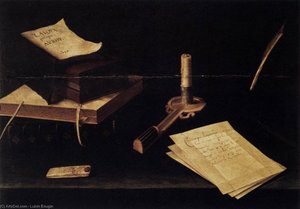
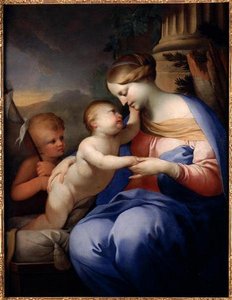
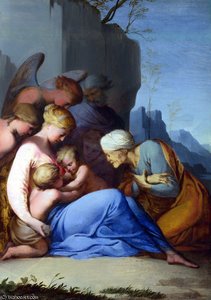
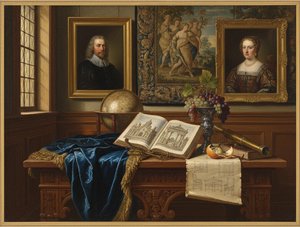
Perhaps the most compelling aspect of Baugin’s artistic legacy lies in the striking contrast between his still life paintings and his religious works. While many artists specialized in a single genre, Baugin seemingly possessed an extraordinary ability to seamlessly transition between these disparate styles. His still lifes, particularly the iconic “Five Senses” (also known as “Chessboard”), are characterized by their off-balance perspective, unconventional arrangements of objects, and a subtle sense of disorientation. Trevor Winkfield aptly describes this approach as “topographical alienation,” drawing parallels with the metaphysical art of Giorgio de Chirico – an influence that has been debated among scholars. These still lifes aren’t merely depictions of inanimate objects; they are carefully constructed visual puzzles designed to engage the viewer's intellect and challenge their perception of space. Conversely, Baugin’s religious paintings—primarily small devotional works featuring the Virgin and Child or scenes from the Holy Family—are imbued with a more traditional Baroque aesthetic. They are characterized by their elegance, grace, and adherence to established artistic conventions. Arnaud Brejon de Lavergnée famously noted this “great paradox” of Baugin's career: an artist who could simultaneously produce rigorously constructed still lifes governed by precise rules and decorative religious paintings. This duality raises intriguing questions about his artistic motivations and the influences that shaped his diverse oeuvre. The fact that his still lifes were signed while his religious works were not further complicates this enigma, suggesting a deliberate strategy on Baugin’s part to highlight the unique qualities of this particular genre.Italian Influence and Parisian Activity
Around 1632-33, Baugin traveled to Italy, settling in Rome for several years. This period undoubtedly served as a crucial formative experience, exposing him to the artistic currents of the Italian Renaissance and Baroque. The influence of masters like Raphael and Parmigianino is evident in his later religious paintings, particularly their refined compositions and elegant figures. Following his time in Rome, Baugin returned to France and worked primarily in Paris until his death in 1663. During this period, he continued to produce both still lifes and religious works, adapting his style to the evolving tastes of the Parisian art market.Legacy and Significance
Despite the relatively small number of surviving paintings attributed to Lubin Baugin, his work holds a significant place in the history of French art. His innovative approach to still life painting—particularly his use of off-balance perspective and unconventional arrangements—prefigured many developments in 18th-century art, influencing artists such as Jean-Siméon Chardin. Furthermore, Baugin’s career exemplifies the artistic fluidity and experimentation that characterized the period, challenging traditional notions of specialization and demonstrating the remarkable versatility of a single artist. His legacy continues to be debated and reinterpreted by scholars today, solidifying his position as a compelling and enigmatic figure in the rich tapestry of 17th-century French art.
Lubin Baugin
1612 - 1663 , France
Quick Facts
- Artistic Movement Or Style: Baroque (Still Life & Religious)
- Artists Or Movements Influenced By This Artist: ['Giorgio de Chirico']
- Artists Who Influenced This Artist:
- Raphael
- Parmigianino
- Date Of Birth: c. 1612, Pithiviers, France
- Date Of Death: 1663, Paris, France
- Full Name: Lubin Baugin
- Nationality: French
- Notable Artworks:
- Still life with Apricots
- Still life with Candlestick
- Still life with Chessboard
- Saint Jerome
- L'enfance de Jupiter
- Place Of Birth: Pithiviers, France
Related Articles

Theatricality & Triumph: Baroque Drama in Painting & Sculpture
Explore the dramatic world of Baroque art! Discover its history, defining characteristics, & lasting influence on painting & sculpture. Expert insights into Caravaggio, Zurbarán, and Bernini – plus high-quality reproductions at OriginalUniqueArt.
Baroque Classicism: Reconciling Drama & Order in 17th-Century Art
Explore the captivating world of Baroque Classicism! Discover its history, key artists like Caravaggio & Rubens, and defining characteristics. Expert insights & high-quality reproductions at OriginalUniqueArt.
Masterpieces of the 17th Century: Art, History & Decor Inspiration | OriginalUniqueArt
Journey through 17th century art with masterpieces by Rembrandt, Vermeer & Caravaggio. Explore Baroque paintings, Dutch Golden Age techniques & timeless beauty. Find museum-quality reproductions and elevate your home decor on OriginalUniqueArt.com.

The Golden Age Reforged: Dramatic Realism & Religious Zeal in Spanish Baroque Art
Explore the dramatic world of Spanish Baroque art! Discover masters like Zurbarán & the powerful influence of religious zeal on painting techniques – a guide for collectors and enthusiasts.

Baroque Masterpieces: 10 Paintings That Defined an Era |
Journey through the drama & grandeur of Baroque art! Explore 10 masterpieces by Caravaggio, Rembrandt, Rubens & more. Discover stunning oil paintings, rich colors & timeless stories. Find museum-quality reproductions at .