- Home

- Print on canvas
- louis léon cugnot
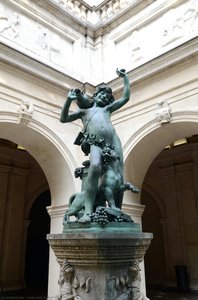
- Drunken Faun

 Buy Painting
 Send
Send Share
Share
 Details

 Download
 Similars
 X-Ray
X-Ray Diaporama
Drunken Faun


 Read More
Giclée / Art Print
Museum-quality giclée or canvas print with fast production and flexible finish options.




































Pick from our preset sizes that match the artwork's original proportions.

You may enter your own dimensions to fit a specific frame or space. If your selected size does not match the original image's proportions, we will either crop the artwork or extend the image with a mirrored or solid-fill edge. A digital mockup will be sent for your approval before production begins.
Please note that the on-screen preview does not reflect the actual cropping or extension. Only the mockup will accurately show the final composition.
While custom sizes are available, we recommend selecting a dimension from the predefined list to preserve the original proportions.
Worldwide Delivery () in 2 weeks instead of standard 4/5 weeks. (22 July)

Free Worldwide Express Shipping

High-Quality Linen Canvas

Full Shipping Insurance

Customs Tax Refund Guarantee

True Color Matching Guarantee

60-Day Return Policy (Defects Only)

100% Money-Back Guarantee

Bulk Discount Offer
 Glass option is only available in size under 110 CM

Drunken Faun
Giclée / Art Print
Reproduction Size
-


Total Price
-
Artist Biography
Louis-Léon Cugnot: A Sculptor of Romantic Grace
Louis-Léon Cugnot (1835-1894), a Parisian sculptor born into a family steeped in artistic tradition, stands as a significant figure within the landscape of 19th-century French art. The son of the renowned sculptor Etienne Cugnot, Louis inherited not just a lineage but also an inherent understanding of form and material – a foundation that profoundly shaped his own distinctive style. His journey began at the prestigious École nationale supérieure des Beaux-Arts, where he honed his skills under the tutelage of influential masters like Francisque Joseph Duret and Georges Diebolt, absorbing the principles of Neoclassicism and Romanticism before venturing into the competitive world of artistic prizes.Early Life and Artistic Training
Cugnot’s early years were marked by a rigorous academic training, culminating in his triumphant victory at the Prix de Rome in 1859 – an achievement shared with Alexandre Falguière. This prestigious award afforded him invaluable time to reside at the Villa Medici in Rome from 1860 to 1863, a period of intense artistic exploration and development. The Roman environment, rich in classical heritage and burgeoning Romantic ideals, undoubtedly influenced his evolving aesthetic sensibilities. It was during this formative phase that he began to cultivate a style characterized by a delicate balance between the grandeur of Neoclassicism and the emotive power of Romanticism – a synthesis that would become the hallmark of his oeuvre.Key Works and Artistic Style
Cugnot’s artistic output is remarkably diverse, encompassing a range of subjects and media. He is particularly celebrated for his sculptures depicting mythological figures and historical scenes, often imbued with a sense of dramatic intensity and psychological depth. His bronze sculpture *Drunken Faun*, currently residing in the gardens of the Museum of Fine Arts of Lyon, exemplifies this skill – capturing both the figure’s languid repose and the subtle suggestion of underlying turmoil. The *Petrarch*, housed at the Hôtel de la Païva in Paris, showcases his ability to render human emotion with remarkable sensitivity. Beyond these iconic pieces, Cugnot contributed significantly to public art, including monumental sculptures for buildings like the Palais Garnier and elaborate tomb designs for prominent figures in Père Lachaise Cemetery. His work on the Plaza Dos de Mayo in Lima, Peru, a testament to his international recognition, further solidified his reputation as a versatile and accomplished sculptor.Influence and Legacy
Cugnot’s artistic development was undoubtedly shaped by the prevailing currents of 19th-century French art. The influence of Francisque Joseph Duret, a key figure in the Neoclassical movement, is evident in Cugnot's early works, while the Romantic ideals championed by artists like Alexandre Delaroche and Eugène Delacroix informed his later pieces. His work reflects a deep engagement with classical forms but also embraces emotional expression and dramatic narrative – qualities that resonated powerfully with contemporary audiences. Furthermore, his appointment as a Knight of the Legion of Honor in 1874 served as a recognition of his artistic merit and contribution to French culture.A Lasting Impression
Louis-Léon Cugnot’s legacy extends beyond his individual works. He represents a pivotal link between Neoclassicism and Romanticism, embodying the stylistic transitions that characterized 19th-century sculpture. His sculptures continue to captivate viewers with their graceful forms, expressive gestures, and evocative narratives – offering a poignant glimpse into the artistic sensibilities of a bygone era. His contributions to public art, particularly his work in Paris and Lima, ensure that his legacy will endure as a testament to his skill, vision, and enduring impact on the world of sculpture.
louis léon cugnot
1835 - 1894 , France
Quick Facts
- Artistic Movement Or Style: Neoclassical & Romantic
- Artists Who Influenced This Artist: ['Francisque Joseph Duret']
- Date Of Birth: 1835 Paris France
- Date Of Death: 1894
- Full Name: Louis Léon Cugnot
- Nationality: French
- Notable Artworks:
- Petrarch
- Drunken Faun
- Place Of Birth: Paris France