

 Preview
 Send
Send Share
Share
 Details
 Guide
Guide

 Download
 Similars
 X-Ray
X-Ray Diaporama
 Q&A
Q&A Stats
StatsProcessional Cross
 Tempera On Panel
- WallArt
- Late Medieval Art
 1392
1392- Late Medieval
 57.0 x 28.0 cm
 Art Institute of Chicago
 Read More
Giclée / Art Print
Museum-quality giclée or canvas print with fast production and flexible finish options. ( Buy Hand Made Painting Switch to Digital Image)




P118B $10

P118H $10

P118W $10

P438Z $10

P508JH $12

P508YH $12

P805H $10

P805Z $10

P919BZ $10

P919G $10

P919XJ $10

P959ZH $10

P968JZ $12

W106C $8

W218G $10

W218JH $8

W218Y $10

W307PJ $10

W316G $10

W316PJ $8

W316Y $10

W398PJ $8

W4111J $10

W500HY $15

W500JH $15

W692G $12

W849H $8

W940BG $15

W953PJ $8




Pick from our preset sizes that match the artwork's original proportions.

Type the width and the height you need, to fit your frame or your wall. A print can only be cut, never made bigger than the picture, so a size with a different shape loses a part of the image. We send you a digital mockup to approve before we print anything. The picture shown on this page does not show the real cut — only the mockup does.
Worldwide Delivery () in 2 weeks instead of standard 4/5 weeks. (28 October)

Free Worldwide Express Shipping

High-Quality Linen Canvas

Full Shipping Insurance

Customs Tax Refund Guarantee

True Color Matching Guarantee

100-Day Return Policy (Defects Only)

100% Money-Back Guarantee

Bulk Discount Offer
 Glass option is only available in size under 110 CM

Processional Cross
Giclée / Art Print
Reproduction Size
-


Total Price
$ 81
A Divine Radiance: The Spiritual Majesty of Lorenzo Monaco
In the quiet transition between the late Middle Ages and the dawn of the Renaissance, few works capture the ethereal tension of faith as poignantly as Lorenzo Monaco’s Processional Cross. Created in 1392, this exquisite tempera panel is far more than a mere religious artifact; it is a window into a world where the boundaries between the earthly and the divine were intentionally blurred through light and gold. As one gazes upon the central figure of Christ, the viewer is immediately enveloped by a shimmering, celestial atmosphere. The painting serves as a profound emblem of late medieval Italian devotion, acting as a bridge between the structured narrative traditions of Giotto and the burgeoning emotional complexity that would soon define the Quattrocento.
The composition is a masterclass in sacred geometry, where the verticality of the cross directs the soul upward. Monaco utilizes a sophisticated interplay of rectangles, triangles, and soft curves to guide the eye through a landscape of profound sorrow and divine hope. Below the crucified Christ, figures of mourning—including a woman draped in a rich, crimson robe—anchor the scene in human empathy, while an ascending angel offers a heavenly benediction from above. This careful arrangement ensures that the viewer does not merely observe the Crucifixion but participates in its liturgical rhythm, much like the faithful who would have once carried this very panel through the hallowed aisles of a cathedral during solemn processions.
The Alchemy of Gold and Tempera
To behold this masterpiece is to witness the pinnacle of fresco secco and gilding techniques. Monaco’s use of gold leaf is nothing short of transformative; it does not merely decorate the background but creates a luminous, infinite space that defies the flatness of the wooden panel. This heavy application of gold catches the light with every movement, simulating a divine presence that fluctuates between shadow and brilliance. The technique of tempera allows for an incredible precision in detail, seen in the delicate drapery folds and the meticulous rendering of facial expressions that convey a spectrum of grief and grace.
For the discerning collector or interior designer, the texture of this work offers unparalleled tactile richness. The layering of pigments over gold creates a sense of depth and sculptural weight, making the artwork feel alive within its frame. The interplay of light on the gilded surfaces provides a sophisticated focal point that can anchor a room with an air of historical grandeur and contemplative stillness. It is a piece that demands attention not through loud colors, but through a quiet, commanding elegance that speaks to the enduring power of classical craftsmanship.
A Legacy of Devotion and Design
Beyond its aesthetic brilliance, the Processional Cross carries a heavy symbolic weight. Every element—from the rocky outcrops of the stylized landscape to the symbolic presence of the angel—is a verse in a visual hymn of redemption. The cross itself stands as the ultimate symbol of sacrifice, yet the surrounding ornamentation and the radiant background suggest that death is not an end, but a transition into light. This duality makes the piece an incredibly versatile inspiration for those looking to infuse their spaces with themes of resilience, peace, and timelessness.
Owning a high-quality reproduction of such a significant work allows one to bring this piece of Florentine history into a modern context. Whether placed in a curated gallery setting or as a centerpiece in a thoughtfully designed study, the Processional Cross offers a sense of continuity with the masters of the past. It remains a testament to Lorenzo Monaco’s unique ability to marry the monastic discipline of his life as a Camaldolese monk with an unparalleled artistic vision, creating a work that continues to inspire awe and reverence centuries after its creation.
Questions & Answers
Is there a slideshow for "Processional Cross" by Lorenzo Monaco?
The diaporama of "Processional Cross" can be watched on the artwork's Diaporama page.
How is "Processional Cross" by Lorenzo Monaco proportioned, and how big is it?
"Processional Cross" by Lorenzo Monaco is a tall composition measuring 57 x 28 cm in the original.
What color palette is used in "Processional Cross" by Lorenzo Monaco?
The palette of "Processional Cross" by Lorenzo Monaco is described as earthy. It is a compact description of the work's colors.
Artist Biography
A Florentine Monk’s Vision: The World of Lorenzo Monaco
Lorenzo Monaco, born Piero di Giovanni around 1370 in Siena, occupies a fascinating and pivotal position in the transition from the Gothic grace of the Trecento to the burgeoning Renaissance ideals of the Quattrocento. Though biographical details remain scarce, his artistic journey reveals a compelling story of adaptation, innovation, and deeply felt spirituality. Apprenticed in Florence, he absorbed the lessons of masters like Giotto, Spinello Aretino, and Agnolo Gaddi – artists who established a foundation of narrative clarity and emotional resonance. However, it was his embrace of monastic life in 1390, joining the Camaldolese order at Santa Maria degli Angeli, that truly shaped both his artistic identity and earned him the name by which he is best known: Lorenzo Monaco, or “Lawrence the Monk.” This commitment to a contemplative existence profoundly influenced the character of his work, imbuing it with an introspective quality and a focus on devotional themes.Blending Gothic Elegance with Renaissance Stirrings
Monaco’s early works, emerging in the 1390s, demonstrate a masterful command of the International Gothic style then prevalent throughout Europe. These paintings are characterized by their refined elegance, delicate linearism, and a palette initially restrained in its chromatic range. Yet even within this established framework, hints of his individual artistic voice begin to emerge. He absorbed influences from contemporaries like Lorenzo Ghiberti and Gherardo Starnina, incorporating elements of their sophisticated compositions and attention to detail. Over time, Monaco’s style evolved, becoming increasingly marked by elongated figures draped in sinuous, flowing garments, a preference for sharp edges and brilliant colors – particularly the luxurious hues of gold and lapis lazuli – and a subtle, almost ethereal quality of light. His gestures are often understated, hinting at inner emotion rather than overtly displaying it, and his spatial arrangements tend to be flattened, prioritizing symbolic resonance over strict realism. He consistently sought to depict scenes imbued with strong spiritual value, often distancing himself from the pursuit of purely naturalistic representation.Masterpieces of Faith and Artistic Innovation
The breadth of Monaco’s artistic output is impressive, encompassing panel paintings, frescoes, and illuminated manuscripts. The Pietà, housed in Florence's Galleria dell'Accademia, stands as a testament to his early mastery, showcasing a nervous energy in its lines and a palpable sense of emotional tension. The magnificent Coronation of the Virgin, now gracing the Uffizi Gallery, exemplifies his mature style – a vibrant tapestry of saints rendered with sinuous forms and dazzling colors. The Polyptych of Monteoliveto, also in the Galleria dell'Accademia, reveals a profound spirituality that anticipates the work of Fra Angelico. Perhaps one of his most celebrated achievements is the Adoration of the Magi (1420-1422), where his innovative use of foreshortening, though lacking strict geometrical perspective, creates a compelling and visually arresting composition. His frescoes in the Bartolini Salimbeni Chapel represent one of his few surviving mural works, offering a glimpse into his skill as a large-scale decorator. These pieces demonstrate not only technical brilliance but also a deep understanding of theological symbolism and a commitment to conveying religious narratives with clarity and grace.A Bridge Between Eras
Despite the revolutionary artistic currents sweeping Florence during his lifetime – particularly the groundbreaking innovations of Masaccio and Filippo Brunelleschi in perspective and naturalism – Lorenzo Monaco remained largely unaffected by these developments. He steadfastly maintained his distinctive style, forging a unique path that bridged the gap between late Gothic traditions and the emerging Renaissance aesthetic. Giorgio Vasari, writing in his Lives of the Artists, acknowledged Monaco’s talent while noting his untimely death from an unidentified infection around 1425. While biographical details are limited, his contributions to art history are undeniable. He stands as the last significant exponent of the Giotto style, preserving its legacy while simultaneously incorporating elements that foreshadowed the artistic transformations to come. His emphasis on spirituality, stylized forms, and refined elegance represents a distinct aesthetic within Florentine painting, leaving an enduring mark on subsequent generations of artists.Legacy and Enduring Influence
Lorenzo Monaco’s work continues to captivate viewers with its delicate beauty, profound piety, and subtle innovations. He was not a revolutionary in the same vein as Masaccio, but his contribution lies in his ability to synthesize existing traditions into a harmonious and deeply personal style. He demonstrated that artistic excellence could flourish within the confines of established conventions, enriching them with individual expression and spiritual depth. His influence can be seen in the work of later artists who appreciated his refined technique and devotional sensibility. Today, his paintings serve as invaluable windows into a pivotal moment in art history – a time of transition, experimentation, and the enduring power of faith expressed through artistic vision.
Lorenzo Monaco
1370 - 1425 , Italy
Quick Facts
- Full Name: Lorenzo Monaco
- Nationality: Italian
- Date Of Birth: 1370
- Date Of Death: 1425
- Place Of Birth: Siena, Italy
- Notable Artworks:
- Pietà
- Coronation of the Virgin
- Polyptych of Monteoliveto
- Adoration of the Magi
- Artistic Movement Or Style: Gothic, Early Renaissance
- Artists Who Influenced This Artist:
- Giotto
- Spinello Aretino
- Agnolo Gaddi
- Lorenzo Ghiberti
- Artists Or Movements Influenced By This Artist: ['Fra Angelico']
Related Articles
Illuminating History: A Comprehensive Exploration of Tempera Painting Techniques & Artistic Legacy
Explore the rich history & techniques of tempera painting! Discover Renaissance masters like Botticelli & Fra Angelico, conservation insights, and the enduring legacy of this captivating art form.
Late Gothic Art: The Divine Transition from Medieval Symbolism to Renaissance Naturalism
Explore the profound transition of Late Gothic art from medieval symbolism to Renaissance naturalism. Discover the elegance of International Gothic, the legacy of Master Theodoric, and the evolution of European courtly masterpieces through an expert art-historical lens.
High Medieval Art: 10 Masterpieces That Shaped an Era | OriginalUniqueArt
Journey through High Medieval Art! Explore 10 iconic masterpieces – from Giotto's frescoes to stunning Gothic cathedrals. Discover the stories behind these timeless paintings, sculptures & illuminated manuscripts. Find museum-quality art reproductions at OriginalUniqueArt.com.
Illuminating Surfaces: A Comprehensive Exploration of Tempera on Panel Painting Techniques & Historical Significance
Explore the rich history & techniques of tempera painting! Discover Renaissance masters like Botticelli & Fra Angelico, conservation insights, and the enduring legacy of this captivating art form. Learn more now!
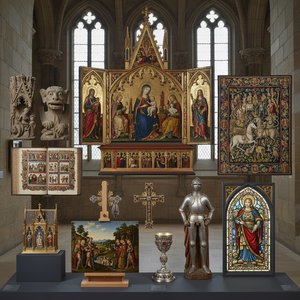
Late Medieval Masterpieces: 10 Artworks That Defined an Era | OriginalUniqueArt
Journey through 10 defining Late Medieval masterpieces – from Giotto's frescoes to Jan van Eyck’s realism. Explore the stories, techniques & vibrant colors of Gothic art. Find museum-quality reproductions and elevate your home decor with OriginalUniqueArt.com! Discover all masterpieces on OriginalUniqueArt.com


