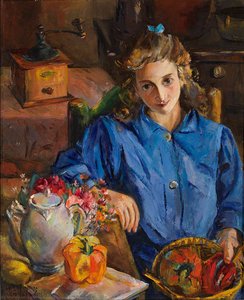
Preview
 Send
Send Share
Share
 Details
 Guide
Guide

 Download
 Similars
 X-Ray
X-Ray Diaporama
 Stats
StatsOde to Kinshasa


 Read More
The artwork displayed on this page is protected by copyright law, which means we cannot legally create or sell an identical reproduction. This protection is enforced under international agreements such as the Berne Convention and by national laws, including those outlined by the U.S. Copyright Law - Title 17.
This method fully complies with copyright regulations because it does not involve copying or duplicating the protected artwork. Instead, it is a creative reinterpretation - a new painting that is influenced by the original but not identical to it.
Giclée / Art Print
Museum-quality giclée or canvas print with fast production and flexible finish options. ( Buy Hand Made Painting Switch to Digital Image)




P118B $10

P118H $10

P118W $10

P438Z $10

P508JH $12

P508YH $12

P805H $10

P805Z $10

P919BZ $10

P919G $10

P919XJ $10

P959ZH $10

P968JZ $12

W106C $8

W218G $10

W218JH $8

W218Y $10

W307PJ $10

W316G $10

W316PJ $8

W316Y $10

W398PJ $8

W4111J $10

W500HY $15

W500JH $15

W692G $12

W849H $8

W940BG $15

W953PJ $8




Pick from our preset sizes that match the artwork's original proportions.

Type the width and the height you need, to fit your frame or your wall. A print can only be cut, never made bigger than the picture, so a size with a different shape loses a part of the image. We send you a digital mockup to approve before we print anything. The picture shown on this page does not show the real cut — only the mockup does.
Worldwide Delivery () in 2 weeks instead of standard 4/5 weeks. (24 October)

Free Worldwide Express Shipping

High-Quality Linen Canvas

Full Shipping Insurance

Customs Tax Refund Guarantee

True Color Matching Guarantee

100-Day Return Policy (Defects Only)

100% Money-Back Guarantee

Bulk Discount Offer
 Glass option is only available in size under 110 CM

Ode to Kinshasa
Giclée / Art Print
Reproduction Size
-


Total Price
$ 81
Ode to Kinshasa: A Celebration of African Heritage Through Cubist Vision
Lois Mailou Jones’s *Ode to Kinshasa* isn't merely a painting; it’s a testament to resilience, cultural pride, and the transformative power of artistic exploration. Completed in 1972, shortly after Jones embarked on her groundbreaking research trip to Africa—specifically Zaire (now Democratic Republic of Congo)—the artwork embodies the spirit of liberation that characterized the nation's newfound independence from Belgian colonial rule. This pivotal moment profoundly influenced Jones’s creative process, prompting her to synthesize European artistic traditions with vibrant African imagery and symbolism.- Subject Matter: The centerpiece of *Ode to Kinshasa* is a stylized depiction of an African warrior—a figure steeped in tradition and imbued with palpable energy—charging toward the viewer’s gaze. This dynamic posture immediately establishes a connection between the artwork's subject and its audience, inviting contemplation on themes of courage, determination, and confrontation.
- Style & Technique: Jones skillfully employs cubism, a revolutionary artistic movement pioneered by Pablo Picasso and Georges Braque in the early 20th century. Cubist principles—fragmentation, multiple perspectives, and geometric abstraction—are expertly applied to render the warrior’s form and surroundings. The artist utilizes a collage technique incorporating Japanese paper and gold foil, adding textural richness and visual complexity to the composition.
African Influences: Echoes of Tradition
Jones's artistic journey began with her fascination for African masks—a motif that would recur throughout her oeuvre. Her meticulous observation of mask designs during her research expedition in Zaire served as a catalyst for incorporating geometric patterns and stylized representations into *Ode to Kinshasa*. The diamond shape, prominent within the painting’s background, directly references traditional Kuba cloth weaving techniques prevalent in central Africa—a symbol of wealth, prestige, and artistic craftsmanship. Similarly, the triangular form echoes architectural elements found across the continent.
Symbolism Beyond Representation
Beyond its literal depiction of a warrior, *Ode to Kinshasa* operates on multiple symbolic levels. The single eye positioned at the center of the composition represents vigilance and awareness—a deliberate nod to Jones’s lifelong engagement with the African mask tradition. This visual element underscores the importance of observation and contemplation as pathways to understanding cultural heritage. Furthermore, the bold use of color—particularly vibrant oranges and yellows—evokes associations with warmth, vitality, and optimism—reflecting the hopeful spirit of Zaire's independence.
Emotional Resonance: A Portrait of Liberation
*Ode to Kinshasa* transcends mere visual representation; it communicates a profound emotional resonance. The painting’s energetic dynamism captures the fervor of liberation—the palpable excitement surrounding Zaire’s emergence from colonial subjugation. Jones's masterful technique conveys not only the physical form of the warrior but also his inner resolve and unwavering determination to confront adversity. Ultimately, *Ode to Kinshasa* stands as a powerful reminder that art can serve as a conduit for cultural pride and an affirmation of humanity’s capacity for courage and resilience.
Questions & Answers
What is the recommended use of a print of "Ode to Kinshasa"?
A reproduction of "Ode to Kinshasa" by Lois Mailou Jones is recommended for accent. This suggestion follows from the work's subject, mood and colors.
What type of artwork is "Ode to Kinshasa" by Lois Mailou Jones?
"Ode to Kinshasa" by Lois Mailou Jones is classified as wall art. The category describes the kind of artwork the original is.
Where can I see a preview of "Ode to Kinshasa"?
A preview of "Ode to Kinshasa" by Lois Mailou Jones is available on the artwork's Preview page.
Artist Biography
A Life Immersed in Color and Culture
Lois Mailou Jones, a name synonymous with groundbreaking artistry and unwavering dedication to African American representation, was born in Boston, Massachusetts, on November 3, 1905. From her earliest years, she was nurtured in an environment that valued creativity; her parents, Thomas Vreeland Jones, a lawyer, and Carolyn Adams Jones, a cosmetologist, encouraged her innate talent for drawing and painting, particularly with the fluid grace of watercolors. Summers spent on Martha's Vineyard proved formative, introducing young Lois to a constellation of influential figures – sculptor Meta Warrick Fuller, composer Harry T. Burleigh, and novelist Dorothy West – who would subtly shape her artistic sensibilities. This early exposure instilled in her not only an appreciation for art but also a sense of cultural pride and the importance of mentorship, values she would carry throughout her life. Her formal education began at the High School of Practical Arts in Boston (1919-1923), followed by night classes at the Boston Museum of Fine Arts, secured through a hard-earned scholarship. A pivotal apprenticeship with costume designer Grace Ripley further broadened her artistic horizons, sparking an early fascination with African masks and their potential for symbolic expression. Even as a teenager, Jones demonstrated remarkable ambition, holding her first solo exhibition on Martha’s Vineyard at the age of seventeen. She continued to hone her skills at the School of the Museum of Fine Arts in Boston (1923-1927), consistently winning the Susan Minot Lane Scholarship, and supplemented her studies with courses at the Boston Normal Art School, culminating in a graduate degree in design from the Design Art School of Boston in 1928.From Textile Design to Artistic Independence
Jones’s initial professional path led her into the world of textile design, working for both F. A. Foster Company in Boston and Schumacher Company in New York City. However, a transformative summer at Harvard University in 1928 ignited a deeper desire – to fully dedicate herself to painting. This decision coincided with the burgeoning Harlem Renaissance, an intellectual and artistic movement that profoundly impacted her work. The influence of artist Aaron Douglas became particularly significant; his stylized depictions of African American life and incorporation of African motifs resonated deeply with Jones’s own emerging aesthetic vision. Her seminal work, The Ascent of Ethiopia, stands as a testament to this period, reflecting both Douglas's stylistic influence and her growing commitment to celebrating African heritage. But Jones was not content to remain solely within the confines of one artistic movement or geographical location. She embarked on extensive travels throughout Europe, Africa, and the Caribbean, each journey leaving an indelible mark on her evolving style. These experiences broadened her palette, both literally and figuratively, exposing her to diverse cultures, vibrant colors, and new ways of seeing the world. Her marriage to Haitian graphic designer Louis Vergniaud Pierre-Noël in 1953 further enriched her artistic vocabulary, introducing the bold patterns and luminous hues characteristic of Haitian art into her compositions. Over time, Jones’s style underwent a remarkable transformation, shifting from early impressionistic tendencies towards a more dynamic blend of Cubist elements and abstraction, always retaining a uniquely personal touch.A Legacy Forged in Education and Advocacy
Beyond her accomplishments as an artist, Lois Mailou Jones dedicated much of her life to education and advocacy. She began teaching shortly after completing her studies, but faced disheartening discrimination when the director of the Boston Museum School suggested she seek employment in the South rather than at their institution. Undeterred, she founded the art department at Palmer Memorial Institute in North Carolina in 1928, demonstrating a remarkable versatility by also coaching basketball, teaching folk dancing, and providing musical accompaniment for church services. In 1930, she joined the faculty of Howard University in Washington, D.C., under the guidance of James Vernon Herring, where she would remain as Professor of Design and Watercolor Painting until her retirement in 1977. At Howard, Jones became a mentor to generations of African American artists, including luminaries such as David Driskell, Elizabeth Catlett, and Sylvia Snowden, nurturing their talents and providing them with the encouragement they needed to overcome systemic barriers. She tirelessly advocated for the recognition of African American art and artists throughout her career, challenging prevailing biases and championing diversity within the art world. In the 1970s, she served as a cultural ambassador to Africa for the United States Information Agency, further solidifying her role as a bridge between cultures and a powerful voice for artistic exchange.A Pioneer’s Enduring Impact
Lois Mailou Jones's contributions to American art are immeasurable. Her work is now featured in prominent collections including the Smithsonian American Art Museum, The Metropolitan Museum of Art, and the National Museum of Women in the Arts, a testament to her enduring legacy. She broke down barriers for African American artists, proving that talent knows no racial boundaries. Her exhibitions with the William E. Harmon Foundation in 1929 ("Negro Youth") helped bring attention to emerging Black artists during a period when opportunities were limited. Jones herself often expressed that her greatest contribution was “proof of the talent of black artists.” Her artistic journey, spanning decades and encompassing diverse influences, reflects a lifelong commitment to exploring themes of African heritage, American ancestry, cultural identity, and the social struggles faced by African Americans. She navigated stylistic shifts with grace and innovation, always remaining true to her own unique vision. Lois Mailou Jones passed away in Washington, D.C., on June 9, 1998, leaving behind a rich artistic legacy that continues to inspire and challenge audiences today. Her paintings are not merely representations of the world; they are vibrant celebrations of life, culture, and the enduring power of the human spirit.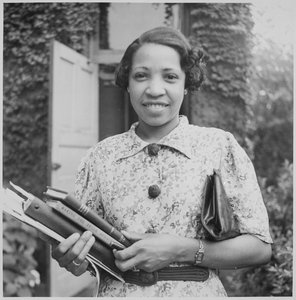
Lois Mailou Jones
1905 - 1998 , United States of America
Quick Facts
- Full Name: Lois Mailou Jones
- Nationality: American
- Date Of Birth: 1905
- Date Of Death: 1998
- Place Of Birth: Boston, United States of America
- Notable Artworks:
- Jeune Fille Française
- Les Fétiches
- Initiation, Liberia
- The Ascent of Ethiopia
- Artistic Movement Or Style: Harlem Renaissance, Impressionism
- Artists Who Influenced This Artist:
- Aaron Douglas
- Meta Warrick Fuller
- Artists Or Movements Influenced By This Artist:
- David Driskell
- Elizabeth Catlett
Related Articles

Deconstructing Reality: Cubism's Evolution, Impact & Enduring Legacy
Explore the revolutionary world of Cubism with expert insights from OriginalUniqueArt. Discover Picasso & Braque's groundbreaking techniques, its philosophical roots, and lasting impact on modern art. Expert appraisal & custom reproductions available.

Jean Dominique Antony Metzinger: Pioneering Cubism & the Evolution of Abstract Form
Explore the life & work of Jean Metzinger, a pivotal Cubist painter and theorist. Discover his innovations in proto-Cubism, 'Du Cubisme,' and Crystal Cubism – a journey through modern art's evolution.
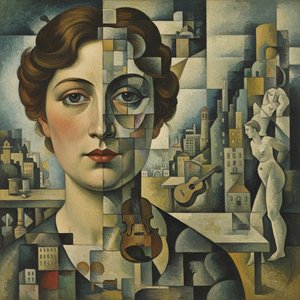
Deconstructing Reality: Cubism's Revolutionary Impact on 20th-Century Art
Explore the revolutionary world of Cubism with OriginalUniqueArt. Discover Picasso & Braque's groundbreaking techniques, its philosophical roots, and lasting impact on modern art. Expert insights for collectors.

Cubism Unveiled: How Picasso and Braque Redefined Reality Through Geometric Abstraction
Explore the revolutionary world of Cubism. Discover how masters Pablo Picasso and Georges Braque dismantled reality through geometric abstraction to redefine modern art history.

Cubism Unveiled: How Picasso and Braque Redefined Modern Art through Geometric Revolution
Explore the revolutionary world of Cubism. Discover how Pablo Picasso and Georges Braque dismantled perspective to redefine modern art through geometric innovation and analytical mastery. An essential guide for art students, collectors, and history enthusiasts.