Preview
 Send
Send Share
Share
 Details

 Download
 Similars
 X-Ray
X-Ray Diaporama
St Sebastian
 Oil On Panel
- Renaissance
 Renaissance
 198.0 x 95.0 cm
 Pinacoteca di Brera
 Read More
Giclée / Art Print
Museum-quality giclée or canvas print with fast production and flexible finish options. ( Buy Hand Made Painting Buy Image)




P118B $10

P118H $10

P118W $10

P438Z $10

P508JH $12

P508YH $12

P805H $10

P805Z $10

P919BZ $10

P919G $10

P919XJ $10

P959ZH $10

P968JZ $12

W106C $8

W218G $10

W218JH $8

W218Y $10

W307PJ $10

W316G $10

W316PJ $8

W316Y $10

W398PJ $8

W4111J $10

W500HY $15

W500JH $15

W692G $12

W849H $8

W940BG $15

W953PJ $8




Pick from our preset sizes that match the artwork's original proportions.

You may enter your own dimensions to fit a specific frame or space. If your selected size does not match the original image's proportions, we will either crop the artwork or extend the image with a mirrored or solid-fill edge. A digital mockup will be sent for your approval before production begins.
Please note that the on-screen preview does not reflect the actual cropping or extension. Only the mockup will accurately show the final composition.
While custom sizes are available, we recommend selecting a dimension from the predefined list to preserve the original proportions.
Worldwide Delivery () in 2 weeks instead of standard 4/5 weeks. (22 August)

Free Worldwide Express Shipping

High-Quality Linen Canvas

Full Shipping Insurance

Customs Tax Refund Guarantee

True Color Matching Guarantee

60-Day Return Policy (Defects Only)

100% Money-Back Guarantee

Bulk Discount Offer
 Glass option is only available in size under 110 CM

St Sebastian
Giclée / Art Print
Reproduction Size
-


Total Price
$ 81
Collectible Description
The Martyrdom Captured in Renaissance Light
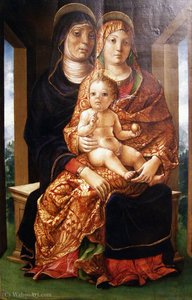
To stand before this depiction of St. Sebastian is to confront a moment suspended between profound suffering and ultimate spiritual triumph. The composition immediately draws the eye to the central figure, rendered with an almost visceral realism that speaks directly to the viewer's sense of awe and pity. This is not merely a portrait; it is a narrative tableau vivant, capturing the precise instant of martyrdom. The artist has masterfully employed the dramatic tension inherent in the subject matter—the arrows piercing the body, the posture suggesting both agony and serene acceptance. One can almost feel the weight of the wood panel beneath the paint, sensing the meticulous handwork that brought this sacred drama to life.
A Study in Renaissance Technique and Detail
The technical brilliance evident here is a hallmark of the Italian Renaissance period. The attention paid to human anatomy is breathtaking; every sinew, every fold of drapery, speaks to an understanding of the physical world coupled with divine inspiration. Notice how the light plays across the figure—it seems to emanate from an unseen source, highlighting the musculature and casting deep, dramatic shadows that lend the scene its somber yet vibrant atmosphere. The use of a limited palette, dominated by rich earth tones, serves not as a restriction, but as a deliberate choice to heighten the emotional gravity of the event. Furthermore, the visible texture of the panel itself adds an undeniable layer of materiality, grounding this heavenly subject in tangible art history.
Symbolism and Spiritual Resonance
St. Sebastian himself is one of art's most enduring symbols—a figure whose suffering was interpreted as a pathway to divine grace. The arrows are potent symbols, representing both physical torment and the piercing nature of spiritual truth or temptation. Surrounded by what appears to be an urban cityscape in the background, populated by observing figures, the painting situates this personal sacrifice within the context of community belief and public devotion. It compels us to consider our own moments of trial, transforming the artwork into a profound meditation on endurance, faith, and redemption.
Echoes of Verona's Masters
The style suggests a deep connection to the artistic currents flowing from centers like Verona, echoing the influences of masters such as Andrea Mantegna. The rigorous draftsmanship combined with a dramatic compositional flair points toward an artist deeply versed in classical ideals while simultaneously embracing the burgeoning emotionalism of the era. Owning a reproduction of this piece allows one to bring home not just a painting, but a tangible connection to the intellectual and spiritual fervor of the Quattrocento masters, transforming any space into a gallery steeped in history and devotion.
Artist Biography
Liberale da Verona: A Renaissance Master
Life and Origins
- Born in Verona, Italy, around 1441, Liberale da Verona was a prominent painter of the Italian Renaissance.
- He passed away in 1529, leaving behind a legacy of exquisite frescoes, panel paintings, and illuminated manuscripts.
- Early Training: Liberale began his artistic journey as a pupil of Vincenzo di Stefano, laying the foundation for his future style.
Influences and Artistic Development
- While trained by di Stefano, Liberale was profoundly influenced by the works of Andrea Mantegna and Jacopo Bellini. This influence is evident in his attention to detail, perspective, and dramatic compositions.
- Giorgio Vasari’s Account: He is notably mentioned in Giorgio Vasari's *Lives of the Most Excellent Painters, Sculptors, and Architects*, solidifying his place within the canon of Renaissance artists.
- His style evolved to incorporate elements of both Mantegna’s rigorous draftsmanship and Bellini’s refined color palettes.
Major Works and Achievements
- Veronese Commissions: In Verona, Liberale completed significant commissions such as the *Adoration of the Magi* in the Duomo (Cathedral) and another version for a chapel within the Bishopric.
- He also decorated the chapel of the Company of the Maddalena in the church of San Bernardino with paintings depicting the *Birth and Assumption of the Virgin*.
- Brera Gallery: A notable work, *St. Stephen*, is housed in the Brera Gallery, showcasing his skill in portraying religious figures.
- Illuminated Manuscripts: Liberale’s talent extended to illuminated books, with examples found in the Cathedral of Chiusi.
- *St. Sebastian* (attributed) at Princeton University Art Museum demonstrates his mastery of anatomical detail and emotional expression.
- Monte Oliveto Abbey: He traveled to Siena to work at the Abbey of Monte Oliveto, where he illuminated numerous manuscripts.
Pupils and Legacy
- Liberale da Verona played a crucial role in training the next generation of Veronese painters.
- Notable Students: Among his pupils were Giovanni and Giovanni Francesco Caroto, Francesco Torbido (also known as Il Moro), and Paolo Cavazzola. These artists continued to develop and disseminate his artistic principles.
Historical Significance
- Renaissance Contribution: Liberale da Verona contributed significantly to the flourishing of Renaissance art in Verona, bridging the gap between earlier styles and the emerging Mannerism.
- Cultural Impact: His works continue to be studied and admired for their technical skill, expressive power, and historical importance. He even appeared as a subject of forgery within popular culture – specifically, in an episode of the British TV series *Inspector Morse* titled “The Death of the Self.”
- His art provides valuable insights into the religious, cultural, and artistic climate of 15th and 16th-century Italy.

Liberale da Verona
1441 - 1529 , Italy
Quick Facts
- Birth Date: 1441
- Birth Place: Verona, Italy
- Death Date: 1529
- Influenced:
- Giovanni Caroto
- Giovanni Francesco Caroto
- Francesco Torbido
- Paolo Cavazzola
- Influenced By:
- Andrea Mantegna
- Jacopo Bellini
- Vincenzo di Stefano
- Movement: Renaissance
- Name: Liberale da Verona
- Nationality: Italian
- Notable Works:
- Adoration of the Magi
- St. Sebastian
- The Miniscalchi Altarpiece
Related Articles

El Greco's Masterpieces: Explore 25 Iconic Paintings & Spiritual Visions | OriginalUniqueArt
Journey through El Greco's 25 most iconic paintings! Explore the spiritual depth & dramatic beauty of this Spanish Renaissance master. Discover art history, techniques & find museum-quality reproductions for your home at OriginalUniqueArt.com.
Mastering the Surface: A Historical and Technical Guide to the Art of Oil on Panel Painting
Explore the profound history and technical brilliance of oil on panel painting. From Renaissance masters to modern techniques, discover why this rigid support offers unparalleled precision and permanence for fine art lovers and collectors.
Fra Angelico's Masterpieces: 25 Renaissance Paintings for Your Home | OriginalUniqueArt
Explore 25 breathtaking masterpieces by Fra Angelico, a Renaissance master. Discover the stories behind his iconic frescoes, Annunciations & religious art. Find museum-quality reproductions and elevate your home decor with OriginalUniqueArt.com.
Giotto's Masterpieces: 25 Renaissance Artworks for Your Home | OriginalUniqueArt
Explore 25 breathtaking artworks by Giotto di Bondone, a Renaissance master. Discover the stories behind iconic frescoes & paintings like the Scrovegni Chapel cycle. Find museum-quality Giotto reproductions and elevate your home decor with OriginalUniqueArt.com.
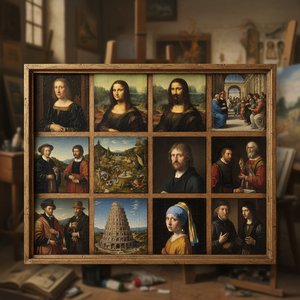
Oil on Panel Masters: 10 Paintings That Revolutionized Art |
Journey through 10 legendary 'Oil on Panel' masterpieces by Van Eyck, Bosch & Bruegel. Explore the stories behind these iconic Renaissance & Baroque paintings and find museum-quality art reproductions to elevate your home decor. Discover all masterpieces on !