- Home

- Digital Image
- lee ufan
- Dialogue
 Preview
 Send
Send Share
Share
 Details

 Download
 Similars
 X-Ray
X-Ray Diaporama
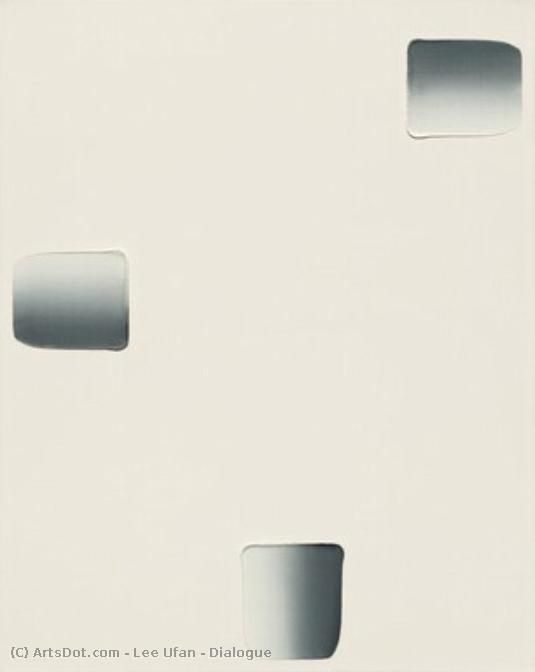
Dialogue
 2011
2011 162.0 x 130.0 cm
 Read More
Purchase a high-resolution, enhanced digital image, far superior to the online preview.
Each file is meticulously prepared by our in-house specialists using advanced tools and expert manual retouching. We ensure every image has exceptional clarity, precise color accuracy, and fine detail.
The final file is delivered via email within 72 hours, optimized for immediate use in professional, editorial, and print environments. This is the same quality trusted by top-tier design studios, publishers, and galleries.
Digital Image
Download a high-resolution file for personal display, printing, and creative projects. ( Switch to Print Switch to hand made Painting)
Included in Every Digital Image Order
Expert Digital Delivery, Guaranteed
When you choose OriginalUniqueArt.com, you're not just getting an image - you're receiving a professionally enhanced digital artwork, crafted with precision and backed by a satisfaction guarantee. Here's everything that comes with your order, automatically:

Fast Email Delivery
Your high-resolution digital image file will be emailed to you within 72 hours of ordering - ready for immediate use.

AI-Enhanced Digital File
Your artwork is professionally optimized using advanced AI tools and manual editing, ensuring maximum detail, clarity, and color accuracy.

Free Lifetime Re-Delivery
Accidentally deleted or lost your file? No worries - we'll resend it to you anytime, free of charge.

No Import Fees - Ever
Enjoy your artwork instantly with zero customs, duties, or delivery fees - digital downloads are always tax-free.

Color Accuracy Guarantee
We ensure your digital image reflects the original colors as closely as possible using professional tools and color management.

60-Day Satisfaction Guarantee
If you're not satisfied with your digital image, we'll revise it or refund 100% within 60 days - no questions asked.

100% Money-Back Guarantee
Not satisfied? Get a full refund within 60 days of receiving your digital file - no questions asked.

Bulk Order Discounts
Buy 3 images, save 10% - Buy 5, save 15% - Buy 10+, save 20%. Great for creative projects, galleries, and agencies.
Artist Biography
born in haman-gun, gyeongsangnam-do in 1936, lee ufan was raised by his parents and confucian grandfather. lee studied painting at the college of fine arts at seoul national university for just two months and moved to yokohama, japan in 1956, where he earned a degree in philosophy in 1961. whilst studying philosophy ufan painted in a restrained, traditional japanese style, eschewing the expressive abstraction of the contemporary japanese gutai movement. after graduating from the university in japan, 1961, he threw himself against the south–north unification movement and the military regime. in 1964, lee was arrested and tortured by the korean central intelligence agency (kcia).
lee spent his early working years pursuing careers as an art critic, philosopher, and artist. in japan he became an active participant in the countercultural upheavals surrounding the anpo movement of the 1960s. he came to prominence in the late 1960s as one of the founders and theoretical leaders of the avant garde mono-ha (school of thing) group. mono-ha was related in arte povera movement of the 1960s and japan's first contemporary art movement to gain international recognition. the mono-ha school of thought rejected western notions of representation, choosing to focus on the relationships of materials and perceptions rather than on expression or intervention. the movement's goal was to embrace the world at large and encourage the fluid coexistence of numerous beings, concepts, and experiences. lee u-fan's position in the philosophy department at nihon university in tokyo earned him a distinguished role as the movement's spokesman. in 1973, he was appointed professor of tama art university in tokyo and he stayed there until 2007. yoshio itagaki was one of his students in 1989–1991. he is professor emeritus at tama art university.
in the mid-1970s lee introduced korean five artists whom called later dansaekzo whehwa (monotone painting) school to japan, which offered a fresh approach to abstraction by presenting repetitive gestural marks as bodily records of time’s perpetual passage. in his early painting series, from point and from line (1972–84), lee combines ground mineral pigment with animal-skin glue, characteristic of nihonga painting in which he was trained. each brushstroke is applied slowly and is composed of several layers. where the brush first makes contact with the canvas, the paint is thick, forming a 'ridge' that gradually becomes lighter. rarely does his brush touch the surface more than three times. the artist refers to this as yohaku or the art of emptiness. in the from point works he adopted a similar method in order to produce a fading series of small, discrete, rectangular brushstokes. in 1991 lee began his series of correspondance paintings, which consist of just one or two grey-blue brushstrokes, made of a mixture of oil and crushed stone pigment, applied onto a large white surface. on average it takes lee about a month to finish a painting, on canvases that typically measure about 60 by 90 inches, although they can vary in size from a few inches to 10 feet per side. he completes no more than 25 works a year.
lee's sculptures, presenting dispersed arrangements of stones together with industrial materials like steel plates, rubber sheets, and glass panes, recast the discrete object as a network of relations based on parity between the viewer, materials, and site. in his sculptural series relatum, each work consists of one or more light-colored round stones and dark, rectangular iron plates.

lee ufan
1936 -
Quick Facts
- Artistic Movement Or Style: Minimalism, Mono-ha
- Artists Or Movements Influenced By This Artist:
- Mono-ha
- Dansaekjo Yesul
- Artists Who Influenced This Artist:
- Martin Heidegger
- Maurice Merleau-Ponty
- Date Of Birth: 1936
- Full Name: Lee Ufan
- Nationality: Korean
- Notable Artworks:
- From Point series
- From Line series
- Place Of Birth: Haman-gun, Korea

