
 Preview
 Send
Send Share
Share
 Details
 Guide
Guide

 Download
 Similars
 X-Ray
X-Ray Diaporama
 Q&A
Q&A Stats
StatsPeach Blossom

- 76.0 x 65.0 cm


 Read More
Giclée / Art Print
Museum-quality giclée or canvas print with fast production and flexible finish options. ( Buy Hand Made Painting Switch to Digital Image)




P118B $10

P118H $10

P118W $10

P438Z $10

P508JH $12

P508YH $12

P805H $10

P805Z $10

P919BZ $10

P919G $10

P919XJ $10

P959ZH $10

P968JZ $12

W106C $8

W218G $10

W218JH $8

W218Y $10

W307PJ $10

W316G $10

W316PJ $8

W316Y $10

W398PJ $8

W4111J $10

W500HY $15

W500JH $15

W692G $12

W849H $8

W940BG $15

W953PJ $8




Pick from our preset sizes that match the artwork's original proportions.

Type the width and the height you need, to fit your frame or your wall. A print can only be cut, never made bigger than the picture, so a size with a different shape loses a part of the image. We send you a digital mockup to approve before we print anything. The picture shown on this page does not show the real cut — only the mockup does.
Worldwide Delivery () in 2 weeks instead of standard 4/5 weeks. (8 November)

Free Worldwide Express Shipping

High-Quality Linen Canvas

Full Shipping Insurance

Customs Tax Refund Guarantee

True Color Matching Guarantee

100-Day Return Policy (Defects Only)

100% Money-Back Guarantee

Bulk Discount Offer
 Glass option is only available in size under 110 CM

Peach Blossom
Giclée / Art Print
Reproduction Size
-


Total Price
$ 81
A Symphony of Color and Korean Tradition
In the annals of Korean Modern Art, few works resonate with as much poignant beauty and cultural depth as Lee Jung-seob’s “Peach Blossom.” Created in 1953, this masterpiece serves as a profound meditation on heritage and resilience, capturing a moment of serene natural splendor amidst the turbulent backdrop of post-war Korea. The painting is far more than a mere depiction of nature; it is an evocative exploration of familial bonds and the enduring spirit of a nation seeking peace after years of hardship. Through his masterful hand, Lee Jung-seob invites the viewer into a tranquil sanctuary where the natural world and human emotion intertwine seamlessly.
The artist’s vision is defined by a breathtaking fusion of styles that bridges the gap between ancient tradition and modern expressionism. One can observe the bold, expressive use of color reminiscent of Fauvism, which lends the piece an intense emotional vitality. Yet, this modernity is anchored by elements drawn from the ancient Goguryeo tomb murals, creating a stylistic dialogue between Korea's storied past and its contemporary struggles. By employing oil paints on paper, Lee Jung-seob achieved a meticulous layering of textures and hues, allowing the light to dance across the surface and breathe life into every branch and blossom.
Symbolism and the Harmony of Nature
At the heart of the composition lies a captivating scene of monkeys inhabiting a tree laden with ripe fruit. This is not merely a playful observation of wildlife; it is a carefully constructed tapestry of Korean symbolism. The peaches, heavy on the branches, serve as potent emblems of longevity, prosperity, and good fortune—wishes that reflect a deep-seated desire for familial well-being and national stability. As the monkeys interact with the fruit, their positioning within the sprawling branches suggests a sense of perfect harmony and balance, mirroring the artist's own longing for peace in a fractured era.
The composition is further enriched by subtle details that invite closer inspection. Scattered throughout the scene are apples, some resting on the ground and others still clinging to the tree, adding a sense of abundance and natural rhythm. A solitary bird, perched near the top right corner, watches over this idyllic landscape, completing a cycle of life that feels both eternal and intimate. For the collector or interior designer, this painting offers a profound sense of tranquility, making it an ideal centerpiece for spaces intended to evoke calm, reflection, and a connection to the organic world.
A Legacy of Resilience and Beauty
To understand “Peach Blossom,” one must consider the historical weight carried by its creator. Painted during a period when Korean identity was under constant pressure from colonial influences, Lee Jung-seob’s work stands as an act of cultural resistance. By championing a distinctly Korean aesthetic, he celebrated a national identity that refused to be assimilated. The painting captures a sense of beauty amidst struggle, proving that even in the most difficult historical moments, the human spirit can cultivate gardens of immense grace.
For those seeking to adorn their homes with art that possesses both intellectual depth and aesthetic splendor, this reproduction offers an unparalleled opportunity. It is a piece that transcends decoration; it is a conversation starter, a window into a soul, and a timeless tribute to the enduring power of nature and tradition. Whether placed in a contemporary gallery setting or a classic study, “Peach Blossom” brings with it an atmosphere of playfulness, warmth, and an unforgettable emotional resonance.
Questions & Answers
What is "Peach Blossom" made with?
The medium of "Peach Blossom" by Lee, Jung-Seob is oil on paper. Reproductions aim to render the appearance of this technique.
What emotional tone accompanies the Modern Korean Art style of "Peach Blossom"?
"Peach Blossom" carries a calm emotional tone within the Modern Korean Art movement.
What explains the copyright situation of "Peach Blossom" by Lee, Jung-Seob?
"Peach Blossom" by Lee, Jung-Seob is in the public domain - its copyright has expired. Copyright duration runs from the artist's death, which occurred in 1956.
Artist Biography
a korean master of oil paintings
lee, jung-seob, a prominent south korean artist, left an indelible mark on the art world with his captivating oil paintings. born in pyeongannamdo, south korea in 1916, lee's artistic journey was marked by innovation and a deep connection with his heritage.artistic contributions
lee jung-seob is best known for his iconic piece 'white ox', a testament to his skillful use of oil paints. this masterpiece, among others, showcases his unique style that blends traditional korean elements with modern techniques.- key works:
- family and pigeon (national museum of korea, seoul, south korea) - a poignant oil on paper piece.
- boys, fish, and crab (national museum of korea, seoul, south korea) - a watercolor showcasing lee's versatility.
- two boys and deer (national museum of korea, seoul, south korea) - another example of his watercolor prowess.
- museums featuring his work:
- national museum of korea (seoul, south korea)
legacy and influence
lee jung-seob's passing in seoul in 1956 marked the end of an era but also paved the way for future generations of korean artists. his influence can be seen in the works of many contemporary korean painters. explore more of lee jung-seob's art: [https://OriginalUniqueArt.com/@/lee-jung-seob](https://OriginalUniqueArt.com/@/lee-jung-seob) | discover an extensive collection of his paintings on OriginalUniqueArt. learn about other renowned artists: /en/art/list/ | browse through the list of greatest artists at OriginalUniqueArt.
Lee, Jung-Seob
1916 - 1956 , South Korea
Quick Facts
- Full Name: Lee Jung-seob
- Nationality: Korean
- Date Of Birth: 1916
- Date Of Death: 1956
- Place Of Birth: Gyeongnam Province, South Korea
- Notable Artworks:
- White Ox
- Family & Pigeon
- Boys, fish, crab
- Artistic Movement Or Style: Modern Korean Art
- Artists Who Influenced This Artist: ['Goguryeo tomb murals']
- Artists Or Movements Influenced By This Artist: ['Fauvism']
Related Articles

Oil on Canvas: A Historical & Technical Exploration of a Timeless Artistic Medium
Explore the rich history & enduring techniques of oil painting on canvas. Discover the science behind its longevity, conservation practices, and contemporary relevance. Expert insights for art enthusiasts.

The Enduring Power of Painting: A Historical & Contemporary Exploration of Form and Emotion
Explore the rich history & enduring techniques of oil painting with OriginalUniqueArt. Discover masterpieces, learn about art collecting, and find authentic handmade reproductions crafted by skilled artists.
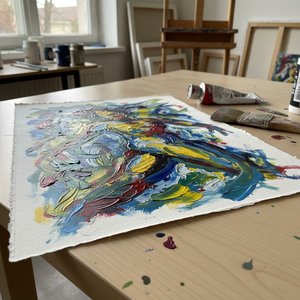
Acrylic on Paper: A Modern Canvas for Contemporary Expression
Explore the versatility of acrylic painting on paper! Discover expert techniques, artist insights & archival practices for creating stunning contemporary art. Learn more at OriginalUniqueArt.

The Enduring Legacy of Oil on Canvas: Technique, History & Contemporary Practice
Explore the rich history & enduring techniques of oil painting on canvas. Discover the science behind its longevity, conservation practices, and contemporary relevance. Expert insights for art enthusiasts.

The Enduring Legacy of Oil on Canvas: Technique, History & Aesthetic Impact
Explore the rich history & techniques of oil painting – from Renaissance masters to Impressionism. Discover pigments, layering methods, and why this timeless medium endures. Expert insights for artists & art enthusiasts.


