Preview
 Send
Send Share
Share
 Details

 Download
 Similars
 X-Ray
X-Ray Diaporama
Blue Landscape
 Oil On Canvas
- WallArt
- Expressionism
 35.0 x 35.0 cm
 Tata Institute of Fundamental Research
 Read More
Giclée / Art Print
Museum-quality giclée or canvas print with fast production and flexible finish options. ( Buy Hand Made Painting Buy Image)




P118B $10

P118H $10

P118W $10

P438Z $10

P508JH $12

P508YH $12

P805H $10

P805Z $10

P919BZ $10

P919G $10

P919XJ $10

P959ZH $10

P968JZ $12

W106C $8

W218G $10

W218JH $8

W218Y $10

W307PJ $10

W316G $10

W316PJ $8

W316Y $10

W398PJ $8

W4111J $10

W500HY $15

W500JH $15

W692G $12

W849H $8

W940BG $15

W953PJ $8




Pick from our preset sizes that match the artwork's original proportions.

You may enter your own dimensions to fit a specific frame or space. If your selected size does not match the original image's proportions, we will either crop the artwork or extend the image with a mirrored or solid-fill edge. A digital mockup will be sent for your approval before production begins.
Please note that the on-screen preview does not reflect the actual cropping or extension. Only the mockup will accurately show the final composition.
While custom sizes are available, we recommend selecting a dimension from the predefined list to preserve the original proportions.
Worldwide Delivery () in 2 weeks instead of standard 4/5 weeks. (21 August)

Free Worldwide Express Shipping

High-Quality Linen Canvas

Full Shipping Insurance

Customs Tax Refund Guarantee

True Color Matching Guarantee

60-Day Return Policy (Defects Only)

100% Money-Back Guarantee

Bulk Discount Offer
 Glass option is only available in size under 110 CM

Blue Landscape
Giclée / Art Print
Reproduction Size
-


Total Price
$ 81
Collectible Description
Blue Landscape - A Meditation on Solitude and Remembrance
Krishnaji Howlaji Ara’s “Blue Landscape” isn't merely a depiction of a snowy vista; it’s an invitation to contemplate the profound stillness inherent in nature and, perhaps more subtly, the echoes of personal experience. Painted sometime between 1975 and 1985 during Ara’s formative years—a period marked by significant upheaval and displacement—the artwork embodies a spirit of resilience born from adversity.
Ara's artistic vision was profoundly influenced by his early life in Mumbai, where he navigated the challenges of poverty and obscurity with unwavering determination. These experiences instilled within him an acute sensitivity to human suffering and a meticulous observation of everyday existence – qualities that find their expression in the textured surface and evocative color palette of “Blue Landscape.” The artist’s ability to capture the essence of emotion through visual form speaks volumes about his artistic prowess.
- Style: Expressionistic
- Technique: Oil paint applied with broad brushstrokes (impasto)
- Materials: Canvas and oil paints
Composition & Color Palette – Guiding the Eye
The artwork’s composition utilizes diagonal lines created by the winding pathway to draw the viewer's gaze into the scene, fostering a sense of movement against the backdrop of serene stillness. Ara skillfully employs thick impasto—a technique characterized by heavily textured paint application—primarily in the snow and sky regions, amplifying visual interest and conveying a palpable feeling of physicality. The dominant color scheme revolves around shades of blue and green, punctuated by delicate accents of white and brown, creating an atmosphere that is both melancholic yet imbued with tranquility.
Symbolism – Echoes of Isolation and Journey
Beyond its aesthetic beauty, “Blue Landscape” carries symbolic weight. The snow itself represents a state of profound isolation—a visual metaphor for introspection and contemplation—while the pathway symbolizes a journey toward understanding or perhaps reconciliation. Ara’s deliberate use of these elements suggests that the artwork is not simply a representation of a place but rather an exploration of internal states.
Detailed Analysis – Texture, Light & Perspective
Ara's masterful technique reveals itself in the meticulous layering of colors and the subtle manipulation of perspective. The diffused lighting—characteristic of twilight or overcast days—further enhances the artwork’s mood, fostering a sense of intimacy and inviting viewers to immerse themselves in its contemplative atmosphere. Ara’s careful attention to detail contributes to the overall impression of depth and realism, despite the stylized aesthetic.
Concluding Thoughts – A Legacy of Observation
"Blue Landscape" stands as a testament to Krishnaji Howlaji Ara's unwavering commitment to capturing the complexities of human experience through art. It’s a piece that transcends mere visual representation, offering viewers a glimpse into the artist’s soul and prompting reflection on themes of solitude, remembrance, and the enduring power of observation—qualities that continue to resonate within the broader context of Indian Expressionism.
Artist Biography
A Life Forged in Resilience: The Early Years of K.H. Ara
Krishnaji Howlaji Ara, known to the art world as K.H. Ara, emerged from a childhood steeped in hardship and resilience, experiences that would profoundly shape his artistic vision. Born in 1914 in Bolarum, Secunderabad, India, his early life was marked by loss and displacement. The death of his mother at the tender age of three, followed by his father’s remarriage, created a turbulent home environment. At just seven years old, Ara bravely embarked on a journey to Mumbai, seeking independence and survival. He navigated the bustling city streets, taking on menial jobs – cleaning cars and working as a houseboy – to sustain himself. These formative experiences instilled in him a deep empathy for the marginalized and a keen observation of everyday life, themes that would later permeate his art. It was during this period of struggle that Ara’s innate artistic talent began to blossom, nurtured by chance encounters with supportive individuals who recognized his potential and provided encouragement.Embracing Modernity: Artistic Development and the Progressive Artists' Group
Ara’s dedication led him to enroll at the J.J. School of Art, where he honed his foundational skills. However, it was his involvement with the revolutionary *Progressive Artists' Group* in 1948 that truly propelled his artistic evolution. This collective, comprised of luminaries like M.F. Hussain, H.A. Gade, S.H. Raza, and F.N. Souza, sought to break free from the constraints of traditional Indian art styles and embrace a new era of modern expression. Ara found kinship with these artists, sharing their commitment to innovation and experimentation. His artistic sensibilities were also deeply influenced by French modern masters, particularly Paul Cézanne, whose emphasis on naturalism and composition resonated with Ara’s own aesthetic inclinations. Initially working with watercolors and gouaches, he later transitioned to oil paints, yet retained the delicate touch and nuanced pigmentation characteristic of his earlier work.A Pioneer of Sensuality: Themes and Artistic Style
K.H. Ara carved a unique niche for himself in Indian art history as the first contemporary painter to consistently depict the female nude with such naturalism and sensuality. This bold move challenged prevailing artistic conventions and sparked both admiration and controversy. His nudes were not merely representations of the human form; they were imbued with a quiet dignity and an intimate understanding of the female experience. Beyond his groundbreaking depictions of the nude, Ara excelled in still life painting, creating robust compositions centered around everyday objects – bowls, fruits, vases – transforming them into subjects of profound beauty and contemplation. His mastery of *impasto* technique, particularly evident in his watercolors and gouaches, added a tactile dimension to his work, lending texture and depth to his canvases. Throughout his oeuvre, Ara’s style is defined by its naturalistic portrayal of subjects, subtle sensuality, and keen observation of the world around him.Recognition and Legacy: A Lasting Impact on Indian Art
Ara's talent was recognized early in his career with successes like his first solo show at the Chetana Restaurant in Bombay in 1942, which proved to be a significant commercial triumph. He continued to receive accolades throughout his life, including the Governor’s Award for painting in 1944 and a Gold Medal from the Bombay Art Society for “Two Jugs” in 1952. His work was exhibited extensively across India and internationally, reaching audiences in Eastern Europe, Japan, Germany, and Russia. While he didn't achieve the same level of commercial success as some of his contemporaries later in life, Ara remained steadfast in his artistic pursuits and dedicated to supporting emerging artists through the Artists’ Centre in Mumbai. His contribution to Indian contemporary art is undeniable; he paved the way for future generations with his innovative approach, bold subject matter, and unwavering commitment to artistic expression. K.H. Ara's legacy endures as a testament to the power of resilience, the beauty of naturalism, and the enduring allure of the human form.
Krishnaji Howlaji Ara
1914 - 1985 , India
Quick Facts
- Artistic Movement Or Style: Modern Indian Art
- Artists Or Movements Influenced By This Artist: ["Progressive Artists' Group"]
- Artists Who Influenced This Artist: ['Paul Cézanne']
- Date Of Birth: April 16, 1914
- Date Of Death: June 30, 1985
- Full Name: Krishnaji Howlaji Ara
- Nationality: Indian
- Notable Artworks:
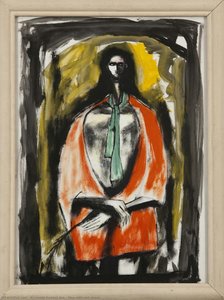
- Man with red shawl
- Blue Pot
- Blue Landscape
- Place Of Birth: Secunderabad, India
Related Articles

Slate Blue Masterpieces: 10 Iconic Paintings & Timeless Home Decor Ideas
Immerse yourself in the captivating world of slate blue! Explore 10 iconic paintings by Monet, Van Gogh & Renoir. Discover their stories, techniques & find museum-quality art reproductions for your home at .
Beyond the Horizon: 10 Landscape Masterpieces for Your Home Decor
Journey through 10 breathtaking landscape paintings by Monet, Van Gogh & more! Explore iconic artworks, artistic techniques & find inspiration for your home decor. Museum-quality reproductions at OriginalUniqueArt.com. Discover all masterpieces on OriginalUniqueArt.com

Evocations of Place: A Historical Journey Through Landscape Art
Explore the rich history of landscape art with OriginalUniqueArt. Discover renowned artists, movements like Impressionism & Romanticism, and expert guidance for collecting timeless pieces. Find your perfect serene escape today!

Romantic Landscapes: 10 Masterpieces for Your Home | OriginalUniqueArt
Journey through 10 Romantic landscape masterpieces by Friedrich, Turner & Cole. Explore emotional art, sublime nature scenes & iconic 19th-century paintings. Find museum-quality reproductions for your home at OriginalUniqueArt.com – discover the full collection online!

The Allure of Azure: Exploring the Symbolic & Aesthetic Depths of Blue in Art History
Explore the rich history of blue in art! Discover its symbolism, from ancient pigments to modern masterpieces by Kandinsky & Seurat. Uncover the psychological impact and cultural meanings behind this captivating hue.