
 Preview
 Send
Send Share
Share
 Details
 Guide
Guide

 Download
 Similars
 X-Ray
X-Ray Diaporama
 Q&A
Q&A Stats
StatsPiling


 Read More
The artwork displayed on this page is protected by copyright law, which means we cannot legally create or sell an identical reproduction. This protection is enforced under international agreements such as the Berne Convention and by national laws, including those outlined by the U.S. Copyright Law - Title 17.
This method fully complies with copyright regulations because it does not involve copying or duplicating the protected artwork. Instead, it is a creative reinterpretation - a new painting that is influenced by the original but not identical to it.
Giclée / Art Print
Museum-quality giclée or canvas print with fast production and flexible finish options. ( Buy Hand Made Painting Switch to Digital Image)




P118B $10

P118H $10

P118W $10

P438Z $10

P508JH $12

P508YH $12

P805H $10

P805Z $10

P919BZ $10

P919G $10

P919XJ $10

P959ZH $10

P968JZ $12

W106C $8

W218G $10

W218JH $8

W218Y $10

W307PJ $10

W316G $10

W316PJ $8

W316Y $10

W398PJ $8

W4111J $10

W500HY $15

W500JH $15

W692G $12

W849H $8

W940BG $15

W953PJ $8




Pick from our preset sizes that match the artwork's original proportions.

Type the width and the height you need, to fit your frame or your wall. A print can only be cut, never made bigger than the picture, so a size with a different shape loses a part of the image. We send you a digital mockup to approve before we print anything. The picture shown on this page does not show the real cut — only the mockup does.
Worldwide Delivery () in 2 weeks instead of standard 4/5 weeks. (4 November)

Free Worldwide Express Shipping

High-Quality Linen Canvas

Full Shipping Insurance

Customs Tax Refund Guarantee

True Color Matching Guarantee

100-Day Return Policy (Defects Only)

100% Money-Back Guarantee

Bulk Discount Offer
 Glass option is only available in size under 110 CM

Piling
Giclée / Art Print
Reproduction Size
-


Total Price
$ 81
Exploring the Quiet Intensity of Kim Jong-gun’s “Piling”
Kim Jong-gun's "Piling" presents a deceptively simple visual experience—a grayscale canvas punctuated by scattered black dots against a subtly textured background. Yet, within this minimalist composition lies a profound reflection of North Korean artistic tradition and a compelling exploration of elemental beauty. The painting’s understated elegance speaks volumes about the artist’s dedication to capturing authentic moments from everyday life and the natural world, hallmarks of DPRK art.Subject Matter and Composition
The artwork depicts what appears to be an undisturbed expanse of gray earth or stone—likely representing a rural landscape typical of North Korea. The deliberate absence of figures allows viewers to focus entirely on the textural qualities of the surface. These black dots aren’t merely random blemishes; they are carefully placed elements that contribute significantly to the overall visual rhythm and depth. Their distribution mimics patterns found in natural formations, subtly hinting at geological processes and reinforcing the painting's connection to the environment. The composition is balanced and restrained, prioritizing clarity and conveying a sense of serene contemplation.Artistic Style and Technique
Kim Jong-gun’s style aligns with representational painting—a favored approach within North Korean artistic institutions—where realism serves as a conduit for communicating cultural values and portraying the beauty inherent in the natural surroundings. The artist employs a technique characterized by meticulous layering and blending, achieved through oil paints on canvas. This painstaking process ensures that every nuance of texture is faithfully reproduced, resulting in an image that feels tactile and inviting. The grayscale palette enhances the painting’s emotional impact, stripping away distracting color hues to emphasize form and surface detail—a deliberate choice reflecting a tradition of artistic austerity.Historical Context and Cultural Significance
“Piling” embodies the spirit of DPRK art, which prioritizes portraying scenes of rural life and landscapes as symbols of national identity and resilience. During periods of economic hardship and political isolation, artists like Kim Jong-gun have consistently focused on depicting the enduring beauty of their homeland—a testament to the importance of artistic expression within a tightly controlled cultural framework. The painting’s quiet stillness speaks to a broader aesthetic sensibility rooted in Confucian ideals – harmony, simplicity, and reverence for nature – values deeply ingrained in North Korean culture.Emotional Impact and Artistic Resonance
Ultimately, “Piling” transcends mere visual representation; it evokes feelings of tranquility and contemplation. The grayscale tones foster introspection, inviting viewers to consider the profound beauty found in unassuming natural elements. It’s a piece that encourages appreciation for subtle details and reminds us that artistic excellence can reside in restraint—a powerful statement about conveying emotion through carefully considered form and texture. Reproductions of this artwork offer an opportunity to engage with North Korean artistic heritage and experience its enduring aesthetic appeal.Questions & Answers
Where is "Piling" suggested to be displayed, considering its palette?
The earthy colors of "Piling" by Kim Jong-gun match its recommended space: a hotel lobby.
Is "Piling" by Kim Jong-gun a portrait, landscape or square composition?
The format of "Piling" is portrait. This is useful when planning where a reproduction will be placed.
How is "Piling" recommended to be printed - what size, what orientation?
For "Piling", the recommended print setup is a large size and a portrait orientation.
Artist Biography
Kim Jong-gun: A North Korean Artistic Voice
Early Life and Background
- Born in Pyongyang, Democratic People's Republic of Korea (North Korea) in 1982, Kim Jong-gun’s life is intertwined with the complex political and cultural landscape of his nation.
- Details regarding his early artistic training remain limited due to the closed nature of North Korean society. However, it is understood he received formal art education within the state system.
- Family Context: It’s important to note that this Kim Jong-gun is distinct from the Supreme Leader of North Korea, sharing only a name. This distinction is crucial when researching his work and biography.
Artistic Style and Themes
- Kim Jong-gun’s artistic style leans towards representational painting, focusing on capturing realistic depictions of everyday life and the natural world.
- Common Themes: His works frequently feature landscapes, still lifes, and scenes portraying ordinary people engaged in daily activities. These themes often reflect a romanticized view of North Korean society.
- His paintings demonstrate technical skill and attention to detail, showcasing a traditional approach to painting techniques.
Influences and Artistic Development
- Socialist Realism: Kim Jong-gun’s work is heavily influenced by the principles of Socialist Realism, an artistic style prevalent in communist states. This influence manifests in his focus on portraying idealized images of workers, farmers, and the beauty of the homeland.
- Traditional Korean Painting: Elements of traditional Korean painting techniques, such as ink wash painting (sumukhwa) and meticulous brushwork, can be observed in his landscapes and still lifes.
- Political Context: The artistic direction within North Korea is heavily guided by state ideology. Kim Jong-gun’s work likely reflects the aesthetic preferences and political directives of the Workers' Party of Korea.
Notable Works
- Wild Grapes: A representative example of his still life paintings, showcasing detailed rendering of natural forms.
- Piling: Demonstrates his ability to capture scenes from daily labor and the working class.
- While a comprehensive catalog of his works is unavailable due to limited access to North Korean art collections, these pieces offer insight into his artistic style.
Historical Significance and Cultural Context
- Representation of DPRK Art: Kim Jong-gun’s work provides a glimpse into the state-sponsored art produced in North Korea, offering valuable insights into the country's cultural values and ideological priorities.
- His paintings contribute to the broader understanding of how art is used as a tool for propaganda and social control within authoritarian regimes.
- Limited Exposure: Due to restrictions on artistic expression and international exchange, Kim Jong-gun’s work remains relatively unknown outside of North Korea. His inclusion in platforms like OriginalUniqueArt.com helps broaden access to this unique perspective.

Kim Jong-gun
1982 - , Democratic People's Republic of Korea
Quick Facts
- Name: kim jong-gun
- Birth Date: 1982
- Birth Place: Pyongyang, Democratic People's Republic of Korea
- Nationality: North Korean
- Date Of Birth: 1982
- Notable Works:
- Wild Grapes
- Piling
- Place Of Birth: Pyongyang, Democratic People's Republic of Korea
Related Articles

Evocations of Place: A Historical Journey Through Landscape Art
Explore the rich history of landscape art with OriginalUniqueArt. Discover renowned artists, movements like Impressionism & Romanticism, and expert guidance for collecting timeless pieces. Find your perfect serene escape today!

Evocations of Place: A Historical Journey Through Landscape Art
Explore the rich history of landscape art with OriginalUniqueArt. Discover renowned artists, movements like Impressionism & tonalism, and expert guidance for collecting timeless pieces. Find your perfect serene escape today!

Mastering the English Landscape: The Top 25 John Constable Artworks
Experience the soul of English landscapes through John Constable's top 25 works. Explore the full collection online at OriginalUniqueArt.com.

Romantic Landscapes: 10 Masterpieces for Your Home | OriginalUniqueArt
Journey through 10 Romantic landscape masterpieces by Friedrich, Turner & Cole. Explore emotional art, sublime nature scenes & iconic 19th-century paintings. Find museum-quality reproductions for your home at OriginalUniqueArt.com – discover the full collection online!
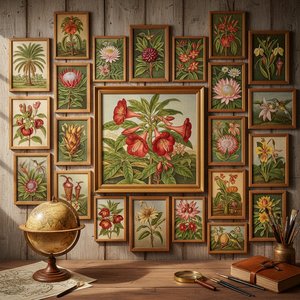
Marianne North's Masterpieces: 25 Botanical Paintings That Bloom With Adventure | OriginalUniqueArt
Journey through the vibrant world of Marianne North’s botanical paintings! Explore 25 iconic artworks from this Victorian artist, celebrating exotic flora & travel. Find museum-quality reproductions and curated decor ideas at OriginalUniqueArt.com.

