Menu
FREE ART CONSULTATION
Buy print Buy printBuy Image Buy Image SendSend
DetailsDetails Add to favorites Add to favorites DownloadDownload SimilarsSimilars X-RayX-Ray DiaporamaDiaporama

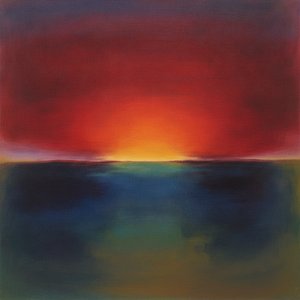
Untitled

  • Creation date1958
  • Dimensions62.0 x 64.0 cm

Explore Kenneth Noland (1924-2010), a leading American Color Field painter & Washington Color School pioneer. Discover his vibrant circles, chevrons & shaped canvases—abstract art redefining color & space.

Hand Made Oil Reproduction

Hand-painted oil on canvas in your size and frame, made to order by our artists.

Standard
custom
CM
INCH

Pick from our preset sizes that match the artwork's original proportions.

width
height

You may enter your own dimensions to fit a specific frame or space. If your selected size does not match the original image's proportions, we will either crop the artwork or extend the painting with additional hand-painted elements. A digital mockup will be sent for your approval before production begins.
Please note that the on-screen preview does not reflect the actual cropping or extension. Only the mockup will accurately show the final composition.
While custom sizes are available, we recommend selecting a dimension from the predefined list to preserve the original proportions.

Examples of what can be changed: Replace face with customer photo; Add pet (e.g., replace cat with dog); Include hidden message in background; Change background landscape or elements.
After order, OriginalUniqueArt.com team will email client for instructions and provide a mockup preview

Worldwide Delivery () in 3/4 weeks instead of standard 5 weeks. (21 July). No compromise on quality.

why_choose_icon
Free Worldwide Express Shipping
why_choose_icon
High-Quality Linen Canvas
why_choose_icon
Full Shipping Insurance
why_choose_icon
Customs Tax Refund Guarantee
why_choose_icon
True Color Matching Guarantee
why_choose_icon
60-Day Return Policy (Defects Only)
why_choose_icon
100% Money-Back Guarantee
why_choose_icon
Bulk Discount Offer

Total Price

-

reproduction

Untitled

Reproduction Medium

Reproduction Size

-

Total Price

-

Artwork Description

The Smithsonian American Art Museum is home to a stunning collection of modern and contemporary art, including the remarkable painting "Untitled" by Kenneth Noland. Created in 1958, this acrylic on canvas work is a quintessential example of Color Field painting, a style characterized by large, flat areas of color.

The Artist's Vision

Kenneth Noland was an American artist known for his innovative use of color and composition. His paintings often feature geometric shapes and bold, vibrant colors that seem to pulse with energy. In "Untitled", Noland uses a series of concentric circles to create a sense of depth and movement, drawing the viewer's eye into the heart of the painting. Key Elements of the painting include its use of color, composition, and technique. The colors used by Noland are bold and vibrant, with shades of red, blue, and yellow dominating the palette. The composition is characterized by a series of concentric circles, which create a sense of depth and movement. The technique used by Noland is also noteworthy, as he uses a staining method to apply the paint to the canvas, creating a sense of texture and visual interest.

Similar Artists and Styles

Other artists who worked in a similar style to Kenneth Noland include Sam Gilliam and Alma Thomas. Like Noland, these artists were known for their innovative use of color and composition, and their paintings often feature geometric shapes and bold, vibrant colors. For example, Alma Thomas's painting Celestial Fantasy features a similar use of color and composition, with a series of geometric shapes and bold, vibrant colors creating a sense of depth and movement.
In conclusion, "Untitled" by Kenneth Noland is a masterpiece of Color Field painting that showcases the artist's innovative use of color and composition. With its bold, vibrant colors and geometric shapes, this painting is a must-see for anyone interested in modern and contemporary art.

Artist Biography

A Life Immersed in Color: The World of Kenneth Noland

Kenneth Clifton Noland, a name synonymous with the vibrant energy of Color Field painting and a pivotal figure in the Washington Color School, dedicated his life to distilling art down to its most essential elements – color, form, and spatial relationships. Born in Asheville, North Carolina, in 1924, Noland’s journey was one of constant exploration and innovation, evolving from early engagements with Abstract Expressionism to a groundbreaking embrace of shaped canvases that redefined the boundaries of abstract painting. His work wasn't merely about what he *painted*, but how he revealed color itself, allowing it to breathe and resonate within carefully considered compositions.

Early Influences and Artistic Formation

Noland’s artistic inclinations were nurtured from a young age, growing up in a household where music and art held value. This early exposure laid the foundation for his lifelong pursuit of aesthetic expression. His formal training began after serving in the U.S. Air Force during World War II, utilizing the G.I. Bill to attend Black Mountain College – an institution renowned as a crucible of artistic experimentation. It was here that Noland encountered transformative influences. Instructors like Ilya Bolotowsky introduced him to the principles of Neo-plasticism and the work of Piet Mondrian, while Josef Albers instilled in him a deep understanding of Bauhaus theory and the profound impact of color perception. These foundational lessons would become cornerstones of his artistic philosophy.

A subsequent period studying sculpture with Ossip Zadkine in Paris further broadened Noland’s horizons, marking his first solo exhibition and exposing him to the European art scene. However, it was a pivotal encounter back in America that truly set him on the path toward his signature style. In 1953, Clement Greenberg introduced Noland – along with Morris Louis – to Helen Frankenthaler's revolutionary “soak-stain” technique. This method, involving applying thinned paint directly onto unprimed canvas, proved a watershed moment, liberating color from the constraints of traditional brushwork and allowing it to become an integral part of the fabric itself.

The Evolution of Style: Circles, Chevrons, and Shaped Canvases

Noland and Louis enthusiastically embraced Frankenthaler’s technique, embarking on a shared exploration of color field painting. Noland's early works during this period are characterized by striking concentric circles – often referred to as “targets.” These weren’t simply depictions of targets; they were investigations into the relationship between image and canvas edge, utilizing unexpected and bold color combinations to create visual tension and optical effects. Beginning (1958) stands as a prime example of this phase, showcasing his mastery of color interaction and spatial dynamics.

Around 1958, Noland began to diverge from Louis’s artistic trajectory, venturing into explorations with chevrons and stripes. This marked a shift towards more structured compositions while retaining the emphasis on pure color. However, it was his pioneering use of shaped canvases that truly cemented his place in art history. Initially experimenting with diamonds or chevrons, Noland progressively evolved toward highly irregular forms, emphasizing the canvas edges not as boundaries but as integral structural elements – actively participating in the overall composition and challenging traditional notions of pictorial space.

Recognition and Lasting Legacy

Noland’s innovative work garnered significant recognition throughout his career. He was prominently featured in Clement Greenberg’s influential 1964 exhibition, Post-Painterly Abstraction, which solidified Color Field painting as a major force in the contemporary art world. That same year, he occupied half of the American pavilion at the Venice Biennale, demonstrating international acclaim. Major retrospective exhibitions followed, including one at the Solomon R. Guggenheim Museum in 1977 that traveled to other prestigious institutions like the Hirshhorn Museum and Sculpture Garden and the Toledo Museum of Art. Further exhibitions internationally, including a showing at the Tate in London in 2006, continued to celebrate his contributions.

Throughout the 1970s and 80s, Noland relentlessly refined his shaped canvas approach, creating increasingly complex structures with sophisticated color control. He remained committed to pushing the boundaries of abstraction, inspiring generations of artists. Kenneth Noland passed away in 2010, leaving behind a legacy as a central figure in Color Field painting, a leader of the Washington Color School, and an innovator who fundamentally expanded the possibilities of abstract art. His work continues to resonate today, reminding us of the power of color to evoke emotion, challenge perception, and redefine our understanding of space.

A Lasting Impact

  • Noland’s influence extends beyond his immediate contemporaries, inspiring artists exploring abstraction, color theory, and spatial relationships even now.
  • His pioneering use of shaped canvases challenged conventional notions of painting, opening up new avenues for artistic expression.
  • As a key figure in the Washington Color School, he helped establish a distinct American voice within the broader context of abstract art.
Kenneth Noland

Kenneth Noland

1924 - 2010 , United States of America

Quick Facts

  • Artistic Movement Or Style: Color Field painting
  • Artists Or Movements Influenced By This Artist: ['Washington Color School']
  • Artists Who Influenced This Artist:
    • Ilya Bolotowsky
    • Josef Albers
    • Helen Frankenthaler
  • Date Of Birth: 1924
  • Date Of Death: 2010
  • Full Name: Kenneth Clifton Noland
  • Nationality: American
  • Notable Artworks:
    • Beginning
    • Magic Box
    • October
  • Place Of Birth: Asheville, USA
Explore artworks organized by themes, styles, and characteristics.