Preview
 Send
Send Share
Share
 Details
 Guide
Guide

 Download
 Similars
 X-Ray
X-Ray Diaporama
 Stats
StatsPortrait


 Read More
Hand Made Oil Reproduction
Hand-painted oil on canvas in your size and frame, made to order by our artists. ( Switch to Print Switch to Digital Image)




P118B $10

P118H $10

P118W $10

P438Z $10

P508JH $12

P508YH $12

P805H $10

P805Z $10

P919BZ $10

P919G $10

P919XJ $10

P959ZH $10

P968JZ $12

W106C $8

W218G $10

W218JH $8

W218Y $10

W307PJ $10

W316G $10

W316PJ $8

W316Y $10

W398PJ $8

W4111J $10

W500HY $15

W500JH $15

W692G $12

W849H $8

W940BG $15

W953PJ $8




Pick from our preset sizes that match the artwork's original proportions.

You may enter your own dimensions to fit a specific frame or space. If your selected size does not match the original image's proportions, we will either crop the artwork or extend the painting with additional hand-painted elements. A digital mockup will be sent for your approval before production begins.
Please note that the on-screen preview does not reflect the actual cropping or extension. Only the mockup will accurately show the final composition.
While custom sizes are available, we recommend selecting a dimension from the predefined list to preserve the original proportions.
After order, OriginalUniqueArt.com team will email client for instructions and provide a mockup preview
Worldwide Delivery () in 3/4 weeks instead of standard 5 weeks. (13 October). No compromise on quality.

Free Worldwide Express Shipping

High-Quality Linen Canvas

Full Shipping Insurance

Customs Tax Refund Guarantee

True Color Matching Guarantee

100-Day Return Policy (Defects Only)

100% Money-Back Guarantee

Bulk Discount Offer
 Glass option is only available in size under 110 CM

Portrait
Reproduction Medium
Reproduction Size
-


Total Price
$ 300
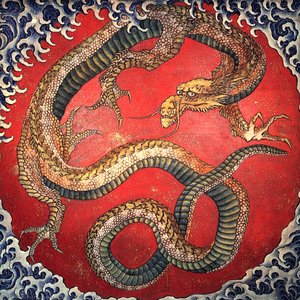
A Window Into Edo: Katsushika Hokusai’s Portrait of a Shogunate Observer
Katsushika Hokusai's "Portrait of a Shogunate Observer," painted circa 1830, isn’t merely a depiction of an individual; it’s a meticulously crafted window into the intellectual and political currents swirling within Edo-period Japan. This arresting image, rendered in the signature *sumi* ink style that defined Hokusai's later career, transcends simple portraiture to become a potent symbol of observation, contemplation, and the complex relationship between art, power, and the pursuit of knowledge.
The subject himself remains deliberately enigmatic. He’s a man of considerable presence – his posture is upright, suggesting authority and careful consideration. Dressed in the formal attire of a *hakama*, a pleated divided skirt signifying high rank within the shogunate bureaucracy, he embodies the meticulous order and disciplined governance that characterized the Tokugawa regime. The folding fan held delicately in his right hand isn’t just an accessory; it's a visual shorthand for diplomacy, strategic thought, and the subtle art of negotiation – essential tools for any observer navigating the intricacies of courtly life.
The Language of Detail: Technique and Symbolism
Hokusai’s masterful use of *sumi* ink is immediately striking. The monochrome palette, a hallmark of his mature style, isn't devoid of richness; rather, it’s layered with subtle gradations achieved through varying pressures and brushstrokes. Notice the delicate rendering of the man’s face – the raised eyebrows convey an air of shrewdness and perhaps even skepticism, while the tightly closed mouth hints at guarded contemplation. The double eyelids, a prominent feature emphasized by Hokusai, are not simply anatomical detail but also contribute to his overall aura of intelligence and observation.
- The Armillary Sphere: Behind the observer, a meticulously rendered armillary sphere dominates the background. This ancient instrument, used for charting celestial movements, speaks volumes about the intellectual climate of the time. The shogunate actively sought to align its calendar system with Western astronomy, reflecting a desire for modernization and a recognition of the importance of scientific knowledge. The inclusion of the armillary sphere subtly suggests that this observer is not just passively observing but actively engaged in understanding the broader cosmic order.
- The Sword Scabbard: The presence of the sword scabbard in his left hand, a symbol of military power and authority, underscores the role of the shogunate’s armed forces within the political landscape. It's a reminder that even the most contemplative observer is operating within a context of potential conflict and strategic maneuvering.
- The Fan: The folding fan itself carries symbolic weight. In Japanese culture, fans are used to moderate temperature, offer protection from the sun, and convey subtle messages through gesture and movement. Here, it suggests a careful and considered approach to his observations.
Contextualizing the Portrait: A Shogunate in Transition
To fully appreciate this portrait, one must understand the political climate of 1830s Japan. The Tokugawa shogunate, which had ruled for over two centuries, was facing increasing pressure from within and without. Western traders and missionaries were challenging its authority, while internal dissent simmered beneath the surface. The shogunate’s attempts to modernize and reform its institutions – exemplified by the interest in astronomy – were a desperate attempt to maintain control in the face of these challenges.
Hokusai, already a celebrated artist, was deeply aware of this political landscape. His work often reflected the anxieties and uncertainties of his time. This portrait isn’t simply a likeness; it's a commentary on the role of the observer – the scholar, the bureaucrat, the strategist – within a rapidly changing society.
Emotional Resonance: A Portrait of Quiet Intensity
Despite its historical context, “Portrait of a Shogunate Observer” possesses an enduring emotional resonance. The man’s gaze is direct and unwavering, inviting the viewer to contemplate his thoughts and motivations. There's a sense of quiet intensity – a feeling that he is wrestling with complex ideas and navigating a challenging world. The monochrome palette contributes to this mood, evoking a sense of timelessness and introspection. This portrait isn’t just a historical document; it’s a powerful meditation on observation, knowledge, and the human condition.
Reproductions of this piece capture the subtle nuances of Hokusai's masterful technique, allowing viewers to appreciate the depth and complexity of this remarkable work of art. It is a timeless reminder of the power of visual storytelling and the enduring legacy of one of Japan’s greatest artists.
Questions & Answers
Is "Portrait" available as a fine art print?
A print of "Portrait" by Katsushika Hokusai can be ordered directly on this page: a fine art print on cotton canvas or archival canvas paper.
Which reproduction size is suggested for "Portrait" by Katsushika Hokusai?
"Portrait" is recommended at a large print size. Other sizes are available with the same proportions.
How do I download the image of "Portrait" by Katsushika Hokusai?
The image of "Portrait" by Katsushika Hokusai can be downloaded from the artwork's Download page: a high-resolution digital image download.
How does the subject of "Portrait" relate to Katsushika Hokusai's usual themes?
Among Katsushika Hokusai's recorded themes - chinese landscape, western printmaking, edo period social commentary, shogunate reforms, calendar system, mount fuji, national identity, hokusai's diverse artistic legacy - "Portrait" brings its own focus on portrait, edo period, japan, mount fuji, hokusai, ukiyo-e, landscape, man.
How do the colors of "Portrait" relate to each other?
The colors of "Portrait" by Katsushika Hokusai show a unified palette harmony. Harmony describes how the colors relate to each other.
How can I view "Portrait" by Katsushika Hokusai as a slideshow?
"Portrait" by Katsushika Hokusai can be viewed as a slideshow on the artwork's Diaporama page.
How is the color composition of "Portrait" by Katsushika Hokusai built?
In "Portrait", a serene contrast is paired with a unified palette harmony.
What is "Portrait" about?
"Portrait" by Katsushika Hokusai depicts: portrait, edo period, japan, mount fuji, hokusai, ukiyo-e, landscape, man.
Artist Biography
A Life Etched in Ink: The World of Katsushika Hokusai
Katsushika Hokusai, a name synonymous with Japanese art and the iconic image of *The Great Wave off Kanagawa*, was far more than just a printmaker. Born in Edo (modern-day Tokyo) around 1760, his life was a restless pursuit of artistic mastery, a constant evolution marked by shifting names and an insatiable curiosity. From humble beginnings as the son of a mirror maker, Hokusai’s early inclination towards art wasn't immediately encouraged; yet, he relentlessly honed his skills, reportedly beginning to draw at the age of six. This dedication would define a career spanning nearly nine decades, leaving behind a legacy that continues to resonate with audiences worldwide. His father, Nakajima Ise, though not an artist himself, recognized and perhaps fostered this nascent talent, laying the groundwork for a journey that would transform Japanese visual culture. Hokusai’s early life wasn't one of privilege, but rather a steady climb fueled by ambition and a deep-seated passion to capture the essence of the world around him.From Apprenticeship to Innovation: The Blossoming of a Style
Hokusai’s formal artistic training began at twelve when he entered the studio of Katsukawa Shunshō, a leading master of *ukiyo-e* – “pictures of the floating world.” This genre, popular during the Edo period, depicted scenes from everyday life: actors, courtesans, landscapes, and glimpses into the vibrant urban culture. Under Shunshō’s guidance, Hokusai mastered the techniques of woodblock printing, a demanding process requiring precision and artistry. However, he wasn't content to simply replicate his teacher’s style. Even in his early work, a restless spirit was evident, a desire to push boundaries and explore new avenues of expression. He experimented with different subjects, from book illustrations to single-sheet prints, constantly refining his skills and developing a unique visual language. This period also saw the first of many name changes – a common practice among *ukiyo-e* artists signifying periods of artistic reinvention or affiliation with different schools. He initially focused on illustrating books, which provided him with steady work and allowed him to develop his compositional skills. But it was his move towards single-sheet prints that truly unleashed his creative potential.Mount Fuji and the Floating World: Defining Masterpieces
Hokusai’s artistic output was astonishingly prolific; thousands of woodblock prints, paintings, and illustrated books bear his signature. While he explored a wide range of subjects, it was his series *Thirty-six Views of Mount Fuji* (circa 1831) that cemented his fame. This collection, featuring the now-iconic *The Great Wave off Kanagawa*, wasn’t merely a depiction of a landscape; it was a masterful exploration of perspective, composition, and the power of nature. The wave itself, a towering force about to crash down on tiny boats, embodies both the beauty and the terror of the sea. Beyond *Fuji*, works like *Fireworks at Ryōgoku Bridge* (1790) demonstrated his ability to capture dynamic scenes of daily life with remarkable energy and detail. His *Hokusai Manga* – a collection of sketches and studies encompassing people, animals, landscapes, and fantastical creatures – was groundbreaking in its scope and influence, foreshadowing the development of modern manga as an art form. These works weren’t isolated achievements; they were milestones in a continuous artistic journey, each building upon the last to create a body of work that is both deeply rooted in Japanese tradition and remarkably innovative.A Legacy Beyond Borders: Hokusai's Enduring Influence
Hokusai’s impact extended far beyond Japan. In the late 19th century, as Japan opened its doors to the West, *ukiyo-e* prints flooded European markets, sparking a phenomenon known as *Japonisme*. Artists like Claude Monet, Edgar Degas, and Vincent van Gogh were captivated by Hokusai’s bold compositions, vibrant colors, and unconventional perspectives. Van Gogh, in particular, was deeply influenced by *The Great Wave*, even recreating it in his own paintings. Hokusai's influence wasn't limited to Impressionism; it permeated various modern art movements, shaping the way artists approached composition, color, and subject matter. His emphasis on capturing fleeting moments, his dynamic use of line, and his ability to find beauty in everyday life resonated with a generation of artists seeking new forms of expression. Even today, Hokusai’s work continues to inspire and challenge artists around the world, solidifying his place as one of the most important figures in art history. He continued painting until his death in 1849 at the age of 89, leaving behind a vast body of work that remains a testament to his unwavering dedication and artistic genius.The Old Man Mad About Painting
Hokusai’s life was one of constant reinvention, marked by numerous name changes – over thirty throughout his career – each reflecting a new phase in his artistic development. He often referred to himself as “Gakyō Rōjin,” or "Old Man Crazy to Paint," a fitting title for an artist who remained passionately devoted to his craft well into his eighties. This relentless pursuit of perfection, coupled with his innovative spirit and profound understanding of both Japanese tradition and the wider world, cemented Hokusai’s legacy as a true master of *ukiyo-e* and a pivotal figure in the history of art. His work continues to captivate audiences, reminding us of the power of art to transcend cultural boundaries and connect us to something larger than ourselves.- Major Influences: Ukiyo-e traditions, Chinese landscape painting, everyday life in Edo.
- Key Characteristics: Bold lines, vibrant colors, dynamic compositions, keen observation of nature.

Katsushika Hokusai
1760 - 1849 , Japan
Quick Facts
- Full Name: Katsushika Hokusai
- Nationality: Japanese
- Date Of Birth: 1760
- Date Of Death: 1849
- Place Of Birth: Tokyo, Japan
- Notable Artworks:
- The Great Wave off Kanagawa
- Thirty-six Views of Mt. Fuji
- Hokusai Manga
- Fireworks at Ryōgoku Bridge
- Artistic Movement Or Style: Ukiyo-e
- Artists Who Influenced This Artist: ['Chinese landscape painting']
- Artists Or Movements Influenced By This Artist:
- Impressionism
- Vincent van Gogh
- Claude Monet
Related Articles
Masterpieces of Japan: A Definitive Guide to Ukiyo-e and the Art of the Floating World
Explore the profound beauty of Japanese Ukiyo-e. From Hokusai's iconic waves to the elegance of the Edo period, discover the history and masters behind the 'Floating World' in this expert art-history guide for collectors and enthusiasts.
Floating World: The Captivating Art and Legacy of Japanese Ukiyo-e
Explore the profound beauty of Japanese Ukiyo-e. Discover the history, masters like Hokusai, and the enduring legacy of the 'Floating World' through an expert art-historical lens.

Hokusai's Masterpieces: 25 Iconic Prints & Paintings for Art Lovers | OriginalUniqueArt
Journey through Katsushika Hokusai’s 25 most iconic artworks, including *The Great Wave*. Explore the ukiyo-e master's history, style & timeless Japanese woodblock prints. Find museum-quality reproductions for your home at OriginalUniqueArt.com.
Ukiyo-e Unlocked: The Bold Japanese Art Movement That Defined Modern Pop Culture
Dive into the high-energy world of Ukiyo-e. Discover how Japan's 'floating world' woodblock prints pioneered bold colors and graphic storytelling, shaping the DNA of modern pop culture, anime, and street art. Explore the masters that defined a visual revolution.
Serenity on Canvas: A Guide to the Timeless Beauty of Japanese Landscape Painting
Discover the serene beauty of Japanese landscape painting. From Hokusai's iconic woodblock prints to meditative sumi-e ink washes, explore a visual journey through the 'floating world' and learn how to bring this timeless Zen aesthetic into your modern home decor.