

 Preview
 Send
Send Share
Share
 Details
 Guide
Guide

 Download
 Similars
 X-Ray
X-Ray Diaporama
 Stats
StatsInterior 178 (Meg)
 Painting
- Contemporary Realism
 Contemporary
 40.0 x 38.0 cm
 Canberra Museum and Gallery
 Read More
Hand Made Oil Reproduction
Hand-painted oil on canvas in your size and frame, made to order by our artists. ( Switch to Print Switch to Digital Image)




P118B $10

P118H $10

P118W $10

P438Z $10

P508JH $12

P508YH $12

P805H $10

P805Z $10

P919BZ $10

P919G $10

P919XJ $10

P959ZH $10

P968JZ $12

W106C $8

W218G $10

W218JH $8

W218Y $10

W307PJ $10

W316G $10

W316PJ $8

W316Y $10

W398PJ $8

W4111J $10

W500HY $15

W500JH $15

W692G $12

W849H $8

W940BG $15

W953PJ $8




Pick from our preset sizes that match the artwork's original proportions.

You may enter your own dimensions to fit a specific frame or space. If your selected size does not match the original image's proportions, we will either crop the artwork or extend the painting with additional hand-painted elements. A digital mockup will be sent for your approval before production begins.
Please note that the on-screen preview does not reflect the actual cropping or extension. Only the mockup will accurately show the final composition.
While custom sizes are available, we recommend selecting a dimension from the predefined list to preserve the original proportions.
After order, OriginalUniqueArt.com team will email client for instructions and provide a mockup preview
Worldwide Delivery () in 3/4 weeks instead of standard 5 weeks. (29 September). No compromise on quality.

Free Worldwide Express Shipping

High-Quality Linen Canvas

Full Shipping Insurance

Customs Tax Refund Guarantee

True Color Matching Guarantee

100-Day Return Policy (Defects Only)

100% Money-Back Guarantee

Bulk Discount Offer
 Glass option is only available in size under 110 CM

Interior 178 (Meg)
Reproduction Medium
Reproduction Size
-


Total Price
$ 300
The Intimacy of the Unseen: Exploring Jude Rae’s Interior 178 (Meg)
In the quietude of Interior 178 (Meg), the viewer is invited into a profound moment of stillness that transcends the boundaries of a mere portrait. The Australian painter Jude Rae, an artist celebrated for her mastery of both still life and portraiture, presents us with a subject caught in a state of deep repose. The painting depicts a woman with soft brown hair, her eyes gently closed, draped in the simple elegance of a black shirt. There is no performative gaze here; there is no attempt to engage the spectator through the traditional "windows of the soul." Instead, Rae directs our attention inward, capturing a sense of profound peace and the sanctity of a private, undisturbed moment.
The technique employed in this work reflects Rae’s rigorous academic foundation, rooted in her studies at the Julian Ashton Art School and the University of Canterbury. Executed on linen, the painting possesses a tactile richness that lends weight to the subject's vulnerability. The artist utilizes light and shadow not merely to define form, but to sculpt an atmosphere of contemplative silence. Through subtle gradations of tone, the texture of the hair and the heavy drape of the dark fabric become palpable, creating a sensory experience that invites the observer to slow their own breathing in resonance with the sleeping figure.
A Reimagined Portraiture: Symbolism and the Closed Eye
The conceptual heart of Interior 178 (Meg) lies in Rae’s deliberate subversion of portraiture conventions. By choosing to paint her subjects—many of whom were fellow residents of the Australian National Capital Artists studios—with their eyes closed, she challenges the long-standing aphorical belief that the eyes are the primary gateway to a person's essence. In this series, the closed eyelid becomes a symbol of autonomy and self-containment. When the subject refuses to look outward, they become complete within their own interior world, rendering themselves both vulnerable to our gaze and entirely unreachable by it.
This artistic choice creates a powerful emotional resonance for the collector and the admirer alike. There is a haunting beauty in this refusal to perform; it transforms the portrait from a social document into a psychological landscape. For those seeking to incorporate art into a curated space, such a piece offers more than mere decoration. It provides a focal point of tranquility, acting as an anchor of calm within the often chaotic environment of modern living. The painting does not demand attention through spectacle, but rather earns it through its quiet, undeniable presence.
An Essential Addition to the Discerning Collection
For interior designers and art enthusiasts, Interior 178 (Meg) represents a sophisticated intersection of classical skill and modern psychological depth. Its intimate scale—measuring 40 x 38 cm—makes it an ideal candidate for a curated gallery wall or a prominent position in a study or bedroom where themes of reflection and rest are celebrated. The work’s ability to evoke empathy and introspection makes it a timeless piece, capable of anchoring a room with its understated gravity.
Owning a high-quality reproduction of such a significant contemporary Australian work allows for the preservation of this delicate atmosphere within one's own home. It is an invitation to contemplate the beauty of the unseen and to find inspiration in the quiet moments of existence. As a piece that bridges the gap between the historical traditions of portraiture and a modern exploration of identity, Rae’s work remains a profound testament to the enduring power of the painted image.
Artist Biography
The Quietude of the Inner World
Born in Sydney in 1956, Jude Rae emerged from a lineage deeply rooted in the traditions of realist painting. As the daughter of David Rae, a painter whose works are held within the esteemed collection of the Art Gallery of New South Wales, her artistic foundation was laid amidst the textures and tones of classical observation. Her education began early, attending the Julian Ashton Art School from the age of eleven or twelve, following in the footsteps of both her parents who were also trained at the same institution. This rigorous early immersion in the fundamentals of light and form provided the scaffolding for a career that would eventually span Australia and New Zealand, marked by a profound ability to capture the delicate intersection between the physical and the spiritual.
Rae’s academic journey further refined her technical prowess, as she pursued a Bachelor of Arts in Fine Arts with a focus on Art History at the University of Sydney. Her scholarly pursuits were complemented by advanced training, including a Graduate Diploma in Professional Art Studies from the University of New South Wales and a Master of Arts in Painting from the University of Canterbury in Christchurch, New Zealand. This blend of historical knowledge and technical mastery allowed her to develop a style that is both deeply informed by the past and intensely personal in its execution.
A Mastery of Stillness and Light
The work of Jude Rae is celebrated for its evocative power, particularly within her large-scale interiors, portraits, and still life paintings. She has gained significant recognition for a unique approach to portraiture that subverts traditional expectations. In her celebrated series of interiors, which captures the essence of Canberra’s artistic community, Rae often depicts her subjects with their eyes gently closed. By intentionally obscuring the gaze, she challenges the age-old adage that the eyes are the windows to the soul; instead, she suggests that true intimacy and the richness of one's inner life are discovered when those windows are shuttered, allowing the viewer to contemplate the vast, unseen landscapes of the mind.
Her technique is a masterclass in subtle nuance and atmospheric depth. Utilizing a sophisticated layering technique, likely employing oils on canvas, Rae builds a rich, tactile surface where every crease, contour, and soft texture is articulated through deliberate, expressive brushwork. Her color palettes are often intentionally subdued, dominated by harmonious blends of earthy browns, muted greens, and soft greys. This restrained chromatic range, paired with soft, diffused lighting, ensures that the viewer's focus remains entirely on the emotional weight and psychological landscape of her subjects. Whether she is rendering a moment of deep contemplation in Interior 180 (Anna) or exploring the sanctuary of thought in Interior 167 (David), her paintings transcend mere likeness to become explorations of human interiority.
Legacy and Recognition
Since beginning to exhibit in the 1980s, Jude Rae has established a significant presence in the Australian and New Zealander art scenes. Her career has been marked by prestigious accolades and inclusion in major surveys of contemporary art. Notable achievements include:
- The Portia Geach Memorial Award, which she won in both 2005 and 2008.
- The Bulgari Award in 2016.
- Inclusion in the National Gallery of Australia’s major survey, Know My Name, in 2021, which highlighted her importance among Australian women artists.
Beyond her studio practice, Rae has contributed to the academic community through her teaching roles at institutions such as the Australian National University. Her exhibitions, ranging from solo shows like Jude Rae: Still Lifes to group displays across Australia and New Zealand, continue to invite viewers into a profound space of stillness, making her a vital voice in contemporary realist painting.

Jude Rae
1956 - , Australia
Quick Facts
- Artistic Movement Or Style: Realism, Still life, Portraiture
- Full Name: Jude Rae
- Nationality: Australian
- Notable Artworks:
- Interior 167 (David)
- Interior 180 (Anna)
- Interior 183 (Caitlin)
- Interior 178 (Meg)
- Place Of Birth: Not Specified, Australia
- Date Of Birth: 1956
Related Articles
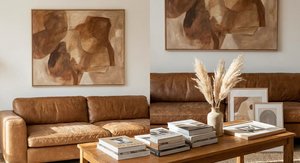
Sandy Brown Masterpieces: 10 Iconic Paintings & Timeless Decor Ideas
Explore 10 iconic paintings bathed in captivating sandy brown tones! From Rembrandt to Monet, discover the stories behind these timeless masterpieces & find museum-quality art reproductions for your home. Explore the full collection on OriginalUniqueArt.com.
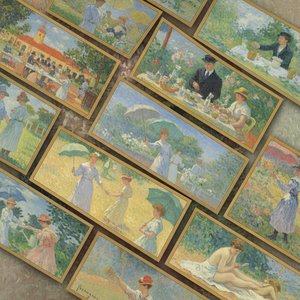
Renoir's Masterpieces: Explore 25 Iconic Paintings & Bring Art Home | OriginalUniqueArt
Explore 25 iconic Pierre-Auguste Renoir paintings! Discover the stories behind Impressionist masterpieces like 'Dance at Le Moulin de la Galette' & 'Luncheon of the Boating Party'. Find museum-quality art reproductions and elevate your home decor with OriginalUniqueArt.com.
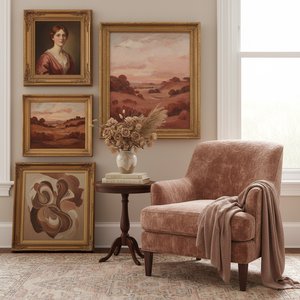
Rosy Brown Hues: 10 Master Paintings & Timeless Decor Ideas |
Explore 10 iconic paintings bathed in captivating rosy brown tones! From Rembrandt to Titian, discover the stories behind these masterpieces & their warm color palettes. Find museum-quality art reproductions and decor inspiration at .
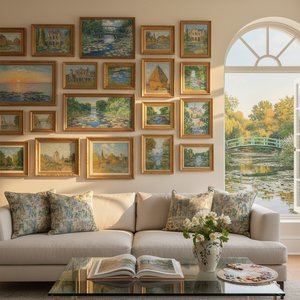
Monet's Masterpieces: 25 Iconic Artworks to Transform Your Home
Journey through 25 iconic Claude Monet masterpieces! Explore Impressionism’s beauty, from Water Lilies to Rouen Cathedral. Discover stunning art reproductions & curated decor ideas – explore the full collection online at OriginalUniqueArt.com.

John Constable's Masterpieces: Explore 25 Iconic Landscapes for Your Home
Journey through John Constable's 25 most celebrated landscapes. Explore Romanticism, Dedham Vale & his masterful use of light in iconic paintings like 'Hay Wain'. Find museum-quality art reproductions and elevate your home decor on OriginalUniqueArt.com.


