
 Preview
 Send
Send Share
Share
 Details

 Download
 Similars
 X-Ray
X-Ray Diaporama
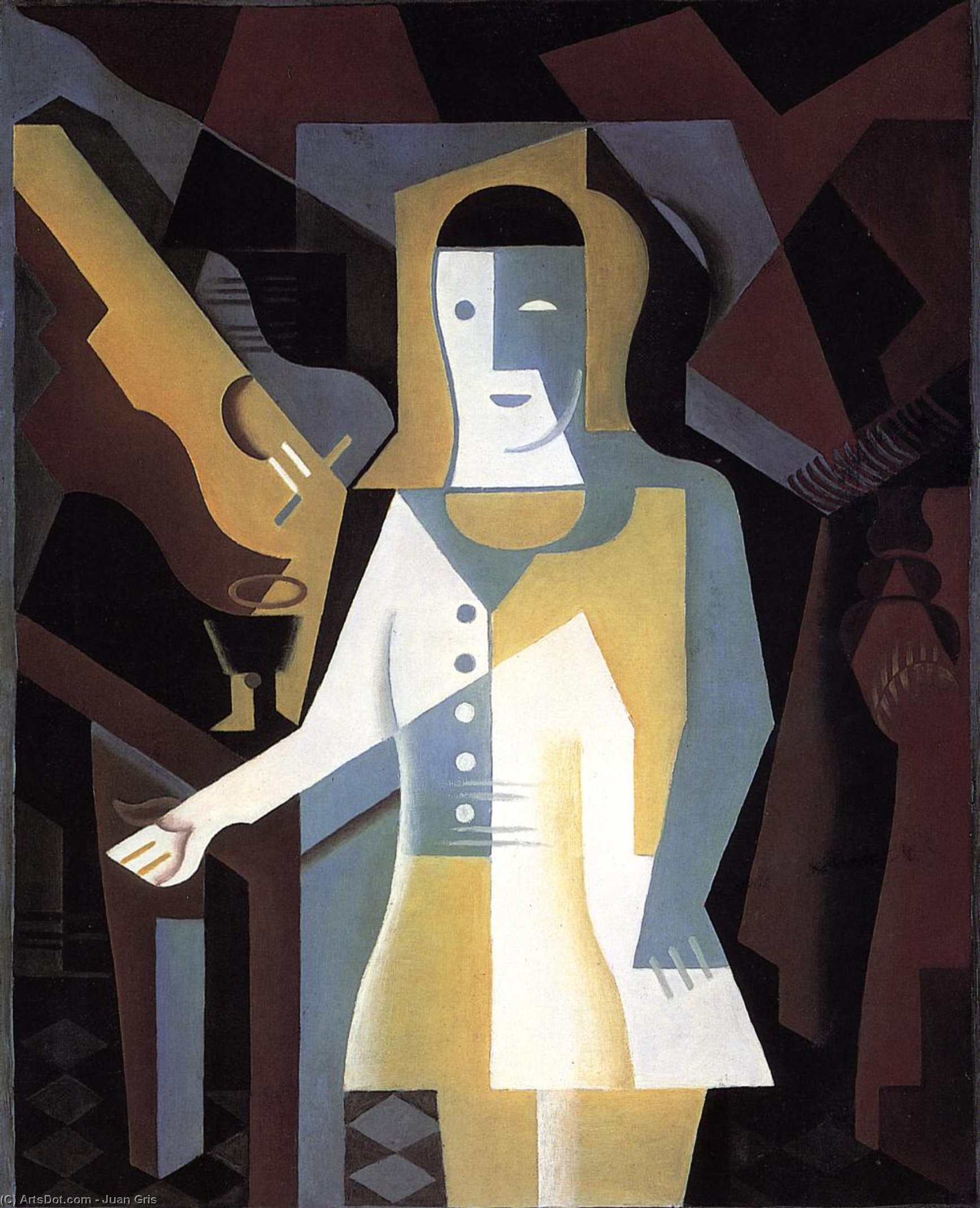
Pierrot
 Oil On Canvas
- WallArt
- Cubism
 1919
1919- Modern
 101.0 x 82.0 cm
 Read More
Purchase a high-resolution, enhanced digital image, far superior to the online preview.
Each file is meticulously prepared by our in-house specialists using advanced tools and expert manual retouching. We ensure every image has exceptional clarity, precise color accuracy, and fine detail.
The final file is delivered via email within 72 hours, optimized for immediate use in professional, editorial, and print environments. This is the same quality trusted by top-tier design studios, publishers, and galleries.
Digital Image
Download a high-resolution file for personal display, printing, and creative projects. ( Buy Print Buy Hand Made Painting)
Included in Every Digital Image Order
Expert Digital Delivery, Guaranteed
When you choose OriginalUniqueArt.com, you're not just getting an image - you're receiving a professionally enhanced digital artwork, crafted with precision and backed by a satisfaction guarantee. Here's everything that comes with your order, automatically:

Fast Email Delivery
Your high-resolution digital image file will be emailed to you within 72 hours of ordering - ready for immediate use.

AI-Enhanced Digital File
Your artwork is professionally optimized using advanced AI tools and manual editing, ensuring maximum detail, clarity, and color accuracy.

Free Lifetime Re-Delivery
Accidentally deleted or lost your file? No worries - we'll resend it to you anytime, free of charge.

No Import Fees - Ever
Enjoy your artwork instantly with zero customs, duties, or delivery fees - digital downloads are always tax-free.

Color Accuracy Guarantee
We ensure your digital image reflects the original colors as closely as possible using professional tools and color management.

60-Day Satisfaction Guarantee
If you're not satisfied with your digital image, we'll revise it or refund 100% within 60 days - no questions asked.

100% Money-Back Guarantee
Not satisfied? Get a full refund within 60 days of receiving your digital file - no questions asked.

Bulk Order Discounts
Buy 3 images, save 10% - Buy 5, save 15% - Buy 10+, save 20%. Great for creative projects, galleries, and agencies.
Collectible Description
A Fragmented Portrait of Modernity: Juan Gris's "Pierrot"
Juan Gris’s “Pierrot,” painted in 1919, is more than just a depiction of a theatrical character; it’s a meticulously constructed embodiment of Cubism’s revolutionary spirit. This oil on canvas, measuring 101 x 82 cm and currently residing within the Kunstmuseum Winterthur, offers a profound glimpse into the artistic ferment of early 20th-century Europe – a period defined by intellectual upheaval and a radical reimagining of visual reality.
- The Cubist Vision: Created during the height of Cubism’s influence, “Pierrot” exemplifies Picasso and Braque's groundbreaking approach. Rather than striving for realistic representation, Gris dissects his subject – a man in white, holding a handkerchief – into geometric forms, presenting multiple perspectives simultaneously. This technique challenges the viewer to actively participate in constructing the image, moving beyond passive observation.
- A Room of Reflections: The composition itself is layered with meaning. The figures stand within a room, subtly suggesting a domestic setting—a dining table and chairs hint at everyday life, yet they are rendered as fragmented planes, echoing the fractured nature of perception central to Cubism. An instrument, likely a guitar or violin, adds another layer of complexity, perhaps representing music, memory, or the artist’s own creative process.
- Technical Mastery: Gris's masterful use of color and texture further enhances the painting’s impact. The muted tones – primarily whites, blacks, and browns – create a sense of stillness and contemplation, while subtle variations in brushstroke add depth and visual interest. The meticulous application of paint demonstrates a profound understanding of both form and space.
The Historical Context: Cubism's Radical Shift
“Pierrot” was created at a pivotal moment in art history. Pablo Picasso and Georges Braque, working independently yet collaboratively, pioneered Cubism in the early 1910s. This movement rejected traditional representational techniques, challenging the established norms of Western art. Influenced by Paul Cézanne’s emphasis on geometric forms and African sculpture's simplified shapes, Cubists sought to depict objects from multiple viewpoints at once, creating a sense of dynamism and simultaneity. “Pierrot” directly reflects this revolutionary approach, embodying the core tenets of Cubism while showcasing Gris’s unique artistic vision.
The painting’s creation coincided with a period of intense social and political change – World War I was looming, and Europe was grappling with rapid industrialization and urbanization. This atmosphere of uncertainty and disruption undoubtedly fueled the artists' desire to break free from traditional modes of representation and explore new ways of seeing the world.
Symbolism and Emotional Resonance
While “Pierrot” is a formally complex work, it also possesses a subtle emotional resonance. The figure’s posture – slightly melancholic, holding a handkerchief – evokes feelings of vulnerability and introspection. The fragmented composition mirrors the sense of disorientation and uncertainty that characterized the era. The presence of the musical instrument adds another layer of interpretation, suggesting themes of memory, nostalgia, or perhaps even the fleeting nature of beauty.
Gris’s choice to depict Pierrot, a traditional clown figure, is particularly intriguing. The character's inherent duality – simultaneously joyful and sorrowful – aligns perfectly with Cubism’s exploration of multiple perspectives and its ability to convey complex emotions through fragmented forms.
Owning a Piece of Art History
OriginalUniqueArt offers meticulously crafted hand-painted reproductions of Juan Gris’s “Pierrot,” allowing you to bring this iconic work into your home or office. Each reproduction is created by skilled artisans using the same techniques and materials as the original, ensuring exceptional quality and authenticity. More than just a decoration, it's an investment in art history – a tangible connection to one of the most influential movements in modern art.
Size: 101 x 82 cm
Date: 1919
Artist Biography
A Spanish Visionary of Cubism: The Life and Art of Juan Gris
Born José Victoriano González-Pérez in Madrid in 1887, the artist who would become known as Juan Gris embarked on a journey that would place him among the most significant figures of early 20th-century art. His initial path wasn’t one immediately leading to canvas and brush; he pursued engineering at the School of Arts and Sciences, demonstrating an analytical mind that would later profoundly influence his artistic approach. Even during these formative years, a creative spark flickered – contributing drawings to local periodicals hinted at a burgeoning visual talent. It was in 1905 that he adopted the pseudonym Juan Gris, a name resonating with a newfound sense of identity and purpose as he began formal painting studies under José Moreno Carbonero. This marked a pivotal shift, setting him on a course toward artistic innovation.Parisian Awakening and the Embrace of Cubism
The year 1906 witnessed a transformative relocation to Paris, a city then pulsating with artistic energy. Gris immersed himself in this vibrant milieu, forging friendships with luminaries like Henri Matisse, Georges Braque, and Fernand Léger. He initially engaged in satirical illustration for publications such as *L'Assiette au Beurre*, honing his observational skills and developing a keen sense of visual wit. However, the magnetic pull of Pablo Picasso proved particularly influential. Around 1910, Gris began to seriously dedicate himself to painting, moving away from caricature towards the burgeoning language of Cubism. This wasn’t mere imitation; he embarked on a quest to distill the essence of form and space, seeking a new visual order. His early explorations were marked by a deliberate departure from traditional representation, embracing abstraction as a means of capturing reality's underlying structure.The Geometry of Perception: Style and Key Works
Juan Gris’s artistic output is characterized by an exceptional clarity and intellectual rigor. He didn’t simply deconstruct objects; he reconstructed them with deliberate precision, emphasizing geometric forms and a carefully considered palette. This approach led to what became known as his “crystal period,” exemplified in masterpieces like *Still Life Before an Open Window* and *Place Ravignan* (1915). These works showcase a remarkable interplay of planes and angles, creating a sense of depth and solidity while simultaneously challenging conventional notions of perspective. After 1913, Gris wholeheartedly embraced Synthetic Cubism, pioneering the use of *papier collé* – collage – incorporating real-world materials like newspaper clippings and textured papers into his compositions. This technique added another layer of complexity and tactility to his work, blurring the boundaries between painting and sculpture. Notable examples include *Guitar in front of the sea* (1925), a testament to his simplified forms and adherence to cubist principles, and *Homage à Pablo Picasso* (1912), which signaled his growing recognition within the avant-garde art world.Legacy and Lasting Influence
Juan Gris’s contribution to Cubism extends beyond mere stylistic innovation; he brought a unique intellectual depth and structural clarity to the movement. He moved past the analytical phase, towards a more organized and synthetic approach, emphasizing order and precision. His work profoundly influenced the Purist style championed by Amédée Ozenfant and Charles Edouard Jeanneret (Le Corbusier), advocating for a return to classical principles of form and composition. Gris’s emphasis on geometric forms, harmonious color palettes, and the integration of everyday objects into his art established him as a pivotal figure in 20th-century art. His legacy continues to inspire artists today, demonstrating the enduring power of Cubism and the visionary genius of Juan Gris – a Spanish master who reshaped our understanding of perception and representation.
Juan Gris
1887 - 1927 , Spain
Quick Facts
- Artistic Movement Or Style: Cubism, Synthetic Cubism
- Artists Or Movements Influenced By This Artist:
- Purism
- Amédée Ozenfant
- Le Corbusier
- Artists Who Influenced This Artist:
- Pablo Picasso
- Henri Matisse
- Georges Braque
- Date Of Birth: March 23, 1887
- Date Of Death: May 11, 1927
- Full Name: José Victoriano González-Pérez
- Nationality: Spanish
- Notable Artworks:
- Guitar in front of the sea
- Homage à Pablo Picasso
- The Miller
- Portrait of Madame Josette Gris
- Place Of Birth: Madrid, Spain

