Preview
 Send
Send Share
Share
 Details

 Download
 Similars
 X-Ray
X-Ray Diaporama
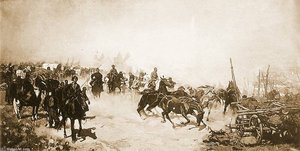
Wolves attack
 1883
1883 55.0 x 80.0 cm
 Read More
Giclée / Art Print
Museum-quality giclée or canvas print with fast production and flexible finish options. ( Switch to hand made Painting Switch to Image)




































Pick from our preset sizes that match the artwork's original proportions.

You may enter your own dimensions to fit a specific frame or space. If your selected size does not match the original image's proportions, we will either crop the artwork or extend the image with a mirrored or solid-fill edge. A digital mockup will be sent for your approval before production begins.
Please note that the on-screen preview does not reflect the actual cropping or extension. Only the mockup will accurately show the final composition.
While custom sizes are available, we recommend selecting a dimension from the predefined list to preserve the original proportions.
Worldwide Delivery () in 2 weeks instead of standard 4/5 weeks. (11 August)

Free Worldwide Express Shipping

High-Quality Linen Canvas

Full Shipping Insurance

Customs Tax Refund Guarantee

True Color Matching Guarantee

60-Day Return Policy (Defects Only)

100% Money-Back Guarantee

Bulk Discount Offer
 Glass option is only available in size under 110 CM

Wolves attack
Giclée / Art Print
Reproduction Size
-


Total Price
$ 81
Collectible Description
The Artist's Background
Józef Chełmoński was a Polish painter of the realist school, known for his monumental paintings that reflected the historical and social context of late Romantic period Poland. Born on November 7, 1849, in Boczki, Poland, Chełmoński studied art in Warsaw and later in Munich, where he was influenced by Polish painters such as Józef Brandt and Maksymilian Gierymski.The Painting's Significance
"Wolves Attack" is a significant work in Chełmoński's oeuvre, demonstrating his ability to convey the intensity of a moment. The painting depicts a group of men on horseback, armed with guns, surrounded by wolves. The scene is set against a backdrop of a snowy landscape, adding to the sense of drama and urgency. The use of chiaroscuro and sfumato techniques creates a sense of depth and volume, drawing the viewer into the scene.- The painting's composition is characterized by a sense of movement and energy, with the horses and wolves depicted in dynamic poses.
- The use of color is muted, with earthy tones dominating the palette, which adds to the overall sense of realism.
- The painting's themes of survival and struggle against nature are timeless and universal, making it a work that continues to resonate with audiences today.
The painting "Wolves Attack" is a testament to Józef Chełmoński's skill as a painter and his ability to capture the essence of the human experience. As a work of art, it continues to inspire and captivate audiences, offering a glimpse into the world of 19th-century Poland and the artistic traditions that shaped it.
Artist Biography
A Life Rooted in the Polish Landscape
Józef Chełmoński, born in 1849 in the small village of Łowicz, Poland, was an artist whose life and work became inextricably linked to the soul of his nation’s countryside. His beginnings were humble; his father, a leaseholder and administrator of Boczki village, served as his initial instructor, nurturing a nascent talent for drawing. This early exposure to rural life would profoundly shape Chełmoński's artistic vision, imbuing his canvases with an intimate understanding of the land and its people. Formal studies followed at the Warsaw Drawing Class from 1867 to 1871, where he benefited from private lessons under the esteemed Wojciech Gerson. This foundation propelled him towards further development in Munich between 1871 and 1874, a period spent amongst a vibrant circle of Polish painters including Józef Brandt and Maksymilian Gierymski – an association that would prove formative. However, it was not merely technical skill that Chełmoński absorbed during these years; he began to cultivate a deep emotional connection to the landscapes and traditions of Poland, a theme that would resonate throughout his career.
From Warsaw & Munich to Parisian Recognition
Chełmoński’s early artistic endeavors bore the clear influence of Wojciech Gerson, focusing on genre scenes depicting rural life and evocative landscape paintings. Yet, he wasn't content with mere imitation. Frequent journeys to Ukraine provided a wealth of inspiration, allowing him to capture the essence of the Polish countryside in all its nuanced beauty. In 1875, a pivotal moment arrived when Chełmoński relocated to Paris. This move marked a turning point, as his work began to garner recognition from international audiences captivated by its exotic themes and masterful execution. For twelve years, he immersed himself in the Parisian art scene, honing his skills and establishing a reputation for paintings that skillfully blended realism with a distinctly Polish sensibility. The period in Paris was crucial; it allowed him to refine his technique and develop a unique style that would set him apart from his contemporaries. Upon returning to Poland in 1887, he settled in Kuklówka, Mazovia, seeking solace and inspiration in the familiar landscapes of his homeland. This return signaled a shift towards a more contemplative phase in his artistic development.
A Trilogy of Artistic Phases
Chełmoński’s artistic journey can be thoughtfully divided into three distinct phases, each reflecting his evolving perspective and stylistic approach. The Warsaw-Munich period (1867–1875) represents the foundation of his training, marked by an exploration of traditional techniques and subject matter. His time in Paris (1875–1887) witnessed a blossoming of his talent, as he gained international acclaim for his evocative depictions of Polish life. Finally, the Mazovian period – spanning until his death in 1914 – saw him retreat to the countryside, producing works characterized by introspection and a profound connection to nature. During this final phase, Chełmoński’s paintings became increasingly focused on capturing the subtle nuances of light and atmosphere, revealing a deep understanding of the Polish landscape's emotional resonance. Notable works from this period include Partridge on the Snow and The Storks Before Thunderstorm, both exemplifying his ability to convey mood and emotion through masterful brushwork and composition. His earlier work, such as Midnight Ride (1873), remains a powerful testament to his skill in depicting movement and intensity – a sleigh charging through the snow, radiating power and drama.
Realism, Romanticism & Patriotic Sentiment
Chełmoński’s style is often categorized within the “Munich-Warsaw group of late positivism,” yet this label only partially captures the richness and complexity of his artistic vision. While firmly rooted in realism, his work also reveals subtle influences from Polish Romanticism, particularly the evocative poetry of Adam Mickiewicz. He possessed an extraordinary ability to portray life in the Polish countryside with authenticity and sensitivity, revealing a profound connection between humanity and the natural world. His paintings are not merely depictions of rural scenes; they are imbued with a sense of national identity and pride – representing what was termed “Polish patriotic painting.” Chełmoński’s legacy extends beyond his technical skill; he captured the essence of Polish culture, immortalizing everyday rhythms as the seasons changed. Today, his masterpieces can be found in prestigious institutions such as the Sukiennice National Art Gallery in Kraków and the MNW (National Museum) in Warsaw, serving as enduring testaments to his artistic genius.
A Legacy Enduring Through Time
The later years of Chełmoński’s life were marked by personal solitude following the end of his marriage in 1894. He retreated further into rural existence at his manor house in Kuklówka, dedicating himself to both farming and painting. This period allowed him to fully immerse himself in his artistic pursuits, producing some of his most celebrated works. His death on April 6, 1914, near Grodzisk Mazowiecki, marked the end of a remarkable life dedicated to capturing the beauty and spirit of Poland. Yet, his art continues to resonate with audiences today, celebrated for its emotional depth, skillful portrayal of rural life, and enduring patriotic sentiment. Chełmoński’s paintings are more than just historical artifacts; they are windows into a bygone era, offering glimpses of a world steeped in tradition, beauty, and the timeless connection between humanity and nature.
- Notable works include: Departure – Available on OriginalUniqueArt.com
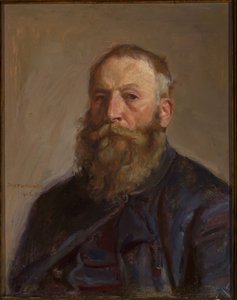
Józef Chełmoński
1849 - 1914 , United States of America
Quick Facts
- Artistic Movement Or Style: Realism, Positivism
- Artists Or Movements Influenced By This Artist: ['Polish patriotic painting']
- Artists Who Influenced This Artist:
- Wojciech Gerson
- Jozef Brandt
- Maksymilian Gierymski
- Date Of Birth: 1849
- Date Of Death: 1914
- Full Name: Józef Chełmoński
- Nationality: Polish
- Notable Artworks:
- Partridge on the Snow
- The Storks Before Thunderstorm
- Midnight Ride
- Departure
- Place Of Birth: Lowicz, USA