Preview
 Send
Send Share
Share
 Details
 Guide
Guide

 Download
 Similars
 X-Ray
X-Ray Diaporama
 Stats
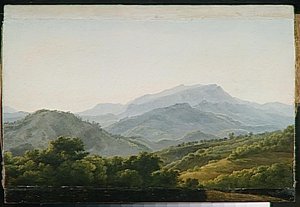
StatsSubiaco
 Realism
 1786
1786 17.0 x 25.0 cm
 Metropolitan Museum of Art
 Read More
Giclée / Art Print
Museum-quality giclée or canvas print with fast production and flexible finish options. ( Buy Hand Made Painting Switch to Digital Image)




































Pick from our preset sizes that match the artwork's original proportions.

Type the width and the height you need, to fit your frame or your wall. A print can only be cut, never made bigger than the picture, so a size with a different shape loses a part of the image. We send you a digital mockup to approve before we print anything. The picture shown on this page does not show the real cut — only the mockup does.
Worldwide Delivery () in 2 weeks instead of standard 4/5 weeks. (23 October)

Free Worldwide Express Shipping

High-Quality Linen Canvas

Full Shipping Insurance

Customs Tax Refund Guarantee

True Color Matching Guarantee

100-Day Return Policy (Defects Only)

100% Money-Back Guarantee

Bulk Discount Offer
 Glass option is only available in size under 110 CM

Subiaco
Giclée / Art Print
Reproduction Size
-


Total Price
$ 81
Questions & Answers
Can I see "Subiaco" by Joseph Pierre Xavier Bidauld on my own wall before buying?
"Subiaco" has an augmented reality preview: the artwork's AR Preview page shows it in your own space on a compatible device.
How do I download the image of "Subiaco" by Joseph Pierre Xavier Bidauld?
A download is available for "Subiaco": the artwork's Download page offers a high-resolution digital image download.
Which color stands out most in "Subiaco"?
rosy brown (#ada798) is the leading color of "Subiaco" by Joseph Pierre Xavier Bidauld.
Artist Biography
Jean-Joseph-Xavier Bidauld: The Quiet Landscape Painter
Jean-Joseph-Xavier Bidauld (10 April 1758 – 20 October 1846) was a French painter whose career unfolded largely outside the spotlight of Parisian artistic circles, yet yielded remarkable landscapes imbued with an understated beauty and profound sensitivity to Italianate traditions. Born in Carpentras, Provence, Bidauld’s formative years were spent honing his craft alongside his brother, Jean-Pierre Xavier, in Lyon—a city renowned for its textile industry and burgeoning artistic patronage. This early exposure instilled a disciplined approach to painting that would characterize his entire oeuvre.- Early Training & Travels: Bidauld’s formal training began with Jean-Pierre Xavier, who recognized his talent and encouraged him to pursue studies in Lyon. Recognizing the importance of broadening artistic horizons, he embarked on a significant journey to Paris in 1783, where he secured commissions from Dulac, a prominent perfume merchant and art dealer who became instrumental in supporting his subsequent explorations into Italian landscape painting.
- The Florentine Influence: Dulac’s generosity enabled Bidauld to spend five years immersed in the artistic fervor of Florence—a pivotal period that cemented his stylistic preferences. The Tuscan countryside, with its rolling hills and cypress trees, captivated him, profoundly shaping his vision of ideal beauty. He meticulously studied the techniques pioneered by artists like Canaletto and Claude Lorrain, mastering atmospheric perspective and capturing fleeting moments of light and shadow.
- Salon Recognition & Artistic Development: Returning to Paris in 1790, Bidauld swiftly gained acceptance into the Salon—the official art exhibition of the Académie des Beaux-Arts—establishing himself as a respected figure within the Parisian artistic landscape. His participation continued consistently throughout his life, allowing him to refine his style and garner critical acclaim.
- Notable Works & Patronage: Among Bidauld’s most celebrated paintings is “View of the Bridge and Part of the Town of Cava,” a breathtaking depiction of Lake Cellano and Mount Vesuvius commissioned by the Royal Family of Naples—a testament to his ability to convey grandeur and serenity simultaneously. His landscapes were admired by fellow artists like Camille Corot, who recognized Bidauld’s understated mastery of tonal harmony and compositional balance.
- Legacy & Decline: Despite considerable success during his lifetime, Bidauld experienced a notable decline in popularity after the mid-1820s—primarily due to disputes surrounding the Salon jury and its perceived bias against younger artists like Théodore Rousseau. This controversy overshadowed his artistic achievements and contributed to his impoverished circumstances upon his death in 1846. Nevertheless, Bidauld’s landscapes endure as emblems of Romantic sensibility, embodying a quiet contemplation of nature that continues to resonate with viewers today.

Joseph Pierre Xavier Bidauld
1758 - 1846
Quick Facts
- Full Name: Jean-Joseph-Xavier Bidauld
- Nationality: French
- Date Of Birth: 1758
- Date Of Death: 1846
- Place Of Birth: Carpentras, France
- Notable Artworks: ['View of the Bridge and Part of the Town of Cava']
- Artistic Movement Or Style: Romantic Landscape
- Artists Who Influenced This Artist: ['Camille Corot']
- Artists Or Movements Influenced By This Artist: ['Barbizon School']
Related Articles

Romantic Landscapes: 10 Masterpieces for Your Home | OriginalUniqueArt
Journey through 10 Romantic landscape masterpieces by Friedrich, Turner & Cole. Explore emotional art, sublime nature scenes & iconic 19th-century paintings. Find museum-quality reproductions for your home at OriginalUniqueArt.com – discover the full collection online!

Evocations of Place: A Historical Journey Through Landscape Art
Explore the rich history of landscape art with OriginalUniqueArt. Discover renowned artists, movements like Impressionism & tonalism, and expert guidance for collecting timeless pieces. Find your perfect serene escape today!

Evocations of Place: A Historical Journey Through Landscape Art
Explore the rich history of landscape art with OriginalUniqueArt. Discover renowned artists, movements like Impressionism & Romanticism, and expert guidance for collecting timeless pieces. Find your perfect serene escape today!
Timeless Italy: A Visual Journey Through Iconic Masterpieces and Eternal Landscapes
Embark on a visual journey through Italy's most iconic landscapes and Renaissance masterpieces. Discover the profound beauty of classical art, from Venetian altarpieces to serene countryside vistas, curated for the discerning art enthusiast and collector.

Evoking Atmosphere & Identity: A Journey Through Landscape Painting's History
Explore the rich history of landscape painting! Discover renowned artists, movements like Romanticism, & techniques such as atmospheric perspective. Find inspiration and quality reproductions at OriginalUniqueArt.