Preview
 Send
Send Share
Share
 Details
 Guide
Guide

 Download
 Similars
 X-Ray
X-Ray Diaporama
 Q&A
Q&A Stats
StatsMale portrait


 Read More
Giclée / Art Print
Museum-quality giclée or canvas print with fast production and flexible finish options. ( Buy Hand Made Painting Switch to Digital Image)




P118B $10

P118H $10

P118W $10

P438Z $10

P508JH $12

P508YH $12

P805H $10

P805Z $10

P919BZ $10

P919G $10

P919XJ $10

P959ZH $10

P968JZ $12

W106C $8

W218G $10

W218JH $8

W218Y $10

W307PJ $10

W316G $10

W316PJ $8

W316Y $10

W398PJ $8

W4111J $10

W500HY $15

W500JH $15

W692G $12

W849H $8

W940BG $15

W953PJ $8




Pick from our preset sizes that match the artwork's original proportions.

Type the width and the height you need, to fit your frame or your wall. A print can only be cut, never made bigger than the picture, so a size with a different shape loses a part of the image. We send you a digital mockup to approve before we print anything. The picture shown on this page does not show the real cut — only the mockup does.
Worldwide Delivery () in 2 weeks instead of standard 4/5 weeks. (9 November)

Free Worldwide Express Shipping

High-Quality Linen Canvas

Full Shipping Insurance

Customs Tax Refund Guarantee

True Color Matching Guarantee

100-Day Return Policy (Defects Only)

100% Money-Back Guarantee

Bulk Discount Offer
 Glass option is only available in size under 110 CM

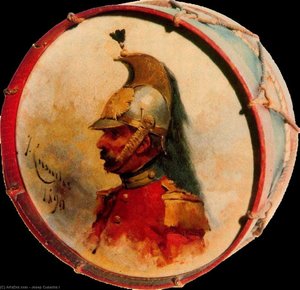
Male portrait
Giclée / Art Print
Reproduction Size
-


Total Price
$ 81
A Study in Wisdom: The Timeless Allure of Josep Cusachs i’s Male Portrait
In the quiet depths of 1881, Josep Cusachs i captured a moment of profound introspection that continues to resonate with the modern soul. His Male Portrait is not merely a depiction of an elderly man; it is a masterful window into the twilight of a life lived with intensity. As the viewer approaches this oil on canvas, they are immediately met by the striking profile of a subject whose long, flowing white beard and silvered hair serve as a testament to the passage of time. The composition, centered with deliberate focus on the face and upper torso, utilizes a dark, atmospheric background to push the figure forward, creating an intimate encounter between the subject and the observer. There is an undeniable gravity in his gaze, a sense of melancholy intertwined with a hard-won wisdom that commands silence and respect.
The technical brilliance of this piece lies in Cusachs i’s adherence to Academic Realism, a style that demands rigorous observation and a sophisticated command of light. The artist employs a directional lighting technique that sculpts the subject's features, casting deep, velvety shadows that define the sharp angles of the nose and cheekbones while simultaneously illuminating the soft, organic textures of the beard. Through the meticulous layering of oil paints, Cusachs i achieves a luminous quality, where the skin appears to hold its own internal light. While the foundation of the work is firmly rooted in realism, a subtle impressionistic touch emerges through visible, textured brushstrokes. These strokes do not merely define form; they breathe life into the canvas, adding a tactile richness that makes the subject feel palpably present.
Symbolism and the Weight of Experience
Beyond its aesthetic mastery, the portrait serves as a profound symbolic exploration of human experience. In the tradition of 19th-century character studies, the aged appearance of the man acts as a metaphor for reflection and the accumulation of memory. The contrast between the stark, bright white of his beard and the surrounding darkness suggests a flicker of consciousness persisting through the shadows of mortality. For the collector or interior designer, this piece offers more than just visual beauty; it provides a focal point of intellectual depth. It is an artwork that invites conversation, prompting observers to contemplate their own journeys and the inevitable beauty found in the aging process.
The emotional impact of the work is one of quietude and reverence. The way the light catches the silvered strands of hair creates a sense of sanctity, as if we are witnessing a private moment of prayer or deep thought. This atmosphere makes the portrait an exceptional choice for sophisticated living spaces, libraries, or study areas where a mood of contemplation and prestige is desired. To possess a reproduction of this caliber is to bring a piece of 19th-century Spanish soul into a contemporary setting, bridging the gap between historical gravity and modern elegance.
Questions & Answers
How strong are the colors of "Male portrait"?
The colors of "Male portrait" by Josep Cusachs i show a muted saturation with a monochromatic intensity.
How intense are the colors in "Male portrait" by Josep Cusachs i?
The color intensity of "Male portrait" is monochromatic. Intensity describes how strong the colors appear.
Is "Male portrait" by Josep Cusachs i a painting, a drawing or a print?
"Male portrait" by Josep Cusachs i is classified as wall art. The category describes the kind of artwork the original is.
Artist Biography
Josep Cusachs i: A Pioneer of Cavalry Art and Royal Portraiture
Josep Cusachs i (1851 – 1908) stands as a significant figure in late nineteenth-century Spanish art, particularly renowned for his captivating depictions of cavalry scenes and meticulously crafted royal portraits. Born in Montpellier, France, Cusachs’s artistic journey began amidst the burgeoning Impressionist movement but swiftly established him as a staunch defender of Realism, forging a distinctive style that blended observation with emotional depth. His unwavering commitment to capturing the essence of his subjects—often military officers and members of the Spanish aristocracy—secured his place in art history.- Early Life & Artistic Training:
- Influences: Impressionism vs. Realism
- Notable Paintings & Techniques:
- Royal Patronage and Legacy:
- Historical Significance: Reflecting the Era’s Spirit
Early Life & Artistic Training
Cusachs’s formative years were spent in Montpellier, where he received a comprehensive artistic education. While Impressionism exerted considerable influence on European art circles at the time—characterized by fleeting light and vibrant color palettes—Cusachs resolutely rejected this trend. Instead, he embraced Realism, prioritizing accurate representation of form and texture as championed by artists like Gustave Courbet and Jean-François Millet. This decision wasn’t merely stylistic; it reflected a broader philosophical stance rooted in documenting the realities of everyday life and portraying individuals with honesty and nuance.Influences: Impressionism vs. Realism
Despite his rejection of Impressionistic ideals, Cusachs's artistic sensibilities were undeniably shaped by the movement’s pioneering spirit. The exploration of light and color—albeit tempered by a grounding in observation—found its way into his compositions. However, it was Courbet’s unflinching realism that truly solidified Cusachs’s approach. Courbet’s insistence on depicting subjects without idealization served as an inspiration for Cusachs's dedication to portraying figures with psychological complexity and capturing the palpable atmosphere of his scenes. This duality—embracing Impressionistic techniques while adhering to Realist principles—became a hallmark of Cusachs’s oeuvre.Notable Paintings & Techniques
Cusachs’s artistic prowess shone through in numerous paintings that exemplify his mastery of technique and unwavering attention to detail. His depictions of cavalry regiments, meticulously rendered with painstaking accuracy, are particularly noteworthy. He skillfully employed chiaroscuro—the dramatic interplay of light and shadow—to sculpt figures and convey a sense of dynamism and grandeur. Furthermore, Cusachs excelled at capturing the subtleties of human emotion through expressive brushstrokes and nuanced color choices. Pieces like “Portrait of the daughter of cusachs” demonstrate his ability to infuse paintings with an emotional resonance that transcends mere visual representation.Royal Patronage and Legacy
Cusachs enjoyed considerable acclaim during his lifetime, securing commissions from prominent members of the Spanish royal family. These portraits—characterized by their dignified poses and subtle psychological insight—became treasured additions to royal collections and cemented Cusachs’s reputation as a portrait artist of distinction. His work reflects the spirit of the era—a period marked by aristocratic grandeur and artistic ambition—providing valuable insights into the cultural landscape of Spain at the turn of the century.Historical Significance: Reflecting the Era’s Spirit
Josep Cusachs i's contribution to Spanish art extends beyond his individual achievements; he embodies the broader artistic currents of his time. By championing Realism alongside Impressionistic influences, he challenged prevailing aesthetic conventions and paved the way for a more truthful and psychologically perceptive approach to painting. His legacy continues to inspire artists today, reminding us that profound beauty can be found in unwavering commitment to observation and emotional honesty—qualities that define Cusachs’s enduring artistic significance.
Josep Cusachs i
1851 - 1908 , France
Quick Facts
- Full Name: Josep Cusachs i
- Nationality: Spanish
- Date Of Birth: 1851
- Date Of Death: 1908
- Place Of Birth: Montpellier, France
- Notable Artworks: ['Portrait of the daughter of cusachs']
- Artistic Movement Or Style: Realism
Related Articles

Josep Cusachs i: Exploring Catalan Modernism Through Social Commentary & Artistic Innovation
Explore the captivating world of Josep Cusachs i, a key figure in Catalan Modernism. Discover his realist paintings, social commentary, and influence on 19th-century Spanish art. Hand-painted reproductions available at OriginalUniqueArt.

Oil on Canvas: A Historical & Technical Exploration of a Timeless Artistic Medium
Explore the rich history & enduring techniques of oil painting on canvas. Discover the science behind its longevity, conservation practices, and contemporary relevance. Expert insights for art enthusiasts.

The Enduring Legacy of Oil on Canvas: Technique, History & Aesthetic Impact
Explore the rich history & techniques of oil painting – from Renaissance masters to Impressionism. Discover pigments, layering methods, and why this timeless medium endures. Expert insights for artists & art enthusiasts.

The Enduring Power of Painting: A Historical & Contemporary Exploration of Form and Emotion
Explore the rich history & enduring techniques of oil painting with OriginalUniqueArt. Discover masterpieces, learn about art collecting, and find authentic handmade reproductions crafted by skilled artists.

19th Century Masterpieces: 10 Paintings That Defined an Era | OriginalUniqueArt
Journey through 19th century art with OriginalUniqueArt! Explore 10 iconic paintings – from Monet & Renoir to Courbet – and discover the stories behind Romanticism, Realism & Impressionism. Find museum-quality reproductions for your home decor. Explore the full collection online!