- Home

- Oil Painting Reproduction
- josefina e. bodnar
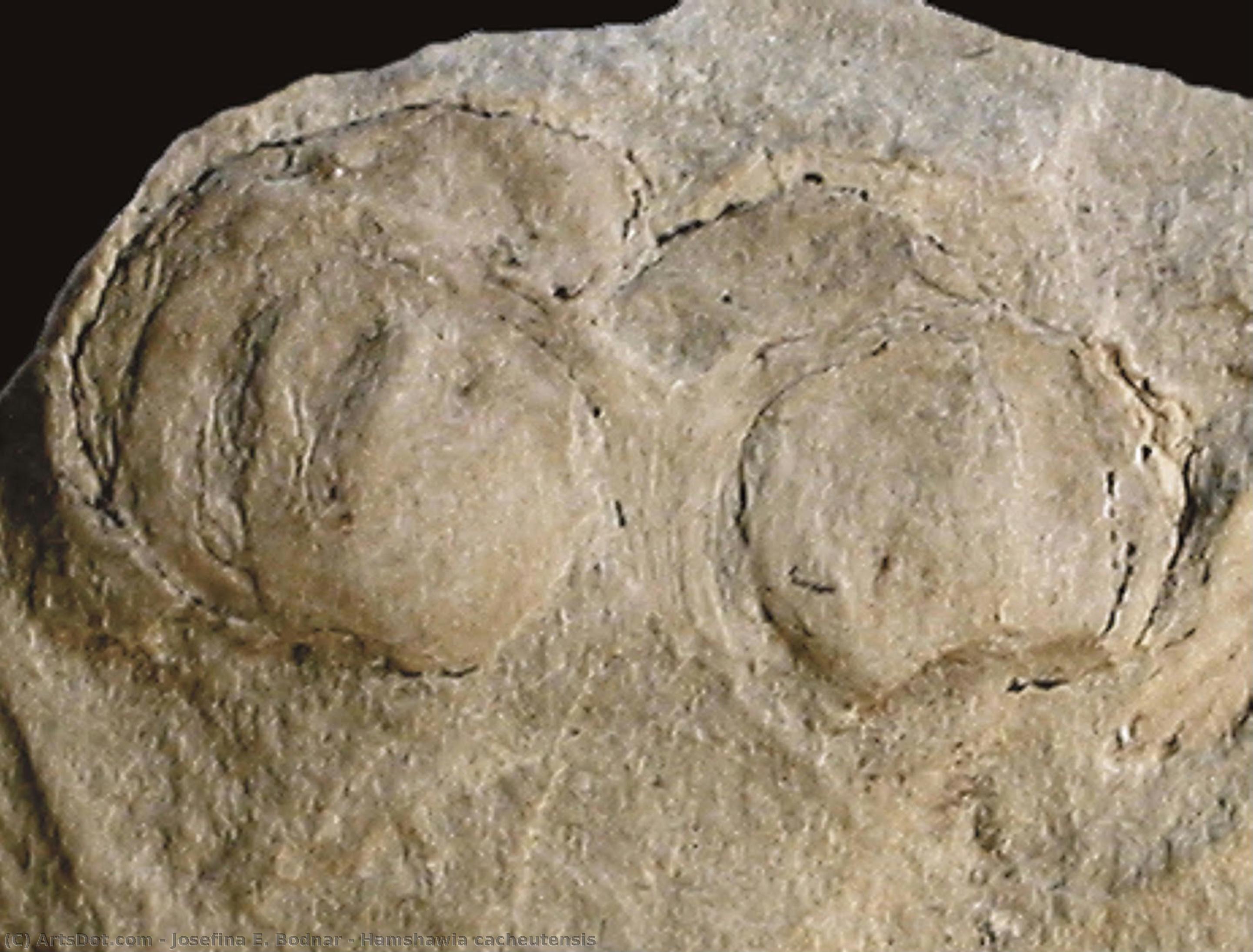
- Hamshawia cacheutensis
 Buy print
 Send
Send Share
Share
 Details

 Download
 Similars
 X-Ray
X-Ray Diaporama
Hamshawia cacheutensis


 Read More
Hand Made Oil Reproduction
Hand-painted oil on canvas in your size and frame, made to order by our artists.




































Pick from our preset sizes that match the artwork's original proportions.

You may enter your own dimensions to fit a specific frame or space. If your selected size does not match the original image's proportions, we will either crop the artwork or extend the painting with additional hand-painted elements. A digital mockup will be sent for your approval before production begins.
Please note that the on-screen preview does not reflect the actual cropping or extension. Only the mockup will accurately show the final composition.
While custom sizes are available, we recommend selecting a dimension from the predefined list to preserve the original proportions.
After order, OriginalUniqueArt.com team will email client for instructions and provide a mockup preview
Worldwide Delivery () in 3/4 weeks instead of standard 5 weeks. (18 July). No compromise on quality.

Free Worldwide Express Shipping

High-Quality Linen Canvas

Full Shipping Insurance

Customs Tax Refund Guarantee

True Color Matching Guarantee

60-Day Return Policy (Defects Only)

100% Money-Back Guarantee

Bulk Discount Offer
 Glass option is only available in size under 110 CM

Hamshawia cacheutensis
Reproduction Medium
Reproduction Size
-


Total Price
-
Artist Biography
Introduction: A Paleobotanist’s Artistic Vision
Josefina E. Bodnar is a singular figure, blending the rigorous discipline of paleobotany with an extraordinary artistic sensibility. Born in La Plata, Argentina, in 1981, her journey began not within the hallowed halls of art galleries but amidst the fossilized remnants of ancient plant life. This unique foundation—a deep understanding of prehistoric ecosystems and a meticulous eye for detail—forms the bedrock of her captivating artwork, which seeks to resurrect vanished flora with breathtaking accuracy and emotional resonance. Her work isn’t simply reproduction; it's reconstruction – a painstaking process of translating fossil data into vibrant, evocative images that invite viewers to contemplate the lost beauty of Earth’s distant past. Bodnar’s current role as Head of the Laboratory at the Universidad Nacional de La Plata (UNLP) and her ongoing research within the Museo de la Plata further cement her position as a leading voice in the intersection of science and art, demonstrating a commitment to both preserving our planet's botanical heritage and sharing it with the world.Early Life and Scientific Foundations
Bodnar’s fascination with paleobotany began early, nurtured by her upbringing in Argentina – a region rich in fossil deposits. Her academic pursuits led her to specialize in botany and palaeobotany at the Universidad Nacional de La Plata, where she honed her skills in fossil identification, analysis, and reconstruction. This rigorous scientific training is evident in every piece of her artwork; each meticulously rendered plant is grounded in years of research, geological context, and a profound understanding of evolutionary relationships. Her published papers, including the 2021 study on *Neochamberlainia pteridospermoidea*, highlight her dedication to advancing our knowledge of ancient flora and contributing to the scientific community. Beyond academia, Bodnar’s work is deeply rooted in the Museo de La Plata, where she actively participates in research projects and contributes significantly to the museum's collection of fossil plant specimens – a testament to her commitment to both scholarship and public engagement.The Art of Reconstruction: Technique and Process
Bodnar’s artistic process is as fascinating as the subjects she portrays. She doesn’t rely on traditional botanical illustration techniques; instead, she employs a hybrid approach that combines scientific precision with an intuitive understanding of form and color. Her work begins with painstaking analysis of fossil fragments – often incredibly small and fragmented – using advanced imaging technologies like CT scanning to reconstruct three-dimensional models. These digital reconstructions serve as the foundation for her paintings, allowing her to accurately capture the intricate details of ancient plant structures. She then translates these models into vibrant oil paintings, utilizing a layered technique that builds up color and texture gradually, mimicking the natural patterns found in fossilized remains. Crucially, she avoids simply replicating the fossils; instead, she imagines what these plants *looked* like – their coloration, their textures, their overall form – based on her scientific knowledge and artistic intuition. This process results in images that are both scientifically accurate and deeply evocative, transporting viewers back to a time when these plants dominated the landscapes of our planet.Notable Works: Moltenia wardii and Zuberia zuberi
Bodnar’s portfolio showcases a remarkable range of prehistoric flora, each piece offering a unique glimpse into Earth's distant past. *Moltenia wardii*, one of her most celebrated works, exemplifies her ability to capture the delicate beauty of extinct plants. The painting vividly portrays this Cretaceous fern, showcasing its intricate fronds and subtle coloration – a testament to Bodnar’s meticulous attention to detail. Similarly, *Zuberia zuberi*, a fossilized conifer from the Triassic period, demonstrates her skill in rendering complex vascular structures and conveying the plant's ancient presence. These works, along with others like “Neochamberlainia pteridospermoidea,” are not merely reproductions; they are artistic interpretations that breathe life into long-extinct species, inviting viewers to contemplate their evolutionary history and ecological significance. The Museo de La Plata serves as a crucial platform for showcasing these pieces, allowing the public to experience Bodnar’s artistry alongside her scientific research.Legacy and Significance
Josefina E. Bodnar's work transcends the boundaries of art and science, offering a powerful commentary on Earth’s history and our relationship with the natural world. Her unique approach—combining paleobotanical expertise with artistic vision—has garnered significant recognition within both scientific and artistic communities. She is not simply an artist; she is a storyteller, using her paintings to illuminate the lost beauty of ancient plant life and to raise awareness about the importance of preserving our planet’s biodiversity. Her ongoing research at the Museo de La Plata ensures that her work will continue to inspire future generations of scientists and artists alike, fostering a deeper appreciation for the intricate web of life that has shaped our world. Her dedication to both scientific discovery and artistic expression solidifies her position as a vital voice in contemporary art and paleobotany.
josefina e. bodnar
1981 - , Argentina
Quick Facts
- Artistic Movement Or Style: Paleobotany art
- Date Of Birth: 1981
- Full Name: Josefina E. Bodnar
- Nationality: Argentinian
- Notable Artworks:
- Moltenia wardii
- Zuberia zuberi
- Place Of Birth: La Plata, Argentina



