Preview
 Send
Send Share
Share
 Details

 Download
 Similars
 X-Ray
X-Ray Diaporama
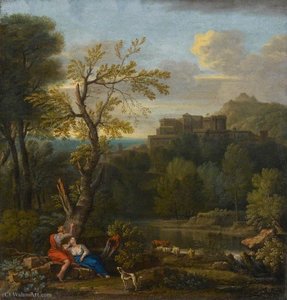
Classical Landscape with Gypsies
 Acrylic On Canvas
- WallArt
- Baroque Landscape Painting
 1748
1748 140.0 x 131.0 cm
 Metropolitan Museum of Art
 Read More
Hand Made Oil Reproduction
Hand-painted oil on canvas in your size and frame, made to order by our artists. ( Buy Print Buy Image)




































Pick from our preset sizes that match the artwork's original proportions.

You may enter your own dimensions to fit a specific frame or space. If your selected size does not match the original image's proportions, we will either crop the artwork or extend the painting with additional hand-painted elements. A digital mockup will be sent for your approval before production begins.
Please note that the on-screen preview does not reflect the actual cropping or extension. Only the mockup will accurately show the final composition.
While custom sizes are available, we recommend selecting a dimension from the predefined list to preserve the original proportions.
After order, OriginalUniqueArt.com team will email client for instructions and provide a mockup preview
Worldwide Delivery () in 3/4 weeks instead of standard 5 weeks. (18 August). No compromise on quality.

Free Worldwide Express Shipping

High-Quality Linen Canvas

Full Shipping Insurance

Customs Tax Refund Guarantee

True Color Matching Guarantee

60-Day Return Policy (Defects Only)

100% Money-Back Guarantee

Bulk Discount Offer
 Glass option is only available in size under 110 CM

Classical Landscape with Gypsies
Reproduction Medium
Reproduction Size
-


Total Price
$ 300
Artwork Description
A Window Into Regency Elegance: Exploring John Wootton’s “Classical Landscape with Gypsies”
The painting "Classical Landscape with Gypsies," executed by John Wootton in 1748, stands as a quintessential emblem of the Regency era's fascination with pastoral beauty and aristocratic leisure. More than just a scenic depiction—it’s a meticulously crafted tableau that speaks volumes about social aspirations and artistic innovation within Britain’s gilded age. Commissioned for Sir James Dashwood’s dining room at Kirtlington Park, this monumental canvas embodies the spirit of its time, reflecting both the grandeur of the estate and the refined tastes of its patron.The Landscape as Symbol: Setting the Stage for Narrative
Wootton's masterful handling of landscape owes much to his training under Jan Wyck, whose influence instilled in him a profound understanding of atmospheric perspective and tonal gradation—techniques that elevate this scene beyond mere visual representation. The composition unfolds with deliberate care; rolling hills dominate the background, rendered in muted greens and browns punctuated by scattered trees – colors chosen not merely for aesthetic appeal but to convey a sense of tranquility and timelessness. These elements serve as an ideal backdrop for the central narrative: a gathering of gypsies amidst the pastoral splendor. Such imagery wasn’t uncommon during the period, representing nomadic life alongside wealth and sophistication. The inclusion of horses—prominent throughout the painting—underscores the importance of equestrian pursuits within aristocratic society and symbolizes status, freedom, and connection to the natural world.Technique and Detail: Wootton's Brushstrokes Capture Emotion
Wootton’s distinctive brushwork is immediately recognizable; he favored loose, expressive strokes that captured the dynamism of movement and imbued his canvases with palpable emotion. Unlike the more rigid conventions of academic painting prevalent at the time, Wootton prioritized capturing the immediacy of experience—the feeling of being present in this idyllic landscape. Observe particularly the rendering of the figures themselves: they are depicted with remarkable accuracy, conveying not only physical form but also subtle gestures and expressions that hint at their interactions. The artist’s meticulous attention to detail extends beyond the human subjects; he painstakingly portrays the textures of foliage, the sheen of horse coats, and the dappled sunlight filtering through the trees—creating a richly layered visual experience.Historical Context: Patronage and Artistic Expression
The painting's provenance – commissioned by Sir James Dashwood – illuminates the broader context of Regency art patronage. Wealthy aristocrats actively sought to surround themselves with artworks that reflected their values and aspirations, fostering an environment where artistic talent flourished. Wootton’s success stemmed from his ability to cater to this demand while simultaneously pursuing his own creative vision. Furthermore, “Classical Landscape with Gypsies” aligns itself with the prevailing Romantic sensibility emerging in Britain during this era—a movement characterized by a fascination with nature, emotion, and individualism. Unlike earlier Baroque landscapes that prioritized grandeur and formality, Wootton’s work prioritizes capturing the beauty of the natural world and conveying its emotional resonance.Legacy and Resonance: An Image Enduring Through Time
“Classical Landscape with Gypsies” continues to captivate viewers today due to its masterful execution and evocative atmosphere. Reproductions of this painting adorn homes and galleries worldwide, testament to its enduring appeal as a symbol of elegance and artistic achievement. Its inclusion in the Metropolitan Museum’s collection underscores its significance within art history—a reminder that even seemingly simple landscapes can convey profound ideas about human experience and cultural values. Wootton's legacy extends beyond this singular masterpiece; he established himself as one of Britain’s foremost Sporting Artists, shaping the visual language of his time and inspiring generations of painters to come.Artist Biography
A Pioneer of Sporting Art: The Life and Legacy of John Wootton
John Wootton, born around 1686 in the quaint Warwickshire village of Snitterfield, near Stratford-upon-Avon, emerged as a pivotal figure in the development of British sporting art. While precise details of his early life remain somewhat elusive, it is believed he entered the service of the esteemed Beaufort family at a young age, an experience that likely fostered his deep connection to equestrian pursuits and the aristocratic world surrounding them. His artistic journey began with formal training under Jan Wyck during the 1690s, where he honed fundamental skills in draftsmanship and painting techniques – a foundation upon which he would build a remarkably successful career. Even in these early years, Wootton demonstrated an innate talent for capturing the essence of horses, as evidenced by his earliest known work, “Bonny Black” (1711), a piece that foreshadowed his future mastery of equine portraiture.Establishing a Reputation and Artistic Innovation
By 1706, Wootton had firmly established himself in London, quickly gaining recognition for his depictions of horses, particularly those gracing the renowned racing scene at Newmarket. He wasn’t merely documenting these animals; he was capturing their spirit, their power, and their individual character with an unprecedented level of detail and sensitivity. This specialization brought him into close contact with Britain's elite – a patronage that included figures like George II and Frederick, Prince of Wales. Wootton actively engaged with the artistic community, subscribing to the first English Academy of Painting and Drawing in 1711 and later serving as a steward of the Virtuosi Club of St Luke’s by 1717, demonstrating his commitment to fostering artistic discourse and collaboration. However, Wootton's contribution extended beyond simply painting horses. He was a key figure in introducing what became known as the “ideal landscape” to British art – a style heavily influenced by artists like Gaspard Dughet (also known as Gaspar van Wittel). By incorporating classical elements into his landscapes, he offered a refreshing alternative to the prevailing Dutch and Flemish styles, laying the groundwork for future generations of British landscape painters, including Thomas Gainsborough.Mastering the Canvas: Style and Major Works
Wootton’s artistic style is characterized by meticulous detail, a realistic rendering of animals, and a harmonious blend of figure and landscape painting. He possessed an exceptional ability to observe and then idealize, creating works that were both aesthetically pleasing and reflective of the sporting culture of his time. His equine portraits are arguably his most celebrated achievement – paintings like “The Bloody-Shouldered Arabian” showcase not only technical skill but also a deep understanding of anatomy and character. Beyond individual horse portraits, Wootton excelled at depicting lively hunting scenes and equestrian activities, often incorporating "conversation pieces" that featured riders, hounds, and picturesque settings. These works weren’t simply records of events; they were carefully constructed narratives that captured the social dynamics and leisurely pursuits of the British aristocracy. His landscapes, while sometimes overshadowed by his animal paintings, demonstrate a refined understanding of perspective, composition, and atmospheric effects, further solidifying his position as a versatile and innovative artist. Works like “Viscount Weymouth’s Hunt” exemplify this skill, portraying aristocratic leisure with classic style and rich detail.A Lasting Influence and Historical Significance
While later artists such as George Stubbs – whose anatomical precision surpassed Wootton's – gained greater prominence in the field of animal painting, John Wootton’s pioneering role remains undeniable. He established sporting art as a legitimate genre, paving the way for subsequent artists to explore this subject matter with increasing sophistication. His introduction of the ideal landscape style had a lasting impact on British painting, influencing generations and contributing to the development of a distinctly British aesthetic sensibility. He bridged the gap between earlier traditions and the emerging styles that would define 18th-century British art. Today, Wootton’s works are held in prestigious collections worldwide – including the Tate Gallery (London), the Virginia Museum of Fine Arts (Richmond), and the Yale Center for British Art – ensuring his legacy continues to be appreciated by art enthusiasts. He stands as a testament to the power of observation, innovation, and the enduring appeal of capturing the beauty and dynamism of both the natural world and the aristocratic pursuits that defined his era.
John Wootton
1682 - 1764 , United Kingdom
Quick Facts
- Artistic Movement Or Style: Sporting art, Landscape
- Artists Or Movements Influenced By This Artist:
- Thomas Gainsborough
- George Stubbs
- Artists Who Influenced This Artist:
- Jan Wyck
- Gaspard Dughet
- Date Of Birth: c. 1686
- Date Of Death: 1764
- Full Name: John Wootton
- Nationality: British
- Notable Artworks:
- Bonny Black
- Before the hunt
- The Bloody-Shouldered Arabian
- Place Of Birth: Snitterfield, UK
Related Articles

John Singer Sargent's 25 Masterpieces: Portraits & Beyond | OriginalUniqueArt
Explore 25 iconic John Singer Sargent paintings – from dazzling portraits to Impressionist landscapes. Discover the stories behind Madame X, El Jaleo & more! Find museum-quality art reproductions and elevate your home decor with OriginalUniqueArt.com.

John Constable's Masterpieces: Explore 25 Iconic Landscapes for Your Home
Journey through John Constable's 25 most celebrated landscapes. Explore Romanticism, Dedham Vale & his masterful use of light in iconic paintings like 'Hay Wain'. Find museum-quality art reproductions and elevate your home decor on OriginalUniqueArt.com.
Sr. John E. Ferneley: Equestrian Portraiture & England's Social Fabric
Explore the captivating world of Sr. John E. Ferneley, a master of British sporting art. Discover his exquisite equestrian paintings & insights into 19th-century society. Invest in timeless masterpieces with OriginalUniqueArt.
John Frederick Herring Sr.: Equestrian Mastery & the Rise of Sporting Art in Victorian England
Explore the life & work of John Frederick Herring Sr., a leading Victorian equestrian artist. Discover his masterpieces, patronage, techniques & investment potential. Expert insights for collectors.

Neo-Classicism's Greatest Hits: 10 Masterpieces for Your Home |
Journey through Neo-Classicism's finest! Explore 10 iconic masterpieces by David, Ingres & Canova. Discover art history, techniques & timeless beauty – perfect for inspiring your home decor. Find museum-quality reproductions at