Preview
 Send
Send Share
Share
 Details
 Guide
Guide

 Download
 Similars
 X-Ray
X-Ray Diaporama
 Stats
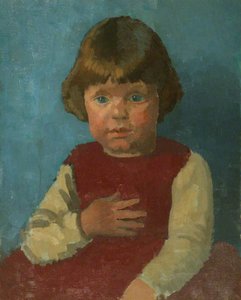
StatsViscount Nuffield
 62.0 x 89.0 cm
 Gordon Museum
 Read More
Giclée / Art Print
Museum-quality giclée or canvas print with fast production and flexible finish options. ( Buy Hand Made Painting Switch to Digital Image)




































Pick from our preset sizes that match the artwork's original proportions.

You may enter your own dimensions to fit a specific frame or space. If your selected size does not match the original image's proportions, we will either crop the artwork or extend the image with a mirrored or solid-fill edge. A digital mockup will be sent for your approval before production begins.
Please note that the on-screen preview does not reflect the actual cropping or extension. Only the mockup will accurately show the final composition.
While custom sizes are available, we recommend selecting a dimension from the predefined list to preserve the original proportions.
Worldwide Delivery () in 2 weeks instead of standard 4/5 weeks. (26 September)

Free Worldwide Express Shipping

High-Quality Linen Canvas

Full Shipping Insurance

Customs Tax Refund Guarantee

True Color Matching Guarantee

100-Day Return Policy (Defects Only)

100% Money-Back Guarantee

Bulk Discount Offer
 Glass option is only available in size under 110 CM

Viscount Nuffield
Giclée / Art Print
Reproduction Size
-


Total Price
$ 81
Artist Biography
A Legacy of Light and Duty: The Life of John Wheatley
The history of British art is often written through the lens of profound transitions, and few figures embody this movement as gracefully as John Laviers Wheatley. Born in the historic town of Abergavenny in 1892, Wheatley was a man whose life was inextricably linked to the pulse of his era. Descended from a lineage of academic distinction—his father, Sir Zachariah Wheatley, served as the mayor of Abergavenny and held esteemed positions at Oxford University—Wheatley carried an innate scholarly rigor into his creative pursuits. His journey began in the hallowed studios of the Slade School of Art between 1912 and 1913, a formative period where he absorbed the revolutionary techniques of masters like Walter Sickert and Stanhope Forbes. This training provided him with more than just technical skill; it gifted him an Impressionistic sensibility that allowed him to capture the fleeting nuances of light and atmosphere, a quality that would later define his most evocative works.
However, Wheatley’s artistry was never confined to the quietude of a studio. The onset of the First World War thrust him into the visceral realities of conflict. Enlisting in the Artists’ Rifles and serving with the British Expeditionary Force, he experienced firsthand the grit and gravity of wartime existence. This period of service transformed his perspective, leading to his appointment as an Official War Artist by the British War Memorials Committee. Tasked with documenting the naval operations at Rosyth and Southampton, Wheatley moved away from mere observation toward a profound industrial realism. His paintings from this era, such as A Greaser Admiralty Salvage Ship and Divers at Work Repairing a Torpedoed Ship, are masterclasses in tension; through thick impasto and a somber, dark palette, he captured the claustrophobic and heroic efforts of maritime salvage, immortalizing the mechanical and human struggle against the sea.
From Educator to Curator: A Multifaceted Career
As the smoke of the Great War cleared, Wheatley’s career expanded into the realms of education and institutional leadership, proving that his influence extended far beyond the canvas. Returning to the Slade School of Art as an instructor from 1920 to 1925, he helped shape the next generation of British painters with the same foundational principles he had mastered decades prior. His wanderlust and professional ambition eventually led him to South Africa in 1925, where he accepted the prestigious role of Michaelis Professor of Fine Art and Architecture at the University of Cape Town. This international chapter saw him transition from a painter of scenes to a guardian of culture, culminating in his appointment as the Director of the National Gallery of South Africa in 1937.
Wheatley’s return to England in 1938 marked yet another significant era of service. As the Director of the Sheffield City Art Galleries, he became a pivotal figure in the British art scene during the Second World War. Once again, the call of duty summoned him back to his role as an Official War Artist, this time focusing on the dignified portraits of military and civic dignitaries. His ability to blend the solemnity of portraiture with the atmospheric depth of his earlier maritime works allowed him to bridge the gap between historical documentation and fine art. Whether he was capturing the quiet dignity of a decorated soldier like James Crichton VC or exploring the dreamlike, hazy textures of Impressionistic subjects in pieces like The Darlings, Wheatley remained a master of emotional resonance.
The enduring significance of John Wheatley lies in his unique ability to navigate the intersection of art and history. His life was a tapestry woven from threads of duty, academic rigor, and profound aesthetic sensitivity. Through his diverse roles—
- Official War Artist documenting the industrial and naval realities of two World Wars;
- Educator fostering talent at the Slade School of Art;
- Museum Director shaping the cultural landscapes of both South Africa and England;
- Portraitist capturing the essence of the era's most notable figures;
Wheatley ensured that the fleeting moments of human struggle and triumph were preserved with a permanence that continues to captivate collectors and historians alike. He remains a pioneer whose work serves as a vital window into the soul of the early 20th century.

John Wheatley
1892 - 1955 , United States of America
Quick Facts
- Artistic Movement Or Style: Impressionism
- Artists Or Movements Influenced By This Artist: ['Realist Painting']
- Artists Who Influenced This Artist:
- Walter Sickert
- Stanhope Forbes
- Date Of Birth: 1892
- Date Of Death: 1955
- Full Name: John Laviers Wheatley ARA
- Nationality: British
- Notable Artworks:
- The Darlings
- A Greaser Admiralty Salvage Ship
- Divers at Work Repairing a Torpedoed Ship
- Place Of Birth: Abergavenny, Wales