Preview
 Send
Send Share
Share
 Details

 Download
 Similars
 X-Ray
X-Ray Diaporama
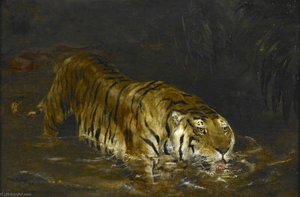
The Moors
 52.0 x 78.0 cm
 Alfred East Art Gallery
 Read More
Giclée / Art Print
Museum-quality giclée or canvas print with fast production and flexible finish options. ( Buy Hand Made Painting Buy Image)




































Pick from our preset sizes that match the artwork's original proportions.

You may enter your own dimensions to fit a specific frame or space. If your selected size does not match the original image's proportions, we will either crop the artwork or extend the image with a mirrored or solid-fill edge. A digital mockup will be sent for your approval before production begins.
Please note that the on-screen preview does not reflect the actual cropping or extension. Only the mockup will accurately show the final composition.
While custom sizes are available, we recommend selecting a dimension from the predefined list to preserve the original proportions.
Worldwide Delivery () in 2 weeks instead of standard 4/5 weeks. (16 August)

Free Worldwide Express Shipping

High-Quality Linen Canvas

Full Shipping Insurance

Customs Tax Refund Guarantee

True Color Matching Guarantee

60-Day Return Policy (Defects Only)

100% Money-Back Guarantee

Bulk Discount Offer
 Glass option is only available in size under 110 CM

The Moors
Giclée / Art Print
Reproduction Size
-


Total Price
$ 81
Artist Biography
John Trivett Nettleship (1841–1902): The Lion’s Embrace
John Trivett Nettleship (1841-1902) stands as a singular figure in Victorian art, celebrated primarily for his masterful depictions of lions and other wild animals—a realm where meticulous observation met unwavering artistic conviction. More than just an artist, he was a prolific writer and literary critic whose early engagement with Robert Browning profoundly shaped his intellectual trajectory and cemented his reputation as a champion of poetic nuance. This biography delves into Nettleship’s formative years, artistic evolution, influential collaborations, and enduring legacy within the broader context of late nineteenth-century British art and culture.Early Life and Education
Born in Kettering, Northamptonshire, on February 11, 1841, Nettleship descended from a respectable family—his father, Henry John Nettleship, was a solicitor, and his mother, Isabella Ann Hogg, daughter of the vicar of Geddington—providing him with a stable upbringing steeped in intellectual curiosity. His formative years were marked by academic excellence; he excelled at New College Oxford as a chorister and subsequently attended Durham Cathedral School, where his brother Henry had preceded him. This grounding in classical scholarship undoubtedly instilled within him a disciplined aesthetic sensibility that would permeate his artistic endeavors. Notably, Nettleship’s prize-winning verse on “Venice” foreshadowed his future vocation as a literary critic—a connection that deepened during his friendship with Browning himself.Artistic Training and Early Career
Nettleship's artistic journey commenced at Heatherley’s School of Fine Art and the Slade School in London, where he honed his skills under renowned instructors. Unlike many artists of his time who pursued formal training abroad, Nettleship embraced a largely self-taught approach—a decision that nonetheless yielded exceptional results. His dedication to capturing the essence of animal subjects was unwavering; he meticulously studied specimens at the Zoological Gardens and sought inspiration from the natural world. The Royal Academy quickly recognized his talent, initiating his artistic career with exhibitions beginning in 1874, establishing him as a prominent voice within the Victorian art landscape.The Lion Paintings: A Defining Achievement
Nettleship’s fame ascended to unparalleled heights thanks to his series of monumental oil paintings depicting lions—a project that consumed nearly three decades of his artistic life (1874–1901). These canvases, showcased repeatedly at the Royal Academy and Grosvenor Gallery, captivated audiences with their breathtaking realism and dramatic compositions. Critics lauded Nettleship’s ability to convey both the brute physicality and psychological complexity of these magnificent creatures—a feat achieved through painstaking observation and masterful brushwork. The sheer scale of his lion paintings solidified his position as one of Britain's foremost animal painters and cemented his reputation for capturing the sublime beauty of untamed nature.Literary Collaborations and Critical Influence
Beyond his artistic accomplishments, Nettleship possessed a formidable intellect and cultivated an expansive literary horizon. His seminal essay on Robert Browning’s poetry—published in 1868—established him as one of Browning's most astute interpreters and initiated a lifelong friendship between the poet and critic. This collaboration profoundly influenced Nettleship’s artistic vision, fostering a belief in the power of language to illuminate profound truths about human experience. His subsequent book illustrations further demonstrated his versatility as an artist and cemented his legacy as a champion of literary artistry—a testament to his multifaceted talent and enduring contribution to Victorian culture.Legacy and Historical Significance
John Trivett Nettleship’s artistic output remains remarkably influential, particularly within the realm of animal painting. His meticulous technique, unwavering commitment to realism, and profound understanding of animal behavior continue to inspire artists today. Moreover, his intellectual engagement with Browning—a figure whose poetic explorations mirrored Nettleship's own philosophical inquiries—underscores the importance of interdisciplinary dialogue in shaping artistic creativity. As a symbol of Victorian naturalism and literary scholarship, Nettleship’s work stands as an enduring reminder of Britain’s artistic heritage—a legacy secured through his unwavering devotion to capturing the majesty of the animal kingdom and illuminating the complexities of human thought.
john trivett nettleship
1841 - 1902
Quick Facts
- Artistic Movement Or Style: Animal Painting
- Artists Or Movements Influenced By This Artist: ['Robert Browning']
- Artists Who Influenced This Artist: ['Blake Drawings']
- Date Of Birth: February 11, 1841
- Date Of Death: August 31, 1902
- Full Name: John Trivett Nettleship
- Nationality: British
- Notable Artworks:
- Tiger Drinking at a Jungle Pool
- Wild Horses and Pigs
- A Lyme Mastiff 'Lion'
- Place Of Birth: Kettering, Northamptonshire