Text size

() ·

A painting made for you, by hand

The Red Cross Knight

Hand Made Oil Reproduction

Hand-painted oil on canvas in your size and frame, made to order by our artists. ( Switch to Print Switch to Digital Image)

Collectible Description

Artist Biography

Discover John Singleton Copley (1738-1815), a pivotal Anglo-American painter celebrated for his detailed colonial portraits and innovative historical scenes. Explore his masterpieces today!

from ·

Chapter 1

How large should it be?

Slide to change the size; the picture on the left shows the frame at its real width. The proportions of the original are kept.

Standard
custom
CM
INCH

Pick from our preset sizes that match the artwork's original proportions.

width
height

Type the width and the height you need, to fit your frame or your wall. This is hand-painted, so for a size with a different shape the artist can paint a bit more around the picture, or cut a bit — you choose. We send you a digital mockup to approve before the painting starts. The picture shown on this page does not show the real result — only the mockup does.

Chapter 2

How should it arrive?

Choose the edges of the stretched canvas

Choose your frame

Corner sample of the WhiteWrap canvas edge finish, stretched on solid wood bars
White $1
Corner sample of the BlurSideWrap canvas edge finish, stretched on solid wood bars
Blurside $1
Corner sample of the ExtendedWrap canvas edge finish, stretched on solid wood bars
Extended $1
Corner sample of the P118B picture frame: moulded polystyrene, 5 cm wide and 3 cm thick
P118B $10
Corner sample of the P118H picture frame: moulded polystyrene, 5 cm wide and 3 cm thick
P118H $10
Corner sample of the P118W picture frame: moulded polystyrene, 5 cm wide and 3 cm thick
P118W $10
Corner sample of the P438Z picture frame: moulded polystyrene, 5.5 cm wide and 3.5 cm thick
P438Z $10
Corner sample of the P508JH picture frame: moulded polystyrene, 7 cm wide and 3.5 cm thick
P508JH $12
Corner sample of the P508YH picture frame: moulded polystyrene, 7 cm wide and 3.5 cm thick
P508YH $12
Corner sample of the P805H picture frame: moulded polystyrene, 5 cm wide and 3.5 cm thick
P805H $10
Corner sample of the P805Z picture frame: moulded polystyrene, 5 cm wide and 3.5 cm thick
P805Z $10
Corner sample of the P919BZ picture frame: moulded polystyrene, 7 cm wide and 3.5 cm thick
P919BZ $10
Corner sample of the P919G picture frame: moulded polystyrene, 7 cm wide and 3.5 cm thick
P919G $10
Corner sample of the P919XJ picture frame: moulded polystyrene, 7 cm wide and 3.5 cm thick
P919XJ $10
Corner sample of the P959ZH picture frame: moulded polystyrene, 5 cm wide and 3 cm thick
P959ZH $10
Corner sample of the P968JZ picture frame: moulded polystyrene, 6 cm wide and 4 cm thick
P968JZ $12
Corner sample of the W106C picture frame: solid wood, 5 cm wide and 3 cm thick
W106C $8
Corner sample of the W218G picture frame: solid wood, 5 cm wide and 3 cm thick
W218G $10
Corner sample of the W218JH picture frame: solid wood, 5 cm wide and 3 cm thick
W218JH $8
Corner sample of the W218Y picture frame: solid wood, 5 cm wide and 3 cm thick
W218Y $10
Corner sample of the W307PJ picture frame: solid wood, 6 cm wide and 3 cm thick
W307PJ $10
Corner sample of the W316G picture frame: solid wood, 6 cm wide and 3 cm thick
W316G $10
Corner sample of the W316PJ picture frame: solid wood, 6 cm wide and 3 cm thick
W316PJ $8
Corner sample of the W316Y picture frame: solid wood, 6 cm wide and 3 cm thick
W316Y $10
Corner sample of the W398PJ picture frame: solid wood, 5 cm wide and 3 cm thick
W398PJ $8
Corner sample of the W4111J picture frame: solid wood, 6.5 cm wide and 3.5 cm thick
W4111J $10
Corner sample of the W500HY picture frame: solid wood, 7 cm wide and 5 cm thick
W500HY $15
Corner sample of the W500JH picture frame: solid wood, 7 cm wide and 5 cm thick
W500JH $15
Corner sample of the W692G picture frame: solid wood, 8 cm wide and 4 cm thick
W692G $12
Corner sample of the W849H picture frame: solid wood, 5 cm wide and 3 cm thick
W849H $8
Corner sample of the W940BG picture frame: solid wood, 7.5 cm wide and 4.5 cm thick
W940BG $15
Corner sample of the W953PJ picture frame: solid wood, 6 cm wide and 3.5 cm thick
W953PJ $8
Corner sample of the H24-GOLD picture frame: carved wood with gesso, 10 cm wide and 6 cm thick
H24-GOLD $30
Corner sample of the H24-SILVER picture frame: carved wood with gesso, 10 cm wide and 6 cm thick
H24-SILVER $30
Corner sample of the H36-GOLD picture frame: carved wood with gesso, 15 cm wide and 6.5 cm thick
H36-GOLD $45
Corner sample of the H36-SILVER picture frame: carved wood with gesso, 15 cm wide and 6.5 cm thick
H36-SILVER $45
Frame preview
Framed

Moulding: . Overall size with the frame: .

Chapter 3

Who paints it, and should anything change?

Examples of what can be changed: Replace face with customer photo; Add pet (e.g., replace cat with dog); Include hidden message in background; Change background landscape or elements.
After order, OriginalUniqueArt.com team will email client for instructions and provide a mockup preview

Worldwide Delivery () in 3/4 weeks instead of standard 5 weeks. (2 November). No compromise on quality.

Chapter 4

The finishing touches

A nameplate, as in a museum?

Engraved Bronze Plaque Details

This elegant plaque features the artist's name and the title of the artwork, finely engraved for a timeless presentation.

It is made from bronze with a refined, elegant finish. The text is precisely laser-engraved for a sharp and permanent result. Measuring 9x2 cm, the plaque is compact yet easy to read. It's built to be durable and scratch-resistant, offering a professional, museum-quality look. Mounting is simple thanks to the included adhesive backing.

Transparent Acrylic Plaque Details

The plaque includes essential engraved details such as the artist's name, the title of the artwork, the date it was created, the type of media used-like oil on canvas or watercolor-a brief description of the piece, and a QR code that links to the complete artwork information.

It is crafted from clear acrylic, offering a sleek, modern appearance. The text is UV-engraved in black to ensure strong visual contrast. With a size of 10x15 cm, it ensures optimal readability. It comes equipped with two metal hooks for secure wall mounting. The plaque is designed to be weather-resistant, making it suitable for various environments, and it includes interactive features that work seamlessly with smartphone scanning.

Black Acrylic Plaque Details

This elegant plaque includes engraved information such as the artist's name, the title of the artwork, the date it was created, the type of media used (like oil on canvas or watercolor), a short description of the artwork, and a QR code for quick access to more information.

The plaque itself is made from refined black acrylic with a premium finish. The text is laser-engraved in white for high contrast and readability. Its size is 10x15 cm, designed to be easy to read. It comes with two metal hooks for professional mounting. The design is sleek and fits any interior style. It is also weather-resistant and durable, with built-in digital integration for mobile compatibility.

A protective varnish?

When do you need it?

Chapter 5

Your painting, as you ordered it

The Red Cross Knight

Reproduction Medium

Reproduction Size

-

Elite Senior Artist

More detail, finesse, and extra production time

-

Reproduction Frame

-

-

For artworks or reproductions larger than 105 cm (approximately 41 inches) on any side, the frame will be shipped as a kit, disassembled. This method ensures safe delivery and prevents damage during transport.

Professional assembly required - this is not a DIY product.
The kit must be assembled and the canvas stretched by an experienced professional framer, using wood glue (not supplied), a canvas stretching plier and clamps to hold the bars square while the glue dries. Incorrect assembly or uneven canvas tension can permanently damage the artwork and is not covered by our warranty.

  • All solid wood bars are included, precisely cut to size.

  • Assembled with the screws provided, plus wood glue for the corner joints, which is not supplied and must be sourced by your framer.

  • Professional tools are required and not included: a canvas stretching plier (tensioner) and clamps to hold the bars square while the glue dries.

Important:
The corner joints require wood glue, the bars must be held with clamps until the glue is fully dry, and tightening the canvas on the assembled frame requires a canvas stretching plier. None of these are included in the kit. Please arrange an experienced professional framer before ordering this size.

Nameplate

-

-

Protective Varnish

Glossy Varnish (enhances colors, protects against light/moisture)

-

Customize My Artwork

Examples of what can be changed: Replace face with customer photo; Add pet (e.g., replace cat with dog); Include hidden message in background; Change background landscape or elements.

-

Urgent

Worldwide Delivery () in 3/4 weeks instead of standard 5 weeks. (2 November). No compromise on quality.

-

Express Shipping

Worldwide Delivery () in 5 weeks. (9 November).

Included

Total Price

$ 300

Total Price $ 300

Glass option is only available in size under 110 CM

Included with every order

  • Free Worldwide Express Shipping
  • High-Quality Linen Canvas
  • Full Shipping Insurance
  • Customs Tax Refund Guarantee
  • True Color Matching Guarantee
  • 100-Day Return Policy (Defects Only)
  • 100% Money-Back Guarantee
  • Bulk Discount Offer

A Moment Frozen in Time: John Singleton Copley’s “The Red Cross Knight”

John Singleton Copley's "The Red Cross Knight," painted in 1793, isn’t merely a portrait; it’s a carefully constructed tableau of Romantic ideals rendered with the precision and observational skill characteristic of a true master. This oil on canvas, currently residing within the National Gallery of Art in Washington D.C., offers a captivating glimpse into the burgeoning artistic landscape of early America – a period where European influences were being vigorously assimilated and reinterpreted through a distinctly American lens. Copley, a pivotal figure bridging the gap between Anglo-American and European art traditions, expertly captures a scene brimming with narrative potential, inviting viewers to contemplate themes of chivalry, honor, and perhaps even nascent romanticism.

The painting immediately draws the eye to its central figures: a woman in a luminous white gown, poised with an air of quiet contemplation, and two men clad in elaborate historical costumes. One, identifiable as a knight, proudly displays a shield emblazoned with a prominent red cross – a potent symbol of courage, loyalty, and service, deeply rooted in medieval iconography. His posture exudes confidence and strength, while the other figure, also a knight, carries a bow and arrow, suggesting a readiness for action or perhaps a connection to a more martial past. The setting itself is crucial; an outdoor landscape, subtly rendered with trees that frame the scene and birds flitting amongst the branches, establishes a naturalistic backdrop that contrasts beautifully with the formality of the figures’ attire.

Decoding Romanticism Through Detail

Copley's masterful technique exemplifies the tenets of Romanticism. He eschews simple likeness in favor of capturing an *essence*, imbuing his subjects with emotion and narrative weight. Notice the meticulous detail lavished upon the fabrics – the folds of the woman’s gown, the texture of the knight’s armor, the subtle sheen on the weapons. These aren't merely decorative elements; they are carefully chosen to evoke a specific time and place, transporting the viewer back to an era of chivalry and heroic ideals. The lighting, too, plays a vital role, creating a sense of drama and highlighting key features within the composition – particularly the woman’s face, which seems turned towards something just beyond the frame, hinting at an unspoken story.

Symbolism and Narrative Resonance

Beyond its aesthetic qualities, “The Red Cross Knight” is rich in symbolic meaning. The red cross itself, a direct reference to Christian iconography, elevates the scene beyond a simple depiction of historical figures. It speaks to values of self-sacrifice and dedication – concepts central to the Romantic movement’s emphasis on individual heroism and moral virtue. The presence of weapons suggests a potential narrative rooted in medieval legends or chivalric tales, perhaps a story of honor, loyalty, and bravery. The woman's gaze, directed upwards, invites speculation about her role within this tableau; is she an observer, a participant, or perhaps even the object of the knights’ attentions? This ambiguity fuels the painting’s enduring appeal.

A Legacy of American Art

“The Red Cross Knight” stands as a testament to John Singleton Copley's remarkable talent and his significant contribution to the development of American art. His ability to seamlessly blend historical accuracy with Romantic sensibilities, coupled with his meticulous attention to detail and masterful use of light and shadow, resulted in works that continue to resonate with viewers today. Reproductions offer an exceptional opportunity to bring this captivating scene into any space, allowing you to appreciate Copley’s artistry and the rich cultural context from which it emerged. Consider how the painting's themes – honor, courage, and the interplay between tradition and individual expression – can inform your own design choices and create a visually compelling atmosphere.

Questions & Answers

Is "The Red Cross Knight" by John Singleton Copley a painting, a drawing or a print?

In the catalog, "The Red Cross Knight" by John Singleton Copley is filed as wall art. The category helps find similar works.

What color palette is used in "The Red Cross Knight" by John Singleton Copley?

"The Red Cross Knight" by John Singleton Copley uses an earthy color palette. The palette summarizes the work's overall color character.

Can "The Red Cross Knight" by John Singleton Copley, held at the National Gallery of Art, be legally reproduced?

"The Red Cross Knight" by John Singleton Copley, held at the National Gallery of Art, is in the public domain - its copyright has expired. This status determines whether reproductions of the image may be made.

More about this painting

Preview AR preview Switch to Print Switch to Digital Image Send
Details Guide Add to favorites Download Similars X-Ray Diaporama Q&A Stats

In numbers

  • 1793the year it was painted
  • 29frames to choose from
  • standard sizes, in its own proportions
  • 5weeks to paint and deliver it
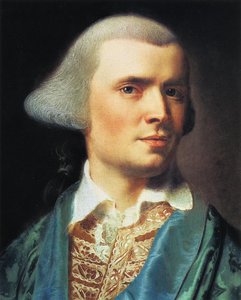
John Singleton Copley

John Singleton Copley

1738 - 1815, United Kingdom

Quick facts about John Singleton Copley

  • Full Name: John Singleton Copley
  • Nationality: Anglo-American
  • Date Of Birth: 1738
  • Date Of Death: 1815
  • Place Of Birth: Boston, United Kingdom
  • Notable Artworks:
    • Earl of Chatham
    • Mr. & Mrs. Izard
    • Watson and the Shark
  • Artistic Movement Or Style: Portraiture, Realism
  • Artists Or Movements Influenced By This Artist: Generations of artists

Artist Biography

A Pioneer Bridging Worlds: The Life and Art of John Singleton Copley

John Singleton Copley, born in Boston in 1738, occupies a unique and pivotal position in the history of American art. He wasn’t merely a painter; he was a cultural bridge, forging a distinctly Anglo-American aesthetic during a period of immense political and social upheaval. His story is one of self-taught brilliance, relentless ambition, and an uncanny ability to capture not just likenesses, but the very essence of his subjects within the context of their time. Copley’s early life was steeped in the bustling maritime world of colonial Boston, a city brimming with merchants, shipbuilders, and burgeoning wealth. His father, Richard Copley, though absent shortly after John's birth, was a tobacco merchant, while his mother, Mary Singleton Copley, ran a shop on Long Wharf. This environment instilled in young John an acute awareness of the material world – the textures of fabrics, the gleam of silver, the subtle nuances of social standing – all elements that would later define his artistic style. His stepfather, Peter Pelham, an engraver and limner (an artist who created portraits on vellum or parchment), provided some initial guidance, but Copley’s talent was largely self-cultivated through diligent study and practice. He devoured any available engravings, meticulously copying them to master technique, and quickly surpassed his stepfather's abilities.

The Rise of a Colonial Portraitist

By the 1760s, Copley had established himself as Boston’s premier portraitist, catering to the city’s elite. His success wasn’t simply due to technical skill; it was his ability to imbue his portraits with a psychological depth rarely seen in colonial American art. He moved beyond mere representation, striving to capture the character and social standing of his sitters. This involved meticulous attention to detail – the precise rendering of fabrics, jewelry, and furnishings – but also a keen understanding of posture, expression, and gesture. Copley’s portraits weren't just images; they were statements about wealth, power, and social aspiration. He skillfully incorporated symbolic objects into his compositions, subtly hinting at his subjects’ professions or interests. A merchant might be depicted with imported goods in the background, a lawyer with legal texts, or a naval officer with nautical instruments. This attention to detail and symbolism elevated his work beyond simple portraiture, transforming it into a form of social commentary. His portraits of prominent figures like *Mrs. Ezekiel Gondthwait (Elizabeth Lewis)* exemplify this approach – the elegant pose, luxurious fabrics, and subtle details all convey a sense of refinement and status.

Ambition and the Call of Europe

Despite his success in Boston, Copley harbored ambitions that extended beyond the colonial art world. He yearned for recognition from the established artistic circles of London and Rome, and sought to test his skills against the masters of European painting. In 1766, he sent his *Boy with a Flying Squirrel* to the Society of Artists in London, where it received considerable praise from Joshua Reynolds and Benjamin West – two leading figures in the British art scene. This encouragement fueled Copley’s desire for further training and exposure. However, family obligations and a thriving practice kept him rooted in Boston for another decade. Finally, in 1774, with his wife Susanna Farnsworth Clarke and their children, he embarked on a journey to Europe, intending to study the Old Masters and establish himself as a historical painter. The outbreak of the American Revolution shortly after his arrival complicated matters, forcing Copley to navigate a politically charged environment while pursuing his artistic goals.

Historical Narratives and Lasting Legacy

In London, Copley found both opportunities and challenges. He continued to paint portraits, securing commissions from prominent British figures, but he also turned his attention to historical painting – a genre considered more prestigious than portraiture at the time. His most ambitious work in this vein was *The Death of Major Peirson*, depicting a scene from the Battle of Jersey during the American Revolutionary War. While technically impressive, it received mixed reviews, with some critics questioning its composition and dramatic impact. Copley’s later historical paintings, such as *The Colapse of the Earl of Chatham in the House of Lords*, were more successful, demonstrating his ability to capture complex emotions and dramatic moments. Though he never fully achieved the level of acclaim he sought in Europe, John Singleton Copley left an indelible mark on both American and British art history. He pioneered a uniquely Anglo-American style, blending European techniques with a distinctly colonial sensibility. His portraits remain invaluable historical documents, offering glimpses into the lives and values of a bygone era. He is remembered not only for his artistic skill but also for his role in shaping a national identity through his art. He died in London in 1815, leaving behind a legacy that continues to inspire artists and captivate audiences today.

Influences and Artistic Development

  • Early Influences: Copley’s early artistic development was heavily influenced by the engravings he meticulously copied, particularly those of European masters like Rembrandt van Rijn and Antoine Watteau.
  • Peter Pelham's Guidance: His stepfather, Peter Pelham, provided initial training in portraiture and engraving techniques, laying the foundation for his future success.
  • Joshua Reynolds & Benjamin West: The encouragement and feedback from these prominent British artists during Copley’s early submissions to London exhibitions were crucial in shaping his ambitions and artistic direction.
  • Rococo Style: Copley initially embraced the Rococo style, evident in his use of delicate colors, graceful poses, and ornate details. However, he gradually moved towards a more realistic and restrained approach.
  • Historical Painting Inspiration: His exposure to historical paintings by artists like Benjamin West inspired him to explore this genre, though he often struggled to fully reconcile it with his natural talent for portraiture.

Quick Facts

  • Movement: Romanticism
  • Artistic style: Historical, dramatic
  • Location: National Gallery of Art
  • Medium: Oil on canvas
  • Title: The Red Cross Knight
  • Year: 1793

Art Quiz

There is only one correct answer for each question.

Question 1:
What historical movement is most closely associated with John Singleton Copley’s ‘The Red Cross Knight’?
Question 2:
What is the primary symbolic significance of the ‘red cross’ depicted on the knight's armor?
Question 3:
The painting depicts a scene featuring figures in historical costumes. What does this suggest about the artwork’s intent?
Question 4:
Based on the image description, what is the woman in the white dress primarily engaged in?
Question 5:
In what year was ‘The Red Cross Knight’ painted?