 Read More


 For artworks or reproductions larger than 105 cm (approximately 41 inches) on any side, the frame will be shipped as a kit, disassembled. This method ensures safe delivery and prevents damage during transport.


More about this painting
Text size
() ·
A painting made for you, by hand
Hand Made Oil Reproduction
Hand-painted oil on canvas in your size and frame, made to order by our artists. ( Switch to Print Switch to Digital Image)
Artist Biography
Explore the art of John Moir (1788-1841), a Scottish painter known for portraits & historical scenes, including George Robinson & William Marshall. Discover his legacy!
from ·
Chapter 1
How large should it be?
Slide to change the size; the picture on the left shows the frame at its real width. The proportions of the original are kept.
Standard
custom
CM
INCH
Pick from our preset sizes that match the artwork's original proportions.
Loading sizes...

width
height
Type the width and the height you need, to fit your frame or your wall. This is hand-painted, so for a size with a different shape the artist can paint a bit more around the picture, or cut a bit — you choose. We send you a digital mockup to approve before the painting starts. The picture shown on this page does not show the real result — only the mockup does.
Chapter 2
How should it arrive?
Choose the edges of the stretched canvas
Choose your frame

White $1

Blurside $1

Extended $1

P118B $10

P118H $10

P118W $10

P438Z $10

P508JH $12

P508YH $12

P805H $10

P805Z $10

P919BZ $10

P919G $10

P919XJ $10

P959ZH $10

P968JZ $12

W106C $8

W218G $10

W218JH $8

W218Y $10

W307PJ $10

W316G $10

W316PJ $8

W316Y $10

W398PJ $8

W4111J $10

W500HY $15

W500JH $15

W692G $12

W849H $8

W940BG $15

W953PJ $8

H24-GOLD $30

H24-SILVER $30

H36-GOLD $45

H36-SILVER $45
Framed
Moulding: . Overall size with the frame: .
Chapter 3
Who paints it, and should anything change?
Examples of what can be changed: Replace face with customer photo; Add pet (e.g., replace cat with dog); Include hidden message in background; Change background landscape or elements.
After order, OriginalUniqueArt.com team will email client for instructions and provide a mockup preview
After order, OriginalUniqueArt.com team will email client for instructions and provide a mockup preview
Worldwide Delivery () in 3/4 weeks instead of standard 5 weeks. (29 October). No compromise on quality.
Chapter 4
The finishing touches
A nameplate, as in a museum?
Engraved Bronze Plaque Details
This elegant plaque features the artist's name and the title of the artwork, finely engraved for a timeless presentation.
It is made from bronze with a refined, elegant finish. The text is precisely laser-engraved for a sharp and permanent result. Measuring 9x2 cm, the plaque is compact yet easy to read. It's built to be durable and scratch-resistant, offering a professional, museum-quality look. Mounting is simple thanks to the included adhesive backing.
Transparent Acrylic Plaque Details
The plaque includes essential engraved details such as the artist's name, the title of the artwork, the date it was created, the type of media used-like oil on canvas or watercolor-a brief description of the piece, and a QR code that links to the complete artwork information.
It is crafted from clear acrylic, offering a sleek, modern appearance. The text is UV-engraved in black to ensure strong visual contrast. With a size of 10x15 cm, it ensures optimal readability. It comes equipped with two metal hooks for secure wall mounting. The plaque is designed to be weather-resistant, making it suitable for various environments, and it includes interactive features that work seamlessly with smartphone scanning.
Black Acrylic Plaque Details
This elegant plaque includes engraved information such as the artist's name, the title of the artwork, the date it was created, the type of media used (like oil on canvas or watercolor), a short description of the artwork, and a QR code for quick access to more information.
The plaque itself is made from refined black acrylic with a premium finish. The text is laser-engraved in white for high contrast and readability. Its size is 10x15 cm, designed to be easy to read. It comes with two metal hooks for professional mounting. The design is sleek and fits any interior style. It is also weather-resistant and durable, with built-in digital integration for mobile compatibility.
A protective varnish?
When do you need it?
Chapter 5
Your painting, as you ordered it
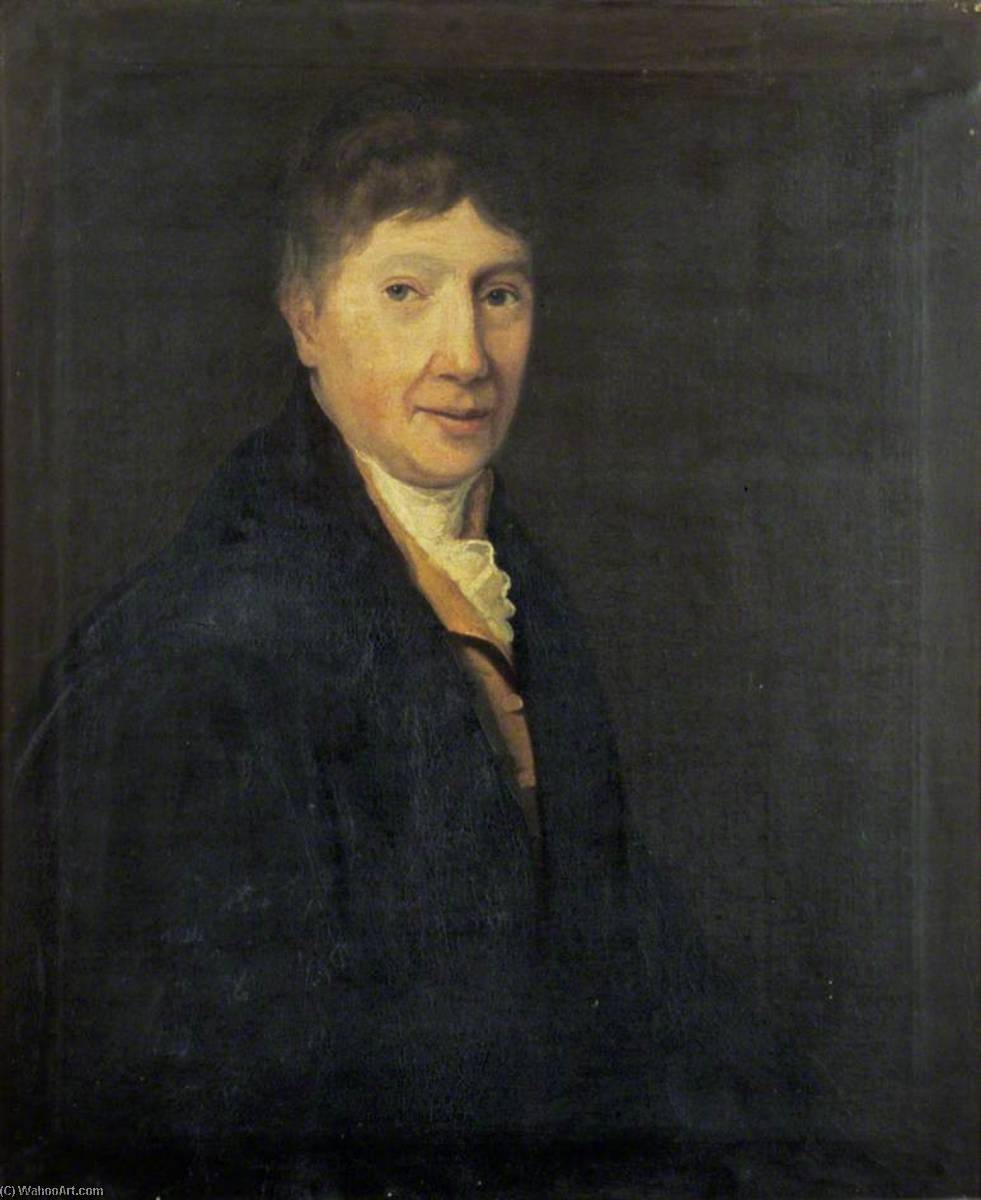
Robert Hamilton, LLD
Reproduction Medium
Reproduction Size
-
Elite Senior Artist
More detail, finesse, and extra production time
-
Reproduction Frame
-
-
For artworks or reproductions larger than 105 cm (approximately 41 inches) on any side, the frame will be shipped as a kit, disassembled. This method ensures safe delivery and prevents damage during transport.
Professional assembly required - this is not a DIY product.
The kit must be assembled and the canvas stretched by an experienced professional framer, using wood glue (not supplied), a canvas stretching plier and clamps to hold the bars square while the glue dries. Incorrect assembly or uneven canvas tension can permanently damage the artwork and is not covered by our warranty.
All solid wood bars are included, precisely cut to size.
Assembled with the screws provided, plus wood glue for the corner joints, which is not supplied and must be sourced by your framer.
Professional tools are required and not included: a canvas stretching plier (tensioner) and clamps to hold the bars square while the glue dries.
Important:
The corner joints require wood glue, the bars must be held with clamps until the glue is fully dry, and tightening the canvas on the assembled frame requires a canvas stretching plier. None of these are included in the kit. Please arrange an experienced professional framer before ordering this size.
Nameplate
-
-
Protective Varnish
Glossy Varnish (enhances colors, protects against light/moisture)
-
Customize My Artwork
Examples of what can be changed: Replace face with customer photo; Add pet (e.g., replace cat with dog); Include hidden message in background; Change background landscape or elements.
-
Urgent
Worldwide Delivery () in 3/4 weeks instead of standard 5 weeks. (29 October). No compromise on quality.
-
Express Shipping
Worldwide Delivery () in 5 weeks. (5 November).
Included
Total Price
$ 300
Glass option is only available in size under 110 CM
Included with every order
- Free Worldwide Express Shipping
- High-Quality Linen Canvas
- Full Shipping Insurance
- Customs Tax Refund Guarantee
- True Color Matching Guarantee
- 100-Day Return Policy (Defects Only)
- 100% Money-Back Guarantee
- Bulk Discount Offer
 Preview
 Send
Send Share
Share
 Details
 Guide
Guide

 Download
 Similars
 X-Ray
X-Ray Diaporama
 Q&A
Q&A Stats
StatsIn numbers
- 1829the year it was painted
- 29frames to choose from
- standard sizes, in its own proportions
- 5weeks to paint and deliver it
About the original
 1829
1829 77.0 x 63.0 cm

John Moir
1788 - 1841
Quick facts about John Moir
- Full Name: James Roderick Moir
- Nationality: English
- Date Of Birth: 1788
- Date Of Death: 1841
- Place Of Birth: Leeds, England
- Notable Artworks: ['The Smell of Reeves and Mortimer']
- Artistic Movement Or Style: Comedy
- Artists Who Influenced This Artist:
- Vic Damone
- Jim Reeves
- Artists Or Movements Influenced By This Artist: ['Shooting Stars']
Artist Biography
John Moir (c.1776–1857): A Visionary Landscape Painter of Northumberland
John Moir was born around 1776 in Peterhead, Aberdeenshire, Scotland—the son of the minister of Peterhead and the nephew of James Byres, the famed Scottish antiquarian residing in Rome. His formative years were marked by a profound connection to the rugged beauty of Northumberland, an influence that would permeate his artistic endeavors throughout his life. Early indications suggest he studied at King’s College, Aberdeen, honing his skills before embarking on a journey into Italy where he immersed himself in classical art and aesthetics. This exposure undoubtedly shaped his compositional sensibilities and fueled his desire to capture the grandeur of the natural world with meticulous detail.- Early Life & Education: Moir’s upbringing instilled in him a deep appreciation for both religious faith and scholarly pursuits, providing a foundation for his intellectual curiosity and artistic development.
- Italian Influences: His time in Italy proved pivotal, exposing him to the techniques of Venetian landscape painters like Canaletto and influencing his approach to perspective and tonal gradation—elements that would become hallmarks of his distinctive style.
The Landscape Painter’s Technique
Moir's artistic technique was characterized by a dedication to realism combined with an expressive use of color and light. He meticulously observed the subtleties of Northumberland’s topography, painstakingly rendering mountains, valleys, and rivers with remarkable accuracy. However, he didn’t merely aim for photographic representation; rather, he sought to convey the emotional impact of these landscapes—the serenity of twilight skies, the drama of stormy weather, and the vibrant hues of autumnal foliage. His brushstrokes were deliberate and considered, layering pigments to achieve depth and luminosity that captured the essence of Northumberland's atmosphere. He frequently employed a glazing technique, applying thin washes of color over underlayers to build up tonal variations and create shimmering effects—a method favored by many Northern Romantic painters.- Glazing Technique: This layering process allowed Moir to achieve remarkable depth and luminosity, mirroring the atmospheric conditions he sought to depict.
- Color Palette: His palette leaned heavily on earthy tones—greens, browns, ochres—reflecting the dominant colors of Northumberland’s landscape.
Notable Works & Commissions
Moir gained recognition for his portraits and landscapes alike, securing commissions from prominent figures across Northumberland and beyond. Among his most celebrated paintings are depictions of George Robinson, a landowner and diplomat, and William Marshall, Earl of Glamis—images that exemplify his mastery of portraiture and his ability to convey character through subtle gestures and expressions. Furthermore, he produced numerous landscape views showcasing the Northumberland countryside, capturing its dramatic vistas with breathtaking precision. His works reside in collections across Britain, including the National Gallery of Scotland and private residences, testament to their enduring appeal and artistic merit.- George Robinson Portrait: This piece showcases Moir’s skill in portraying aristocratic dignity and conveying inner emotion through facial expression.
- William Marshall Landscape: Demonstrates his ability to capture the grandeur of Northumberland's scenery with masterful brushwork and tonal harmony.
Legacy & Historical Significance
John Moir’s contribution to British landscape painting is significant within the broader context of the Romantic movement. He embodies the spirit of Northern Romanticism—a fascination for untamed wilderness, a reverence for sublime beauty, and an aspiration to capture the emotional resonance of nature. His meticulous observation and expressive technique stand as an inspiration to subsequent generations of artists, cementing his place as one of Northumberland’s most distinguished visual chroniclers. Moir's work continues to resonate with viewers today, reminding us of the power of art to convey profound feelings about our relationship with the natural world—a connection that remains vitally important in the 21st century.
Explore artworks organized by themes, styles, and characteristics.


