Menu
Text size

() ·

A painting made for you, by hand

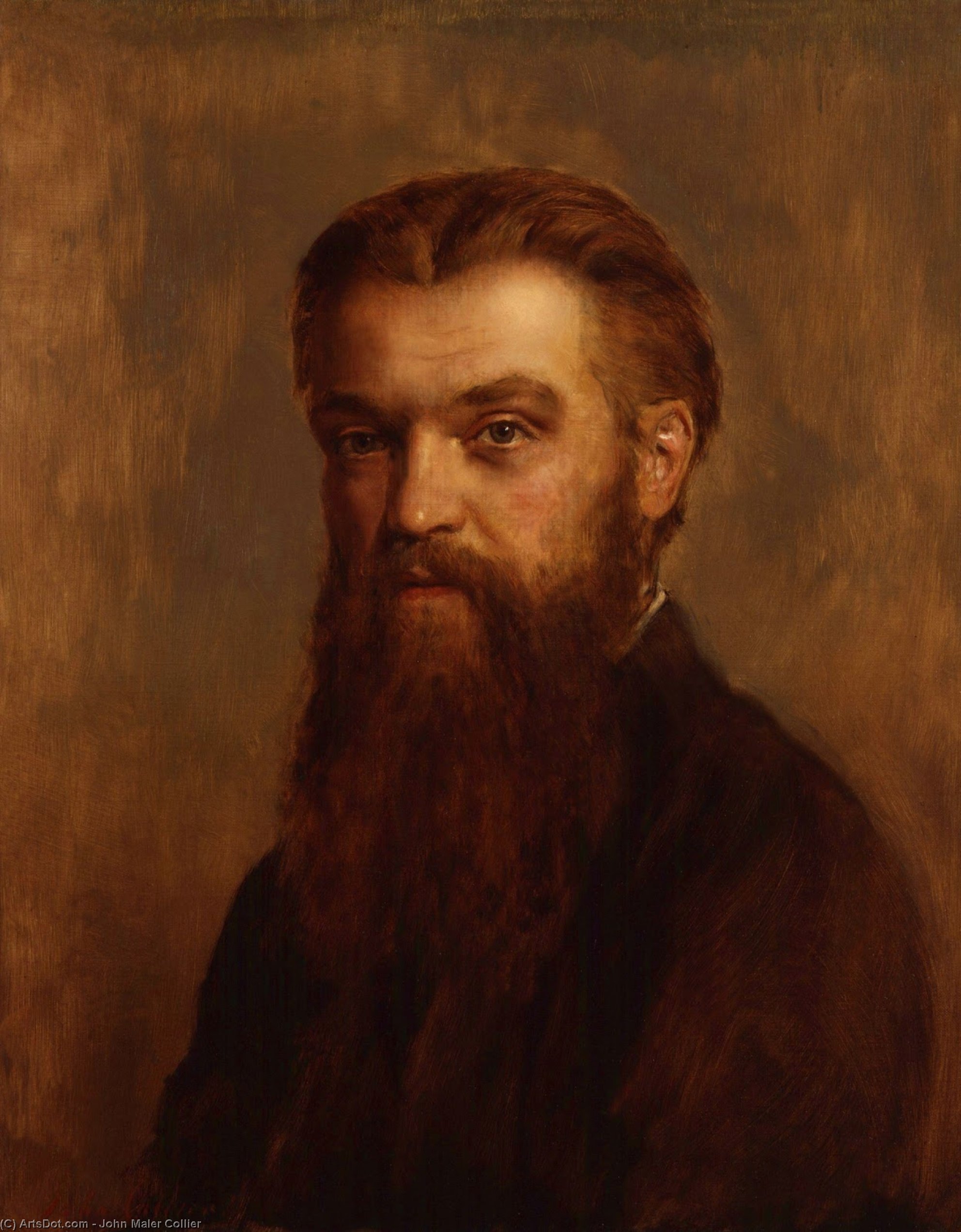
William Kingdon Clifford

Hand Made Oil Reproduction

Hand-painted oil on canvas in your size and frame, made to order by our artists. ( Switch to Print Switch to Digital Image)

Collectible Description

Experience John Maler Collier's stunning 'William Kingdon Clifford' portrait! This Pre-Raphaelite masterpiece captures the mathematician’s intellect with rich detail and vibrant colors. A timeless work of art.

Artist Biography

Discover John Maler Collier (1850-1934), a leading Pre-Raphaelite portrait painter! Explore his vibrant depictions of British society, art & science.

from ·

Chapter 1

How large should it be?

Slide to change the size; the picture on the left shows the frame at its real width. The proportions of the original are kept.

Standard
custom
CM
INCH

Pick from our preset sizes that match the artwork's original proportions.

width
height

Type the width and the height you need, to fit your frame or your wall. This is hand-painted, so for a size with a different shape the artist can paint a bit more around the picture, or cut a bit — you choose. We send you a digital mockup to approve before the painting starts. The picture shown on this page does not show the real result — only the mockup does.

Chapter 2

How should it arrive?

Choose the edges of the stretched canvas

Choose your frame

Corner sample of the WhiteWrap canvas edge finish, stretched on solid wood bars
White $1
Corner sample of the BlurSideWrap canvas edge finish, stretched on solid wood bars
Blurside $1
Corner sample of the ExtendedWrap canvas edge finish, stretched on solid wood bars
Extended $1
Corner sample of the P118B picture frame: moulded polystyrene, 5 cm wide and 3 cm thick
P118B $10
Corner sample of the P118H picture frame: moulded polystyrene, 5 cm wide and 3 cm thick
P118H $10
Corner sample of the P118W picture frame: moulded polystyrene, 5 cm wide and 3 cm thick
P118W $10
Corner sample of the P438Z picture frame: moulded polystyrene, 5.5 cm wide and 3.5 cm thick
P438Z $10
Corner sample of the P508JH picture frame: moulded polystyrene, 7 cm wide and 3.5 cm thick
P508JH $12
Corner sample of the P508YH picture frame: moulded polystyrene, 7 cm wide and 3.5 cm thick
P508YH $12
Corner sample of the P805H picture frame: moulded polystyrene, 5 cm wide and 3.5 cm thick
P805H $10
Corner sample of the P805Z picture frame: moulded polystyrene, 5 cm wide and 3.5 cm thick
P805Z $10
Corner sample of the P919BZ picture frame: moulded polystyrene, 7 cm wide and 3.5 cm thick
P919BZ $10
Corner sample of the P919G picture frame: moulded polystyrene, 7 cm wide and 3.5 cm thick
P919G $10
Corner sample of the P919XJ picture frame: moulded polystyrene, 7 cm wide and 3.5 cm thick
P919XJ $10
Corner sample of the P959ZH picture frame: moulded polystyrene, 5 cm wide and 3 cm thick
P959ZH $10
Corner sample of the P968JZ picture frame: moulded polystyrene, 6 cm wide and 4 cm thick
P968JZ $12
Corner sample of the W106C picture frame: solid wood, 5 cm wide and 3 cm thick
W106C $8
Corner sample of the W218G picture frame: solid wood, 5 cm wide and 3 cm thick
W218G $10
Corner sample of the W218JH picture frame: solid wood, 5 cm wide and 3 cm thick
W218JH $8
Corner sample of the W218Y picture frame: solid wood, 5 cm wide and 3 cm thick
W218Y $10
Corner sample of the W307PJ picture frame: solid wood, 6 cm wide and 3 cm thick
W307PJ $10
Corner sample of the W316G picture frame: solid wood, 6 cm wide and 3 cm thick
W316G $10
Corner sample of the W316PJ picture frame: solid wood, 6 cm wide and 3 cm thick
W316PJ $8
Corner sample of the W316Y picture frame: solid wood, 6 cm wide and 3 cm thick
W316Y $10
Corner sample of the W398PJ picture frame: solid wood, 5 cm wide and 3 cm thick
W398PJ $8
Corner sample of the W4111J picture frame: solid wood, 6.5 cm wide and 3.5 cm thick
W4111J $10
Corner sample of the W500HY picture frame: solid wood, 7 cm wide and 5 cm thick
W500HY $15
Corner sample of the W500JH picture frame: solid wood, 7 cm wide and 5 cm thick
W500JH $15
Corner sample of the W692G picture frame: solid wood, 8 cm wide and 4 cm thick
W692G $12
Corner sample of the W849H picture frame: solid wood, 5 cm wide and 3 cm thick
W849H $8
Corner sample of the W940BG picture frame: solid wood, 7.5 cm wide and 4.5 cm thick
W940BG $15
Corner sample of the W953PJ picture frame: solid wood, 6 cm wide and 3.5 cm thick
W953PJ $8
Corner sample of the H24-GOLD picture frame: carved wood with gesso, 10 cm wide and 6 cm thick
H24-GOLD $30
Corner sample of the H24-SILVER picture frame: carved wood with gesso, 10 cm wide and 6 cm thick
H24-SILVER $30
Corner sample of the H36-GOLD picture frame: carved wood with gesso, 15 cm wide and 6.5 cm thick
H36-GOLD $45
Corner sample of the H36-SILVER picture frame: carved wood with gesso, 15 cm wide and 6.5 cm thick
H36-SILVER $45
Frame preview
Framed

Moulding: . Overall size with the frame: .

Chapter 3

Who paints it, and should anything change?

Examples of what can be changed: Replace face with customer photo; Add pet (e.g., replace cat with dog); Include hidden message in background; Change background landscape or elements.
After order, OriginalUniqueArt.com team will email client for instructions and provide a mockup preview

Worldwide Delivery () in 3/4 weeks instead of standard 5 weeks. (30 October). No compromise on quality.

Chapter 4

The finishing touches

A nameplate, as in a museum?

Engraved Bronze Plaque Details

This elegant plaque features the artist's name and the title of the artwork, finely engraved for a timeless presentation.

It is made from bronze with a refined, elegant finish. The text is precisely laser-engraved for a sharp and permanent result. Measuring 9x2 cm, the plaque is compact yet easy to read. It's built to be durable and scratch-resistant, offering a professional, museum-quality look. Mounting is simple thanks to the included adhesive backing.

Transparent Acrylic Plaque Details

The plaque includes essential engraved details such as the artist's name, the title of the artwork, the date it was created, the type of media used-like oil on canvas or watercolor-a brief description of the piece, and a QR code that links to the complete artwork information.

It is crafted from clear acrylic, offering a sleek, modern appearance. The text is UV-engraved in black to ensure strong visual contrast. With a size of 10x15 cm, it ensures optimal readability. It comes equipped with two metal hooks for secure wall mounting. The plaque is designed to be weather-resistant, making it suitable for various environments, and it includes interactive features that work seamlessly with smartphone scanning.

Black Acrylic Plaque Details

This elegant plaque includes engraved information such as the artist's name, the title of the artwork, the date it was created, the type of media used (like oil on canvas or watercolor), a short description of the artwork, and a QR code for quick access to more information.

The plaque itself is made from refined black acrylic with a premium finish. The text is laser-engraved in white for high contrast and readability. Its size is 10x15 cm, designed to be easy to read. It comes with two metal hooks for professional mounting. The design is sleek and fits any interior style. It is also weather-resistant and durable, with built-in digital integration for mobile compatibility.

A protective varnish?

When do you need it?

Chapter 5

Your painting, as you ordered it

William Kingdon Clifford

Reproduction Medium

Reproduction Size

-

Elite Senior Artist

More detail, finesse, and extra production time

-

Reproduction Frame

-

-

For artworks or reproductions larger than 105 cm (approximately 41 inches) on any side, the frame will be shipped as a kit, disassembled. This method ensures safe delivery and prevents damage during transport.

Professional assembly required - this is not a DIY product.
The kit must be assembled and the canvas stretched by an experienced professional framer, using wood glue (not supplied), a canvas stretching plier and clamps to hold the bars square while the glue dries. Incorrect assembly or uneven canvas tension can permanently damage the artwork and is not covered by our warranty.

  • All solid wood bars are included, precisely cut to size.

  • Assembled with the screws provided, plus wood glue for the corner joints, which is not supplied and must be sourced by your framer.

  • Professional tools are required and not included: a canvas stretching plier (tensioner) and clamps to hold the bars square while the glue dries.

Important:
The corner joints require wood glue, the bars must be held with clamps until the glue is fully dry, and tightening the canvas on the assembled frame requires a canvas stretching plier. None of these are included in the kit. Please arrange an experienced professional framer before ordering this size.

Nameplate

-

-

Protective Varnish

Glossy Varnish (enhances colors, protects against light/moisture)

-

Customize My Artwork

Examples of what can be changed: Replace face with customer photo; Add pet (e.g., replace cat with dog); Include hidden message in background; Change background landscape or elements.

-

Urgent

Worldwide Delivery () in 3/4 weeks instead of standard 5 weeks. (30 October). No compromise on quality.

-

Express Shipping

Worldwide Delivery () in 5 weeks. (6 November).

Included

Total Price

$ 300

Total Price $ 300

Glass option is only available in size under 110 CM

Included with every order

  • Free Worldwide Express Shipping
  • High-Quality Linen Canvas
  • Full Shipping Insurance
  • Customs Tax Refund Guarantee
  • True Color Matching Guarantee
  • 100-Day Return Policy (Defects Only)
  • 100% Money-Back Guarantee
  • Bulk Discount Offer

The Enigmatic Gaze: John Maler Collier’s William Kingdon Clifford

John Maler Collier's 1899 portrait of William Kingdon Clifford isn’t merely a likeness; it’s a carefully constructed embodiment of Victorian intellectualism, rendered with the meticulous detail and evocative storytelling characteristic of the Pre-Raphaelite movement. Collier, a master of capturing the essence of his subjects – as evidenced by his equally compelling portraits of Sir Michael Foster and Sir Ignatius Valentine Chirol – has here created an image that transcends simple representation, offering a glimpse into the mind of a mathematician and philosopher grappling with profound concepts.

The painting immediately draws the eye to Clifford’s face. His expression is one of quiet contemplation, his brow furrowed slightly as if lost in thought, yet his gaze holds a directness that invites engagement. The subtle lines etched around his eyes and mouth speak volumes about a life dedicated to rigorous study and intellectual pursuit. Collier's skill lies not just in capturing physical features but in conveying the inner world of his subject – a feat achieved through masterful use of light and shadow, and a remarkably sensitive understanding of human psychology.

  • Color Palette: The muted tones—a symphony of browns, greys, and ochres—lend an air of gravitas and seriousness to the portrait. Collier eschews bright, vibrant colors in favor of a palette that reflects the subject’s intellectual pursuits, suggesting a focus on abstract thought rather than worldly concerns.
  • Composition: The arrangement is deliberately restrained, emphasizing Clifford's figure within a simple, uncluttered background. This simplicity allows the viewer to concentrate fully on the subject and his expression.
  • Technique: Collier’s brushwork is remarkably smooth and controlled, indicative of his meticulous approach to portraiture. He employs layering techniques to create depth and texture, particularly in Clifford's clothing and facial features.

The Pre-Raphaelite Influence & Victorian Portraiture

Collier’s work is firmly rooted in the Pre-Raphaelite aesthetic – a movement that sought to revive the artistic conventions of 15th-century Italian art, rejecting the perceived artificiality and materialism of academic painting. The Pre-Raphaelites valued truth, beauty, and moral purpose, often drawing inspiration from literature, mythology, and medieval legends. Collier’s portraits are characterized by their rich detail, vibrant colors (though subtly employed here), and a tendency to imbue his subjects with symbolic meaning.

This portrait also reflects the broader trends in Victorian-era portraiture. During this period, portrait painting became increasingly popular among the wealthy and influential, serving as both a means of commemorating individuals and displaying social status. Collier’s work exemplifies this trend, capturing the intellectual prestige associated with figures like Clifford, who were prominent in academic circles.

Symbolism & Intellectual Depth

Beyond its surface appearance, the portrait is laden with symbolic significance. Clifford's spectacles – a ubiquitous symbol of intellect and scholarly pursuit – immediately establish his profession and suggest a life dedicated to reason and observation. The carefully chosen attire—a dark suit and tie—underscores his status as a respected member of Victorian society. The subtle lighting highlights his face, drawing attention to the intensity of his gaze and hinting at the complex thoughts swirling within his mind.

Furthermore, Clifford’s subject matter – mathematics and philosophy – speaks to the intellectual ferment of the late 19th century, a period marked by rapid scientific advancements and philosophical debates. Collier's portrait captures this spirit of inquiry and intellectual exploration, offering a visual representation of a mind grappling with fundamental questions about the nature of reality.

Replicas & A Window into Victorian Thought

Reproductions of Collier’s “William Kingdon Clifford” offer art lovers a unique opportunity to connect with this remarkable portrait and gain insight into the intellectual landscape of the Victorian era. The painting serves as a powerful reminder of the enduring legacy of Pre-Raphaelite art and its ability to capture not only physical likenesses but also the essence of human character and intellect. High-quality reproductions, like those available on OriginalUniqueArt.com, allow us to appreciate Collier’s masterful technique and the profound symbolism embedded within this iconic portrait.

Questions & Answers

Where in the home does a reproduction of "William Kingdon Clifford" fit well?

A reproduction of "William Kingdon Clifford" fits well in a living room.

Does "William Kingdon Clifford" by John Maler Collier use strong contrasts or soft harmonies?

The color composition of "William Kingdon Clifford" by John Maler Collier combines a serene contrast with a unified palette harmony.

Is a download available for "William Kingdon Clifford"?

The image of "William Kingdon Clifford" by John Maler Collier can be downloaded from the artwork's Download page: a high-resolution digital image download.

More about this painting

Preview AR preview Switch to Print Switch to Digital Image Send
Details Guide Add to favorites Download Similars X-Ray Diaporama Q&A Stats

In numbers

  • 1899the year it was painted
  • 29frames to choose from
  • standard sizes, in its own proportions
  • 5weeks to paint and deliver it
John Maler Collier

John Maler Collier

1850 - 1934, United Kingdom

Quick facts about John Maler Collier

  • Full Name: John Maler Collier
  • Nationality: British
  • Date Of Birth: 1850
  • Date Of Death: 1934
  • Place Of Birth: London, United Kingdom
  • Notable Artworks:
    • Lovelace Stamer
    • Sir John Lubbock FRS
    • Duke of York (George V)
    • Prince of Wales (Edward VIII)
  • Artistic Movement Or Style: Pre-Raphaelite
  • Artists Who Influenced This Artist:
    • Jean-Paul Laurens
    • Millais
    • Alma-Tadema

Artist Biography

John Maler Collier: A Life in Portraiture

  • Born: London, United Kingdom (1850)
  • Died: 1934

John Maler Collier OBE RP ROI was a prominent English artist and author, celebrated as a leading portrait painter of his generation. His artistic style leaned heavily into the Pre-Raphaelite aesthetic, characterized by meticulous detail, vibrant colors, and a focus on narrative storytelling within portraits.

Early Life and Artistic Training

  • Family Background: Collier hailed from a distinguished family. His grandfather was a Quaker merchant and Member of Parliament, while his father served as Attorney General and a judge in the Privy Council. This privileged background afforded him access to education and societal circles that would later influence his artistic career.
  • Education: He received his early education at Eton College before pursuing formal art training.

  • Formal Studies: Collier studied painting at the Munich Academy starting in 1875, honing his skills under established masters. He also studied in Paris with Jean-Paul Laurens.

Artistic Style and Major Works

  • Pre-Raphaelite Influence: Collier’s work is deeply rooted in the Pre-Raphaelite movement, evident in his attention to detail, rich color palettes, and a tendency towards narrative scenes within portraits.
  • Portraiture Focus: He primarily specialized in portraiture, capturing likenesses of prominent figures from various fields including art, science, politics, and royalty.
  • Notable Subjects: Collier’s sitters included Charles Darwin, Thomas Henry Huxley (his father-in-law), Rudyard Kipling, Sir Lawrence Alma-Tadema, two Lord Chancellors (Earl of Selborne and Earl of Halsbury), the Speaker of the House of Commons William Gully, and Field Marshal Lord Kitchener.
  • Royal Portraits: Significant commissions included portraits of the Duke of York (later King George V) as Master of Trinity House in 1901, and the Prince of Wales (later Edward VIII). The latter was displayed at Durbar Hall in Jodhpur, Rajputana.
  • "Problem Pictures": Beyond formal portraiture, Collier also created "problem pictures," depicting scenes from everyday life, often showcasing a brighter and fresher style than his more solemn portraits.

Personal Life and Family Connections

  • Marriages to Huxley's Daughters: A defining aspect of Collier’s life was his marriage to two daughters of Thomas Henry Huxley, a renowned scientist and President of the Royal Society. His first wife, Marian (Mady) Huxley, was also an artist.
  • Family Legacy: His daughter by his first marriage, Joyce, became a portrait miniaturist. His second son, Sir Laurence Collier, served as the British Ambassador to Norway from 1941-1951.
  • Close Ties to Intellectual Circles: Collier maintained close relationships with prominent intellectuals and writers of his time, including Leonard Huxley (Thomas Henry Huxley’s son).

Legacy and Historical Significance

  • Recognition and Awards: Collier was appointed an Officer of the Order of the British Empire (OBE) in 1920.
  • Critical Reception: While initially praised, his work later received mixed reviews. Some critics compared his style to that of Frank Holl due to its solemnity, while others recognized his "strong and surprising sense of color."
  • Extensive Record Keeping: Collier meticulously documented his sitters in a handwritten book, providing valuable insight into his career and the individuals he portrayed. This “Sitters Book” is now housed in the Heinz Archive and Library at the National Portrait Gallery.
  • Representation in Major Collections: Sixteen of Collier’s paintings are held by the National Portrait Gallery in London, with two residing in the Tate Gallery.

Quick Facts

  • Movement: Pre-Raphaelite
  • Subject or theme: Intellectual portrait
  • Location: National Portrait Gallery, London
  • Artistic style: Portraiture, Detail-oriented
  • Notable elements: Thoughtful expression

Art Quiz

There is only one correct answer for each question.

Question 1:
What artistic movement is John Maler Collier’s ‘William Kingdon Clifford’ primarily associated with?
Question 2:
In the painting ‘William Kingdon Clifford’, what is depicted as a key characteristic of the subject’s appearance?
Question 3:
What year was ‘William Kingdon Clifford’ painted?
Question 4:
Which of the following best describes John Maler Collier’s artistic style?
Question 5:
Where is the original painting ‘William Kingdon Clifford’ currently housed?