

 Preview
 Send
Send Share
Share
 Details
 Guide
Guide

 Download
 Similars
 X-Ray
X-Ray Diaporama
 Stats
StatsGodiva


 Read More
Giclée / Art Print
Museum-quality giclée or canvas print with fast production and flexible finish options. ( Buy Hand Made Painting Switch to Digital Image)




P118B $10

P118H $10

P118W $10

P438Z $10

P508JH $12

P508YH $12

P805H $10

P805Z $10

P919BZ $10

P919G $10

P919XJ $10

P959ZH $10

P968JZ $12

W106C $8

W218G $10

W218JH $8

W218Y $10

W307PJ $10

W316G $10

W316PJ $8

W316Y $10

W398PJ $8

W4111J $10

W500HY $15

W500JH $15

W692G $12

W849H $8

W940BG $15

W953PJ $8




Pick from our preset sizes that match the artwork's original proportions.

Type the width and the height you need, to fit your frame or your wall. A print can only be cut, never made bigger than the picture, so a size with a different shape loses a part of the image. We send you a digital mockup to approve before we print anything. The picture shown on this page does not show the real cut — only the mockup does.
Worldwide Delivery () in 2 weeks instead of standard 4/5 weeks. (21 October)

Free Worldwide Express Shipping

High-Quality Linen Canvas

Full Shipping Insurance

Customs Tax Refund Guarantee

True Color Matching Guarantee

100-Day Return Policy (Defects Only)

100% Money-Back Guarantee

Bulk Discount Offer
 Glass option is only available in size under 110 CM

Godiva
Giclée / Art Print
Reproduction Size
-


Total Price
$ 81
A Victorian Reverie: The Ethereal Grace of Lady Godiva
In the quiet corners of the Herbert Art Gallery and Museum in Coventry resides a masterpiece that transcends mere portraiture, inviting the viewer into a realm of profound stillness and historical myth. John Maler Collier’s Lady Godiva, executed at the turn of the century, is far more than a depiction of a legendary figure; it is a window into the late Victorian soul. The painting captures a moment of suspended animation, where a young woman sits gracefully upon a luminous white horse against the backdrop of a medieval city wall. There is an undeniable sense of serenity intertwined with a subtle, haunting melancholy, as if the world has held its breath to witness this private moment of contemplation.
Collier, a master of the Pre-Raphaelite aesthetic, eschews the overt drama often associated with historical legends. Instead, he presents a tableau of psychological depth. The subject’s gaze is slightly averted, suggesting an internal monologue that separates her from the viewer, creating an intimate yet untouchable presence. This nuanced approach allows the painting to function as a piece of narrative storytelling, where the silence speaks louder than any grand gesture. For the discerning collector or interior designer, this work offers a sophisticated focal point, bringing a sense of timelessness and intellectual weight to any curated space.
Technical Mastery and the Pre-Raphaelite Spirit
The brilliance of Collier’s technique lies in his ability to marry meticulous realism with an idealized, almost dreamlike atmosphere. Utilizing the rich, layered textures of oil on canvas, the artist employs chiaroscuro to sculpt form from shadow. One can almost feel the palpable texture of the horse’s musculature and the heavy, intricate weave of the heraldic saddlecloth. His brushwork is deliberate and precise, reflecting the Pre-Raphaute ethos of striving for artistic veracity through careful observation.
The color palette is a masterclass in balance. Muted earth tones and soft grays define the architectural elements of the medieval wall, providing a grounded, somber counterpoint to the brilliant whites and shimmering golds that adorn the horse and the rider. This interplay of light and shadow creates an atmospheric depth that draws the eye inward, making the painting feel less like a flat image and more like a window into another era. The soft, diffused lighting bathes the scene in a glow that feels both naturalistic and otherworldly, perfect for adding a layer of classical elegance to a refined interior.
Symbolism and Emotional Resonance
Beyond its technical splendor, Lady Godiva is steeped in symbolic resonance. The white horse serves as a powerful emblem of strength, purity, and unbridled freedom, contrasting beautifully with the vulnerability of the woman’s posture. The medieval setting, rendered with architectural precision, anchors the piece in a romanticized past, evoking themes of chivalry, sacrifice, and the enduring power of legend. The saddlecloth, decorated with intricate patterns of blue, red, and gold, adds a touch of regal splendor that speaks to her noble lineage.
For those seeking to decorate with art that inspires emotion, this piece offers a unique duality: it is both a calming presence and a profound conversation starter. It embodies the Victorian sensibility—a blend of outward composure and inward complexity. Whether placed in a grand library or a contemporary living space, a high-quality reproduction of this work serves as an invitation to reflect, offering a sense of peace and a connection to the rich tapestry of human history and myth.
Questions & Answers
Can I see an X-ray view of "Godiva" by John Maler Collier?
The X-Ray view of "Godiva" by John Maler Collier is on the artwork's X-Ray page: an interactive examination of the image through eleven optical layers.
What feeling does "Godiva" by John Maler Collier convey?
The recorded mood of "Godiva" by John Maler Collier is romantic, and its emotional tone is melancholic.
Where can I buy a print of "Godiva" by John Maler Collier?
To get a print of "Godiva" by John Maler Collier, simply order it on its Fine Art Print page: a fine art print on cotton canvas or archival canvas paper.
Artist Biography
John Maler Collier: A Life in Portraiture
- Born: London, United Kingdom (1850)
- Died: 1934
John Maler Collier OBE RP ROI was a prominent English artist and author, celebrated as a leading portrait painter of his generation. His artistic style leaned heavily into the Pre-Raphaelite aesthetic, characterized by meticulous detail, vibrant colors, and a focus on narrative storytelling within portraits.
Early Life and Artistic Training
- Family Background: Collier hailed from a distinguished family. His grandfather was a Quaker merchant and Member of Parliament, while his father served as Attorney General and a judge in the Privy Council. This privileged background afforded him access to education and societal circles that would later influence his artistic career.
- Education: He received his early education at Eton College before pursuing formal art training.
- Formal Studies: Collier studied painting at the Munich Academy starting in 1875, honing his skills under established masters. He also studied in Paris with Jean-Paul Laurens.
Artistic Style and Major Works
- Pre-Raphaelite Influence: Collier’s work is deeply rooted in the Pre-Raphaelite movement, evident in his attention to detail, rich color palettes, and a tendency towards narrative scenes within portraits.
- Portraiture Focus: He primarily specialized in portraiture, capturing likenesses of prominent figures from various fields including art, science, politics, and royalty.
- Notable Subjects: Collier’s sitters included Charles Darwin, Thomas Henry Huxley (his father-in-law), Rudyard Kipling, Sir Lawrence Alma-Tadema, two Lord Chancellors (Earl of Selborne and Earl of Halsbury), the Speaker of the House of Commons William Gully, and Field Marshal Lord Kitchener.
- Royal Portraits: Significant commissions included portraits of the Duke of York (later King George V) as Master of Trinity House in 1901, and the Prince of Wales (later Edward VIII). The latter was displayed at Durbar Hall in Jodhpur, Rajputana.
- "Problem Pictures": Beyond formal portraiture, Collier also created "problem pictures," depicting scenes from everyday life, often showcasing a brighter and fresher style than his more solemn portraits.
Personal Life and Family Connections
- Marriages to Huxley's Daughters: A defining aspect of Collier’s life was his marriage to two daughters of Thomas Henry Huxley, a renowned scientist and President of the Royal Society. His first wife, Marian (Mady) Huxley, was also an artist.
- Family Legacy: His daughter by his first marriage, Joyce, became a portrait miniaturist. His second son, Sir Laurence Collier, served as the British Ambassador to Norway from 1941-1951.
- Close Ties to Intellectual Circles: Collier maintained close relationships with prominent intellectuals and writers of his time, including Leonard Huxley (Thomas Henry Huxley’s son).
Legacy and Historical Significance
- Recognition and Awards: Collier was appointed an Officer of the Order of the British Empire (OBE) in 1920.
- Critical Reception: While initially praised, his work later received mixed reviews. Some critics compared his style to that of Frank Holl due to its solemnity, while others recognized his "strong and surprising sense of color."
- Extensive Record Keeping: Collier meticulously documented his sitters in a handwritten book, providing valuable insight into his career and the individuals he portrayed. This “Sitters Book” is now housed in the Heinz Archive and Library at the National Portrait Gallery.
- Representation in Major Collections: Sixteen of Collier’s paintings are held by the National Portrait Gallery in London, with two residing in the Tate Gallery.

John Maler Collier
1850 - 1934 , United Kingdom
Quick Facts
- Full Name: John Maler Collier
- Nationality: British
- Date Of Birth: 1850
- Date Of Death: 1934
- Place Of Birth: London, United Kingdom
- Notable Artworks:
- Lovelace Stamer
- Sir John Lubbock FRS
- Duke of York (George V)
- Prince of Wales (Edward VIII)
- Artistic Movement Or Style: Pre-Raphaelite
- Artists Who Influenced This Artist:
- Jean-Paul Laurens
- Millais
- Alma-Tadema
Related Articles

Sir John Everett Millais: Pre-Raphaelite Rebellion & Victorian Narrative Detail
Explore the revolutionary art of Sir John Everett Millais & the Pre-Raphaelite Brotherhood. Discover their radical realism, symbolic narratives, and lasting impact on Victorian aesthetics. A deep dive into 19th-century masterpieces.

John Singer Sargent's 25 Masterpieces: Portraits & Beyond | OriginalUniqueArt
Explore 25 iconic John Singer Sargent paintings – from dazzling portraits to Impressionist landscapes. Discover the stories behind Madame X, El Jaleo & more! Find museum-quality art reproductions and elevate your home decor with OriginalUniqueArt.com.
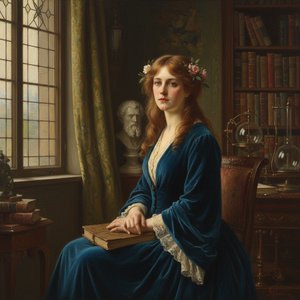
John Collier: Pre-Raphaelite Realism & Victorian Psychological Portraiture
Explore the captivating world of John Collier, a leading Pre-Raphaelite painter renowned for his psychologically insightful Victorian portraits. Discover his masterpieces and lasting artistic legacy.

Dante Gabriel Rossetti's 25 Masterpieces: A Journey Through Victorian Art & Symbolism | OriginalUniqueArt
Explore 25 iconic artworks by Dante Gabriel Rossetti, a leading Pre-Raphaelite artist. Discover the stories behind masterpieces like 'Proserpine' & 'Beata Beatrix'. Find museum-quality art reproductions and elevate your home decor with OriginalUniqueArt.com.

John Constable's Masterpieces: Explore 25 Iconic Landscapes for Your Home
Journey through John Constable's 25 most celebrated landscapes. Explore Romanticism, Dedham Vale & his masterful use of light in iconic paintings like 'Hay Wain'. Find museum-quality art reproductions and elevate your home decor on OriginalUniqueArt.com.


