Text size

() ·

A painting made for you, by hand

Orange Branch

Hand Made Oil Reproduction

Hand-painted oil on canvas in your size and frame, made to order by our artists. ( Switch to Print Switch to Digital Image)

Collectible Description

Experience the vibrant Japonisme of John La Farge's 1883 Orange Branch, a luminous study of color and light you will adore.

Artist Biography

John La Farge (1835-1910): American painter & stained glass innovator captivated by Japanese art. Explore his luminous murals, pioneering techniques & lasting legacy.

from ·

Chapter 1

How large should it be?

Slide to change the size; the picture on the left shows the frame at its real width. The proportions of the original are kept.

Standard
custom
CM
INCH

Pick from our preset sizes that match the artwork's original proportions.

width
height

Type the width and the height you need, to fit your frame or your wall. This is hand-painted, so for a size with a different shape the artist can paint a bit more around the picture, or cut a bit — you choose. We send you a digital mockup to approve before the painting starts. The picture shown on this page does not show the real result — only the mockup does.

Chapter 2

How should it arrive?

Choose the edges of the stretched canvas

Choose your frame

Corner sample of the WhiteWrap canvas edge finish, stretched on solid wood bars
White $1
Corner sample of the BlurSideWrap canvas edge finish, stretched on solid wood bars
Blurside $1
Corner sample of the ExtendedWrap canvas edge finish, stretched on solid wood bars
Extended $1
Corner sample of the P118B picture frame: moulded polystyrene, 5 cm wide and 3 cm thick
P118B $10
Corner sample of the P118H picture frame: moulded polystyrene, 5 cm wide and 3 cm thick
P118H $10
Corner sample of the P118W picture frame: moulded polystyrene, 5 cm wide and 3 cm thick
P118W $10
Corner sample of the P438Z picture frame: moulded polystyrene, 5.5 cm wide and 3.5 cm thick
P438Z $10
Corner sample of the P508JH picture frame: moulded polystyrene, 7 cm wide and 3.5 cm thick
P508JH $12
Corner sample of the P508YH picture frame: moulded polystyrene, 7 cm wide and 3.5 cm thick
P508YH $12
Corner sample of the P805H picture frame: moulded polystyrene, 5 cm wide and 3.5 cm thick
P805H $10
Corner sample of the P805Z picture frame: moulded polystyrene, 5 cm wide and 3.5 cm thick
P805Z $10
Corner sample of the P919BZ picture frame: moulded polystyrene, 7 cm wide and 3.5 cm thick
P919BZ $10
Corner sample of the P919G picture frame: moulded polystyrene, 7 cm wide and 3.5 cm thick
P919G $10
Corner sample of the P919XJ picture frame: moulded polystyrene, 7 cm wide and 3.5 cm thick
P919XJ $10
Corner sample of the P959ZH picture frame: moulded polystyrene, 5 cm wide and 3 cm thick
P959ZH $10
Corner sample of the P968JZ picture frame: moulded polystyrene, 6 cm wide and 4 cm thick
P968JZ $12
Corner sample of the W106C picture frame: solid wood, 5 cm wide and 3 cm thick
W106C $8
Corner sample of the W218G picture frame: solid wood, 5 cm wide and 3 cm thick
W218G $10
Corner sample of the W218JH picture frame: solid wood, 5 cm wide and 3 cm thick
W218JH $8
Corner sample of the W218Y picture frame: solid wood, 5 cm wide and 3 cm thick
W218Y $10
Corner sample of the W307PJ picture frame: solid wood, 6 cm wide and 3 cm thick
W307PJ $10
Corner sample of the W316G picture frame: solid wood, 6 cm wide and 3 cm thick
W316G $10
Corner sample of the W316PJ picture frame: solid wood, 6 cm wide and 3 cm thick
W316PJ $8
Corner sample of the W316Y picture frame: solid wood, 6 cm wide and 3 cm thick
W316Y $10
Corner sample of the W398PJ picture frame: solid wood, 5 cm wide and 3 cm thick
W398PJ $8
Corner sample of the W4111J picture frame: solid wood, 6.5 cm wide and 3.5 cm thick
W4111J $10
Corner sample of the W500HY picture frame: solid wood, 7 cm wide and 5 cm thick
W500HY $15
Corner sample of the W500JH picture frame: solid wood, 7 cm wide and 5 cm thick
W500JH $15
Corner sample of the W692G picture frame: solid wood, 8 cm wide and 4 cm thick
W692G $12
Corner sample of the W849H picture frame: solid wood, 5 cm wide and 3 cm thick
W849H $8
Corner sample of the W940BG picture frame: solid wood, 7.5 cm wide and 4.5 cm thick
W940BG $15
Corner sample of the W953PJ picture frame: solid wood, 6 cm wide and 3.5 cm thick
W953PJ $8
Corner sample of the H24-GOLD picture frame: carved wood with gesso, 10 cm wide and 6 cm thick
H24-GOLD $30
Corner sample of the H24-SILVER picture frame: carved wood with gesso, 10 cm wide and 6 cm thick
H24-SILVER $30
Corner sample of the H36-GOLD picture frame: carved wood with gesso, 15 cm wide and 6.5 cm thick
H36-GOLD $45
Corner sample of the H36-SILVER picture frame: carved wood with gesso, 15 cm wide and 6.5 cm thick
H36-SILVER $45
Frame preview
Framed

Moulding: . Overall size with the frame: .

Chapter 3

Who paints it, and should anything change?

Examples of what can be changed: Replace face with customer photo; Add pet (e.g., replace cat with dog); Include hidden message in background; Change background landscape or elements.
After order, OriginalUniqueArt.com team will email client for instructions and provide a mockup preview

Worldwide Delivery () in 3/4 weeks instead of standard 5 weeks. (4 November). No compromise on quality.

Chapter 4

The finishing touches

A nameplate, as in a museum?

Engraved Bronze Plaque Details

This elegant plaque features the artist's name and the title of the artwork, finely engraved for a timeless presentation.

It is made from bronze with a refined, elegant finish. The text is precisely laser-engraved for a sharp and permanent result. Measuring 9x2 cm, the plaque is compact yet easy to read. It's built to be durable and scratch-resistant, offering a professional, museum-quality look. Mounting is simple thanks to the included adhesive backing.

Transparent Acrylic Plaque Details

The plaque includes essential engraved details such as the artist's name, the title of the artwork, the date it was created, the type of media used-like oil on canvas or watercolor-a brief description of the piece, and a QR code that links to the complete artwork information.

It is crafted from clear acrylic, offering a sleek, modern appearance. The text is UV-engraved in black to ensure strong visual contrast. With a size of 10x15 cm, it ensures optimal readability. It comes equipped with two metal hooks for secure wall mounting. The plaque is designed to be weather-resistant, making it suitable for various environments, and it includes interactive features that work seamlessly with smartphone scanning.

Black Acrylic Plaque Details

This elegant plaque includes engraved information such as the artist's name, the title of the artwork, the date it was created, the type of media used (like oil on canvas or watercolor), a short description of the artwork, and a QR code for quick access to more information.

The plaque itself is made from refined black acrylic with a premium finish. The text is laser-engraved in white for high contrast and readability. Its size is 10x15 cm, designed to be easy to read. It comes with two metal hooks for professional mounting. The design is sleek and fits any interior style. It is also weather-resistant and durable, with built-in digital integration for mobile compatibility.

A protective varnish?

When do you need it?

Chapter 5

Your painting, as you ordered it

Orange Branch

Reproduction Medium

Reproduction Size

-

Elite Senior Artist

More detail, finesse, and extra production time

-

Reproduction Frame

-

-

For artworks or reproductions larger than 105 cm (approximately 41 inches) on any side, the frame will be shipped as a kit, disassembled. This method ensures safe delivery and prevents damage during transport.

Professional assembly required - this is not a DIY product.
The kit must be assembled and the canvas stretched by an experienced professional framer, using wood glue (not supplied), a canvas stretching plier and clamps to hold the bars square while the glue dries. Incorrect assembly or uneven canvas tension can permanently damage the artwork and is not covered by our warranty.

  • All solid wood bars are included, precisely cut to size.

  • Assembled with the screws provided, plus wood glue for the corner joints, which is not supplied and must be sourced by your framer.

  • Professional tools are required and not included: a canvas stretching plier (tensioner) and clamps to hold the bars square while the glue dries.

Important:
The corner joints require wood glue, the bars must be held with clamps until the glue is fully dry, and tightening the canvas on the assembled frame requires a canvas stretching plier. None of these are included in the kit. Please arrange an experienced professional framer before ordering this size.

Nameplate

-

-

Protective Varnish

Glossy Varnish (enhances colors, protects against light/moisture)

-

Customize My Artwork

Examples of what can be changed: Replace face with customer photo; Add pet (e.g., replace cat with dog); Include hidden message in background; Change background landscape or elements.

-

Urgent

Worldwide Delivery () in 3/4 weeks instead of standard 5 weeks. (4 November). No compromise on quality.

-

Express Shipping

Worldwide Delivery () in 5 weeks. (11 November).

Included

Total Price

$ 300

Total Price $ 300

Glass option is only available in size under 110 CM

Included with every order

  • Free Worldwide Express Shipping
  • High-Quality Linen Canvas
  • Full Shipping Insurance
  • Customs Tax Refund Guarantee
  • True Color Matching Guarantee
  • 100-Day Return Policy (Defects Only)
  • 100% Money-Back Guarantee
  • Bulk Discount Offer

A Symphony of Color and Japonisme

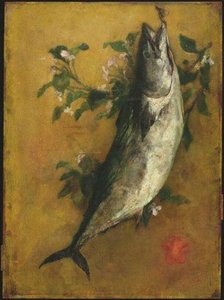
In the quiet brilliance of John La Farge’s 1883 masterpiece, "Orange Branch," viewers are invited into a world where nature and artistry converge in perfect harmony. This exquisite work is far more than a mere botanical study; it is a profound exploration of light, texture, and the delicate dance between Eastern influence and Western Impressionism. At first glance, the eye is immediately drawn to the vibrant, sun-drenched oranges that cling to a slender branch, their golden hues radiating a warmth that seems to pulse from within the canvas itself. La Farge captures not just the fruit, but the very essence of ripeness, inviting a sense of serene contemplation that transcends the boundaries of a simple landscape.

The painting serves as a breathtaking testament to Japonisme, the late 19th-century fascination with Japanese aesthetics that swept through the American art scene. Following the opening of Japan to Western trade, artists like La Farge found profound inspiration in the flattened perspectives and organic compositions of sumi-e ink paintings. In "Orange Branch," this influence is palpable in the way the branch extends diagonally across the frame, creating a balanced yet dynamic movement that guides the viewer’s gaze through the composition. The soft, ethereal blue background acts as a tranquil stage, providing an understated counterpoint to the vivid warmth of the fruit and ensuring that every leaf and citrus orb commands the spotlight.

Mastery of Light and Luminous Technique

To behold "Orange Branch" is to witness the technical virtuosity of a true master of color. La Farge employed a sophisticated technique of layering glazes—applying thin, translucent washes of oil paint over successive layers—to achieve a depth and luminosity that few could replicate. This meticulous process allows light to penetrate the surface of the paint, reflecting back with a brilliance that mimics the natural glow of sunlight filtering through foliage. The oranges possess a tactile quality, their skins rendered with such precision that one can almost sense the subtle variations in texture and the weight of the fruit.

Complementing this luminous fruit is La Farge’s masterful depiction of the surrounding greenery. Through delicate, rhythmic brushstrokes, he creates a textured surface that breathes life into the leaves, capturing the fleeting effects of light and shadow with an Impressionist sensibility. This focus on the ephemeral—the way a leaf catches a glint of sun or how a shadow softens at the edge of a branch—imbues the work with a sense of living, breathing reality. For the discerning collector or interior designer, this painting offers a sophisticated interplay of color and form that can anchor a room, providing both a focal point of intense energy and a source of quiet, natural grace.

An Enduring Legacy for the Modern Collector

Beyond its technical brilliance, "Orange Branch" carries an emotional resonance that remains deeply relevant in our modern, fast-paced world. It offers a moment of stillness, a window into a period of intense cultural exchange and artistic innovation. The painting’s ability to evoke both the vitality of nature and the sophisticated intellect of the Gilded Age makes it a timeless piece of art history. Whether displayed in a sunlit gallery or as a centerpiece in a curated residential space, this work continues to inspire awe through its harmonious balance of color, light, and historical depth.

For those seeking to bring the prestige of American Impressionism into their personal collections, a high-quality reproduction of this work provides an unparalleled opportunity. It allows the rich textures and radiant golds of La Farge’s vision to transform an environment, offering a touch of 19th-century elegance and a profound connection to the enduring beauty of the natural world.

Questions & Answers

What atmosphere would a reproduction of "Orange Branch" by John La Farge bring to a room?

"Orange Branch" by John La Farge has a serene atmosphere and is recommended for a living room. The mood is what the work brings to the space around it.

How can I get a print of "Orange Branch" by John La Farge?

A print of "Orange Branch" by John La Farge can be ordered directly on its Fine Art Print page: a fine art print on cotton canvas or archival canvas paper.

What does "Orange Branch" share with the rest of John La Farge's output?

"Orange Branch" shares with John La Farge's other works its American Colorism & Japonisme style and the recorded themes: japanese aesthetic vision, coloristic exploration, symbolism, american landscape tradition, floral imagery & beauty, la farge’s artistic legacy.

More about this painting

Preview AR preview Switch to Print Switch to Digital Image Send
Details Guide Add to favorites Download Similars X-Ray Diaporama Q&A Stats

In numbers

  • 1883the year it was painted
  • 29frames to choose from
  • standard sizes, in its own proportions
  • 5weeks to paint and deliver it
John La Farge

John La Farge

1835 - 1910, United States of America

Quick facts about John La Farge

  • Full Name: John La Farge
  • Nationality: American
  • Date Of Birth: 1835
  • Date Of Death: 1910
  • Place Of Birth: New York City, United States of America
  • Notable Artworks:
    • The Sacred Grove
    • Trinity Church murals
    • Church of the Ascension
  • Artistic Movement Or Style: Symbolism, Arts & Crafts
  • Artists Who Influenced This Artist: ['Thomas Couture']
  • Artists Or Movements Influenced By This Artist: ['Maria Oakey Dewing']

Artist Biography

A Luminary of American Art: The Life and Legacy of John La Farge

John La Farge, born in New York City in 1835 to wealthy French parents, emerged as a pivotal figure in the evolution of late 19th and early 20th-century American art. His journey was one of constant exploration and innovation, spanning painting, mural design, stained glass artistry, interior decoration, and insightful writing on his travels—particularly those to Asia. Raised bilingually, La Farge’s upbringing instilled in him a cosmopolitan sensibility that would profoundly shape his artistic vision. He initially pursued legal studies but soon gravitated towards the world of art, studying first at Mount St. Mary's University and then at St. John's College (now Fordham University). A formative period followed with training under Thomas Couture in Paris, where he absorbed European artistic traditions while simultaneously developing a uniquely American aesthetic. This early exposure to both Old World mastery and his own burgeoning originality laid the foundation for a career marked by groundbreaking techniques and a distinctive style.

Pioneering Innovation Across Disciplines

La Farge’s artistic output was remarkably diverse, yet consistently characterized by an intense focus on color and light. He began to gain recognition with his illustrations and landscapes, but it was in the realm of mural painting that he first made a significant impact. Commissions for churches like Trinity Church in Boston (1873) and the Church of the Ascension in New York showcased his ability to create luminous, spiritually evocative spaces. However, La Farge’s most enduring legacy lies in his revolutionary work with stained glass. Dissatisfied with the conventional methods of the time, he pioneered a technique involving superimposing multiple layers of colored glass—a process for which he received a patent in 1880. This innovation allowed him to achieve an unprecedented richness and depth of color, transforming stained glass from a merely decorative element into a powerful medium for artistic expression. His stained-glass windows weren’t simply representations; they were immersive experiences of light and hue. Beyond these core disciplines, La Farge also excelled in interior design, creating harmonious environments that integrated his paintings, murals, and decorative arts.

The Influence of the East and a Search for New Forms

A defining aspect of La Farge’s artistic development was his fascination with Japanese art and culture. His travels to Asia, beginning in the 1880s, profoundly influenced his aesthetic sensibilities. He meticulously documented his observations in writings and incorporated elements of Japanese design—such as asymmetry, flattened perspectives, and a refined sense of color—into his own work. This embrace of Eastern aesthetics was not merely imitative; La Farge synthesized these influences with his existing artistic vocabulary to create something entirely new. His studio at 51 West 10th Street in Greenwich Village became a hub for artists interested in exploring non-Western art forms, fostering a spirit of experimentation and cross-cultural exchange. He wasn’t alone in this pursuit—artists like James McNeill Whistler were also captivated by Japanese aesthetics—but La Farge distinguished himself through his ability to seamlessly integrate these influences into his diverse artistic practice. The sacred grove, a forested area in Rhode Island where he painted many mythological scenes, became a personal sanctuary reflecting his spiritual and artistic explorations.

A Lasting Impact on American Art

John La Farge’s contributions extended beyond his individual artworks; he was also a dedicated advocate for the arts and a vocal critic of academic conservatism. He co-founded the Society of American Artists in 1877 as an alternative to the perceived rigidity of the National Academy of Design, championing artistic freedom and innovation. His influence can be seen in the work of subsequent generations of artists, particularly those associated with the Arts and Crafts movement and Symbolism. La Farge’s emphasis on craftsmanship, his exploration of spiritual themes, and his innovative use of color all resonated with artists seeking to break away from traditional conventions. He served as an instructor at the Metropolitan Museum of Art Schools, nurturing young talent and imparting his knowledge and passion for art. Though he faced challenges—including a protracted legal battle with Louis Comfort Tiffany over stained-glass patents—La Farge remained committed to his artistic vision until his death in 1910. His legacy endures as a testament to the power of innovation, the beauty of color, and the enduring influence of cross-cultural exchange.

Beyond the Canvas: Writings and Family

  • Literary Contributions: La Farge was not only a visual artist but also a gifted writer. His travelogues, particularly *An Artist’s Letters from Japan* (1897), offered insightful observations on Japanese culture and art, contributing to a growing Western appreciation for Eastern aesthetics.
  • Family Legacy: The La Farge family continued to contribute to the arts and humanities. His son, Oliver Hazard Perry La Farge II, became a renowned anthropologist and writer, focusing on Native American cultures and winning a Pulitzer Prize for his novel *Laughing Boy* (1929).
  • Final Years: In his later years, La Farge continued to work prolifically, creating murals even into his seventies. He died at Butler Hospital in Providence, Rhode Island, leaving behind a body of work that continues to inspire and captivate audiences today.
  • His interment is at Green-Wood Cemetery in Brooklyn, New York.

Quick Facts

  • Influences: Japanese Art
  • Medium: Oil on canvas
  • Dimensions: 54 5/8 x 11 5/8 in.
  • Year: 1883
  • Title: Orange Branch
  • Movement: American Impressionism