Preview
 Send
Send Share
Share
 Details

 Download
 Similars
 X-Ray
X-Ray Diaporama
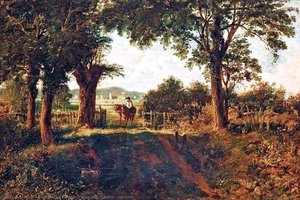
St. Mary


 Read More
Giclée / Art Print
Museum-quality giclée or canvas print with fast production and flexible finish options. ( Switch to hand made Painting Switch to Image)




































Pick from our preset sizes that match the artwork's original proportions.

You may enter your own dimensions to fit a specific frame or space. If your selected size does not match the original image's proportions, we will either crop the artwork or extend the image with a mirrored or solid-fill edge. A digital mockup will be sent for your approval before production begins.
Please note that the on-screen preview does not reflect the actual cropping or extension. Only the mockup will accurately show the final composition.
While custom sizes are available, we recommend selecting a dimension from the predefined list to preserve the original proportions.
Worldwide Delivery () in 2 weeks instead of standard 4/5 weeks. (10 August)

Free Worldwide Express Shipping

High-Quality Linen Canvas

Full Shipping Insurance

Customs Tax Refund Guarantee

True Color Matching Guarantee

60-Day Return Policy (Defects Only)

100% Money-Back Guarantee

Bulk Discount Offer
 Glass option is only available in size under 110 CM

St. Mary
Giclée / Art Print
Reproduction Size
-


Total Price
$ 81
Collectible Description
Artist Biography
The Visionary of the Norwich School
Born into the prosperous silk and lace trade of Norwich in 1782, John Sell Cotman was a man whose destiny was woven not from fabric, but from light, shadow, and the delicate medium of watercolor. Though his father envisioned a life of commerce, Cotman’s spirit was irrevocably drawn to the rolling landscapes and rugged coastlines of England. His early years were defined by an innate talent for capturing the essence of the countryside surrounding his birthplace, a pursuit that would eventually establish him as a cornerstone of the Norwich School of painters. Moving to London in 1798, he sought to transform his raw talent into a professional vocation, finding early sustenance through commissions from print-sellers and immersing himself in the vibrant artistic pulse of the capital.
The trajectory of Cotman’s career was profoundly shaped by the intellectual and creative currents of London's artistic circles. Under the generous patronage of Dr. Thomas Monro, he found himself at the heart of a burgeoning movement. It was within the walls of Monro’s studio that Cotman forged connections with giants of the era, most notably J.M.W. Turner, Peter De Wint, and Thomas Girtin. These encounters were more than mere social engagements; they were transformative artistic dialogues. Through the sketching clubs and expeditions to Wales and Surrey alongside Girtin, Cotman refined a unique visual language—one that balanced structural precision with an atmospheric, almost rhythmic, interpretation of nature.
Mastery of Light and Form
Cotman’s technical evolution is a testament to his dedication to the nuances of watercolor and etching. His work is characterized by a remarkable ability to distill complex landscapes into simplified, powerful compositions. He possessed a singular gift for using broad washes and bold, structural lines to convey the weight of stone, the fluidity of water, and the ephemeral quality of light. This approach allowed him to capture the rugged majesty of Welsh castles and the serene, flowing beauty of the River Greta with equal intensity. His mastery was not merely in imitation, but in an architectural understanding of the landscape, where every stroke contributed to a sense of enduring permanence.
Throughout his career, Cotman’s travels served as the primary fuel for his creative output:
- The Welsh Expeditions: His time touring Wales provided him with dramatic subjects, including the iconic Harlech Castle, which he exhibited at the Royal Academy.
- The Yorkshire Sojourns: Staying with the Cholmeley family at Brandsby Hall allowed him to produce a celebrated series of watercolors documenting the River Greta.
- The Return to Norwich: His eventual return to his roots solidified his role as a leader in the Norwich Society of Artists, where he contributed extensively to the local art scene through both teaching and exhibiting.
Legacy and Historical Significance
While Cotman’s life was marked by periods of financial struggle and the shifting tides of artistic fashion, his contribution to British Romanticism remains indelible. He was an artist who looked beyond the mere surface of a scene to find its underlying geometry and emotional resonance. His work bridged the gap between the topographical accuracy of earlier traditions and the emotive, atmospheric depth that would define much of 19th-century landscape painting.
Today, Cotman is revered not just as a regional master of the Norwich School, but as a pioneer of the watercolor medium. His ability to manipulate light and form continues to inspire those who seek beauty in the structural simplicity of the natural world. Through his etchings, illustrations, and breathtaking landscapes, John Sell Cotman left behind a visual legacy that captures the very soul of the British landscape, frozen in moments of profound, quiet brilliance.

john joseph cotman
1782 - 1842
Quick Facts
- Artistic Movement Or Style: Norwich School, Romanticism
- Artists Who Influenced This Artist:
- J. M. W. Turner
- Thomas Girtin
- Peter De Wint
- Date Of Birth: May 16, 1782
- Date Of Death: 1842
- Full Name: John Sell Cotman
- Nationality: English
- Place Of Birth: Norwich, England