Read More


 For artworks or reproductions larger than 105 cm (approximately 41 inches) on any side, the frame will be shipped as a kit, disassembled. This method ensures safe delivery and prevents damage during transport.


More about this painting
Text size

() ·
A painting made for you, by hand
Hand Made Oil Reproduction
Hand-painted oil on canvas in your size and frame, made to order by our artists. ( Switch to Print Switch to Digital Image)
Artist Biography
A pioneer of ornithology known for The Birds of America. Discover his stunning wildlife art today.
from ·
Chapter 1
How large should it be?
Slide to change the size; the picture on the left shows the frame at its real width. The proportions of the original are kept.
Standard
custom
CM
INCH
Pick from our preset sizes that match the artwork's original proportions.
Loading sizes...

width
height
Type the width and the height you need, to fit your frame or your wall. This is hand-painted, so for a size with a different shape the artist can paint a bit more around the picture, or cut a bit — you choose. We send you a digital mockup to approve before the painting starts. The picture shown on this page does not show the real result — only the mockup does.
Chapter 2
How should it arrive?
Choose the edges of the stretched canvas
Choose your frame

White $1

Blurside $1

Extended $1

P118B $10

P118H $10

P118W $10

P438Z $10

P508JH $12

P508YH $12

P805H $10

P805Z $10

P919BZ $10

P919G $10

P919XJ $10

P959ZH $10

P968JZ $12

W106C $8

W218G $10

W218JH $8

W218Y $10

W307PJ $10

W316G $10

W316PJ $8

W316Y $10

W398PJ $8

W4111J $10

W500HY $15

W500JH $15

W692G $12

W849H $8

W940BG $15

W953PJ $8

H24-GOLD $30

H24-SILVER $30

H36-GOLD $45

H36-SILVER $45
Framed
Moulding: . Overall size with the frame: .
Chapter 3
Who paints it, and should anything change?
Examples of what can be changed: Replace face with customer photo; Add pet (e.g., replace cat with dog); Include hidden message in background; Change background landscape or elements.
After order, OriginalUniqueArt.com team will email client for instructions and provide a mockup preview
After order, OriginalUniqueArt.com team will email client for instructions and provide a mockup preview
Worldwide Delivery () in 3/4 weeks instead of standard 5 weeks. (9 November). No compromise on quality.
Chapter 4
The finishing touches
A nameplate, as in a museum?
Engraved Bronze Plaque Details
This elegant plaque features the artist's name and the title of the artwork, finely engraved for a timeless presentation.
It is made from bronze with a refined, elegant finish. The text is precisely laser-engraved for a sharp and permanent result. Measuring 9x2 cm, the plaque is compact yet easy to read. It's built to be durable and scratch-resistant, offering a professional, museum-quality look. Mounting is simple thanks to the included adhesive backing.
Transparent Acrylic Plaque Details
The plaque includes essential engraved details such as the artist's name, the title of the artwork, the date it was created, the type of media used-like oil on canvas or watercolor-a brief description of the piece, and a QR code that links to the complete artwork information.
It is crafted from clear acrylic, offering a sleek, modern appearance. The text is UV-engraved in black to ensure strong visual contrast. With a size of 10x15 cm, it ensures optimal readability. It comes equipped with two metal hooks for secure wall mounting. The plaque is designed to be weather-resistant, making it suitable for various environments, and it includes interactive features that work seamlessly with smartphone scanning.
Black Acrylic Plaque Details
This elegant plaque includes engraved information such as the artist's name, the title of the artwork, the date it was created, the type of media used (like oil on canvas or watercolor), a short description of the artwork, and a QR code for quick access to more information.
The plaque itself is made from refined black acrylic with a premium finish. The text is laser-engraved in white for high contrast and readability. Its size is 10x15 cm, designed to be easy to read. It comes with two metal hooks for professional mounting. The design is sleek and fits any interior style. It is also weather-resistant and durable, with built-in digital integration for mobile compatibility.
A protective varnish?
When do you need it?
Chapter 5
Your painting, as you ordered it
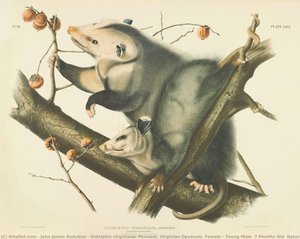
Franklins Marmot Squirrel
Reproduction Medium
Reproduction Size
-
Elite Senior Artist
More detail, finesse, and extra production time
-
Reproduction Frame
-
-
For artworks or reproductions larger than 105 cm (approximately 41 inches) on any side, the frame will be shipped as a kit, disassembled. This method ensures safe delivery and prevents damage during transport.
Professional assembly required - this is not a DIY product.
The kit must be assembled and the canvas stretched by an experienced professional framer, using wood glue (not supplied), a canvas stretching plier and clamps to hold the bars square while the glue dries. Incorrect assembly or uneven canvas tension can permanently damage the artwork and is not covered by our warranty.
All solid wood bars are included, precisely cut to size.
Assembled with the screws provided, plus wood glue for the corner joints, which is not supplied and must be sourced by your framer.
Professional tools are required and not included: a canvas stretching plier (tensioner) and clamps to hold the bars square while the glue dries.
Important:
The corner joints require wood glue, the bars must be held with clamps until the glue is fully dry, and tightening the canvas on the assembled frame requires a canvas stretching plier. None of these are included in the kit. Please arrange an experienced professional framer before ordering this size.
Nameplate
-
-
Protective Varnish
Glossy Varnish (enhances colors, protects against light/moisture)
-
Customize My Artwork
Examples of what can be changed: Replace face with customer photo; Add pet (e.g., replace cat with dog); Include hidden message in background; Change background landscape or elements.
-
Urgent
Worldwide Delivery () in 3/4 weeks instead of standard 5 weeks. (9 November). No compromise on quality.
-
Express Shipping
Worldwide Delivery () in 5 weeks. (16 November).
Included
Total Price
$ 300
Glass option is only available in size under 110 CM
Included with every order
- Free Worldwide Express Shipping
- High-Quality Linen Canvas
- Full Shipping Insurance
- Customs Tax Refund Guarantee
- True Color Matching Guarantee
- 100-Day Return Policy (Defects Only)
- 100% Money-Back Guarantee
- Bulk Discount Offer
 Preview
 Send
Send Share
Share
 Details
 Guide
Guide

 Download
 Similars
 X-Ray
X-Ray Diaporama
 Q&A
Q&A Stats
StatsIn numbers
- 1846the year it was painted
- 29frames to choose from
- standard sizes, in its own proportions
- 5weeks to paint and deliver it
About the original

- 71.0 x 55.0 cm


John James Audubon
1785 - 1851, Haiti
Quick facts about John James Audubon
- Artists Or Movements Influenced By This Artist:
- John Woodhouse Audubon
- Theodore Roosevelt Jr.
- Full Name: John James Audubon
- Nationality: French-American
- Notable Artworks:
- The Birds of America
- Ornithological Biography
- The Viviparous Quadrupeds of North America
- Place Of Birth: Les Cayes, Haiti
- Date Of Birth: 1785
- Date Of Death: 1851
Artist Biography
Early Life, Family and Training
The origins of John James Audubon are rooted in the volatile landscape of Saint-Domingue, modern-day Haiti. Born Jean-Jacques Rabin on April 26, 1785, his arrival was marked by the complex social hierarchies of the Caribbean. He was the son of Lieutenant Jean Audubon, a French naval officer, and Jeanne Rabine, a twenty-seven-year-old chambermaid from Les Touches, Brittany. This lineage, caught between the stability of military service and the precariousness of colonial life, shaped a childhood defined by movement and shifting identities. As unrest gripped the island, the young boy was sent to France for safety and education, a transition that would eventually lead him to the American frontier.
His formal schooling provided little for his restless temperament. Instead, Audubon became a self-taught ornithologist and artist, developing his skills through direct, often difficult, observation of the natural world. He did not rely on the academic traditions of Europe but rather on a relentless, hands-on engagement with the creatures he sought to document. This autodidactic path required a resilience that would serve him well as he moved from the structured environments of his youth toward the untamed wilderness of the Americas.
The Pursuit of Avian Perfection
Before his name became synonymous with the birds of the Americas, Audubon’s life was a series of restless, often unsuccessful, diversions. He was a man of many trades, attempting to find his footing as a shopkeeper, a taxidermist, and even a man of commerce through mercantile pursuits and mining. In Kentucky, he opened a chain of stores, but the venture eventually failed, leaving him to seek a more singular purpose. This period of trial and error was not a detour so much as a preparation for the immense task that lay ahead.
His true vocation required a nomadic existence, a life spent moving back and forth across the vast North American landscape. Between 1827 and 1838, he undertook the monumental task of creating The Birds of America. This was no mere collection of sketches; it was a rigorous attempt to document nearly 500 bird species in life-size detail. He lived among the wilderness, traveling as far as Labrador in 1833, driven by a need to observe these creatures in their natural settings rather than through the lens of a preserved specimen.
This commitment to accuracy demanded a relentless presence in the field. He did not merely observe from a distance; he immersed himself in the habitats of his subjects to capture the essence of their movement and form. The sheer scale of his ambition required him to endure the hardships of the frontier, trading the stability of a settled life for the uncertainty of the wild, all to ensure that his visual record was as precise as the nature it sought to represent.
Technique and Style
Audubon’s method was born of a necessity to capture life before it faded. To achieve the animated poses that defined his work, he often used wires to prop up specimens, holding them in mid-flight or mid-action. His process began with a rapid outline sketch to ensure the proportions were correct. Once the essential form was established, he transferred the outline to permanent drawing paper. It was here that his meticulous nature took hold, as he added the minute structures of feathers with painstaking precision. While he was a master of watercolor on large sheets of paper, his studies were diverse, ranging from charcoal portraits to oil paintings.
The transition from his original vision to the printed page required a sophisticated marriage of different disciplines. His work relied on engraving combined with aquatint, a process that allowed for soft gradations of light and shadow. To add depth and richness to these prints, he often heightened the images with drypoint and etchings. This technical complexity ensured that the textures of plumage and the subtle musculature of the animals were preserved through the printing process. His ability to layer these mediums allowed him to move beyond simple illustration into a realm of detailed biological recording.
Patrons, Workshop and Commissions
The realization of Audubon’s grandest ambitions required a synergy of artistic vision and technical precision. While he provided the initial watercolors, the transition from delicate brushstrokes to enduring prints depended upon the expertise of engravers Robert Havell Sr. and Robert Havell Jr. The latter proved essential, acting as a conduit who translated Audubon’s specific visual intentions into finished works. The Havell family brought a diverse array of creative talents to their craft, including musicians, educators, and writers, providing a sophisticated environment for such a massive undertaking.
The scale of his projects necessitated a structured workshop environment. To manage the immense task of documenting North America's fauna, Audubon relied on several assistants who helped execute his original studies. This collaborative effort was particularly vital during the production of The Birds of America, where the sheer volume of detail required more than a single hand. His process involved a rapid outline sketch to ensure correct proportions, followed by the transfer of these outlines to permanent drawing paper. In some instances, elements from earlier drawings were cut and pasted onto newer compositions to achieve the desired accuracy before the final engraving took place.
Key Works
The most significant achievement of his career was the production of The Birds of America, a massive undertaking published between 1827 and 1838. This collection consisted of 435 engraved plates, many of which were presented in a large-format, double-elephant folio color-plate book. His ambition was to create a complete pictorial record of the bird species of North America, a goal he pursued through years of nomadic observation. The scale of the project was such that one set of these prints was sold to the Legislature of Louisiana through Governor Andre Bienvenu Roman.
His interests eventually expanded beyond the avian world to include the broader fauna of the continent. Between 1845 and 1849, he produced The Viviparous Quadrupeds of North America, a work that shifted his focus toward mammals. His studies included detailed depictions of the American bison and various species of foxes. To accompany his visual records, he also authored Ornithological Biography, which was published in volumes between 1831 and 1839.
- The Birds of America (1827–1838)
- Ornithological Biography (1831–1839)
- The Viviparous Quadrupeds of North America (1845–1849)
Circle, Rivals and Pupils
The artist’s life was deeply intertwined with his family, a circle that provided both continuity and the labor necessary to sustain his ambitious projects. His sons, Victor Gifford Audubon and John Woodhouse Audubon, were born in 1809 and 1812, respectively. While Victor’s life was cut short in 1860, John Woodhouse became a vital collaborator. He did more than merely assist; he oversaw the production of the Second Edition of The Birds of America, ensuring the family’s ornithological vision remained intact. This partnership bridged the gap between the original studies and the later, refined editions that expanded the known record of North American avian life.
The domestic sphere was marked by both presence and profound loss. His daughters, Lucy and Rose, lived only briefly, passing away in 1817 and 1820. These small, quiet tragedies existed alongside the immense, public scale of his scientific pursuits. The work required a specialized network of skilled hands to translate delicate watercolors into the final printed volumes. This included the essential technical partnership with the engraver Robert Havell Jr., whose mastery of the aquatint technique allowed for the subtle tonal gradations required to render the texture of feathers and the depth of natural landscapes.
Legacy and Influence
Audubon’s impact reaches far beyond the pages of his folio. By pioneering a field observation-based approach to ornithology, he shifted the focus of natural history from the study of static, preserved specimens to the observation of living creatures within their natural habitats. This method provided a detailed visual record of North American birdlife at a critical time, capturing species before the rapid environmental shifts of the 19th century could erase them. His commitment to documenting behavior and environment alongside anatomy changed how scientists and naturalists perceived the avian world.
The influence of his work persists through the institutions and movements his life helped inspire. The National Audubon Society was founded in his honor, continuing a mission of conservation that his meticulous documentation helped to foster. His observations remain a resource for those studying the natural history of the continent. Today, his depictions continue to inform the work of artists, scientists, and conservationists who seek to understand the delicate balance of the wilderness.
Where to See the Works Today
The physical remnants of Audubon's obsession are scattered across several continents, held in collections that reflect the global reach of his scientific and artistic pursuits. In the United States, the Amon Carter Museum of American Art in Fort Worth maintains a significant presence, housing ten of his works. For those seeking the institutional weight of his namesake organization, the National Audubon Society in New York City also holds pieces within its collection.
His influence extends far beyond North American borders. Museums Victoria in Melbourne preserves his work in Australia, while the Natural History Museum in London maintains a portrait of the man himself, painted by Lance Calkin. These holdings offer a glimpse into the life of a man who spent his years moving through the wilderness to document the life of the continent.
- Great Egret (Ardea alba)
- American Bison or Buffalo
- American Beaver
- American Badger
- American Cross Fox
- Columbian Black-Tailed Deer
Related Articles
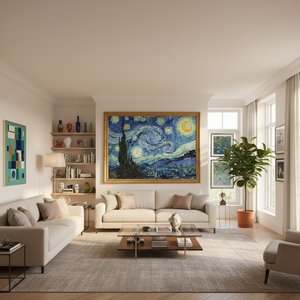
Top 10 Masterpieces for Your Living Room: Iconic Paintings & Art Decor Ideas |
Transform your living room with iconic art! Explore our guide to the Top 10 most famous paintings – from Van Gogh's Starry Night to Mona Lisa. Discover artist stories, techniques & find museum-quality reproductions for timeless decor. Explore the full collection on
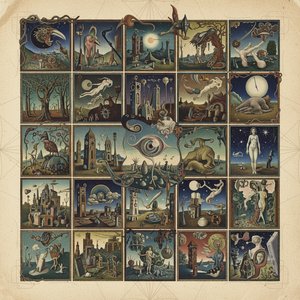
Unlocking the Unconscious: The Top 25 Surrealist Masterpieces by Max Ernst
Explore 25 iconic Max Ernst masterpieces of Surrealism. Discover museum-quality art at OriginalUniqueArt.com.

25 Must-See Masterpieces at the Hermitage Museum: A Journey Through Art History
Explore 25 iconic Hermitage masterpieces, from Rembrandt to Matisse. Discover museum-quality art on OriginalUniqueArt.com.
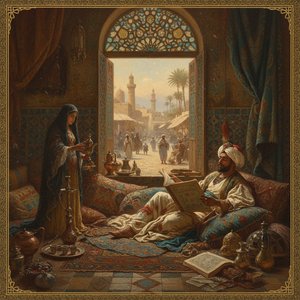
John Frederick Lewis: Orientalism, Detail & Genre Painting in 19th-Century British Art
Explore the captivating Orientalist paintings of John Frederick Lewis! Discover his mastery of detail, genre scenes & influence on 19th-century British art. Learn about his life, techniques & legacy at OriginalUniqueArt.
Explore artworks organized by themes, styles, and characteristics.