Preview
 Send
Send Share
Share
 Details
 Guide
Guide

 Download
 Similars
 X-Ray
X-Ray Diaporama
 Stats
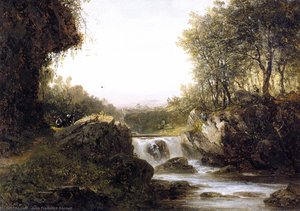
StatsUntitled (D2XALP)
 Oil On Canvas
- WallArt
 1872
1872- 19th Century
 39.0 x 78.0 cm
 Metropolitan Museum of Art
 Read More
Giclée / Art Print
Museum-quality giclée or canvas print with fast production and flexible finish options. ( Buy Hand Made Painting Switch to Digital Image)




P118B $10

P118H $10

P118W $10

P438Z $10

P508JH $12

P508YH $12

P805H $10

P805Z $10

P919BZ $10

P919G $10

P919XJ $10

P959ZH $10

P968JZ $12

W106C $8

W218G $10

W218JH $8

W218Y $10

W307PJ $10

W316G $10

W316PJ $8

W316Y $10

W398PJ $8

W4111J $10

W500HY $15

W500JH $15

W692G $12

W849H $8

W940BG $15

W953PJ $8




Pick from our preset sizes that match the artwork's original proportions.

You may enter your own dimensions to fit a specific frame or space. If your selected size does not match the original image's proportions, we will either crop the artwork or extend the image with a mirrored or solid-fill edge. A digital mockup will be sent for your approval before production begins.
Please note that the on-screen preview does not reflect the actual cropping or extension. Only the mockup will accurately show the final composition.
While custom sizes are available, we recommend selecting a dimension from the predefined list to preserve the original proportions.
Worldwide Delivery () in 2 weeks instead of standard 4/5 weeks. (11 October)

Free Worldwide Express Shipping

High-Quality Linen Canvas

Full Shipping Insurance

Customs Tax Refund Guarantee

True Color Matching Guarantee

100-Day Return Policy (Defects Only)

100% Money-Back Guarantee

Bulk Discount Offer
 Glass option is only available in size under 110 CM

Untitled (D2XALP)
Giclée / Art Print
Reproduction Size
-


Total Price
$ 81
John Frederick Kensett: A Pioneer of Luminism
John Frederick Kensett (March 22, 1816 – December 14, 1872) was an American landscape painter and engraver born in Cheshire, Connecticut. He stands as a pivotal figure within the second generation of the Hudson River School of artists—a movement that championed the transcendental beauty of America’s natural landscapes and sought to capture their ethereal light. Unlike his predecessors who often employed dramatic compositions and rich color palettes, Kensett distinguished himself through a refined Luminist style characterized by subtle brushstrokes and an unwavering focus on atmospheric illumination – a technique profoundly influenced by Dutch masters like Jacob Maris and Isaac Israelson. His artistic vision aimed to convey not merely what the eye perceives but also what the soul feels when confronted with the sublime grandeur of nature.The Essence of Tranquility: Lake George
Kensett’s “Lake George,” completed in 1872, exemplifies this Luminist aesthetic perfectly. The painting depicts a serene expanse of Lake George nestled amidst rolling hills and snow-capped mountains—a scene that immediately transports the viewer to the Adirondack wilderness during autumn. Rather than striving for theatrical grandeur, Kensett meticulously rendered the lake’s surface with an almost imperceptible shimmer, achieved through delicate glazing techniques – applying thin layers of translucent paint over underlying colors to create depth and luminosity. This masterful manipulation of light is paramount to conveying the painting's mood: a profound sense of peace and contemplation.Composition and Color Palette: Restraint and Resonance
The horizontal orientation of “Lake George” emphasizes the vastness of the lake, mirroring the expansive horizon line which dominates approximately one-third of the canvas. The lower right section is anchored by a rocky outcrop—a grounding element that balances the airy expanse above. Kensett’s color palette leans heavily on cool tones – blues and greens – reflecting the dominant hues of the lake and surrounding foliage. Subtle reds appear in the rocks, providing visual warmth against the coolness of the overall composition. These colors aren't vibrant or assertive; instead, they blend seamlessly to create a harmonious effect that resonates with tranquility.Technique and Materials: Brushstrokes as Vessels of Light
Kensett’s brushwork is remarkably understated—almost invisible to the untrained eye. He employed loose, blended strokes to build up layers of color, prioritizing tonal gradations over precise delineation. Glazes – thin washes of translucent pigment – played a crucial role in achieving atmospheric perspective and enhancing the painting's luminous quality. These meticulous techniques underscore Kensett’s dedication to capturing not just the visual appearance of Lake George but also its intangible essence—the feeling of stillness and connection with the natural world.Symbolism and Legacy: Transcendental Vision
“Lake George” transcends mere representation; it embodies the Luminist philosophy's belief in perceiving nature as a conduit for spiritual insight. The painting’s quiet grandeur invites viewers to pause, observe, and contemplate—a deliberate response to the transcendentalist movement’s emphasis on experiencing the sublime beauty of God’s creation. Kensett’s enduring legacy lies in his unwavering commitment to capturing light and atmosphere with unparalleled sensitivity—a contribution that continues to inspire artists and collectors alike. His masterpiece remains a testament to the power of observation and the transformative potential of art.Questions & Answers
How can I view "Untitled (D2XALP)" by John Frederick Kensett as a slideshow?
The diaporama of "Untitled (D2XALP)" can be watched on the artwork's Diaporama page.
Who created "Untitled (D2XALP)"?
"Untitled (D2XALP)" is attributed to John Frederick Kensett.
What is the perceived brightness of "Untitled (D2XALP)" by John Frederick Kensett?
The perceived brightness of "Untitled (D2XALP)" by John Frederick Kensett is brilliant. It can be matched to the light of the intended space.
What is the creation date of "Untitled (D2XALP)" by John Frederick Kensett?
The creation of "Untitled (D2XALP)" by John Frederick Kensett is dated 1872.
At what age did John Frederick Kensett make "Untitled (D2XALP)"?
John Frederick Kensett was 56 years old when creating "Untitled (D2XALP)" in 1872. The age is computed from the artist's birth year, 1816.
What is "Untitled (D2XALP)" made with?
The medium of "Untitled (D2XALP)" by John Frederick Kensett is oil on canvas. Reproductions aim to render the appearance of this technique.
What space is suggested for "Untitled (D2XALP)" by John Frederick Kensett?
The recommended space for "Untitled (D2XALP)" by John Frederick Kensett is a living room. The suggestion can of course be adapted to your interior.
Artist Biography
a life devoted to capturing serene landscapes
john frederick kensett, an american artist and engraver, was born on march 22, 1816, in cheshire, connecticut. as a member of the second generation of the hudson river school of artists, kensett's signature works are characterized by their serene and luminous qualities, celebrating the transcendental aspects of nature.early life and training
kensett attended school at cheshire academy and studied engraving with his father, thomas kensett. he later worked as an engraver in new haven until 1838, then moved to new york city to work on banknote engravings. in 1840, kensett traveled to europe to study painting, refining his talents alongside benjamin champney.established studio and luminist style
after establishing his studio in new york, kensett extensively traveled throughout the northeast and colorado rockies, capturing the essence of these landscapes. his style evolved from traditional hudson river school to a more refined luminist approach, characterized by unselfconscious brushstrokes conveying qualities of atmospheric light.- mount washington from the valley of conway (1851), an iconic painting, was purchased by the american art union and distributed to 13,000 subscribers.
- eaton's neck, long island (1872), a prime example of kensett's luminist style, is now in the collection of the metropolitan museum of art in new york.
legacy and contributions
kensett was a founder of the metropolitan museum of art and a full member of the national academy of design. his work, widely acclaimed during his lifetime, continues to influence landscape painting. key works:- sunset sky (ca. 1870), the metropolitan museum of art, new york
- three mile harbor (ca. 1860), museum of fine arts, tallahassee

John Frederick Kensett
1816 - 1872 , United States of America
Quick Facts
- Full Name: John Frederick Kensett
- Nationality: American
- Date Of Birth: 1816
- Date Of Death: 1872
- Place Of Birth: Cheshire, United States of America
- Notable Artworks:
- Mount Washington from the Valley of Conway
- Eaton's Neck, Long Island
- Artistic Movement Or Style: Hudson River School & Luminism
- Artists Who Influenced This Artist:
- Thomas Cole
- Benjamin Champney
- Artists Or Movements Influenced By This Artist: ['Luminism']
Related Articles
Epic Landscapes & Wild Nature: The Power of the Hudson River School's Sublime Artistry
Explore the breathtaking power of the Hudson River School. Journey through epic American landscapes, from Thomas Cole's sublime vistas to Luminist light, and discover how these timeless masterpieces continue to inspire modern collectors and art lovers worldwide.
Hudson River School: 10 Masterpieces That Capture America's Wild Beauty | OriginalUniqueArt
Journey through America's breathtaking landscapes with our guide to the Top 10 Hudson River School masterpieces. Explore Thomas Cole, Frederic Church & more! Find museum-quality art reproductions and elevate your home decor at OriginalUniqueArt.com.

Robert Spencer: Luminism, Narrative & the American Landscape Tradition
Explore the captivating world of Luminism & the Hudson River School with our expert analysis. Discover the history, artists, and enduring beauty of 19th-century American landscape painting. Find museum-quality reproductions at OriginalUniqueArt.
The Hudson River School: A Definitive Guide to America's Romantic Landscape Tradition
Explore the profound legacy of the Hudson River School. Discover how masters like Thomas Cole captured the American sublime through Romanticism and Luminism. A definitive guide for art historians and collectors seeking to understand America's wild beauty.

The Sublime Landscape: Exploring the Hudson River School Movement
Explore the captivating world of the Hudson River School! Discover the history, artists, and defining characteristics of this iconic American art movement. Learn about Romanticism's influence & find inspiration for your collection.