Preview
 Send
Send Share
Share
 Details
 Guide
Guide

 Download
 Similars
 X-Ray
X-Ray Diaporama
 Stats
StatsThe Seashore


 Read More
Hand Made Oil Reproduction
Hand-painted oil on canvas in your size and frame, made to order by our artists. ( Switch to Print Switch to Digital Image)




P118B $10

P118H $10

P118W $10

P438Z $10

P508JH $12

P508YH $12

P805H $10

P805Z $10

P919BZ $10

P919G $10

P919XJ $10

P959ZH $10

P968JZ $12

W106C $8

W218G $10

W218JH $8

W218Y $10

W307PJ $10

W316G $10

W316PJ $8

W316Y $10

W398PJ $8

W4111J $10

W500HY $15

W500JH $15

W692G $12

W849H $8

W940BG $15

W953PJ $8




Pick from our preset sizes that match the artwork's original proportions.

Type the width and the height you need, to fit your frame or your wall. This is hand-painted, so for a size with a different shape the artist can paint a bit more around the picture, or cut a bit — you choose. We send you a digital mockup to approve before the painting starts. The picture shown on this page does not show the real result — only the mockup does.
After order, OriginalUniqueArt.com team will email client for instructions and provide a mockup preview
Worldwide Delivery () in 3/4 weeks instead of standard 5 weeks. (25 October). No compromise on quality.

Free Worldwide Express Shipping

High-Quality Linen Canvas

Full Shipping Insurance

Customs Tax Refund Guarantee

True Color Matching Guarantee

100-Day Return Policy (Defects Only)

100% Money-Back Guarantee

Bulk Discount Offer
 Glass option is only available in size under 110 CM

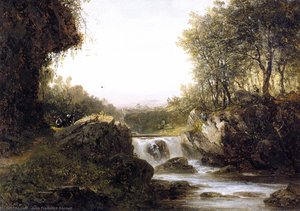
The Seashore
Reproduction Medium
Reproduction Size
-


Total Price
$ 300
A Moment of Tranquility Captured by John Frederick Kensett
John Frederick Kensett’s “The Seashore” embodies the quintessential spirit of Luminist painting—a movement dedicated to portraying landscapes with remarkable clarity and stillness. Completed in 1863, this artwork offers a serene glimpse into coastal life during America's Gilded Age, capturing not just visual beauty but also an underlying sense of contemplative contemplation.Subject Matter and Composition
The scene depicts a picturesque beach vista bathed in soft sunlight. Several figures—likely families enjoying their leisure time—are scattered across the sandy shore, engaging in activities like strolling along the waterline or observing boats gliding across the calm expanse of water. The artist’s meticulous attention to detail extends beyond the human element; he skillfully renders the textures of sand and sea spray, creating a palpable impression of immediacy and realism. Notably, Kensett strategically positions several boats—one prominent on the left, another near the center—to emphasize the maritime setting and contribute to the overall feeling of peaceful exploration.Style and Technique: Luminist Precision
Kensett’s approach distinguishes him from his predecessors within the Hudson River School, marking a pivotal shift toward Luminism. Unlike the Romantic preoccupation with dramatic vistas and emotional fervor, Luminists prioritized capturing natural light and atmosphere with unwavering accuracy. Kensett achieved this goal through painstaking brushwork—characterized by smooth, blended strokes—that minimized visible marks of paint manipulation. The muted palette—dominated by shades of beige, gray, and pale blues—further enhances the painting’s ethereal quality, mirroring the tranquil mood conveyed by the scene.Historical Context: Transcendental Landscape Painting
“The Seashore” emerged during a period of significant intellectual ferment in America, fueled by transcendentalist thinkers like Ralph Waldo Emerson and Henry David Thoreau who championed individualism and communion with nature. Kensett’s work aligns perfectly with this philosophical movement's core tenets—specifically its belief that art should inspire awe and elevate the human spirit. The painting reflects the burgeoning interest in plein air painting—working outdoors directly from observation—a technique embraced by Luminists as a means of capturing the fleeting beauty of the natural world.Symbolism: Reflection and Renewal
Beyond its aesthetic merits, “The Seashore” carries subtle symbolic resonance. The calm sea represents purity and renewal, mirroring the spiritual aspirations of the era. Similarly, the figures engaged in leisurely pursuits symbolize contentment and appreciation for simple pleasures—values central to transcendentalist thought. Kensett’s masterful depiction of light—particularly its diffused glow—suggests a connection between humanity and divinity, reinforcing the painting's overarching message of serenity and contemplation.Emotional Impact: A Balm for the Soul
Ultimately, “The Seashore” succeeds in transporting viewers to a moment of profound peace and tranquility. Its luminous colors and meticulous realism evoke feelings of nostalgia and wonder—capturing the essence of summertime idyll. As an interior design element, this reproduction offers a sophisticated way to infuse any space with a sense of calm sophistication, reminding us of the restorative power of nature’s beauty.Questions & Answers
What stage of John Frederick Kensett's development does "The Seashore" represent?
"The Seashore" belongs to the Mature Period of John Frederick Kensett's career. This classification relates the work to the artist's development.
What was John Frederick Kensett's age when "The Seashore" was created?
When "The Seashore" was created in 1863, John Frederick Kensett - born in 1816 - was 47 years old.
What luminance does "The Seashore" by John Frederick Kensett have?
The colors of "The Seashore" show a luminous luminance.
Artist Biography
a life devoted to capturing serene landscapes
john frederick kensett, an american artist and engraver, was born on march 22, 1816, in cheshire, connecticut. as a member of the second generation of the hudson river school of artists, kensett's signature works are characterized by their serene and luminous qualities, celebrating the transcendental aspects of nature.early life and training
kensett attended school at cheshire academy and studied engraving with his father, thomas kensett. he later worked as an engraver in new haven until 1838, then moved to new york city to work on banknote engravings. in 1840, kensett traveled to europe to study painting, refining his talents alongside benjamin champney.established studio and luminist style
after establishing his studio in new york, kensett extensively traveled throughout the northeast and colorado rockies, capturing the essence of these landscapes. his style evolved from traditional hudson river school to a more refined luminist approach, characterized by unselfconscious brushstrokes conveying qualities of atmospheric light.- mount washington from the valley of conway (1851), an iconic painting, was purchased by the american art union and distributed to 13,000 subscribers.
- eaton's neck, long island (1872), a prime example of kensett's luminist style, is now in the collection of the metropolitan museum of art in new york.
legacy and contributions
kensett was a founder of the metropolitan museum of art and a full member of the national academy of design. his work, widely acclaimed during his lifetime, continues to influence landscape painting. key works:- sunset sky (ca. 1870), the metropolitan museum of art, new york
- three mile harbor (ca. 1860), museum of fine arts, tallahassee

John Frederick Kensett
1816 - 1872 , United States of America
Quick Facts
- Full Name: John Frederick Kensett
- Nationality: American
- Date Of Birth: 1816
- Date Of Death: 1872
- Place Of Birth: Cheshire, United States of America
- Notable Artworks:
- Mount Washington from the Valley of Conway
- Eaton's Neck, Long Island
- Artistic Movement Or Style: Hudson River School & Luminism
- Artists Who Influenced This Artist:
- Thomas Cole
- Benjamin Champney
- Artists Or Movements Influenced By This Artist: ['Luminism']
Related Articles

John Constable's Masterpieces: Explore 25 Iconic Landscapes for Your Home
Journey through John Constable's 25 most celebrated landscapes. Explore Romanticism, Dedham Vale & his masterful use of light in iconic paintings like 'Hay Wain'. Find museum-quality art reproductions and elevate your home decor on OriginalUniqueArt.com.

John Frederick Kensett: Luminosity, Landscape & the American Identity
Explore the luminous landscapes of John Frederick Kensett, a master of Luminism and key figure in the Hudson River School. Discover his serene paintings & enduring legacy with OriginalUniqueArt.

Frederick Childe Hassam: American Impressionism's Chronicler of Light & Modern Life
Explore the captivating world of Frederick Childe Hassam, a pioneer of American Impressionism. Discover his iconic paintings capturing light, urban life & coastal beauty. Learn about his legacy and influence on American art history.

Evocations of Place: A Historical Journey Through Landscape Art
Explore the rich history of landscape art with OriginalUniqueArt. Discover renowned artists, movements like Impressionism & Romanticism, and expert guidance for collecting timeless pieces. Find your perfect serene escape today!

John Singer Sargent's 25 Masterpieces: Portraits & Beyond | OriginalUniqueArt
Explore 25 iconic John Singer Sargent paintings – from dazzling portraits to Impressionist landscapes. Discover the stories behind Madame X, El Jaleo & more! Find museum-quality art reproductions and elevate your home decor with OriginalUniqueArt.com.