Buy Painting
 Send
Send Share
Share
 Details

 Download
 Similars
 X-Ray
X-Ray Diaporama
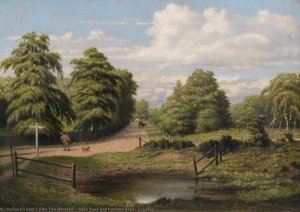
Plums
 36.0 x 26.0 cm
 Read More
Giclée / Art Print
Museum-quality giclée or canvas print with fast production and flexible finish options.




































Pick from our preset sizes that match the artwork's original proportions.

You may enter your own dimensions to fit a specific frame or space. If your selected size does not match the original image's proportions, we will either crop the artwork or extend the image with a mirrored or solid-fill edge. A digital mockup will be sent for your approval before production begins.
Please note that the on-screen preview does not reflect the actual cropping or extension. Only the mockup will accurately show the final composition.
While custom sizes are available, we recommend selecting a dimension from the predefined list to preserve the original proportions.
Worldwide Delivery () in 2 weeks instead of standard 4/5 weeks. (21 July)

Free Worldwide Express Shipping

High-Quality Linen Canvas

Full Shipping Insurance

Customs Tax Refund Guarantee

True Color Matching Guarantee

60-Day Return Policy (Defects Only)

100% Money-Back Guarantee

Bulk Discount Offer
 Glass option is only available in size under 110 CM

Plums
Giclée / Art Print
Reproduction Size
-


Total Price
-
Artist Biography
John Fitz Marshall (1859 – 1932): A Quiet Master of British Animal Art
John Fitz Marshall was a prolific Croydon-based artist who quietly established himself as one of Britain’s foremost painters of animal subjects during the Victorian era. Born in London in 1859, Marshall possessed an innate fascination with the natural world and honed his artistic skills through diligent self-study and experimentation before embarking on a distinguished career that spanned over seven decades. While he remained largely unrecognized by mainstream art critics of his time, Marshall’s enduring legacy resides in the exquisite beauty and meticulous detail of his paintings – particularly those depicting dogs – which continue to captivate collectors and scholars alike.Early Life and Artistic Training
Marshall's formative years were marked by a passion for sketching and drawing from an early age. Encouraged by his father, a solicitor, he pursued formal artistic training at the Slade School of Fine Art in London, where he studied under William Holman Hunt and Frederic Leighton. This exposure to luminist painting techniques – characterized by soft, diffused light – profoundly influenced Marshall’s stylistic sensibilities and instilled in him a commitment to capturing atmospheric effects with remarkable accuracy. The influence of Leighton's idealized landscapes and portraits is particularly evident in Marshall’s own compositions, demonstrating his respect for artistic tradition while simultaneously forging his unique visual language.The Flowering of His Artistic Career
Following graduation from the Slade School in 1882, Marshall established a studio in Croydon, Surrey, where he continued to produce artwork consistently throughout his life. He quickly gained recognition within the Croydon Art Society and cultivated relationships with fellow artists who shared his dedication to portraying animals with sensitivity and realism. Marshall’s artistic output encompassed a diverse range of subjects – from portraits of dogs and cats to landscapes featuring rolling hills and tranquil streams – reflecting his deep appreciation for the pastoral beauty of rural England. He skillfully employed oil paints on canvas, utilizing layering techniques and subtle color palettes to achieve breathtaking visual depth and luminosity.Style and Technique: The Dog Painter Extraordinaire
Marshall’s fame rests primarily upon his extraordinary depictions of dogs. Unlike many artists of his era who favored stylized representations or theatrical poses, Marshall meticulously observed canine behavior and anatomy, striving to convey not merely their appearance but also their emotional essence. His canvases showcase dogs in various positions – playful pups tumbling across grassy lawns, dignified hounds gazing intently into the distance, elderly companions curled up peacefully by a hearth – each rendered with painstaking detail and imbued with palpable warmth. Marshall’s technique involved meticulous blending of colors, careful attention to tonal gradations, and masterful manipulation of brushstrokes to create textures that mirrored the fur of his subjects. He achieved remarkable realism through detailed studies of muscle structure and skeletal anatomy, demonstrating an unparalleled understanding of animal physiology.Notable Works and Recognition
Among Marshall’s most celebrated paintings are “The Shepherd Boy” (1893), a poignant portrayal of a young boy tending to sheep in the Cotswolds countryside; "A Labrador Puppy" (1896), which captures the playful exuberance of a Labrador puppy bounding across a meadow; and “Greyhounds Hunting” (1907), an evocative depiction of greyhounds pursuing rabbits with breathtaking speed and precision. These works garnered considerable acclaim within artistic circles and were exhibited extensively throughout Britain. Although Marshall’s achievements remained largely unrecognized by the broader public during his lifetime, his paintings continue to be admired for their technical brilliance and emotional resonance. Today, Marshall's artwork is housed in numerous private collections and museums across Europe and North America, cementing his place as a significant figure in British animal art history.Legacy and Historical Significance
John Fitz Marshall’s contribution to Victorian art extends beyond mere aesthetic beauty; he embodies the spirit of observation and empathy that characterized the era's finest artists. His unwavering dedication to capturing the nuances of animal behavior—combined with his masterful artistic skill—established him as a pioneer in portraying animals with psychological depth and emotional sincerity. Marshall’s legacy serves as an inspiration for contemporary artists who strive to honor the traditions of realism while simultaneously exploring the complexities of human-animal relationships. He remains a testament to the power of quiet contemplation and meticulous craftsmanship – qualities that continue to resonate powerfully within the realm of art history.
Quick Facts
- Artistic Movement Or Style: Animal Art
- Artists Or Movements Influenced By This Artist: ['Pre-Raphaelites']
- Artists Who Influenced This Artist:
- William Holman Hunt
- John Everett Millais
- Date Of Birth: Living
- Full Name: John Fitz Marshall
- Nationality: British
- Notable Artworks:
- The Shepherd Boy
- A Dog Playing Fetch
- Place Of Birth: Croydon, England